Blog

  • Spooky Semiotics

    What is the first thing you think of when October 31rst rolls around? Halloween of course! Who doesn’t love this spooktacular holiday where you get to dress up as whoever or whatever your heart desires. Adults channel their inner kid and sport princess dresses and super hero tights. Little kids are initiated into the celebration by choosing their favorite costumes at the many pop-up shops that open just for the occasion. Even with the newfound diy craze brought on by Pinterest people of all ages still flock to halloween stores to find the perfect overpriced getup.

    giphy

    Candy is another market that thrives, particularly from the sugar thirsty little gremlins that roam the streets on this particular day. Lets not go giving the little ones all of the credit adults and the elderly are just as guilty of adding a little chocolate to their carts. So what is it that causes so many different people to long for the same generic halloween pastimes?

    reeses-600x450

    Holidays happen every year and along with these holidays come the semiotics of holidays. Halloween is a holiday that is represented by many images and symbols: pumpkins, ghosts, and jack-o-lanterns. As Halloween started to approach, you probably started to notice stores using these symbols to market different products. A common advertisement used during the. Halloween season is the Reeses peanut butter cup ad, where the candy turns into a monster-like creature. This advertisement is used to play towards the candy lovers and to portray their festive spirit of Halloween.

    crazy candy

    Another popular advertisement that many will take advantage of this halloween is the Chipotle Boorito. Put on your cat ears ladies and gentlemen for $3 you can score a full chipotle burrito! Fitting into the halloween spirit they depict the ingredients of the burrito warped into monsters with a jack o’lantern face imposed on the wrapped burrito itself. These images again relate back to Halloween reminding you it is a holiday and you should treat yourself especially with discounts being offered. So I leave you with this advice, go get dressed up in ridiculous outfits and gorge yourself on cheap food and candy. Or as it is said in the famous show Parks and Rec “treat yourself” isn’t that what Halloween is really all about?

    200

  • Communication Ethics in Politics

    With all the fuss about the election this year, you may find yourself in a pickle because you really do not want either of the candidates to become president. The presidential candidates are trying to win over the votes of the people with strategies that are out of the ordinary for this sort of election. Donald Trump is using fear to get voters to side with him in the hopes that he is the only one who can get us out of this “mess”. Hillary Clinton is doing her best to make you forget everything that she has done in the past that make not look good for her (the emails). Their big plans do have something in common though, they want to make the opposing candidate look as bad as they possibly can. They are using narrative communication ethics in their attack ads and in their debates. The media also plays a part in this because they can portray the candidate however they want whether in a good way or a bad way. Some news channels will take clips of the candidate speaking out of context and spin it to make them look bad. Others will stick by literally anything that their candidate says no matter how outrageous the comment could have been.

    Since the candidates try to bring out the worst in their counterpart, they try to justify what has been said about them to make it seem like an overreaction and there is nothing to worry about. You can notice this happening in the presidential debates when Trump just shouts “wrong” or when Hillary dodges the question and ends up saying something about Trump’s Hollywood Insider incident. There is no way to truly know the intentions of either of the candidates because of how vague they always are. They want you to think that they are the best choice for the country and that their opponent is not fit for the job.

    -Bryan

  • Nintendo’s Cultural Success

    Nintendo has had many successes over the years. They are the company behind Mario, Pokémon, Zelda, and many other classic games. For most of us, Nintendo probably made the first video game we ever played. (Speaking to us millennials.) Currently, Nintendo has received worldwide success with its new app Pokémon Go. They have also just announced their new gaming console, the Nintendo Switch, which will surely continue to increase the company’s presence in the global marketplace.

    pokemongonewinfoThey were able to achieve this success by being able to globally market their brand. They used numerous IMC and advertising strategies to accomplish this goal, but at the root of this success was their ability to utilize contextual communication ethics. This means their advertisements and campaigns fit a variety of contexts and cultures.


    As many companies are figuring out, an advertisement might affect audiences differently depending on their cultural background. For a company to become a truly global company they need to appeal, to not just a few markets, but to all of them. Nintendo was ablenintendo-re-l to do this by focusing on one main aspect in their campaigns. In the heart of their advertisements, and in the heart of the company itself they try to highlight their focus on children and family values. They want their brand to be associated with bringing each other together. Whether it be walking around with a group of friends or a family sitting down for an hour to play the new Mario Party game. They want the family aspect to be at the core of everything they do.

    In most cultures, the importance of family is greatly stressed. Nintendo was able to see this and use this idea as a bridge between them and the rest of the world. If they did not follow contextual communication ethics then they would not have been able to reach such a vast and diverse audience.

    -Austin

  • Side Effects May Include: Narrative Ethics in Big Pharma Commercials

    We’ve all seen them on TV, the prescription drug commercials that make you say to yourself, this is soooooo cheesy…

    3oz8xshd6mnizw9sik

    First, a miserable, suffering actor is shown on the screen. They suffer from depression, irritable bowel syndrome, maybe even Crohn’s disease, the list goes on. The actor is shaped by their illness, clearly alienated and not enjoying their time on the commercial like the supporting actors who live without the illness

    Then BOOM, here comes the advertising.

    A happy, go lucky, skipping-through-fields-of-flowers-esque metamorphosis comes over the actor as the voice over introduces you to the drug. The actor is transformed into a joyful result of Humira, Viagra, Lyrica etc. And then comes the speedy voice over listing the side effects which are often worse than the condition the medication is supposed to treat; but yet the actor is still smiling and walking peacefully on the beach, completely delusional to the fact that even though their ailment is treated, they have strokes, heart attacks, and hair loss to look forward to.

    Image result for side effects of lyrica meme

    Take this TV commercial for Humira as an example, which is used to treat rheumatoid arthritis. The woman is clearly distraught in the first segment pre-Humira, and post-Humira her world is transformed into euphoria.

    Prescription drug commercials bring to mind two questions, 1) how does the narrative the commercial creates affect our perception of the product advertised and 2) is it ethical for the commercial to present these narratives as a marketing tool?

    The world of advertising is no stranger to narratives. Companies cash in on our human nature to bond with stories that resonate with our own. Narrative ethics assumes that an individual’s life is guided by stories about the way the world is or how it should be, which protects and promotes the good of learning. In the world of pharmaceuticals, the narratives are created in commercials showing how the world should be for those who suffer from ailments that are treated by their product.  Stories are a way for us to communicate with each other and build relationships, and these narratives play on the human concept of togetherness that we all possess in our inner core. The narratives created in the pharmaceutical commercials draw in the consumer as they see themselves reflected in the actor’s experiences, and ultimately buy into the product.

    l0gtciup6p2pyn2ak

    However, the ethics of these commercials are questionable. There is a clear narrative in the first minute and a half of the commercial, but the side effects of these advertised drugs are left out of the story. The side effects are read at a  fast-forward pace, with the actor still in post-treatment bliss. There is no narrative for us to connect to for the side effects. The consumer can be so caught up in the possibility of living like the actors that they ignore the side effects that come with the medication. Big Pharma has always had questionable ethics, take the Big Pharma Game that pokes fun at the “business etiquette” of pharmaceuticals. By creating a story that sheds only positive light on prescription drugs while the side effects hide in the shadows of the commercial, Big Pharma plays both sides of narrative ethics. Television advertisement ethical standards will always be a topic of discussion surrounding prescription drug companies until the narrative in the commercials portrays the actor in post-treatment bliss with the side effects of the medication. But until then, we will be waiting.


    -Kayla M

  • Dress Up for Halloween without Dressing-Down Communication Ethics

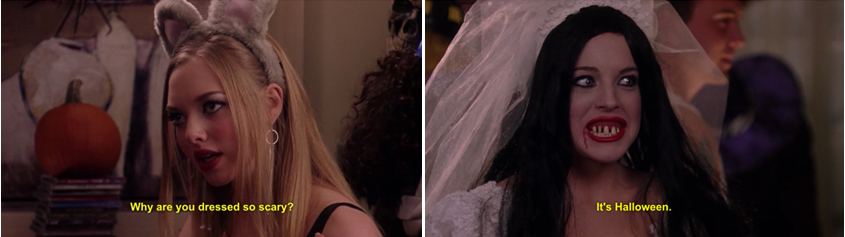
    Halloween, a favorite time of the year for folks young and old, including myself, is only one week away. This means everyone will start to see more and more people dressing up to take on an alternate identity of their choice for this odd “holiday.” While this can be fun, scary, and humorous for many, it can also spark conversation and controversy about respect for other cultures and touchy subjects. The ethical aspect of this holiday relies on the individual as well as the companies involved in marketing costumes that could be considered unethical or offensive. A person’s costume choice is a reflection of their own ethics and overall respect for people of all cultures.
    image
    Contextual communication ethics can help broaden people’s views to recognize how important it is to consider the wide variety of culture, persons, and communication settings in order to find appropriate attire and props for this holiday. Halloween costume ideas like “Indians,” “terrorists,” or “hillbillies,” perpetuate often negative stereotypes about these groups of people. By wearing someone else’s culture as a costume, it is subjecting the members of that culture to stereotypes that may be offensive, and might be seen as belittling or mocking them. Ling Woo Liu, a member of the Asian American civil rights group, disagrees with the marketing of these types of costumes, making the point, “We’re a culture, not a costume,” in a Time (business.times.com) article by Brad Tuttle.

    Retailers like Pottery Barn have agreed to stop selling costumes that they consider to be offensive, racist, or unethical, due to protest from activist groups like Asian Americans Advancing Justice. The problem is not just the articles of clothing themselves, but rather the fact that Pottery Barn is encouraging this type of unethical behavior by marketing these products for people to buy and wear. In response to the activists requests, Pottery Barn removed the costumes from in-store and online, in addition to offering an apology to those offended. Another example of a costume that was forced to get taken down by retailers would be the “Turban and Beard” costume that Walmart and Rite Aid were marketing to their customers, apparently resembling Osama Bin Laden, which were later taken down and apologized for as well.

    Due to the fact that retailers are being pushed to reconsider the content on their websites and in-store, it makes them face the outdated and often offensive views that tie their brand to this type of negative marketing. The content that these companies put out into the world ultimately reflects that company’s own beliefs. This means that the amount of backlash that retailers like Pottery Barn, Walmart, and Rite Aid received now puts them in an unethical position to continue marketing these ideas, and therefore, they must take these items out of stores and apologize to make up for it. Apologizing publicly is a step in the right direction to compensate for the negative image that potential customers now associate them with. It reassures the customers that the company does, in fact, have its eye open to contextual communication ethics.

    image

    http://www.theverge.com/2015/10/3/9440013/best-halloween-movies-television-shows

    While conducting research about this ethical dilemma, the question that seemed to be raised often was, “If this costume is so unethical, why do they sell it at the store?” Unfortunately, the response to that is grim: racism is deeply embedded in many of the traditions widely celebrated in the United States. Columbus Day (Indigenous Peoples’ Day) just passed days ago, which is another example of this. It is of individual responsibility to educate yourself about these sensitivities and the ethical consequences of subjecting yourself to the marketing of such Halloween costumes. From the article on Communication Ethics Literacy, chapter 3, “Culture is a contextual host to the practice of ethics’ concern for the good and its enactment are integral to culture (pg. 51).” This means that one’s understanding of how culture and context intertwine, ultimately means how much respect you will have towards that culture and strive to uphold their views in a positive way instead of a negative way.

    Through the education and attention drawn to this intersection of IMC, ethical communication choices, and the excitement of a fun holiday, new thought will help restore the ethical side of costume play to create a friendly, educated, and culturally-aware atmosphere. We must individually respect others and their cultures, because contextual communication ethics begins with “knowledge of the context aligned with the communicative necessity to be responsive to the needs of that context in a specific situation,” according to Ethics Literacy (53). So, as you prepare for costume ideas for next week, remember this article and skip the “sexy Indian costume” Google search this year. Have a safe and …

    image

    https://goo.gl/images/ZOkIrU / http://www.lovethisgif.com/image/110125/halloween-gifs

    – Nicole

  • How Sprint and Apple are Combining Communication Ethics and Marketing Strategies to Enhance Brand Awareness

    Advertisements are a huge factor when discussing Integrated Marketing Communication (IMC) and companies are moving more towards a new technique to intrigue their target markets. The “Push & Pull” strategies refer to the “Push” strategy that refers to placing the product or service in front of the customer via advertisement. While the “Pull” strategy refers to stimulating demand and motivating customers to actively seek out a specific product. This strategy is used by Apple and Nike corporations with their popular products and services advertised by celebrities and collegiate and professional athletes around the globe.


    sprint-framily.png


    For example, Sprint, a cellular networking company, is popular for their great family rates and cellular plans that are intriguing to consumers who have an interest in having great affordable rates. They specialize in mobile (SMS) text messaging that allows Sprint users to know the various special discounts and deals Sprint has to offer with various plans including saving on a maximum number of 10 lines on one plan. This Push strategy has helped Sprint maintain its customer loyalty with several of consumers who find their deals attractive among the markets.  Sprint is often using Communication Ethics to advertise their products by using visualizing characteristics such as professional and social responsibility and integrity. I often find it hard not to feel one of these characteristics when I leave a Sprint store, I feel amazed at the decisions I made and my overall experiences trying different cellular devices and accessories. So by using the Pull method of marketing, Sprint can attract their consumers to these certain characteristics through visual advertisements similar to the one displayed above.

    ipodnanoadvert_1092008.png


    The Pull strategy are usually common among established and popular brands. Companies with global recognition are advocating this strategy to create demand for their products with sales promotions, referrals, and coupons that are effective in terms of gaining consumers. Apple is the most popular with this strategy with their premiere launches of popular devices like the iPhone, iPad, and iPod. This company uses its products are the focal point to user interaction and by doing so you see long lines outside of Apple stores across the United States simply to get their hands on the next new product. The Push and Pull strategies are going to keep attracting ads and marketing using these techniques to find the interest of their target consumers, we as college students are exposed to advertisements in a lot of our daily lives and we often never look to see how companies affect our pockets through this particular marketing strategy. Apple refers to using Communication Ethics through their unique slogan “Think Different” which has always exemplified their funky, popular, and colorful styles that are often advertised by famous artists and sports figures. This method of Communication Ethics in terms of Apple’s marketing strategy is unique and visionary in taste to the average consumer on the market, this not only attracts those who are new to the brand but also those who stay loyal to the slogan and its true meaning of living and thinking “different.”  

    -Trevor

  • 90s Pop Comes Back

    For millennials we grew up with the greatest pop stars, Backstreet Boys, N’Sync, Britney Spears, Christina Aguilera, Spice Girls and many more. Of course we were devastated when they broke up and stopped creating glorious pop music.

    Image result for backstreet boys, britney spears, christina aguilera, Nsync

    We now get to believe in love again because Britney Spears and Backstreet Boys are BACK. Both having residency in Las Vegas, which started with Britney last year and Backstreet Boys to begin next year.

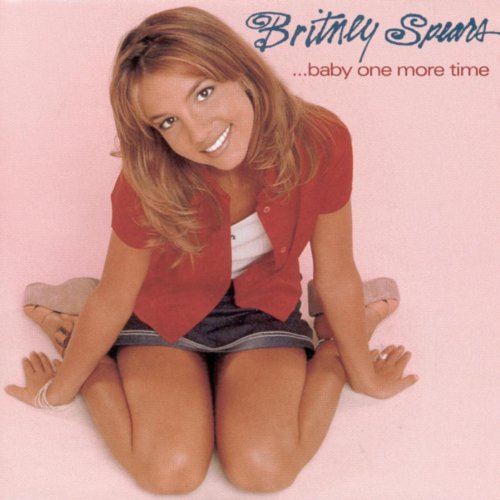
    Image result for baby one more time album cover

    We all remember Britney starting as the girl next door, slowly she started to shake that image with her album “Oops!… I Did It Again”. Luckily for us the Backstreet Boys kept their innocence before they split, being every mom and daughters dream.

    Since Britney’s start in Vegas she has proven she is the pop goddess we remember. She has signed another contract to extend her residency in Vegas. Maybe the girl next door image is gone forever but, she’s still creating new fans and keeping her fans from the 90s wanting more.

    Now we have the Backstreet Boys coming next year and we don’t know what to expect. There were images posted by two Backstreet Boys members, in the studio with Florida Georgia Line. Could they be doing country? This isn’t the boy band I remember, they were pop superstars. This may be their new image or maybe they are just trying out all avenues since they have a chance to recreate themselves. It’s too soon to tell if they will receive the love of the new generation but there are still plenty of 90s lovers that will buy their tickets!