Blog

  • Social Media Backlash Against Komen

    Not only do companies have to worry about negative blogs and reviews to control during an organizational crisis, but now they have to be prepared to control all sorts of social media outlets as well. Susan G. Komen had trouble with just that as they released information to the public on January 31st saying they will no longer provide Planned Parenthood with funding for mammograms for low-income women for breast cancer screening. Immediately this became a very controversial topic on social media sites such as Twitter, Facebook, and Pinterest. Many believe that this decision was made because of political pressure from anti-choice groups. This is exactly what Komen is denying and released a statement after many Komen supporters were posting very negative comments. This statement said that the decision to cut funding to Planned Parenthood was not a political move; instead it was because they now have new funding criteria.

    Interestingly, Komen and Planned Parenthood had been in contact weeks before this came out to the public. So wouldn’t you think Komen had plenty of time to realize things could get touchy? To make matters worse, Komen started to delete the negative comments on their Facebook page. What Komen did not realize is the political power of social media and many need to learn from this. When the Associated Press reported the news that funding was going to be cut, Planned Parenthood blasted news releases on Twitter and Facebook. Once Komen realized they couldn’t change the public opinion around or even slow down the negativity on social media, they reversed their decision to cut funding.

    At a time of crisis in an organization, your message and speed of that message is very important to insure the least amount of damage. Komen was not ready for this backlash of so many people on their social media sites and once they actually responded, it was brief and too defensive. On the other hand, Planned Parenthood prepared for this for weeks before it went to the public and immediately posted to get fans and supporters involved. Some ways they got supporters involved is by asking for donations, sign an online petition, to Tweet or post about it on Facebook, and since then has added over 32,000 fans. Clearly, Komen should have taken a different approach in handling their social media sites and the communication with their avid supporters.

    By: Laura Simmons, Mollie Berthold, Christina Stevenson, Dorothy Conley
  • Pinterested?

           What is it about Pinterest that has caught the fleeting attention span of the masses? Is it the artistic photos, the endless sources for inspiration, or the fact that is also happens to be one of the best new marketing tools out there? Pinterest is a relatively new player in the social media realm and has already become a high roller of sorts. What began as a small invite-only virtual mood board has morphed into a sensation with over ten million current users and that number is growing. Pinterest is captivating everyone: housewives, students, CEO’s, and even grandmothers are all looking to get a piece of the Pinning fun. Pinterest allows creativity to shine and includes everything from delicious recipes for every palate to the newest fashion-trends for every fashionista.
          Some super savvy brands have pounced on the Pinterest bandwagon and have utilized the site to their benefit. By posting pictures with a small pithy caption, companies have been able to drive traffic to their sites, inspire their consumers and begin a photographic conversation with their audiences.
       The most successful companies have learned to cross-reference all of their social media sites so that their presence remains connected and uniquely woven together across all platforms. In a post by Lauren Sorenson on The HubSpot Inbound Internet Marketing blog, she identified seven brands that are utilizing Pinterest particularly well and explains what it is that makes their Pinterest presence so fruitful. Sorenson explains that brands like Chobani and Etsy are not simply promoting their companies, but promoting their brands as a lifestyle.Pinterest’s highly visual element allows people to peruse not just products with a price point like most websites, but to discover a company’s visual aesthetic and participate in the Pinterest relationship by repining, commenting and liking pins and boards. Pinterest has done an incredible job of taking a photographic compilation and transforming it into a highly interactive website that allows companies to participate with their audiences in a new, exciting way.
          Pinterest members are also forging their own personal brands by compiling individual products to represent different facets of their lives. Some of the most common board titles are “My Style,” “Wedding Bells,” “Travel,” “Wish List,” and the scrumptious “Nom Nom” food genres. Users browse the web and other pinners’ boards to gain new additions to their ultimate brand endorsement. The products pinned to “Wish List” boards gain a desirability and the items repinned create a sense of community among those who highlight the same things. These boards act as a network of products brought together by the consumer. Ultimately, a users Pinterest page is a sort of personal brand profile that allows the user to create an image of not only their present self but most importantly, the consumer they want to be.
    By: Kacy Cox, Alexis Kapczynski, Sara Kaloudis, Josh Bowman
  • Valentine’s Day Technology

    Love. Flowers. Chocolate. Hearts.  All of these words are associated with Valentine’s Day.  However this has not always been the case.  How has the brand of “Valentine’s Day” evolved from simply spending a day with that special someone to a day filled with all-things chocolate, bouquets of flowers and days at the spa?  Well, obviously, with the advancement of technology things are becoming more digitized, but does it make the day any less sentimental?

    Valentine’s Day started as the celebrating of the life of St. Valentine.  In today’s society, February 14th is the second most gift giving day of the year.  We have lost sight of the meaning behind the date, much like the other holidays. Diamond and jewelry companies, restaurants and even phone carriers like AT&T, Verizon and T-Mobile are finding ways to boosts sales for the day of love.  Phone companies claim that women want new smart phones rather than candies or to spend the day with your special someone.  We can send eCards to loved ones, we have apps that can send messages and give gift cards to go to grocery stores.

    It’s time to face it.  Valentine’s Day has lost some of it meaning and big brand companies are saying that their products are what we want now.  No more chocolates, flowers, candies… They want cell phones and gift cards.  The times have changed and along with it, ways of expressing an affinity for each other, but has the passion behind the special day lost it’s charge?

    Want to find out more about the origin of Valentine’s Day?  Click here!

  • Oh Red, How I Love Too

    There are many legends and stories explaining the history of Valentine’s Day and St. Valentine, but one thing remains the same; Valentine’s Day is a holiday where lovers express their affection for one another.  Every year marketers use the same tactics to attract their love struck consumers into the arms of their products. Valentine’s Day advertisements are flooded with hearts, flowers, and of course the colors of love: red and pink. Red and pink symbolize passion and tranquility and are considered the most romantic colors. However, the appeal of generic pink candy and red roses will eventually run its course. So it’s time to spice it up and show your love that you put some real effort into this Valentine’s Day.

    M&M’s are promoting their brand this Valentine’s Day season by offering a sweet alternative to help consumers express their feelings to their loved ones.  The commercial features “Red,” the helpless romantic candy bite, who cannot respond to the love of his life with the three words, “I-Love-You.”  M&M’s understands that it is not always easy to express your feelings. With that in mind they are here to make it easier with personalized M&M’s. Popular messages include “Be mine,” “You make me melt”, “You Had Me at Hello” and “I Love You.” M&M’s also features a prepackaged Valentine’s Day blend with an assortment of colors, sayings and symbols. If that won’t cut it the Romance Bundle may be for you. It comes complete with a teddy bear and three bags of personalized M&M’s wrapped up in a gift box.  Remember, personalization shows that you took time out of your glamorous day to care!

    Through this strategic marketing plan, M&M’s enhances their brand by making it convenient for their consumers to spice up Valentine’s Day. M&M’s are one of the few companies that offer personalized messages on their candy products. This allows the company to stand out against the assortment of chocolaty competitors. Keep in mind that personalized candies aren’t just for Valentine’s Day, but also for any of life’s sweet moments.

    -Kelsey Bendig, Andrea Blanton, Brooke Keller, Brian Burch

  • Valentine’s Day goes green for beer?

    Asian night clubs, beer, sword-fighting, and the color green are not what people would typically refer to as romantic or associate with Valentine’s Day. However, this year Heineken has decided to market its product unconventionally by creating a campaign based on Valentine’s Day.

    Heineken’s Serenade campaign has videos of a man and woman on a first date, running and dancing through an Asian night-club with jazz music. The man on the date is charming and wows the woman with his skills of swordsmanship, popularity and dancing. At the end of the video, the man and the woman both drink a Heineken and the phrase “open your world” pops on the screen. The video gives the impression that Valentine’s Day can be enjoyed by both sexes in far more exciting ways than the typical flowers and chocolates. Heineken rebrands itself as a more adventurous way to enjoy the holiday and for couples to open themselves up to new possibilities, while remaining appealing to both women and men alike.

    Another aspect of Heineken’s Valentine’s Day campaign is the Facebook app which creates a personalized video for users to ask a friend out on a date through a song. This service promotes Heineken as a matchmaker of sorts. While the videos satisfy the users’ needs of asking out their romantic interests, they also give Heineken greater exposure. As Facebook users see the videos on their friends’ profiles, they will notice that Heineken created the video. The more that people see the advertisements, the more likely they will think of Heineken the next time they purchase beer.

    Heineken has certainly taken an unconventional approach to marketing itself during the Valentine’s Day season. Unlike other companies sticking to the traditional concepts of love and romance, Heineken has chosen to use the holiday as a chance to market itself as an adventurous matchmaker. If the campaign proves to be a success, it is possible that we will see many more companies choosing to taking this unique approach to marketing their products in future Valentine’s Day seasons.

    -Ashley Oliver, Molly Jacques, Hunter Wilson, and Josh Vester

  • Have a Sexy Valentine’s Day, Gorgeous!

    A week from today, one of the most commercialized and superficial holidays will occur: Valentine’s Day. For those of you who are one half of a couple, Valentine’s Day is all about making your significant other happy, whether it involves showering him/her with gifts, making dinner reservations, or planning exuberant and normally unnecessarily expensive dates.

    The beginning of February marks the time when store fronts become clad with hearts, cupid cutouts, and pink and red streamers.  Around this same time, we begin to see an increasing number of men lurking around lingerie stores, especially Victoria’s Secret – and for good reason.  Victoria’s Secret has a dramatic increase in sales during the season of romance. With their sexy print ads in magazines, their silky almost-obscene commercials, and their free “Lacie Pantie” giveaway, what man in their right mind would avoid giving their girlfriend/wife the gift of sexiness?

    In their 2012 Valentine’s Day campaign, Victoria’s Secret Angels clad in pink and red barely-there bras and panties have advertised to their customers that with the gift of anything from their line of lingerie, their Valentine’s Day celebrations will be fabulous. In their sneak peek to their photo shoot, the Angels prance around in their under garments, smiling, laughing, and selling the ideas of sex and playfulness. In interviews, the girls claim that any man could win their hearts on Valentine’s Day by picking out something from the Victoria’s Secret shelves. One even says that if a man chooses something that he likes, it will give plenty of hints to his significant other.

    Not only does this campaign appeal to male shoppers, but it also appeals to women. The Victoria’s Secret Angels encourage their customers to feel sexy, and by offering specials, free panties, and coupons during this season, women will certainly be able to feel like Angels.

    So whether you are shopping for a significant other or are planning on spoiling yourself with brand new sexy lingerie, Victoria’s Secret will certainly be the place to shop this romantic season.  And don’t forget to have a sexy Valentine’s Day, Gorgeous!

    Love always, Christina Stevenson, Mollie Berthold, Dorothy Conley, & Laura Simmons

  • All The Single Ladies

    Valentine’s Day is a holiday dreaded by a great deal of people, both male and female, for various reasons. There is pressure on both genders to perform, declare emotions, and out-do previous years or expectations. Those who fail at this task of grandstanding may in fact find themselves without a date for next year. Okay, so there’s a ton of pressure on people in relationships, but what about those of us who are single? While some take pride in their solitude, others wish they had someone to be their valentine, and a few twitch at the mere thought of being in a relationship.

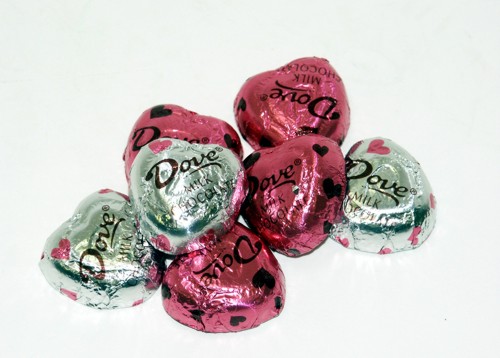
    According to an article in the New York Times, being single is a prevalent occurrence these days with 59.9 million single women in America. This staggering rate may surprise some, but companies like Dove chocolate see these table-for-one ladies as a prime marketing demographic. They hope to strike a chord with this growing independent group by catering their advertising to the women who are without companions. That is why this year Dove has made a campaign to remind women Valentine’s Day isn’t just about romance.

    Dove is banking on the stereotype that single women will turn to chocolate this year on Valentine’s Day. Instead of the standard “Call me” or “I’m yours” found on the candy hearts we used to share with our playground crush, Dove has created a host of witty comments and placed them on the inside of their chocolate wrappers. Some of the best include, “You’re gorgeous,” “Sometimes I buy flowers for myself,” “My flaws are fabulous” and even the ever so uplifting, “Love yourself in a moment.” The new commercial features women sharing their Dove chocolates with everyone from their barista to their neighbor, and most importantly, themselves. Is this a message of independence for the strong woman? Or rather, a cheap ploy based upon the assumption that women alone on Valentine’s Day will inevitably console themselves with chocolate? Either way it’s hard to dislike chocolate, especially when it’s making single girls smile and promising not to judge if we have more than one.

    By: Alexis Kapczynski, Kacy Cox, Josh Bowman, and Sara Kaloudis