Blog

  • Drink Neuro: Functional Beverage, Functional Branding?

    Founded in 2007 by Diana Jenkins, Neuro has become a premium functional beverage.  The beverages slogan “Light it Up” hints at the drinks infusion of science to spark the body’s reaction in order for consumers to live and not merely exist.  Neuro provides a beverage that ignites your passions and stimulates your mind, fueling consumers to live life in color.  Neuro created a beverage for a healthier life through vitamin D and appetite control.

    Image

    The creator, Diana Jenkins creatively designed each Neuro bottle to be fully recyclable.  There are 8 flavors of Neuro water, all only 35 calories, and none contain artificial flavors or colors.  Some of the flavors include neuroTRIM, which slows your appetite, neuroSONIC to increase your ability to focus, neuroSLEEP to help you rest, and neuroGASM, which makes your blood flow.

    Do these drinks actually do what Neuro promotes or is it just a giant branding stunt to help sell their product?  According to warnings on each bottle or Neuro, the statements made by the company have never been evaluated by the Federal Drug Administration and are not to be used as daily supplements.  This makes it seem that the statements made by the company are purely for branding purposes and to catch the consumer’s attention.

    Following these claims Neuro has completed other stunts in order to hitch their brand image.  We all know the saying sex sells and Neuro hopped on the idea by publishing photo shopped images of half naked women covered in Neuro beverages.  By surfing the Internet for Neuro ads there are three main photos of headless, half clothed women, all which read “It’s All About You.”  Are these photos also how they hope to create their brand image or is it just another way to draw attention to their product?

    Image

    Neuro is a fairly new product and company; it is vital that the company produces a strong brand image.  It is those companies who are able to create that positive brand image that successfully compete with competitors.  Neuro sounds like a new trendy beverage but are they employing the right tactics to brand themselves effectively.   Neuro is a functional beverage but are their branding methods functional?

    Jessie Butner, Meaghan Beam, Zach Abramo, Jack Lane

  • Walmart: A Rebranding Genius.

    Consumers all over the world are becoming more savvy and sophisticated with each passing year. In order to survive in today’s marketplace, companies have to update and revitalize their identity while retaining brand equity. This is the unavoidable challenge that companies must face. Brands are struggling to maintain relevance in the eyes of evolving consumers and even the most established companies have to undergo brand re-inventions. Losing loyal customers in an effort to attract new ones is always a pitfall of making a possible change for the worse… but that’s just a risk many brands are willing to take.

    Walmart had one of the most successful rebranding campaigns ever. It is the world’s largest retailer and one of the most distinguishable brands in history. Since its first store opening in 1962, Walmart has evolved from a rural American company to a globally recognized corporation. Historically criticized for having hostile corporate practices, mistreating employers, and being a target for environmentalists, Walmart reconsidered their brand identity and took action in creating a fresh image for their company.

    In 2008, Lippincott brand designers developed a strategy to shift the focus of Walmart from just low prices to an overall positive shopping experience. They unveiled the new tag line “Save money. Live Better.” to highlight the emotional benefits of shopping at Walmart. They hoped to get the message across to consumers that spending less allows people to live better lives, not only save money.

    Image

    A new logo and innovative store design was also implemented. The logo no longer showed a choppy, antiquated Wal-Mart; it now showed a fluid, refreshing Walmart. The star in between all caps was replaced by a bright orange starburst for a finishing touch. The new store design included higher ceiling, lower shelves, wider aisles, and a color palette of vibrant orange, yellow, and green. The signaling of Walmart’s appetizing products in the grocery department and the creation of a more enjoyable and friendly shopping environment was the goal of the new design.

    Image

    This rebranding campaign proved to be a tremendous success for Walmart. The customer ratings for how “clean,” “fast,” and “friendly” Walmart is increased radically between 2008 and 2010. Not even the Walmart haters can deny that in the world of branding, Walmart takes the crown.

    Erin Kiffmeyer, Hannah Eure, Ally Walton, Lauren Habig, Eugene Lee

  • BOBS vs. TOMS

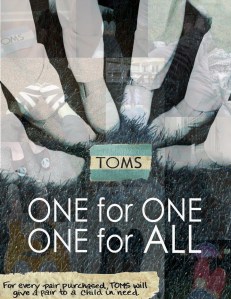
    When discussing brand identity, two important points are the “how” and the “why.” Why a business does what they do, and how they do what they do; the motives and the execution. A brand like TOMS shoes gets consumers hooked with the why. Blake Mycoskie was visiting a village in Argentina when he encountered the effects of poverty. He was forced to confront the number of children without shoes. This inspired him to start a new kind of for-profit business, one that donates as much as it sells. Thus, the TOMS shoe company was born with the slogan, “One for One.” With every pair of shoes purchased, TOMS donates a pair to children in need.

    When the company began it was a risk. One that was not promised to prosper, but had good intent. The company began with three basic colors of the same type of canvas shoe, and has now expanded beyond Mycoskie’s wildest dreams. The brand identity of TOMS is simple: give. As Mycoskie states, “Incorporate giving into everything you do.” So what happens when the giver meets the thief?

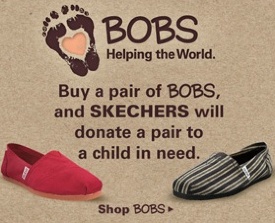
    Skechers is infamous for stealing other shoe companies product concepts. For example, in 2009 Reebok launched the “EasyTone.” In 2010, Skechers launched “Shape-Ups.” Both shoes were designed to provide the same benefit of turning everyday activities into an easy way to get fit. Now, Skechers has released a line of canvas shoes called “BOBS.” The shoes are nearly identical to the TOMS design and sport the same promise of donating a pair of shoes to children in need with every pair purchased.

    The problem is the public hasn’t accepted BOBS with the same open arms that TOMS was embraced with. BOBS has stolen the “how,” but lacks a convincing “why.” Has the thief gone too far this time? The reviews on BOBS have been less than satisfactory. The Skechers company has been called everything from fraudulent to mean-spirited. Their brand identity has been tarnished for their latest rip-off which seems to have struck a deeper chord with the American market.

    Does it matter? The kids who need shoes are still getting shoes. Do they care if the label on their shoes reads BOBS or TOMS? Should we?

    Alexandra Huss, Caroline Merrill, Alyssa Morrello, Lauren Van Trigt, Dann Williams

  • Celebrity Branding Through Social Media

    Nowadays, there is a wide variety of ways to advertise and promote one’s image as well as many products through personal branding. Celebrities are among the first to take advantage of the new social media phenomenon to further promote themselves and products they have endorsed.  Social media outlets such as Facebook, Twitter, YouTube, Instagram, Tumblr, Pinterest, etc. have been in a state of constant growth, as they cater to both the average consumer as well as celebrities. Interconnectivity has played a crucial role in keeping celebrities globally connected to a wider public in order to further promote themselves and gain a higher level of exposure.

    When it comes to many things such as self-branding and the use of social media, one must elaborate a thought-out, cohesive strategy in order to achieve optimum results. First of all, it is important to keep in mind that not all celebrities wish to accomplish the same thing through their social media outlets.  There are many reasons for a celebrity to join a social media site, from simply connecting with fans to promoting a product or event.  Also, each social media medium serves a different purpose and targets a more specific audience. In a recent trend, celebrities have been representing themselves by “opening up” and increasing their level of self-disclosure through many forms of social media. This could be due to the fact that it is believed that social media can be used to build trust with fans as well as build and develop a more personal connection with them by allowing them to see the “real” superstar.  For example, it is difficult to feel a personal connection to President Obama.  By following Obama on Twitter or Facebook, one might feel that this personal relationship has greatly improved.  Not only is this beneficial for the average American, but it could indirectly help Obama.  For example, someone that does not currently have a stance on politics could follow Obama on Twitter, like what they see, and vote for him in the next election.  This is just one example that portrays that social media outlets are a powerful, mass communication tool.  That being said, it is important for one to remain very conscience about what they say.  It does not take much for a tweet by a celebrity or political figure to create a huge controversy, whether or not they intended it to.  We sometimes forget that celebrities are human beings that make mistakes, and one of these mistakes could be by putting too much personal information on the internet.  Voicing an opinion can easily offend many other people.  The celebrity could in theory remove the tweet, but that does not mean it will be deleted from the Internet.  With the millions of followers many celebrities have and the fact that celebrities tend to keep social media outlets as public as possible, almost anyone could snap a screenshot of the tweet immediately and continue to circulate it through the web.

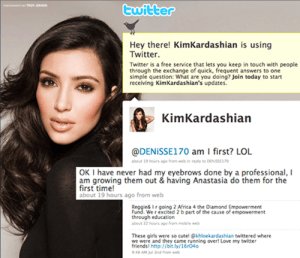
    While there are disadvantages for celebrities putting their lives on the World Wide Web, outlets such as social media can also be used as a free type of advertising or promotion.  Almost all main-stream celebrities have utilized multiple forms of social media from blogs to Twitter.  Britney Spears, Kim Kardashian and Justin Bieber are all examples of celebrities that have endorsed various products and used social media (more specifically, Twitter) to promote them. This has shown to be an effective marketing technique at little or no cost to them.

    Not every celebrity endorses a certain product, but they do essentially brand themselves when they decide post on social media sites.  Whether they mean to or not, the content they post reflects their personality and in turn, allows followers to characterize them.  Mastering how to effectively brand one’s self on these sites has in essence became a modern day art.  In today’s day and age, a social media suicide could destruct the celebrity’s image as a whole.

    Sasha De Vecchi, Lindsay Gallagher, Jay Reilly, Cary Welborn

  • Remember When… “Apple” Was Just A Fruit?

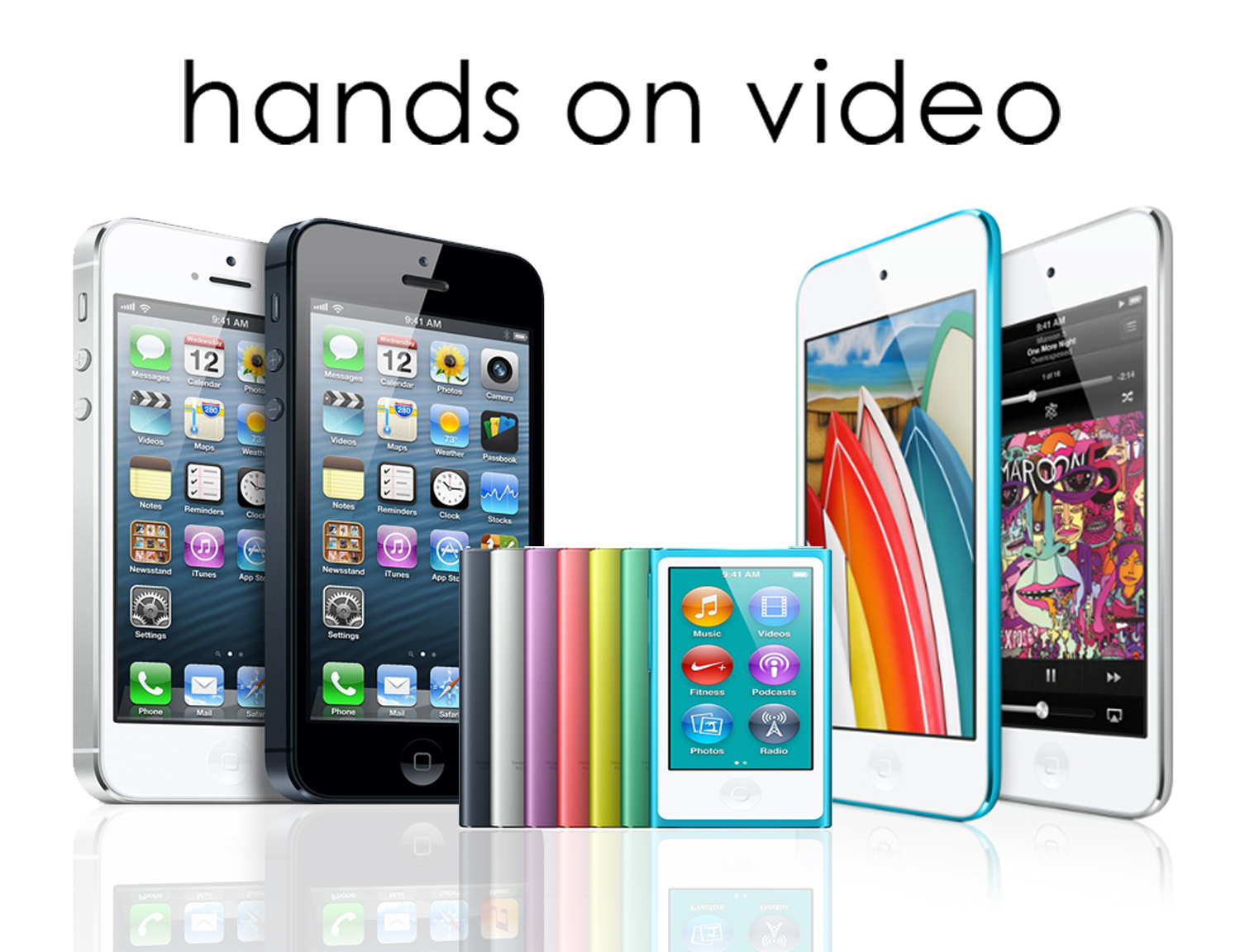
    Who could forget the first time we were able to hold hundreds of songs from our entire CD collection in the palm of our hand?  Or how about the first time we could browse through every artist in our musical arsenal with a gentle swipe of the thumb?  Today, Apple has taken the world by storm with a variety of products that all date back to the original iPod MP3 player, which was released on October 23, 2001.  This sleek invention took the world by storm by allowing people to store hours upon hours of music into a relatively small device that could easily fit in your pocket.  The era of cassette tapes and Walkman CD players had reached an end after the iPod hit the shelves.

    Image

    Almost six years later, on June 29, 2007, Apple had another technological breakthrough with the release of the highly anticipated iPhone.  The iPhone was a combination of an iPod, phone, camera, and mini computer and gave consumers a more media based alternative to the then popular Blackberry.  People were now able to make phone calls, listen to music, take pictures and surf the web with one sleek, pocket-sized device.

    Since then, Apple has consistently raised the bar by releasing new versions of the iPod and iPhone with new features and abilities that keep people wondering, “what will they do next?”

    On Wednesday, Apple unveiled the newest generations of the iPod touch, iPod nano, and the iPhone 5 to a public who was highly anticipating the “next big thing” in the technology market. Although the new iPod touch and nano caught a lot of attention with their new sleek, colorful design and advances in features such as the camera and the display, the iPhone 5 was the hottest topic.Image

    Over the past year, Apple fanatics have been wondering how the iPhone 4s could ever be topped. Before the unveiling, there were rumors that the iPhone 5 would come in many different colors, have a larger screen, and be made of liquid metal. After all of the hype, everyone fell silent around 10:00am on Wednesday, September 12, 2012 and finally caught a glimpse of the newest iPhone. Although it does not come in colors or liquid metal, the iPhone 5 has some notable changes in appearance.  At 7.6 mm thin, the iPhone is the thinnest and lightest smart phone on the market. In order to make the phone even lighter, the touch screen has also been altered and layers have been removed, increasing the clarity of the screen. Although the phone is thinner, it is a bit taller than the iPhone 4 and iPhone 4s.  Borrowing from the extremely popular MacBook, Apple has chosen to make the iPhone 5 from a combination of aluminum and glass.

    The sleek, sexy new design is not the only advantage of the newest iPhone.  For the photographer, Apple has included a camera with the ability to take panoramic shots, record HD video, and make edits.  Everyone’s favorite celebrity, Siri, has gotten even smarter than before and is capable of answering more questions.  A new application, called Passbook, is there to keep all of your tickets, boarding passes, and gift cards in one easy to reach spot.

    The iPhone 5 certainly has major developments, but will it be enough for people to trade in their iPhone 4s? Apple is marketing their newest creation as “the biggest thing to happen to iPhone since iPhone.” Many people believe that Apple has a tendency to sell society things they never realized they really needed and wanted until Apple told them it was important. Will their marketing techniques work? Or will people settle for holding on to their iPhone 4s for a little while longer?

    Jessie Butner, Meaghan Beam, Zach Abramo, Jack Lane

  • Remember When… Cupcakes Were Just for Kids?

    Think back to your elementary school days.  Were you one of the “lucky ones” whose birthday happened to fall on a school day?  If your parents were anything like mine, this probably meant having the honor of bringing your class a huge batch of store-bought (or on the rare occasion, homemade) cupcakes.  Right now you’re probably picturing them, covered in sprinkles and icing that turned your mouth bright colors, maybe decorated with plastic Barbie or Spider-Man rings that everyone would wear for the rest of the day.  Back then cupcakes could make you king or queen for a day, at least in the eyes of your classmates.

    Image

    Nowadays cupcakes have a different reputation.  An exceptional batch could win you $10,000 and instant fame.  Thanks to television programs that highlight the new art of cupcake baking, these mini treats are taking the country by storm, and it’s not just the kids that are buying in.

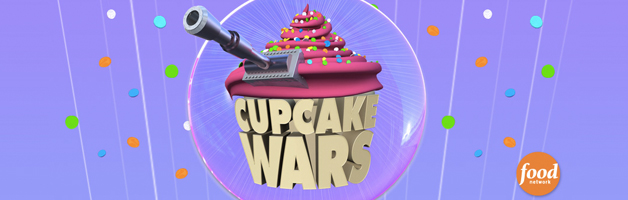
    In 2010, the show “Cupcake Wars” began airing on the Food Network.  Each episode brings together 4 top-rated cupcake bakers from across the country to compete for $10,000 and the chance to debut their cupcakes to crowds of America’s elite at events such as awards shows and charity parties.  The list of ingredients these bakers are given ranges from fruits and nuts to chili peppers and vodka and the finished products are a far cry from the yellow cake and chocolate icing of our childhood.

    The popularity of cupcakes is rapidly spreading and the evidence is popping up in cities nationwide.  Cupcake bakeries that specialize in traditional, exotic, and chic flavors are now conveniently located next to your favorite coffee shops and boutiques.  These bakeries are rebranding the phenomenon of the cupcake with unique flavors and styling that aim to please a more adult crowd.  Not only are they a pleasure for the palate, but cupcakes these days are like a new accessory.  They can be as high-end as the bakeries that produce them and the clientele that consume them.   A cupcake bakery called Georgetown Cupcakes, also famous for a television show that airs on TLC called “DC Cupcakes,” has catered to clients such as Kim Kardashian.

    ImageHowever, it’s not just the ingredients or the celebrity that make cupcakes more appealing to adults.  Now, anyone over the legal drinking age can partake in fine cupcake-inspired wine and vodka produced by Cupcake Vineyards.  Why not pair your cupcake with a glass of wine?  Bakeries and other specialty shops now host cupcake and wine tasting events where adults can mingle and the two indulgences can be enjoyed side by side.

    So is this new trend something to expect from all of our childhood favorites? Will popsicles be the next big thing?  Leave it to the media to help us decide.  Until then we might as well have our cake, and eat it too. Bon appétit!

    Ally Walton, Lauren HabigErin Kiffmeyer, Hannah EureGene Lee

  • Remember When… Social Media Was Not Overrun With Ads?

    Do you know how to transfer your buddy list? What is your Myspace song today? Why did you lower me in your Top 8? Where did you get your buddy icon? Remember when these were your biggest worries on social networking? Nowadays, a social networker must be fully aware of everything they post, every picture they are in, and even everything they click on.                            Image

    When social media first began, it is doubtful that anyone could have predicted where it is today. Employers search Facebook, Twitter, and LinkedIn before hiring new staff. School systems are implementing cyber bullying policies across the nation. Even our parents are sending us friend requests. It is hard to come by someone who doesn’t have a Facebook or Twitter. Due to the popularity of social media, it is no surprise advertisers want to tap into this huge online market.

    Image

    What began with AOL Instant Messenger, evolved into the Myspace fad, and now Facebook, Twitter, FourSquare, Pinterest, LinkedIn, and Instagram have joined the scene. After Myspace died out, there was much debate about how long Facebook would last. With the help of advertisers, it seemed like it could potentially last forever. Unfortunately, with the rise of other social networking sites, Facebook has seen a less than desirable decline in popularity. Now Mark Zuckerberg, the CEO of Facebook, is having to persuade advertisers to continue investing. In an interview covered by ABC News, he “[promised] better results as Facebook’s mobile app is made friendlier to advertisers.”

    What does this mean for users?  More advertising headed your way! If you’ve seen Facebook’s login page lately, you might notice that it has officially been sold. It is hard not to notice as it takes up more than three-fourths of the screen. When Myspace sold their front page, it was the first sign they were not cutting it anymore. Does this mean Facebook’s “in” time is ending soon too? Not if Zuckerberg can help it.

    You might notice the sidebar ads following more closely to your internet searches. As Facebook tries to evolve to keep up with the market, Zuckerberg stated that he would like to make Facebook a search engine that could compete with Google. It is no coincidence that the items you were looking for on Amazon a couple of days ago are popping up in the ads you see on Facebook.  Long gone are the innocent days of simply “lol”ing with your buddies on AIM.  It seems now more than ever before the public will become a constant target for advertisers.

    Will this increase in advertising on Facebook lead to a shift in which social network is the most popular? Will Instagram and Twitter combined be able to wipe out Facebook? Would it even matter because Facebook owns Instagram? Or will the dark horse network, Google +, take the internet by storm?

    G2G. Mom needs the comp. TTYL 🙂 ❤

    Alexandra Huss, Caroline Merrill, Alyssa Morrello, Lauren Van Trigt, Daniel Williams