Tag: iPad

  • Give Thanks for Brand Names

    On this Black Friday, like every other Black Friday before it, shoppers look forward to the best deals. Everyone wants the most they can get for the least they have to pay. Sure Thanksgiving was only a day before, but once the clock strikes midnight, all thoughts of Thanksgiving have left and the pressure of buying Christmas gifts have set in full-force. Black Friday is a day of ultimate competition between brands with similar target markets. Businesses want people to buy products simply because for today they can afford it, not because they necessarily need it. There is a balance that every business and shopper alike struggle with. This is the balance between quality, quantity, and price of a product. Black Friday is the day that no one has to struggle so much with this balance. Today marks a delicate exposure of brands and how low they are willing to go price-wise to beat out the competition but still make a hefty profit.

    It might pain a business to hang up those 50% off signs, but they must remember it is only for one day and in this one day, they know they will have more business than possibly any other time of the year. So why is it that while other stores are giving promos for additional percentages off purchases and knocking prices left and right while brands like Apple are “pushing it” to give $61 off a $600 product? This is what happens when your brand name is seemingly more valuable than the products themselves. Sure you can go to Best Buy and purchase a knock-off iPad for a quarter of the price, but when Black Friday is over, you are going to be wishing you had the apple logo on the back of the tablet. For the thrifty buyers whose ranking from most to least important is price, quantity, and quality, the fact that Apple does not subject themselves to sales and price slashing means that they will not be purchasing Apple products. However, if you have developed a brand loyalty for a certain brand name and you know whether that product is on sale or not you are going to buy that product, then Black Friday is exciting for you even if the sale is next-to-nothing. At the end of the day, you wind up $61 richer than you would have been.

    -Claire Dillard, Liz LaPuasa

  • A World Without Jobs

    When you think of the economy, you think jobs. When you think of the current status of the economy of the United States, you think “we have no jobs.” But, have you ever thought about a world without Jobs?

    Just over a month ago, the CEO of Apple Inc., Steve Jobs, stepped down from his position as the head of one of the most powerful companies ever to exist. Amidst health issues, Jobs resigned from his job as possibly the most brilliant and innovative software developers and business man of all time. When this happened, Apple enthusiasts’ around the world stopped to ask themselves, “what will Apple be like with no Jobs?”

    Just a little over a month ago, we considered Apple to be at a loss for losing Jobs, yet now the entire World is grieving over the passing of Steve Jobs. Yesterday, the 56 year-old mastermind behind the Macintosh Computer, the iPod, iPhone, and the iPad, passed away ending his battle with a rare form of pancreatic cancer.

    While we sit and listen to our iPod’s and play Angry Birds’ on our iPad’s and call our friends from our iPhone’s, we have a piece of Steve Jobs with us. While much of the nation remains unemployed and our economy’s fate is unknown, we can be at peace knowing we got to experience Jobs before he was gone.

    — Jordan Hill, Michela Noreski, Ashley Nelson

  • Not So Fast Apple

    Believe it or not, Google is nipping at the heels of Apple in smart phones and tablets. While in some circles Apple has won the popularity contest with Blackberry they have had some serious competition from Google’s Android network. According to Eweek.com 2,200 application developers were polled by Appcelerator and IDC. The polling revealed that 87 percent of responders were very interested in writing apps for smart phones compared to 92 percent for the iPhone. The iPhone is still king in the market place we are starting to find that application developers are eager to work with the Android network. There is still growth for the Android in the tablet market.

    The Google Android 3.0 Honeycomb was introduced at the 2011 Consumer Electronics show and is going to make a splash in March 2011. Respondents from the Appcelerator-IDC say they are very interested in developing for the Android tablets. They claimed that price was the most important factor, and most want to develop for the Android 3.0 Honeycomb. As you can see the Honeycomb’s popularity keeps growing daily before its release. The most impressive part about the Honeycomb is the tab browsing which you can sync with your Google Crome Bookmarks. The selling point for the New Android tablet is multi-tasking.

    It seems that 2011 is ushering in new competition for Apple. Google is growing by the minute and while I love the versatility of my Blackberry the Android phones seem to have a lot of potential. Apple is on top of the market, for now, but this could be a big year for Android. The brand competition between Apple and Android is something we will be focusing on all semester, and as Google continues to grow I expect Apple will adapt to its market.

  • Are Apps Changing the Way We Do Business?

    Technology giant Apple is once again in the news this week.  No, they haven’t come out with a new iPhone and the new generation of iPads are not yet available; the company has sold their 10 Billionth App.  Yes, you read that correctly BILLION!  On Saturday Gail Davis, of Orpington, Kent, UK, downloaded Paper Glider (a free App) making history for Apple and also making her the winner of a $10,000 iTunes gift Card.

    Apple’s Apps, short for applications, can be downloaded from the App Store on iTunes onto iPhones, iPads, the iPod touch, and now even your computer.  Ranging from free to $999.99, these popular downloads can help you with everything from finding a place to eat, translating words into another language, making dinner reservations, entertaining your child, studying for the California Bar exam (in case you were wondering what the most expensive App does) and anything else you can possibly imagine.

    The popularity of Apps has many retailers and other businesses taking notice and developing Apps of their own.  Apps have become yet another tool for them to reach target audiences and perhaps gain new ones.  Everybody from car insurance companies to retailers to airlines have developed Apps hoping to target new audiences and keeping the attention of existing customers. This trend has even spawned a new way of doing business, m-commerce.  Similar to e-commerce, or shopping online, m-commerce is shopping on your mobile device.

    This new form of business, ushered in by Apple’s introduction of the App, is changing the way companies market themselves.  In the age of Apple’s i-products, the standard practices of print and media ads aren’t going to cut it.  Companies must adapt and incorporate practices such developing Apps if they want to continue to remain relevant and build their customer bases.

    -Eliza Wadson

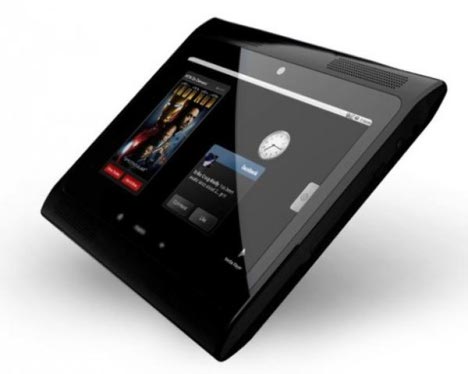
  • Tablet here, tablet there, tablets everywhere!

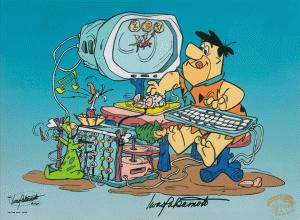
    What in the world is a tablet? Last I checked, tablets were being used in the Flinstones to share information and, somewhere along in the Bible, Moses used them to share everyone’s favorite commandments.

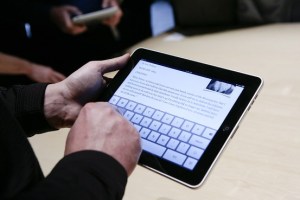
    It all started with a device known as the Kindle. A simple, yet very effective e-reader created by Amazon. Its target market audience was certainly specialized in the sense that the only people purchasing this product would be those that could see the Kindle aiding in their avid reading habits. Then something happened. Technology-friendly giant Apple revealed to the world the iPad: basically a really, really ginormous iPhone. And what a success it has been. The iPad has sold over 2 million units. That translates to an iPad being sold every 3 seconds. Apple knew exactly the amount of lure and desire its iPad product would have on its loyal Apple customers because, as you may know, it costs a company five times as much to attract a new customer rather than to invest in the loyalty of its current customers. The amount of marketing and advertising that Apple has done for the iPad has exceeded well beyond any other tablet competitor on the market. The way they advertised it was also pretty ingenious. They marketed their product by showing the relevance of the iPad and how similar its functioning was to a laptop and PC; but it is perceived as cooler, sleeker, and geared towards the ever-evolving, fast paced, give-it-to-me-now technological society.

    So naturally, with the success of the iPad, came the injection of other technology giants to capitalize on this groundbreaking movement that somehow seems to be the next phase in this apparently unstoppable migration from big, clunky PCs to sleek, portable tablets.

    At the 2011 Consumer Electronics Show (CES), an unprecedented 45 new tablets were unveiled as being in the developing stages or already being moved into production. This mass influx of tablets is going to prove to be quite the competition for these companies as they begin to advertise and market their products towards consumers. One of the most important questions that all of these corporations are going to have answer is, “Why would someone need a tablet if they already have a laptop?” Apple seems to have already answered this question with the amount of exclusive user friendly applications designed specifically for their tablet that literally, cannot be accessed on any other device.Relevance and receptivity are going to be major components of the five Rs (relevance, receptivity, response, recognition, and relationship) of IMC that need to be addressed by companies somersaulting into the tablet arena. When will customers and prospects be most receptive to advertisements about tablets and at what point of brand contact will the customer be most receptive to the incentive to buy a tablet?

    It is going to be quite interesting to see how the market changes with this upcoming inoculation of tablets. Technology establishments will need to pay close attention to aggregation to determine just how many of their consumers are likely to jump on the tablet bandwagon. Instead of using segmentation to break down customers into different demographics, aggregation will allow companies to determine what exactly it is that customers do and how their behavior in the marketplace determines whether or not they will purchase a tablet. It was popular back in Fred Flinstone’s era; let’s see what happens in the next couple of years.

    -Deji Adeleke, Anna Kate Babnik, Katie Eagle, and Tiffany Evans

  • Are consumers ready to embrace the iPad?

    Last week, Apple CEO Steve Jobs unveiled their latest creation: the iPad. With laptops and smart phones belonging to so many people these days, Apple managed to develop a third device that fits neatly in between the two.  Available in both Wi-Fi and 3G, the iPad includes features such as Safari, mail, photos, movies, iPod, iTunes, iBooks and several more.

    Although the iPad does include many useful and fun features, it is also missing a few that some people consider a weak point for the product. It does not have simple features like phone capabilities, a camera or even a USB port. But Apple usually knows what they’re doing. Is the iPad intended for just a very specific audience? Is it geared toward people who may not be very “computer savvy” but still want to enjoy the perks of being linked in? Or was this new device created for the people who hate multitasking?

    Another issue that many people have with this new product is its name: iPad. Many people online are comparing the name to feminine hygiene products. Not a flattering start for Apple’s latest venture.

    But while there is much speculation and buzz on the internet surrounding the iPad, The New York Times’ David Pogue has an interesting take on consumer criticism of Apple products. He has a theory that all Apple products are put through the same cycle of phases, beginning with pre-announcement speculation and hype, to online bashing, to buyers giving it positive reviews and eventually everyone falling in love with it.

    Aside from the jokes about the name and the criticism over the features not available, there was some initial controversy surrounding the iPad regarding Adobe Flash. Apparently the demo video that was originally posted on Apple’s web site to promote the iPad showed web pages, specifically The New York Times, working as though the device were supported by Flash, which was incorrect. This raised suspicion because during the first iPad demonstration, when Jobs pulled up a NY Times page, a “broken plug-in” icon appeared because it needed Adobe Flash to display properly. So when the demo on Apple’s web site showed the web pages working perfectly, people began to ask questions. It became evident that The NY Times’ web pages were duplicates of the real pages, supposedly generated by The NY Times for Apple. But thanks to the internet’s capability of spreading news such as this like wildfire, Apple has now corrected the promo video, replacing it with a more accurate version.

    As with each new product entering the market, there will be criticism and controversy, as well as enthusiasm and excitement. Most likely, this device isn’t meant for everyone, but instead it is probably intended for a niche audience that wants exactly what the iPad offers. It is expected to become available by early April, and during the next couple months, much more will be said about the product. To read what people are saying now, check out the Twitter feed.


     Nicole Doherty

    Stephanie Saulsbury