Michael Jordan — arguably one of the best self-promoters of all time — celebrated his 52nd birthday Tuesday. Jordan has developed his name into one of the most recognizable brands in the world. As first described by Tom Peter’s article , “The Brand Called You,” we live in the age of the individual. Everything we do is a reflection of our personal brand.
Due to fact that we are all working towards our personal brand, we can understand and conceptualize the ideas of self-promotion and advertising that surrounds us. Because of our media saturated culture, we need advertising to stand out in a unique way — almost miracle-like. 1one Production is a creative production company focusing on ” architecture, orchestration, and capturing live brand experiences.” They created a self-promotion video that plays into the awareness we have of advertising.
This ad playfully compares a religious figure to a modern, self promoting celebrity. The details in the advertisement, including things like demographics and sub brands, makes the video resonate the viewer, which would most likely be another business. Also, their use of juxtaposition of a modern employee — wearing glasses and armed with coffee and cell phone in hand — along with with their reference to unions, creates a fun post-modern tone.
Whether you’re Jesus, Jordan or an average joe, we’re all trying to create a brand that is specifically our own. What are some other examples of self-promotion that stand out to you?
It is crazy to think that fake ads can impact consumer buying choices. I guess it’s really not that hard to explain. When you look at some company’s commercials like Old Spice and Slim Jims, the flashy over the top YouTube share-able content wins every time. An article by John Brandon, Fake Ad, “Boost product interest” from Ink.com outlines just how some companies have utilized this new idea.
Sphero, a company that designs toys that allow users to control a robotic ball with a tablet or smart phone has incorporated this within the company’s marketing campaign. The fake ad titled “Sphero Peacekeeper” is a larger than life model who’s design (if you have yet to guess it) is to protect the community. The company did a great job creating this ad because the ending shows exactly what this product is for.
The ad was a success and Sphero noticed a huge increase in web traffic. the idea that people will watch a fake ad for a real product and buy it based on a false premise is a relatively new concept. These kinds of commercials use five key points to accomplish its goal according to International Management Group. First you have to avoid using icon temptations. Second, stand for something bigger. Third, be the brand you are. Fourth, be unexpectedly honest. And fifth, offer a visual reminder. I think the best depiction of this tactic can be seen from a commercial from Bluejean.com. A company that deals in video conferencing, sharing data and remote office entry.
This ad takes all five key points into consideration in the presentation of information throughout the commercial.
This past Sunday, February 15th, Saturday Night Live celebrated its 40th anniversary with a live special. In celebration of the anniversary, and inspired by Ad Age’s article “SNL’s 13 Best Fake Ads as Chosen by Real Ad Execs“, we decided to make our own list. So, here are five of our favorite SNL faux-mercials and how they relate to real advertisements. Enjoy!
1. Taco Town
Does this look familiar? Almost every fast food restaurant has some intense “multi-food” menu item. Take Taco Bell’s Cheesy Gordita Crunch for example, a hard taco wrapped in a soft taco wrapped between a layer of cheese and a flatbread.. Or even KFC’s Double Down Sandwich that has chicken filets in place of the buns. Taco Town is a representative of the products being advertised, as well as, the structure and tone of most fast food commercials.
2. Totino’s Super Bowl Activity Pack
This commercial addresses both gender roles and the institution of marriage. Within the institution of marriage, there is the ordering of roles. Each person in the relationship has a specific role in making the relationship successful. In this case, the wife is ecstatic to be serving her husband and his friends, almost like it’s what she lives for. The husband typically has a reaction of “Thanks honey, now go back to the kitchen, we’re watching the game.” The Super Bowl Activity Pack gives the simple-minded wife fun activities to complete while she waits for her husband’s next request.
This commercial, like the Totino’s Super Bowl Activity Pack, addresses gender roles. The woman has her mind on cleaning and using the product as a cleaning supply, and the husband has his mind on eating and using it as dessert topping. In most commercials, women are typically the ones doing the cleaning while men are usually featured in snacking commercials.
4. Red Flag
Think of the perfume ad that usually airs around the holidays with the woman walking intensely through a hallway, with a serious look on her face, and then at the end whispers the line “J’adore Dior.” Perfume ads have a reputation for being dramatic and intense, with an announcer describing what kind of consumer uses the product. There is typically a group of people dressed up and looking at her. “Red Flag” keeps these themes but with a not so serious message. Instead of her being the amazing and classy woman, the “Red Flag” woman is crazy.
5. 39 Cents PSA
PSAs typically use pathos, logos, and ethos to persuade consumers to donate to the cause. This “PSA” starts out that way, with slow and sad sounding music, video of the people in need, a spokesperson telling the viewer the impact a donation could make, and how little the amount is. For example, “Just 39 cents, thats less than a small cup of coffee.” And then the PSA would go on to tell how to donate, etc. However, this one turns into the needy people saying, “Ask for more. Ask for more money, don’t start so low.”
Each of these faux-mercials parallels a real advertisement. This is part of what makes these fake ads so funny. The structure of these SNL commercials is similar to that of real commercials for the respective products. As consumers of advertisements, we are programmed to recognize the structure of certain types of commercials. Although the commercials featured on SNL may not be for products that are actually available for purchase, structuring them in a way that parallels real advertisements creates humor.
False advertising is defined as “the use of false or misleading statements in advertising, and misrepresentation of the product at hand.” Since advertising has become a common tool for companies, brands must be fully committed to ensuring all promotions and products are accurate.
This past week it was reported that Target will be paying nearly $4 million to settle an ongoing lawsuit. Northern California lawyers filed the suit because they claimed Target’s product prices were higher than originally advertised. In the lawsuit, they are also being accused of pricing differences at the checkout for products that have to be weighed.
A Target spokesman responded by stating that some promotional signs were not removed in a timely manner after the promotion was over, resulting in a advertising a price that was no longer valid. Due to the inaccuracies, the company is dedicating itself to more improved price-accuracy techniques.
In just this year there have been numerous alleged false advertising cases. Cablevision sued Verizon for false WiFi advertising; Vitamin, Supplement Industry is claimed to not properly advertising health risks; and a woman even sued the film Fifty Shades of Grey for misleading expectations.
But how is a company really affected by its false advertising? Consumers can lose trust in the business and the brand may have to pay large amounts to settle lawsuits. For a company as prominent as Target, consumers who once trusted the brand may not any longer. By misleading the public’s perception, it can ultimately change the consumer’s behavior–such as purchasing.
The Federal Trade Commission works diligently to protect consumers in a competitive market. In 2010, Kellogg’s Rice Krispies had been caught by the FTC for making false health claims on the box of cereal and had to stop advertising until the claims were accurate.
Advertising is initially intended to persuade consumers to act, but when those advertisements are false, it can backfire. Because Target made a public statement that they are working to improve their price-accuracy methods, it is an attempt to maintain their consumers’ credibility.
Do you think there’s a difference between false advertising prices versus health claims?
Today is President’s Day. If you forgot, shame on you! Nonetheless, we still have classes, work, and our daily scheduled lives to follow, unless you are a government employee-lucky you. Today we honor the 44 presidents that hold the highest and most honorable position in our country since George Washington became the first president. We annually celebrate all of the presidents on the third Monday of February, ironically not George Washington’s actual birthday. The president is viewed with respect, dignity, and, arguably, honesty, which has made present and past candidates ideal endorsers of products and services. This week we are focusing on the use of presidents in popular culture and advertising.
There are many advertisements that have used presidential figures in their advertisements and commercials over the years; however, we selected a commercial promoting the 2013 Lincoln MKZ featuring Abraham Lincoln, with brief pictures of other presidents, titled ‘Moving Forward.’ Over the past few years, the Lincoln Motor Company introduced advertisements that emphasize their American patriotism and pride in their luxury brand. Choosing honest Abe is congruent with and positively modifies the Lincoln brand. The motto, “Moving Forward,” is obviously a reference to the ideas associated with Abraham Lincoln and the influence he had in American history, but, according to Forbes, the MKZ is a rebranding effort by Lincoln to reach a younger demographic with a higher household income. They provide Abraham Lincoln a revitalized and 21st century appearance, in contrast with the old, dusty, and aged images we are accustomed to seeing of our founding fathers.
The Lincoln Motor Company’s commercial with Abraham Lincoln and the MKZ is a perfect portrayal of McCracken’s Meaning Transfer Model (1989). This model emphasizes that consumers associate the qualities of a celebrity, in this case Honest Abe, with the qualities of a product or brand. Thus in the case of the MKZ, the emphasis is on rebranding Lincoln as the pinnacle luxury car brand in the United States. This commercial also portrays their Lincoln MKZ as a continuous evolution of high end vehicles breaking the barrier of their target market and capturing the attention of a younger demographic. Aside from the Lincoln Motor Company and Abraham Lincoln having the same name, McCracken stresses concurrency. The Lincoln Motor Company’s commercial portrays the company as a luxury brand willing to focus on one aspect, moving forward. This is congruent with Abraham Lincoln’s willingness to abolish slavery and unification of the North and South into one nation.
Have you noticed any other brands using presidents in their advertisements in the media lately?
February 14. Just another day if you’re single. And Coca-Cola lets you know it with their recent marketing campaign.
The ad features an interactive wall and virtual vending machine that appears only for couples walking by. After some cute animations, the couples receive personalized Coke cans with their names on them.
This campaign visually illustrates how ads target specific audiences and excludes others. Coca-Cola’s brand is based heavily on the idea of making people happy (i.e. “Open Happiness” is their tagline). However, this ad makes it seem that this happiness is not something that everyone is deserving of. Many single people may be put off by this ad, especially around Valentine’s Day, when they are already bombarded with images of happy couples.
This is not the first time Coca-Cola has used special vending machines for Valentine’s Day ad campaigns. In 2012, they placed a vending machine in a mall and encouraged people to prove their love of each other by kissing, hugging, and even dancing. They were rewarded with a free Coke for showing their affections.
Although these guerrilla marketing campaigns seem to be very targeted, they connect and engage with the specific audience for Valentine’s Day, couples. Even though this ad could have made some singles angry, the reactions they received from audiences for their out-of-the-box campaign strategies may be worth the risk.
So, if you were left staring at the wall, would your opinion of Coca-Cola change?
Valentine’s Day is rapidly approaching, and so it begs the question, what does love have to do with it? Love is a powerful emotion, but at least in the scientific community can be explained through brain chemistry. According to York psychologist, Professor Arthur Arun there are three stages of love. The first being Lust, a raw physical attraction to someone else driven by testosterone and estrogen. The second stage is Attraction, also known as being “love-struck”, the attraction stage in created and maintained by three main chemical releases of adrenaline, dopamine, and serotonin. This stage of love can alter the way a person see’s the other, in many cases it can blind a couple to each others flaws and only focus on the good. The final stage is attachment, the stage in which people remain in love, many times, until they die. The last stage is kept going though the release of oxytocin and vasopressin. Science has for the most part been able to describe an emotion in terms of a simple release of chemicals at certain times in the brain, and yet something so simple can cause people to do strange things.
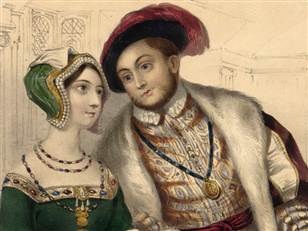
Love causes people to behave irrationally and often times at the expensive of other people. Historically England’s King Henry VIII was enamored with Anne Boleyn. The Pope refused to annul his current marriage to Catherine of Aragon so that Henry could be with Anne. The king, fueled by his love for Anne, became the supreme head of the Church of England and divorced his wife himself and married Anne Boleyn. He later fell in love with one of Anne’s handmaidens and had Anne beheaded because he now loved Jane Seymour. A present day example of love gone awry is that of 21 year old Patrick Moberg who had believed he had found his soul mate. He met a girl on the subway and they “had a moment” but he didn’t get her phone number. So what’s a guy to do in NYC? Well build a website dedicated to this complete stranger of course, and scan hand drawn images of the two on the subway train drawn exactly with what they were wearing. Love has and always will cause people to do crazy things with each other, but love doesn’t stop there.
Love has the power to cross species boundaries and cause some people to feel the need to marry animals. People have married dogs, cats, ponies, horses, and even a dolphin.
It would seem that love is indeed much more complex than simple releases of chemicals in the brain, how could a chemical so small effect so many on such a grand scale? It doesn’t seem logical as to why the human body would continue develop such a system to stimulate love in the human body when so many illogical events unfold from its creation. It would seem as though the words of fictional character Albus Dumbledore help sum up love “Do not pity the dead Harry. Pity the living, and, above all, those who live without love.” Love may be dumb, crazy, and irritating, but it’s what makes us human, and one of the many reason to enjoy living. What are your takes on love? Is it worth all the effort, or should we even strive to understand such a complex emotion? Comment below, tell us what you think!


 IMC Hawks Blog