Blog

  • When Seasons Change

    Happy Monday,

    We hope everyone had a fun and safe Spring Break. The first day of the spring season is only a few short days away. Due to the much needed shift from cold to warm weather, this week the blog will focus on the strategies and techniques that companies use to advertise during the changing of seasons and in different seasons entirely.

    Every company no matter the industry advertises their products that are currently in-season. For example JC Penneyadvertises their winter clothing line at the end of fall and beginning of the winter season, their spring product line at the end of winter and beginning of the spring season, and so the cycle continues throughout the entirety of the year. According to Forbes, in addition to the changing of weather, certain seasons also include holidays and other factors that help companies adjust and succeed with seasonality.

    seasonal-marketing

    In relation to the Elaboration-Likelihood Model (ELM) developed by Richard E. Petty and John Cacioppo in the mid 70s, the changing of seasons initiates the necessary changes many companies makes in their advertising strategies to connect with their consumers. This connection between company and customer during a season or seasonal shift specifically relies on the concept that customers perceive information both centrally and peripherally depending on their involvement with that company. Consumers are aware that seasons change, but companies target key times to increase or decrease certain types of ads to provide the necessary information to these customers. During the changing of seasons companies increase the number of different advertisements as well as the quantity of commercial playing time. This increase relies on the Central Route of ELM. This strategy provides a message to the consumer that capitalizes on their motivation to process relevant information about both the changing of seasons and the new products the company is advertising for that upcoming season; whereas during the season, companies rely primarily on a peripheral route utilizing a few advertisements spaced out to attract customers that have little interest in those products (Griffin, 2011).

    As consumers we all are aware of the changes companies make to advertise during different seasons and times in the year, but there is a lot more that goes into this process as we have briefly touched on. Currently, we know that surf shops and fishing gear stores are beginning their spring sales because these businesses pertain to our interests. Think about your favorite brand or store to purchase products from, what do you notice about their seasonal shifts? Do you buy their products during the season or during the off-season?

    -Colby Cummings, Connor Gold, Chase Seymour
  • The World Goes Green

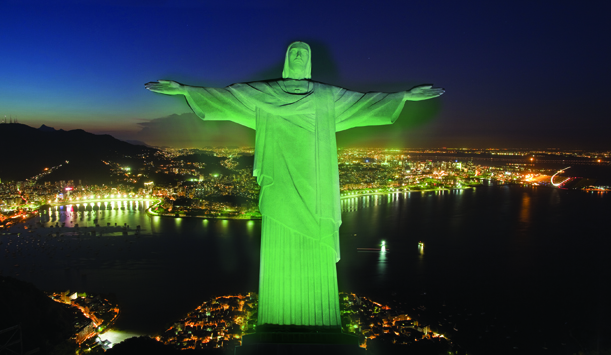
    Imagine your travels taking you to historical locations like the Coliseum in Rome, Christ the Redeemer in Argentina, or even Big Ben in London. Well if you are traveling on March 17th this year these landmarks may look a little different then you might expect. For the sixth year Tourism Ireland is lighting up landmarks all over the world to promote their nation’s biggest draw for travelers—St. Patrick’s Day.

    c111_c_Global Greening_ Main

    Over 60 million landmarks will be lit up this year at a cost of around €65,000 for Tourism Ireland’s “Global Greening”. Last year the “global greening” trended on social media across the world. No matter where you travel on St. Patrick’s Day this campaign makes it feel like you are in Ireland.

    “The 2015 Tourism Ireland Global Greening will again help to raise awareness of Ireland as a visitor destination in key overseas markets. The success of the Global Greening from a tourism perspective is in the volume of media coverage that is generated, with images of the greened landmarks forming part of prime-time news broadcasts on stations around the world, and images of the greened venues appearing in print and online publications and being widely shared on social media. It serves to remind people worldwide of Ireland at a time when many are planning their overseas holidays.” Says Ireland’s Minister for Transport, Tourism and Sport Paschal Donohoe.

    This campaign is an innovative use of the principles of Mead (1937) Symbolic Interactionism. This theory looks at how we as a society derive meaning through interaction and culture. The idea that the color green represents Ireland is something we learn through seeing others associate the hue with the country. Whether that be through green hats on St. Patrick’s Day or seeing people wave the Irish flag with its green coloring, most everyone understands that green is a symbol of Ireland. Tourism Ireland didn’t have to say anything in their promotion, all they had to do is light monuments green on St. Patrick’s Day to put their country in your mind.

    How effective do you think this simplistic yet costly marketing stunt would be if you saw it? Would you want to immediately pack your bags and head to Ireland, would you be annoyed that a historic monument was being obscured, or would you have no real response? Let us know in the comments!

    – Nick Bolick, Olivia Sadler & Patrick Wagner

  • Make Vacations Simple

    It seems like so much time and effort goes into planning a vacation. With unlimited options and destinations, it can be overwhelming to even pick a location, let alone what you are going to do on it, biking, hiking, zip cording, or just taking in the rays. Cruise lines have simplified these options into a well-rounded vacation experience. With multiple destinations and wide range of boat and day activities you can be a part of. Cruises have something for everyone.

    Whether you have kids and want to take the family out. Or to take a ride on the wide side with adult cruise only. With cost ranging from $200 to $2500 it has never been more affordable to take a break with one of the many cruise line packages out there. You can be your own Captain and plan today.

    James- Jill- Spencer

  • Sandals Resorts

    Have you started thinking about a vacation for this summer? Perhaps advertisements for luxurious beach resorts have motivated you to explore these resorts as an option for vacation. Sandals Resorts is one of the most popular resort brands, and it’s a pretty recognizable one too. The commercials are instantly recognizable, like the one below, set to “I’ve Had the Time of My Life.” Images of couples on beautiful beaches with crystal blue water flash across the screen.

    The first Sandals resort opened in 1981, and since then has won multiple awards from prestigious travel websites, like TripAdvisor and World Travel Awards, just to name a few. You can view the extensive list of awards here. What’s interesting about their advertising is that they choose not to focus on these awards, but instead they focus on the all-inclusive luxury aspect. They are serious about luxury being included. Guests don’t have to pay for additional amenities, as they would have to most at most other resorts.

    For a business to have won so many awards, it might seem odd at first that they wouldn’t showcase these in their advertising. However, the fact they choose to center their advertisements around the elements of their brand that have earned them all of these awards, like quality and luxury, definitely speaks the strength of their brand. They are doing a great job with their advertising, because they don’t have to advertise the awards they’ve won in order to remain a successful business.

    -Mallory Brayman, Kelli Hall, Morgan McCleaf

  • Haiti launches ad campaign to encourage Americans to vacation there

    Vacation and tourism advertising is no stranger to the American market, but they typically are of luxurious and tropical escapes. Last month, though, Haiti launched its first ever television advertising campaign that is targeted specifically to Americans, encouraging the market to visit their country.

    haiti-tourism-logo2

    As traditional tourism advertising is generally centered around an already present tourism location, Haiti took a different approach. Using the message of “Haiti: Experience It!” the country is targeting Americans to visit the area in an attempt to revamp its economy and promote the accommodations it has to offer as opposed to the negative perceptions some may have, such as the state of the country since its earthquake or the fact that it’s not a vacation-prone location.

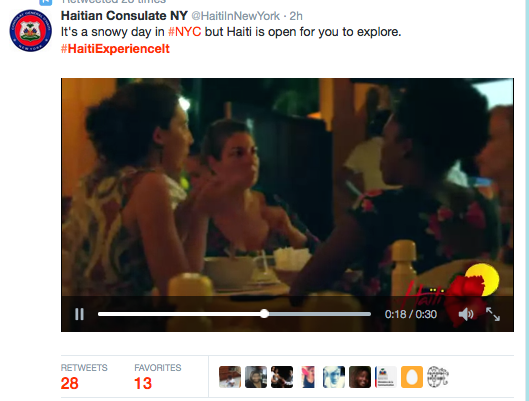
    By launching the campaign towards a specific intended audience, Haiti is searching for consumers of a particular demographic. According to the Associated Press, the commercial has been in the works with Northern cable companies in the New York and New Jersey areas. Liaisons in these states are running social media accounts, such as the one seen below.

    Screen Shot 2015-03-05 at 4.45.00 PM

    Utilizing a common Public Relations and Advertising strategy of “come see for yourself,” the government is tackling the issue of its poor country and inviting consumers to experience the uniqueness of their country. Haiti has a YouTube channel aimed at sharing content on the country, encouraging visitors to “Come visit Haiti” and “Come Experience Haiti.” Additionally, their government website features its history, culture, and nature–all  inviting certain demographics to see the country firsthand.

    Do you think this campaign is effective?

  • Make it Snappy

    Social media is changing how we connect with not only people but with brands and organizations. A fairly recent company, SnapChat — an app that lets you send photos and videos for up to ten seconds to mass amount of users — has become such a popular social media outlet it belongs in the category with Facebook and Twitter. While it was first introduced has a way for people to stay connected via photos, Snapchat is now a way for organizations to promote their brand through videos and special content. This includes the sport realm as well.

    Four out of the five major sports leagues (NBA, NHL, MLB, MLS) in the US have official Snapchat accounts. While the NFL does not have an official account for the league, 12 out of the 32 teams have accounts. This is a great way for the organizations to connect with their fans and consumers. The organizations can post footage of games and events that fans otherwise would not be able to see.

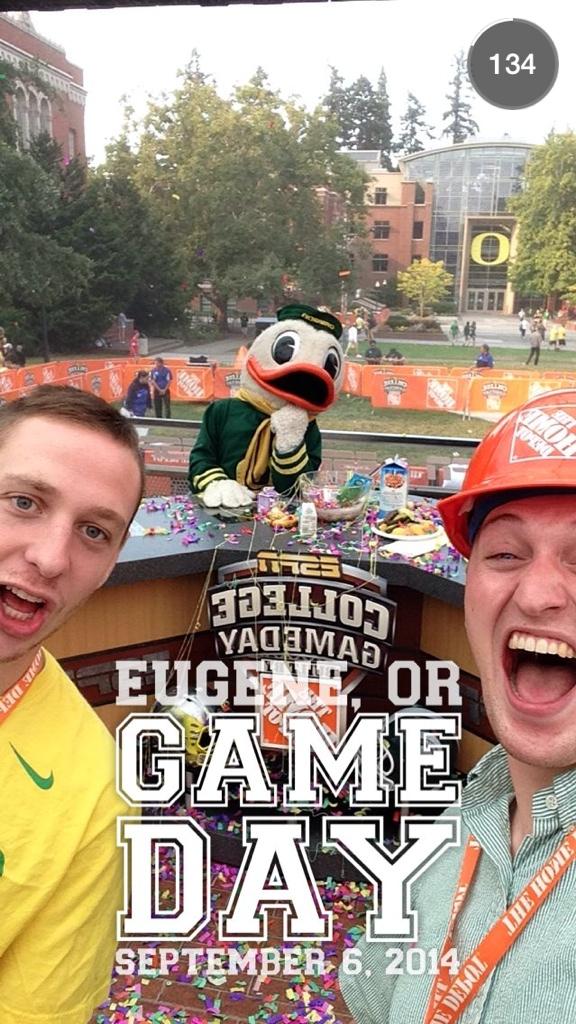
    Snapchat has also partnered with ESPN’s College Football Gameday to bring live coverage to people all over the world through people attending the events. Snapchat first started testing the crowd-sourcing technique at music festivals such as Lollapalooza, and ESPN jumped at the opportunity.


    Snapchat’s success through sports has lead them to hire former Nike’s Global Director of Digital Eric Toda. Toda hopes to create “collaborative, decentralized live streams of their events.” He also is working with companies to help make their Snapchat content feel authentic.

    How else could Snapchat improve on their crowd-sourcing techniques?

    – Nick Bolick, Olivia Sadler & Patrick Wagner

  • Red Bull Puts the Extreme in Extreme Sports

    Red Bull and extreme sports go hand in hand. If you look at any of Red Bull’s social media platforms like Twitter or YouTube you will see an assortment of videos ranging from board sports like skating and surfing to more obscure sports like ice cross. Red Bull doesn’t shy away from showcasing dangerous stunts. They like to take extreme to a whole new level by trying new things through various sports platforms like riding a motorcycle on a roller coaster.

    Red Bull isn’t afraid to sponsor adrenaline junkies as they attempt dangerous stunts with no guarantee that they will make it out alive. For example, on February 3rd, 2015 Red Bull sponsored Will Gadd’s historical climb up frozen Niagara Falls. Fortunately this event was a success, but over the course of Red Bull history there have been six known fatalities in the filming of Red Bull extreme sports pictures.

    https://twistedsifter.files.wordpress.com/2015/02/ice-climbing-at-the-summit-of-kilimanjaro-will-gadd-red-bull-3.jpg

    Most of the videos on their channel have nothing to do with the actual energy drink and if it wasn’t for their logo plastered as a sponsor on the equipment it would look like a regular extreme sports video.

    https://i0.wp.com/newdandyism.com/wp-content/uploads/2010/07/200305_mg_8106mod.jpg

    Despite the ambiguous factor of what Red Bull actually is, it seems like the perfect partnership for both parties involved. Red Bull provides opportunities for extreme athletes to do what they love, while gaining original marketing material in the process. Despite the danger and uncertainty that comes along with being in an extreme sports market Red Bull has decided the possible risks are worth it.

    -Kelli Hall, Mallory Brayman, Morgan McCleaf