Blog

  • Ready to shop ’til you drop?

    Gobble, Gobble! Happy Thanksgiving Eve! With all the impending excitement of a delicious home-cooked meal, time spent relaxing with family, the Macy’s Thanksgiving Day Parade, and of course football, let’s not forget about another American tradition: Black Friday. Every eager deal hunter and thrifty mom alike will be setting their alarm bright and early to take advantage of all this day has to offer. With deals such as Walmart’s Emerson 32″ LCD TV for $188 to Best Buy’s 24″ Dynex HD TV set for a crazy price of $79.99, the early hours are completely worth it.  Target has DVD’s for as low as $1.99 per DVD, while Sears is offering sweaters for 60 percent off from 4 a.m. to 1 p.m. only. With these prices, who needs to advertise? The prices seem to speak for themselves. However, this doesn’t seem to be the case. Companies seem to be spending a great deal of time and effort on their advertising campaigns, from targeted Black Friday commercial campaigns, to leaked Thanksgiving Day newspaper inserts.
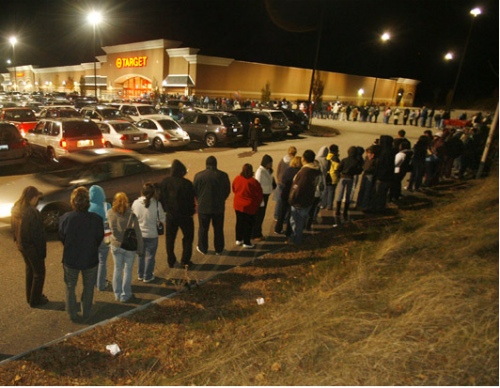
    Target has put an interesting spin on things and has changed the way they have marketed to these consumers. Instead of bombarding customers with prices and products they should be looking forward to buying, they have tried a different technique: portraying a ‘stereotypical’ yet over the top Black Friday shopper.  The commercials feature a woman who has been counting down the days to shop at Target for Black Friday, and gives herself pep-talks and training sessions to prepare for the big day. This fresh way of advertising really seems to have hit a nerve with the public. This is a pure example of a well-executed targeted marketing message. It’s a tongue in cheek inside joke Target is portraying to their customers, “Yes, Black Friday shoppers are crazy, but, hey, with prices this good, there’s a reason to be,” Target has been spreading this campaign through traditional mediums, such as through TV commercials, as well as through social media. They have released additional videos of the “crazy Target lady” on Youtube, as well as giving her a personal Twitter account “ChristmasChamp” to the tune of over 13,000 followers thus far. Although the cost benefits from shopping on Black Friday speak for themselves, the advertising for this day certainly serves as a great positive reinforcement. Happy shopping!

    Phelps, Kingman, Hensley
  • Celebrate Thanksgiving (or any season) With Butterball!

    In 1621, the Plymouth colonists and Wampanoag Indians shared an autumn harvest feast that is acknowledged today as one of the first Thanksgiving celebrations in the colonies.  For more than two centuries, days of thanksgiving were celebrated by individual colonies and states. 
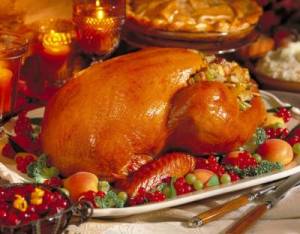
    It wasn’t until 1863, in the midst of the Civil War, that President Abraham Lincoln proclaimed a national Thanksgiving Day to be held each November.  To this day, the centerpiece of Thanksgiving in the United States is a large meal, centered around a large roasted turkey.  Thanksgiving dinner is not complete without the perfectly cooked turkey, but not all of us can be masters in the kitchen.  What happens if you don’t know how to cook a turkey?  Don’t sweat it!  It’s not a problem because now there’s the infamous Butterball Turkey Talk-Line if you need cooking assistance.

    Butterball is a brand of turkey and other poultry products produced by Butterball LLC.  The company manufactures food products worldwide and specializes in turkey, deli meats, raw roasts, and other specialty products, such as soups, salads, sandwiches and entrees. Butterball operates the world’s largest turkey-processing plant in Mount Olive, North Carolina and sells over one billion pounds of turkey a year.  Butterball is so popular that one in every five turkeys sold in the United States comes from them.  How did this Butterball craze start, though?

    Butterball has been around since 1940, but it wasn’t until late 1981 when the company decided to start a toll-free telephone line called the Turkey Talk-Line, that it skyrocketed.  The mission of creating the talk-line was to help customers with cooking and preparation questions during the Thanksgiving season.  During the first year of the Turkey Talk-Line, 11,000 people called in.  Because of the rising popularity of the Turkey Talk-Line and the huge interest in Butterball products, the company decided to expand its business.

    Butterball has a talk-line open to the public on weekdays from 8am-8pm. But it now also has a website that offers consumers the opportunity to celebrate traditional holidays and everyday meal occasions with the Butterball branded line of products.  Whether it’s the annual family get-together or just a day in the office or at school, people can celebrate with Butterball turkey.  Butterball’s website provides a variety of recipes and ideas and also offers tips and how-to’s.  If you are a new cook or are just interested in watching videos on how to choose, thaw, stuff, roast, and carve a turkey, you now do so with Butterball.

    In recent years, Butterball has become even more recognizable.  The Turkey Talk-Line number has grown to over 200,000 and it continues to increase with each holiday season. There are many brands that are associated with the holiday season; the next time you grocery shop for that Thanksgiving or Christmas dinner, Butterball won’t let you down. Happy holidays!

    -Stephanie Bakolia, Claire Outlaw, David Glaubach
  • Feeding America Through Giving

    With the thanksgiving holiday a mere three days away, people around America have only one thing on their mind….

    Food.

    Stuffing, turkey, mashed potatoes, green bean casserole, pumpkin pie…the list goes on and on and on. Family traditions and recipes will fill the kitchens on Thursday as our country enjoys the warmth that comes from a steaming plate of food surrounded by loved ones. This time of year welcomes the holiday season and gives people time to think about everything they can be thankful for as they look ahead to a rapidly approaching new year. And with those thoughts in mind, helping those who may be less fortunate should also be a considered part of this holiday’s mission.
    Local and National non-profit agencies use this time of year to connect with families across America to end the hunger that many homes will face both today and on the upcoming Thanksgiving holiday. One major organization, Feeding America, has been partnered with national brands in order to promote their message of giving; especially during a time that allows for people to feel thankful for what they have and aware of how they can help those in need this year. Partnerships with Kraft, Pepsi, ConAgra, Ameriprise, and Sam’s Club are only a few of the promotional partners that have led to this organization’s ability to help over 37 million Americans each year. Their support, marketing, and contribution to this cause allows for various consumers around America to find different avenues to get involved and help the fight against hunger as well. All we have to do as individuals is make the next step that marketers of these brands hope for: donate.
    Feeding America would not have the ability to reach as many people without their partnerships with corporations, celebrities, local food banks, and the media. However none of their efforts to spread awareness will be successful without evoking action. This holiday season, as we all daydream about the hot apple cider and comfort of the fireplace, non-profit organizations hope that they can warm your heart to the thought of giving. And with 49 million Americans unsure of where their next meal will come from this holiday season, the act of giving should be on the minds of those who have so much to be thankful for this year.

    -Sally Shupe, Jared Sales, Oliver Evans

  • A New Kind of Endorsement

    TGIF! Since it’s Friday, we wanted  to stray away from the scary world of molesters and gunmen to take a look at one of the newest corporate communication strategies that many e-commerce companies are using to contact their publics: “celebrity curators”.

    Different from the everyday endorsement, celebrity curators are a fusion of celebs, social media, and personalization. Ever seen or heard of ShoeDazzle, the Kim Kardashian-sponsored online store for $39.95 shoes and handbags?  This is one of the most popular examples of how companies are using celebrity curators. You take a quick quiz to determine your style, then shows you a custom selection of shoes and bags picked just for you! ShoeDazzle features this famous Kardashian as a celebrity stylist.  This strategy makes the customer feel like they’re not only buying a cool and hip product that a glamourous celebrity would wear, but it also creates a more personal shopping experience for them. Celebrity curators are seen as one of the main success drivers for these types of online companies, and it’s only going to be a matter of time before the rest of the e-commerce world catches on to this trend!

    -Claire Dillard & Liz LaPuasa

  • To sponsor or not to sponsor…

    Penn state is an iconic brand it itself. This brand’s football team alone generates $53 million in revenue annually from the football games, and the entire athletic program receives an additional $24 million in sponsorships and merchandising deals. The team’s brand: The Nittany Lion, has been in jeopardy since the sexual abuse scandal began unraveling and continues to be making headlines in the news. With the story still on the minds of students and faculty, it is still a heavy situation for the sponsors of the school and team. Pepsi announced on Wednesday that it will remain a sponsor of the school and its team. Pepsi has been one of the university’s largest corporate partners, and is on prominent on both in both the sports stadiums as well as Penn State’s main State College campus. In its original deal with the school in 1992, Pepsi Co. paid Penn State $14 million over 10 years for exclusive vending and advertising rights. In this deal, soft drinks are served in Pepsi cups on game day and the signage is anchored by a permanent Pepsi logo on the scoreboard of the 106,537-seat football stadium.

    The Penn State situation eerily reflects the Tiger Woods scandal along with his loss of sponsors. The status of Penn State’s other advertisers other than Pepsi remains uncertain. Mohegan Sun Casino in Uncasville, Conn, on Wednesday expressed that the casino’s deal with Penn State football “technically” ended for the year. Penn State also has sponsors from AT&T (T), Berks Hot Dogs and Chesapeake Energy (CHK). For now, these sponsors still remain, but the future of their sponsorships of the university are uncertain.

    Other high-profile sponsors such as Chevrolet, PNC Financial, John Deere, State Farm Insurance and the American Red Cross are staying put for now. So what does this all mean? Large corporations are also in jeopardy of being in the line of fire for continuing to sponsor a school that has done nothing to protect victims of sexual molestation. Iconic Brands like Penn State and Pepsi have a developed a strong relationship over the years, and will continue to keep their partnership. It poses the question that when is a situation too much for a corporation; what is the breaking point? With modern-day heroes such as Joe Paterno (Penn State) and Tiger Woods, being the center of major scandals which in turn led to the loss of major sponsorship and thus embarrassment for them and their sponsors;  is it in the best interest of Pepsi to remain with Penn State? You be the judge?

    — Michela Noreski, Jordan Hill, Ashley Nelson

  • Another Day, Another “Gunman”

    It was not our plan to write another blog post about university safety communication however, for the second day in a row, one of North Carolina’s universities was faced with a crisis as a reported gunman was spotted on campus. Much like how the University of North Carolina Wilmington alerted their students, East Carolina University also utilized all tools necessary in order to notify their students. Officials issued a complete lockdown and notified students via e-mail, phone calls, text messaging and social media sites. However, the role social media played in UNCW’s crisis is far different from what happened at ECU.

    Reports of a gunman walking through campus started circulating around 10 am this morning and there was surveillance of a man with a cowboy hat carrying what looked like a large riffle walking on a 5th Street, a road that runs through the campus. As students were locked up in class, tweets began to flood in reporting the incident and some even saying that they saw the gunman and that there were hostages. However, after three hours of searching the Greenville Police tracked down the suspect and found that the “rifle” was in fact an umbrella. Greenville police Sgt. Carlton Williams stated that rumors circulating on social media sites such as Facebook and Twitter caused authorities to “chase ghosts” and follow leads that were false.

    Although yesterday’s post focused on how social media has allowed us to share and cooperate in moments of crisis, there is also a negative side to the impact it has on the crisis communication. Officials utilize the tweets and posts on social media sites in order to gain information and as you can see from today, often have to take those tweets at face value. There’s always that “better safe than sorry” feeling, especially in the wake of the Virgina Tech massacre, but to what extent should authorities follow-up on information provided through social media?

    -Alaethea Hensley, Jessica Kingman, & Lauren Phelps

  • Talk of the town? More like talk of the nation: When Local News Goes National

    As we all know, the phrase “gunman on campus,” is nothing to take lightly.  Since the 2007 shooting at Virginia Tech, colleges across the country have made it a priority to ensure the safety of their campus.

    UNC Wilmington students were alerted late last night of a gunman on campus, fleeing from the nearby Hardees. The University continued to update students through email, phone calls and text messages in order to ensure all students were aware of the situation and safe.
    It seems as though UNCW took all the proper precautions; what they didn’t take into consideration was how the students were going to react to it. Within a matter of no time, students with Facebook and Twitter accounts were posting: “everyone on campus be safe!” or writing terms of endearment on loved one’s walls. According to Clay Shirky, author of Here Comes Everybody, the ability of people to share, cooperate, and act together is being improved dramatically by our social tools.With access to these social networking sites, students were able to publicly announce that there was a gunman on campus, which instigated a major concern.  News of the gunman on UNCW’s campus even reached popular media outlets, such as the New York Times and CBS.

    Using these social networking sites has united people all over the country.  Looking again at Shirky’s book, he exclaims, “a story can go from local to global in a heartbeat.” Without today’s social media sites, many news outlets would not have heard about the gunman. From an IMC perspective, we must look at how powerful these sites are and use them with much caution.

    -Stephanie Bakolia, Claire Outlaw, David Glaubach