Blog

  • Are You Getting Scroogled?

    Beginning March 1st, Google will be implementing a new privacy policy which will affect all of its products/services offered in order to gain a better perspective of their consumers and give them a more personalized experience. With the new privacy policy, Google will be able to gain more access to personal information by pulling material from all Google-operated services/products, such as E-mail, and using that information to create personalized advertisements to the user. This idea is similar to the one discussed in our earlier blog post titled “Not to Burst Your Bubble….”. With a better understanding of their users, Google will better be able to sell advertising, which in fact, is a main source of revenue for the company. Also, advertisers will be willing to spend more money with Google, if Google is bringing them more customers.

    This privacy policy change has certainly upset a number of people, but it might be safe to say none like Microsoft, a competitor of Google’s. Within recent weeks, Microsoft has released a number of advertisements via print and YouTube blatantly attacking Google and its new privacy policy. With the headline, “Have you Been Scroogled?”, and the advertisements tearing the privacy policy to shreds, it’s hard for one to not compare these advertising campaigns to those of the presidential elections.  It is unclear what the purpose of the advertisement is until the very last couple of seconds in which the Microsoft Outlook logo is revealed. There is even a website dedicated to the campaign. Upon visiting, the user is given the option to sign a petition against Google and the option to try Microsoft Outlook. The irony behind this whole situation is prevalent in several ways. First, Microsoft is placing these anti-Google advertisements on YouTube. Second, when searching for “Microsoft anti-Google ads” through the Google search engine, the websites provided where splattered with banner/marginal ads for Microsoft. When performing this same search through Bing (a search engine owned by Microsoft), the websites provided had shown ads sponsored by Google. This pattern resembles the concept of a “strange loop” within the Coordinated Management of Meaning theory. According to Littlejohn (1999, in Theories of Human Communication), these occur when “the rules of interpretation change from one point in the loop to another, causing a paradox, or strange loop, in which each contexts disconfirms the other”.

    http://www.scroogled.com/

    As of now, a little less than 10,000 people have signed the petition, which is only a small fraction of the G-mail users, and the YouTube advertisement have received far more “dislikes” than “likes”. Maybe this strategy isn’t as successful as Microsoft had hoped it would be. With Google being the most popular search engine, it is going to take more than that to persuade its users to up and switch to Microsoft. What does this say about Microsoft as a company? Will this be the new advertising technique of the future? Will we no longer see companies like Coke and Pepsi beating around the bush but rather taking deliberate stabs at one another? Only time will tell, but it will be interesting to see where the rest of Microsoft’s campaigning takes us.

    Callie Fenlon

  • S.O.S.

    The night has progressed and you are about to make your move when the inevitable question arises, “do you have a condom?” This is the premise that Durex has based their new campaign on. The S.O.S. campaign is an “app powered” one-hour condom delivery service discreetly operating between 4pm and 4am. When one first runs across this ad they may think it is a parody, but this is a service that already exists in certain cities, such as Dubai. The company plans to further expand the campaign to more cities. In today’s busy world, everyone loves a delivery service. How else would we get our last-minute pizzas, packages, flowers…condoms? The new Durex campaign, launched by the Buzzman firm, is ingenious and definitely outside the realm of normal advertising. The unique aspects of this campaign clearly exemplify why this firm has been credited with the development of captivating campaigns in the past. Future endeavors should not be far behind when examining their exciting new usages of message, labels, and systems.

    S.O.S. (short for “Save Our Souls”) is globally recognized as a distress signal. Viewing the YouTube commercial on Durex condoms it is evident that the sense of urgency, emergency, distress (if you will) associated with an S.O.S can easily be transferred to something less immediately life-threatening.  It was genius to associate their entire campaign on the premise that this product and service is not only a service people may want, but a good they most definitely NEED!  The name itself alerts potential consumers of this product to the fact that it could be important for their lives.  Buzzman of Paris is the firm credited for the original development of this campaign, which may explain why Paris is the leading city in votes for implementation of delivery service (or is it because Paris is truly the city of love)?  Either way there is definitely potential for geographic growth.

    sos_condoms

    http://www.sos-condoms.com/

    Not surprisingly, YouTube is a vehicle for advertising both the product and service.  Social media is being adopted by most modern businesses as a way to connect with audiences on a personal level which allows them to identify and solve the needs and wants of their target audience. The sensual and provocative usage of filming in the commercial fits perfectly the “edginess” that the campaign strives for, while remaining appropriate to the standards of social media. Not only does this medium provide unlimited amounts of information, it builds brand image and is yet another way to gain valuable information about its consumer.  A win-win for Buzzman,Durex and the customer!

    Retailing is the sales of goods and services from businesses to the end users. Durex, in this retail plan, concentrates on its brand image and loyal consumers for selling the product itself (the condom) but this plan furthers the retailing process by integration of a new supply chain of their product.  Rather than purchasing their products by the counter at a pharmacy, or even online, the timeliness and personal service is considered.  Why should pizzas be the only show in town?  Condoms have hit the big time in this retail venture.  It should be interesting to see how this takes off.  The worst-case scenario is that Durex gets people talking, and their condoms “protect” Buzzman’s reputation for fresh ideas.

    – Zach AbramoCallie FenlonLauren Habig,  Alexandra HussMichael Nunes,Daniel Schaefer

  • Get Your Vote On!

    From commercials to infomercials, advertising and marketing in this day and age has become a completely different game than in the past. Lately, between the Super Bowl and Valentine’s Day, many Americans have been overwhelmed with advertisements and promotions that are attempting to make their company stand out from the competition. Whether it was simply trying to convince you to buy their soft drink or attempting to convince you to buy your girlfriend’s engagement ring from their jewelry store, sometimes it seems a little too forced.

    http://www.stikkymedia.com/blog/pepsis-20-million-dollar-social-media-campaign

    In response to this tension,  marketers are always looking for innovative new ways to involve consumers in the production, promotion and selection of the product itself. This method has been used effectively before and proved quite fruitful for certain companies. In 2007, Mountain Dew began their “DewMocracy” promotion where customers get the chance to vote on new flavors, graphics, colors and names. To this day, Mountain Dew continues to create opportunity for customer interaction in their promotions and advertisements.

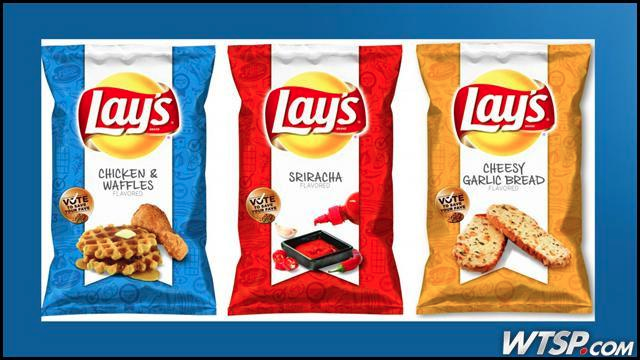
    Interactive promotional campaigns are ideally designed to benefit both the customer and the company. Lays potato chips are the most recent corporation to take this creative strategy and run with it. Lays has put together a multi-step process for establishing their newest flavor of chip. Originally, Lays invited consumers to submit their flavor ideas and let the public vote on these flavors on Facebook. At this point, the public has voted and Lays has narrowed the competition down to the top 3 public favorites. These flavors have actually been produced and are available for purchase for a limited time. While these flavors are available the voting will continue on Facebook and eventually one will be voted in and named the newest member of the Lays family.

    http://www.wtsp.com/news/article/297982/81/You-get-to-pick-the-new-Lays-potato-chip-flavor

    Taking a step back and evaluating this marketing strategy utilized by Lays, Mountain Dew and many other large corporations, it is clear that it is effective not only as a result of the customer interaction, but in a handful of other ways. Obviously if voting and discussion is taking place on social media, this is driving a ton of Internet traffic to each of the respective websites. Also, the customer involvement builds a relationship with the consumers and gives them the feeling that they are a part of the company and making important decisions. Finally, specifically for Lays and other promotions that offer the product for a limited time, this strategy causes a boom in sales with everyone trying the new product.

    Now that this promotion idea of customer involvement has been tried and proven many large companies are adopting these campaigns. Doritos, along with a few other companies, ran campaigns before the Super Bowl to have the consumers make and vote for which commercial would be shown during the big game. So despite the fact that we are still being consistently and constantly advertised to (and that’s not likely to change any time soon!) the benefits of running these promotions are clearly beyond the obvious boost in sales, this is relationship building at its finest!

    Zach Abramo, Callie Fenlon, Lauren HabigAlexandra Huss, Michael Nunes, Daniel Schaefer, Dann Williams

  • Valentine’s Day Pie

    With another Valentine’s Day comes another slew of tacky love themed promotions from chain restaurants.  Over the past couple of years, chain restaurants all over the country have put out heart shaped dinners for Valentine’s Day, and this year is no different.

    Image

    For the fourth year in a row Papa John’s is bringing out their heart-shaped pizza on February 14.  Back in 2010, Papa John’s debuted their annual Valentine’s deal by offering a one topping thin crust heart-shaped pizza and a cinnapie for $15.  The past few years have been such a success that they decided to bring the deal back for another year.

    Another pizza joint that is joining in on this year’s fun is Pizza Hut, but they’ve got something else up their sleeves.  Instead of joining in on the heart-shaped fun, Pizza Hut has decided to put out a pizza-scented perfume for Valentine’s Day.  A free bottle of Eau de Pizza along with a $20 Pizza Hut gift card will be given out to 24 people each day from February 11 to the 13.  In order to win, customers have to tweet at @PizzaHut with a reason they should win and the hashtag #LastMinuteLovers.

    Image

    Pizza Hut is no stranger to the February 14th pandemonium.  Last year they offered their Valentine’s Day Engagement Package for the first 10 customers who could afford it.  At the measly price of $10,010, the package included a red ruby ring, limo service, flowers, fireworks show, photographer, videographer, and a Pizza Hut Dinner Box.  As tacky as this package sounds, the company received about 800 serious inquiries within the first 24 hours of the promotion.

    We will see how well this years promotions work for Papa John’s and Pizza Hut, but if history tells us anything, they will work out very well for the companies.  Here’s to a beautiful day filled with love, romance, heart-shaped pizza and pizza-scented perfume.  Hope y’all enjoy it!

    – Zach AbramoCallie FenlonLauren Habig,  Alexandra HussMichael NunesDaniel SchaeferDann Williams

  • For the Love of Advertisements

    For those of you who don’t know what Valentine’s Day is (and have been living under a rock), it is an annual holiday established to celebrate relationships and love. It is a time when couples buy each other gifts, exchange them with one another (which is the most stressful part from a man’s point of view). Just what inanimate object is somebody to give their loved one as a symbol of their relationship? This decision can make or break the holiday and ultimately the relationship.

    Due to the nature of the holiday, consumers are now being bombarded with visual and audible advertisements offering grand suggestions for Valentine’s Day gifts. These commercials seem very similar in nature, as they are usually directed towards men. Most of these commercials hold men in the stereotypical light of being confused and flustered by the thought of buying a gift for their significant other. This notion can be clearly seen in a commercial created by the company “ProFlowers.com.”

    In this commercial the main character, a football coach, is “coaching” men on how to get their partner the perfect gift. The coach uses great inflection in his voice as he tries to motivate his “players” to make the right choice and go with his company’s business. The advertisement even goes so far as to show what not to get her (as the camera pans to a sloppy bouquet of dead flowers in between the coach’s motivational speech). He keeps explaining the benefits of this service as he draws up “the big play” on the chalkboard behind him, showing how it can help you “score.”
    Another classic example of a company targeting a dominant male audience is through the chocolate company Russell Stover and their “Men Should Go With The Heart Shaped Box” campaign. This advertisement showcases testimonials from women who are just passing by on the street and exclusively features them praising the chocolate makers. The attractive women clearly explain that “it wouldn’t be Valentine’s Day without the heart-shaped box” and, of course, how much they love chocolate on this special day. They conclude the commercial with these women coming to a consensus that; “men should go with the heart-shaped box at Valentine’s Day.”
    With all of these advertisements, there is obviously a great range of possible gifts to give a loved one. Just don’t be an idiot and not get her anything or you will be in the dog house….and that’s not an ideal place to be on the 14th. 

  • Platinum or Gold?

    There’s no question that Budweiser left an impression with their “Brotherhood” Clydesdale commercial. Twitter was abuzz? with admiration for the unbreakable bond of a horse and it’s “brother.” But what about the other Budweiser commercial? The one where they announced their brand extension, “Budweiser Black Crown.” The commercial claimed to be made for the “finest” of our society by stating the beer is made from the finest ingredients and having a glamorous crowd call it their own.

    It’s not uncommon to announce a new product or brand extension at the Super Bowl, in fact just last year Bud Light released “Bud Light Platinum.” This commercial claimed to be a step up from the regular Bud Light brew by striving for platinum, not gold.

    Two similar brands announced similar brand extensions. Budweiser decided to appeal to the elitist in all of us, Bud Light chose to approach our more ambitious side. The clean, crisp factory setting of the Bud Light factory versus the rustic romantic setting of the Budweiser celebration.

    It seemed to us that Bud Light took a bigger risk by ditching the typical crowd voicing their approval and choosing a stark white background to contrast the vibrant blue bottle. In this case, we think the risk paid off. Which commercial do you prefer?

    – Zach Abramo, Callie Fenlon, Lauren Habig,  Alexandra Huss, Michael NunesDaniel Schaefer, Dann Williams

  • “Who are you wearing?”

    The 55th annual Grammy awards will be airing live on CBS this Sunday, and it is certainly safe to say that there is much buzz about the fashion. In fact, the Grammy awards are known for their crazy, over the top red carpet looks. Who could forget Jennifer Lopez’s cleavage bearing VersaceImage dress that she wore to the 2000 Grammy awards? Or Pink performing in a nude colored body suit at the 2010 Grammy awards? Well, it won’t be happening this year.

    The CBS Standards and Practices Committee sent out an email asking attendees, including performers, to adhere to a stricter dress code policy this year. The email specifically stated that outfits exposing “bare fleshy” areas of the body would not be tolerated. On top of this, attendees have been asked to refrain from wearing clothing items that would display blatant product placement, obscene/foreign language, or advertising personal causes in the form of lapel pins.

    So with the new dress code policy, not only have the attendees of the Grammys been affected but the designers as well. Designers receive a lot of advertising and publicity at awards shows by having celebrities wear their gowns and suits. With the very recent enforcement of this dress code, what will designers and those attending the show do to make sure they are adhering to these rules? Designers have been working for moImagenths and months to have their gowns/suits ready to be worn on the red carpet in hopes of getting their names out there, or even better, getting their gowns/suits on the best dressed list. It will certainly be interesting to see what will go down this Sunday night.

    – Zach Abramo, Callie Fenlon, Lauren Habig,  Alexandra Huss, Michael NunesDaniel Schaefer, Dann Williams