Blog

  • XOXO Vitaminwater

    We are faced with it every day. They appear in our lives probably more than we would like, and there is no way to get rid of them. I’m talking about product placements, and there is no way to escape it. The traditional way of advertising used to be as simple as plastering the side of a bus or a taxi with your product with the hope that word would get out. Nowadays, there is no way to avoid the obvious placement of certain products as they have taken over Blockbuster movies and primetime TV shows. On the ongoing list that could stretch for miles, there are often product placement repeaters who have no shame when it comes to getting the name of the product stuck in the viewers’ minds.

    IMG_1992

    One repeat offender is Vitaminwater and its recurring role on the CW show, Gossip Girl. In season two, the opening episode had a plot that was based around a “White Party” that was sponsored by none other than Vitaminwater. The episode was spent with the main characters frolicking around this party, carrying Vitaminwater, ordering Vitaminwater from the bar or sipping on a bottle of Vitaminwater. This was not the most obnoxious placement of Vitaminwater as in a Season 6 episode where the characters are talking about a Vitaminwater Design Contest that they will be judging. In this episode there are bottles upon bottles of Vitaminwater on a coffee table and each label is visible to see from the comfort of the viewers couch.

    This is effective use of the Cultivation Theory to sell products using popular television shows, and it works. The show’s producers are showing a product repeatedly to make an impact on their regular audience, which helps both the show and the product. This is a proven method and it’s definitely not a new concept. Even the classics have their product placements like Forrest Gump with Dr. Pepper or Back to the Future with the DeLorean Motor Company.

    Product Placement is an easy and effective way for name brands to market themselves to a wide audience. By placing products in popular TV shows and movies, companies are able to sway viewers through visual and verbal references to the item at hand. In order for a product to be placed in a film or TV show, companies must pay extremely large amounts of money but based on results, this technique is so effective with today’s generation that it is worth every penny. While at times we may find product placement cheesy and obvious, it works and we can expect to see new trends evolve as it becomes a dynamic marketing tool.

    Brandon Hawkins, Bobby Huckabee, SavannaMitchell, Tony Mangili, Danielle Salas,
  • Subtle or Obvious: Product Placement in Movies

    What is the most humorous example of product placement that you can think of? One that comes to mind is the latest Transformers movie, Transformers: Age of Extinction. There were several times in the movie where one couldn’t help but notice the blatant product placement. The most notable is the scene where an alien ship crashes into a Bud Light truck, spilling the bottles all over the street. Mark Wahlberg’s character then picks up one of the bottles and takes a sip. Throughout the rest of the movie, it was impossible not to notice all of the products being displayed so shamelessly on the screen. The video below even features some scenes with the most obvious product placement.

    When used appropriately, these placements work. This article suggests that brand recognition reaches over 75% when the product is used by the character or incorporated into the story.

    For example, the 1995 James Bond film, GoldenEye, gave BMW a sales boom. James Bond is known for his gadgets, nice suits, and fast cars. A brand having their product placed in just the right film can encourage viewers to want to be just like that character. What did viewers need to emulate James Bond? A fancy car, of course. Aston Martin was struggling at the time and were bought out by Ford, causing the production team to source a vehicle suitable for James Bond. BMW was the highest bidder. Due to the increase of sales, a $100 million promotion was created for Tomorrow Never Dies, the next film in the series.

    Even though the placements may be quite “cheesy” and obvious majority of the time, they seem to work very well for companies. By creating that brand familiarity in Transformers: Age of Extinction, there’s a good chance that come Thanksgiving dinner, those who have been tasked with buying drinks for the adults will see Bud Light in the store, be reminded of the scene with Mark Wahlberg, laugh, and take that pack of Bud Light to the register.

    By: Morgan McCleaf and Danielle Walters

  • Product Placement: Could You be any More Obvious?

    Television shows dominate the “5-day work week,” with people flocking home in the evening to make sure they catch their favorite show. As TV shows have grown more popular, so have their influence on people’s lives including next day conversation and what products people think about buying. Technology has created an age where a consumer can DVR or stream their favorite TV shows, meaning they can also fast forward right through all of the commercials. This new technology has led to the introduction of product placement in TV shows (Soba & Aydin 2013).


    Over the years, companies have grown more aggressive in how they market their products during a show, for example Ford showcasing their cars in commercials, which have evolved into a three-minute segment in an episode of New Girl about the 2013 Ford Fusion. In Integrated Marketing Communication, product placement is an ideal and inexpensive platform for marketers to push a brand while at the same time providing customers a choice whether to accept or reject the product without the pressure of a sales environment (Soba & Aydin 2013).


    Product placement is essentially the insertion of a brand into a form of media, like that of a TV show (Soba & Aydin 2013). These placements have become painfully obvious which can sometimes even make the show uncomfortable to watch. Hawaii 5-0, a very popular show on CBS had a blatantly obvious deal with Subway.


    The increase of product placement begs a major question, is product placement really effective? Deliberate and poorly scripted brand awareness in a TV show can sometimes cause more harm than good. TV shows are sacred to many of its viewers and tainting a consumer’s beloved show with sidebars about Subway, Apple or Ford could be a real turn off for the product.

    Some shows script in product placements better than others, almost poking fun at the brand while still promoting it in a less awkward way. The clip below is from Community, and although Subway is again the brand being showcased, it seems as though it was executed more successfully.


    It appears that for now product placement is just getting started and isn’t going anywhere. This new brand awareness technique is an integral and growing part of Integrated Marketing Communication, but is this new marketing tactic an Achilles heel?


    -Spencer Brenes

  • Product Placement Gone Wrong

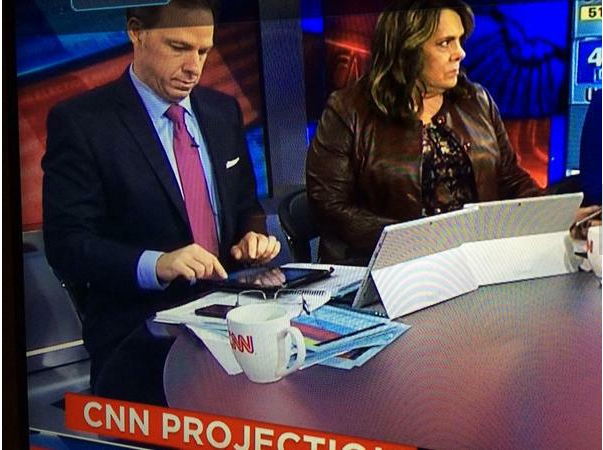
    Am I watching an advertisement or a news show? In today’s media landscape, sometimes it is hard to tell due to an excess amount of product placement, whether we are watching an advertisement or a news show. One blatant example of this happened during the Mid-Term Election on CNN. However, where there was an obvious use of a specific product, it wasn’t the right one, and viewers were confused. While CNN had a deal with Microsoft Surface Tablets to display their tablets in front of the anchor’s, people noticed that the anchor’s had been using the tablets competition, the iPad during the show. Online sites including GeekWire and many more noticed this blunder and explained how big of an embarrassment this was for Microsoft.

    Screen Shot 2014-11-10 at 2.20.29 PM

    http://news.yahoo.com/microsoft-most-humiliating-surface-product-placement-failure-yet-213033878.html

    This is a clear example of the communication theory Media Ecology. According to Griffin (2011), Media Ecology explains how media affects the way we as humans communicate, understand our world, and interact. As a society, we have come to the understanding that the new cool and hip technology is what we should use. So even though CNN was promoting the Surface Tablet, they were still using iPad’s due to the their own preferences. This failure of product placement shows how the anchor’s personal connections with technology matter more to them then what they were told to use. The media has locked into our head’s that apple is the leading brand, and that since the iPad is very popular, there is no reason to buy a Microsoft Tablet and be different from the majority. Since viewers saw the anchor’s shunning the Tablet’s that were right in front of them, and saw them using Apple’s iPad, wouldn’t the viewers be more influenced to go out and buy an iPad?

    Product placement has become a huge role in today’s advertising culture. We see it in movies, TV shows, newspapers, commercials, and especially on the Internet. Although it is hard to measure how successful product placement is within these mediums, we can tell that product placement influences behavior and feelings toward the products or brands that are being used. As viewers to advertisements get smarter and start to realize some of the ridiculous examples of product placement like the one explained above, we see that product placement becomes less effective. However, this of course will not stop brands from developing ways to conceal their products in various mediums, with the intention of trying to expose their brand to the market. Does product placement in your favorite TV shows or movies influence your attitude or behavior toward the product or brand being displayed?

    -Margaret Cafaso, Kierstin Geary, Connor Gold, Olivia Sadler, Hannah Zeskind

  • #college

    How does one market to college students? They’re lazy, not willing to spend money on many things, and hard to put into one category. Social media is the key. It is always accessible and college students are always using it in everyday life. There are ways to market on campus such as “tabling” and “chalking”, but even then most businesses and organizations are using social media to let college students know about the student specials. According to entrepreneur.com, there are 5 tips to marketing to college students: 1. Consider mobile marketing. 2. Get to the point, fast. 3. Don’t try and be cool if you’re not. 4. Get your product right before bragging over it. 5. Win over mom and dad. These are the components that are necessary to keep from getting scrolled past or ignored by the typical college student.

    Untitled

    With the future of advertising falling farther into social media, marketing to college students is similar to the media dependency theory by Sandra Ball-Rokeach and Melvin DeFleur. This theory bases itself on the Uses and Gratifications Theory and pinpoints the characteristics of college students because it is the best way to reach them and explains how dependent college students are on technology.

    Technology such as smart phones are changing the way that college students are getting information and are being marketed to. Student discounts are being tweeted, bars are getting Instagram’s, and on campus events are creating event pages on Facebook. Social media now is the best way to grab a college student’s attention because it is quick, easy, and always shareable.

    – Morganne McIntyre

  • Tips for College Survival

    Wilmington is a college town and with a student body of about 13,ooo, many restaurants and bars cater to students to offer inexpensive deals and specials. Knowing that a large population of their clientele is kids looking for the cheapest beer and food, these businesses find ways to make money off of students without complaints on our end. According to Entrepreneur Magazine, knowing your target customers’ demographics to determine how to appeal to them is the key to a successful business. With over five hundred restaurants to compete with in Wilmington, it is necessary to find your niche and stick with it. Whether it is the appeal of late hours, cheap food or drink specials, there are certain bars and restaurants that have survived over the years largely because of college students and they will continue to flourish based on their ability to use successful tactics and customer service.

    Some of the local businesses and restaurants have gone the extra mile to find ways to attract college students by pairing up with UNCW to offer deals to students.  The Student Government Association (SGA) has a link to  Seahawk Savings that provides a list of  local businesses that can be used on a daily basis which allows students to establish customer loyalty.

    As we walk you through a week’s worth of our favorite businesses that satisfy the average college student’s budget, notice that many use similar approaches to keep their customers happy.

    Sunday: YoSake offers buy one get one free entrees as well as drink specials.

    Monday: Moe’s Southwest Grill has “Moe Monday” where you can get any burrito, chips, and a drink for $6.

    Tuesday: King Neptune’s offers $1 tacos.

    Wednesday: Ladies Night at Little Dipper offers $8 cheese and chocolate fondue.

    Thursday: $1 drink specials at Jerry Allen’s, King Neptune’s and 22 North.

    Friday: Might as Well Bar and Grill offers 50 cent wings and drink specials.

    Fox and Hound offers 20% off everyday for UNCW students

    These businesses realize that college students make up a huge percentage of the Wilmington population and finding a way to get them to spend their money is genius. Student discounts do not discount the brand or decrease profits; they drive loyalty and keep students coming back in search of consistency. If they know a business offers the same deal weekly, they are more likely to return provide you with free advertising via word-of-mouth. Ultimately, both parties end up happy in this two-way trade off.


    Savanna Mitchell, Brandon Hawkins, Danielle Salas, Bobby Huckabee, Tony Mangili

  • Eating Ramen Isn’t the Only Way to Save Cash in College

    What is your favorite Ramen noodle flavor? Most college students can easily answer this question. Eating Ramen for every meal is a “scary story” most graduating high school seniors hear as they are about to go off to college. The stereotype of “poor college kid” is one that is pretty valid. College students spend money on books, rent, and other “necessities.” After all of these expenses, most students are left living on a strict budget, and looking for discounts anywhere they can find them.

    There are many companies that blatantly market towards college students, and have discounts that almost all students know about (for example, Apple and Dell). But there are also many other stores and services that offer students discounts. Unfortunately for us college kids, they aren’t as well-known due to the lack of advertising. Living in a college town can increase business, especially if the business offers student discounts. One of the best ways to market to students is giving away free things and food, but also providing a student discount. The companies in the chart below are ones that offer student discounts that most students probably don’t know about.

    Screen Shot 2014-11-05 at 5.37.39 PM


    The way to a college student’s heart is offering them an “exclusive” discounted price. This offer isn’t just for anyone, it’s a perk for the special crowd that is “poor college kids.” Commodity culture states that we define ourselves by the things we buy. If something offered is “exclusive” it immediately becomes more valuable because not everyone can have it. Not only will a student discount attract college students because they can save a few dollars, but also because it is an exclusive offer that only students with a student ID have access to. With that being said, a student ID can still come in handy even to college graduates, for a little while longer at least.

    By: Kelli Hall, Stephanie Jordan, Morgan McCleaf, Shawn Rause, and Danielle Walters