Category: Social Media

  • Ready to shop ’til you drop?

    Gobble, Gobble! Happy Thanksgiving Eve! With all the impending excitement of a delicious home-cooked meal, time spent relaxing with family, the Macy’s Thanksgiving Day Parade, and of course football, let’s not forget about another American tradition: Black Friday. Every eager deal hunter and thrifty mom alike will be setting their alarm bright and early to take advantage of all this day has to offer. With deals such as Walmart’s Emerson 32″ LCD TV for $188 to Best Buy’s 24″ Dynex HD TV set for a crazy price of $79.99, the early hours are completely worth it.  Target has DVD’s for as low as $1.99 per DVD, while Sears is offering sweaters for 60 percent off from 4 a.m. to 1 p.m. only. With these prices, who needs to advertise? The prices seem to speak for themselves. However, this doesn’t seem to be the case. Companies seem to be spending a great deal of time and effort on their advertising campaigns, from targeted Black Friday commercial campaigns, to leaked Thanksgiving Day newspaper inserts.

    Target has put an interesting spin on things and has changed the way they have marketed to these consumers. Instead of bombarding customers with prices and products they should be looking forward to buying, they have tried a different technique: portraying a ‘stereotypical’ yet over the top Black Friday shopper.  The commercials feature a woman who has been counting down the days to shop at Target for Black Friday, and gives herself pep-talks and training sessions to prepare for the big day. This fresh way of advertising really seems to have hit a nerve with the public. This is a pure example of a well-executed targeted marketing message. It’s a tongue in cheek inside joke Target is portraying to their customers, “Yes, Black Friday shoppers are crazy, but, hey, with prices this good, there’s a reason to be,” Target has been spreading this campaign through traditional mediums, such as through TV commercials, as well as through social media. They have released additional videos of the “crazy Target lady” on Youtube, as well as giving her a personal Twitter account “ChristmasChamp” to the tune of over 13,000 followers thus far. Although the cost benefits from shopping on Black Friday speak for themselves, the advertising for this day certainly serves as a great positive reinforcement. Happy shopping!

    Phelps, Kingman, Hensley

  • A New Kind of Endorsement

    TGIF! Since it’s Friday, we wanted  to stray away from the scary world of molesters and gunmen to take a look at one of the newest corporate communication strategies that many e-commerce companies are using to contact their publics: “celebrity curators”.

    Different from the everyday endorsement, celebrity curators are a fusion of celebs, social media, and personalization. Ever seen or heard of ShoeDazzle, the Kim Kardashian-sponsored online store for $39.95 shoes and handbags?  This is one of the most popular examples of how companies are using celebrity curators. You take a quick quiz to determine your style, then shows you a custom selection of shoes and bags picked just for you! ShoeDazzle features this famous Kardashian as a celebrity stylist.  This strategy makes the customer feel like they’re not only buying a cool and hip product that a glamourous celebrity would wear, but it also creates a more personal shopping experience for them. Celebrity curators are seen as one of the main success drivers for these types of online companies, and it’s only going to be a matter of time before the rest of the e-commerce world catches on to this trend!

    -Claire Dillard & Liz LaPuasa

  • Talk of the town? More like talk of the nation: When Local News Goes National

    As we all know, the phrase “gunman on campus,” is nothing to take lightly.  Since the 2007 shooting at Virginia Tech, colleges across the country have made it a priority to ensure the safety of their campus.

    UNC Wilmington students were alerted late last night of a gunman on campus, fleeing from the nearby Hardees. The University continued to update students through email, phone calls and text messages in order to ensure all students were aware of the situation and safe.
    It seems as though UNCW took all the proper precautions; what they didn’t take into consideration was how the students were going to react to it. Within a matter of no time, students with Facebook and Twitter accounts were posting: “everyone on campus be safe!” or writing terms of endearment on loved one’s walls. According to Clay Shirky, author of Here Comes Everybody, the ability of people to share, cooperate, and act together is being improved dramatically by our social tools.With access to these social networking sites, students were able to publicly announce that there was a gunman on campus, which instigated a major concern.  News of the gunman on UNCW’s campus even reached popular media outlets, such as the New York Times and CBS.

    Using these social networking sites has united people all over the country.  Looking again at Shirky’s book, he exclaims, “a story can go from local to global in a heartbeat.” Without today’s social media sites, many news outlets would not have heard about the gunman. From an IMC perspective, we must look at how powerful these sites are and use them with much caution.

    -Stephanie Bakolia, Claire Outlaw, David Glaubach

  • Gone, but never forgotten: Joe Paterno

    Fact: Joe Paterno is and will always be a legend in the sport of college football.

    Fact: Joe Paterno is the winningest coach in top-level college football.

    Fact: After 46 years as head coach, Joe Paterno is no longer the leader of the Nittany Lions.

    Previous to this week, Joe Paterno was considered the most respected man in college football. He is small in physical stature, greying, wears outdated glasses, and has a soothing-yet rough voice; basically, he fits the description of a typical grandfather. To his fans, the thousands upon thousands of Nittany Lions across the nation, he is their grandfather. His abrupt and unexpected departure from his long-held post as leader of Penn State Football has left his fans in a state of hysteria.

    Students at the university are outraged over the board of trustees’ decision to fire Paterno. These students fully support their beloved coach, regardless of this situation, but why? How can anyone support a person who was aware of such wrongdoing and allowed it to go unreported? Penn State students are different. On Wednesday night, students hit the streets voicing their love for “Joe Pa”, knocking down sign posts, yelling at police, shattering car windows, and turning over trash cans and newspaper boxes. Students even overturned a television news van in an attempt to illustrate their infuriation with the media, which they largely blame for the boot of the beloved coach.

    Under Paterno’s leadership, and motto of “success with honor,” a program was able to defy records and challenge teams across the nation. Although ‘Joe Pa’ was an amazing coach on the field, it takes more than Saturday games and weekly practices to make a good coach. Because Paterno neglected to consider the other duties of being a leader, a man was allowed to repeatedly desecrate innocent young children. In a 15-year period, 8 boys were sexually abused by one man, Jerry Sandusky. This one man has been charged with 40 counts of child abuse, 21 of which are felonies; however, because of him a powerhouse program has been forced to start all over.

    Paterno had announced Wednesday morning that he would step down as coach at the end of the season. But amid the outrage, Penn’s State’s Board of Trustees held an executive session late Wednesday night and fired him and the schools President Graham Spanier, triggering the protests and media frenzy.

    The Penn State story has been a lesson in what not to do in terms of crisis management from a public relations perspective. In a world filled with social media and news happening 24/7, companies, and in this case a university, cannot afford to mishandle a major crisis. It requires preparation and nurturing. One cannot just announce the events in such a manner that Penn State did.  They waited too long to address the allegations after the story had gone live-online, and began being broadcast on news outlets. Not only this, the university cancelled Paterno’s weekly-football press conference, which then caused chaos among the media. If anything good can come out of this, it will be that horrific instances such as this, and men such as Jerry Sandusky, never happen again.

    – Jordan Hill, Michela Noreski, Ashley Nelson

  • Connecting to Potential Jobs

    When it comes to the big job hunt, there are a plethora of considerations that come to mind. Seeking out career fairs, perfecting your resume, and getting the right professional look all seem to be high on the list. However, there’s one tool we sometimes neglect when it comes to seeking out jobs in our field, whether it be Marketing, Advertising, PR, or IMC: social networking. Sites such as LinkedIn provide a huge leg up for those looking for a job in our current market. You will be able to get your resume out to multiple different audiences with the click of your mouse, while also putting your resume out to employers who you may have initially overlooked.

    Not only is LinkedIn important for initially creating new job opportunities, it is also useful in growing and cultivating new connections and relationships. Networking is extremely important in the field of IMC and every connection you get could be a potential for a new opportunity. Active use of this resource shows those you have connected with, what you are up to, how you are looking to grow professionally, and if you are currently looking for employment options. With the current economic state, we have to exploit every avenue we can to ensure that we are able to find a job upon graduating.  While it is necessary that we have a strong resume and good interviewing skills, we also have to remember that our potential job opportunity could be found through LinkedIn.

    – Lauren Phelps, Alaethea Hensley, Jessica Kingman


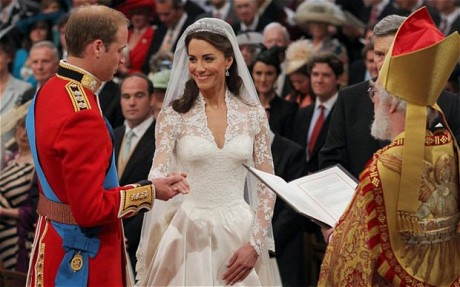
  • A Royal Frenzy

    For centuries, royal weddings have drawn a unique interest among the population; however it is not until recent decades that such events have been televised. The first televised royal wedding was in 1960 of Princess Margaret and Anthony Armstrong Jones who were married at Westminster Abbey. The occasion accumulated over 20 million viewers according to BBC News, and since then royal weddings have become a social event not only for those attending, but millions worldwide. With such a broad interest in the subject, it’s no wonder marketing and branding gurus jumped on the royal bandwagon.

    The wedding of Prince William and Catherine Middleton, now the Duke and Duchess of Cambridge brought in record numbers of viewers from all over the world. More than 52 million viewers tuned into NBC Universal, more than 40 million tuned into NBC news. But what would a royal wedding be in this day in age without a social media impact?  Don’t worry, Prince William and Kate made a huge splash on Facebook and Twitter. NBC News hosted a Royal Wedding Facebook event that received 7,500 attendees and over 500,000 impressions. NBC News also created a Twitter account @RoyalWedding that acquired over 90,000 followers and more than 1.5 million users. The frenzy didn’t stop there, “The Royal Wedding by NBC News” App for iPad, iPhone, and Android reached over 200,000 downloads and quickly became one of  iTune’s Top Ten listed free iPad Apps.

    Aside from the technological and social media craze, numerous memorabilia items were created just for the big day. From replicas of the engagement ring to china sets with Prince William and Kate’s faces, branding reached a whole new level. Marketers even went so far as to create toilet seat covers with the dynamic duo’s face and wedding date. It is safe to say, the Duke and Duchess of Cambridge have developed into their own brand with the help of IMC.

    – Katie Eagle, Deji Adeleke, Carissa Niederkorn, Anna Kate Babnik & Tiffany Evans

  • Osama=0, Facebook & Twitter=2

    Last night social media networks exploded with the news of Osama Bin Laden’s death. If you have a social media account, there was no way you did not hear the news before President Obama’s speech. Most people, especially members of the millennial generation, spread the news around the world like wildfire. On Facebook, statuses were updated every second with celebratory posts of the death of the most hated person since Adolf Hitler. Twitter set a new record on traffic, with an average of 4,000 tweets per second from the beginning to the end of President Obama’s speech.

    How does this relate to IMC? IMC incorporates social media, which helps create social capital. It is evident that last nights social media event fostered a community around the country and globe of American nationalism, helping to reunite the country once again as the United States of America. In all of our debates over whether social media inhibits social capital, it is now quite clear that social media is a driving force in creating social capital, and on a large scale.

    Here’s to you IMC, for helping create a community one status and tweet at a time.

    -Allison Day, Jessica Berinson, Megan Canny, Melissa Gagliardi, & Scott Burgess