 (Photo credit: Aviad.com)
Seeing as it is spring break, I thought this would be an appropriate time to talk about an advertising medium that does not get a lot of attention in the marketing world. Aerial advertising has been around since shortly after World War II when aerial advertising pioneer Arnold Sidney Butler first started attaching banners to his airplanes. Aerial advertising does not receive much attention when it comes to marketing because it is a bit antiquated and is very location specific. This however, does not mean that it does not fill a particular gap in the advertising world and because of this, should not be overlooked.
Unforeseen Benefits
Aerial advertising allows brands to advertise not only where there is a large gathering of people, but also where there is usually no other means of advertising. These are both bull’s-eyes for anybody looking to expand brand awareness quickly. The most popular of these locations are normally outdoor sporting events, beaches, and even over highways where there is regularly heavy traffic.
These criteria mean that certain locations are going to allow the aerial advertising industry to thrive, while in other locations it is obsolete.
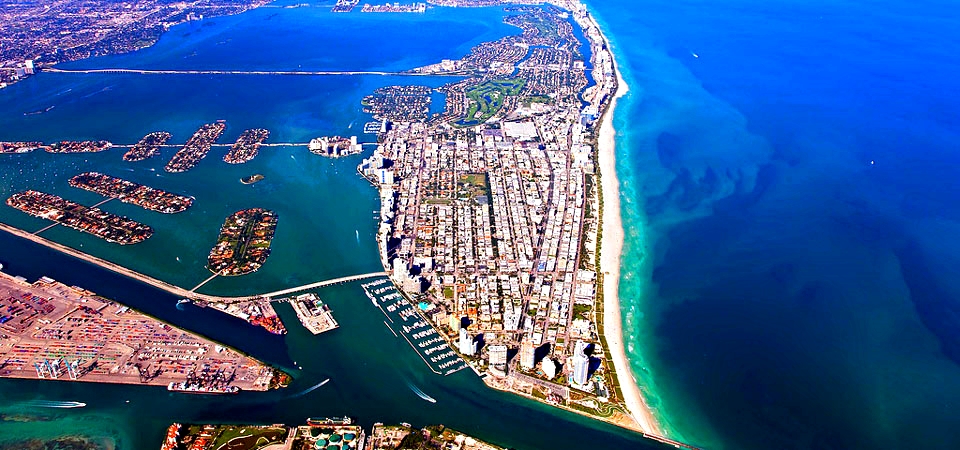
(Photo credit: http://www.southbeachvision.com)
One of the locations where aerial advertising is more than thriving is South Beach, Miami. Here aerial advertising has become a primary method for brands to reach thousands of people at a time. The combination of beaches, youth, and plenty of sporting events, makes South Beach the number one location for aerial advertising companies. This can be seen by the fact that the two biggest aerial advertising companies in the country, Van Wagner Aerial Media and Aerial Banners Inc., are both located in Miami.
Dangerous Downsides
While aerial advertising may be relatively cheap in terms of cost versus amount of people reached, there are a few innate risks.
The more obvious risk involved with aerial advertising, just like any other business involving giant metal machines flying through the air, is how dangerous it can be. Think about it— airplanes are already a scary concept, now add large crowds of people to the mix with planes flying lower than normal, and it becomes a dangerous situation. The process of getting banners attached to planes is no easy feat either. It requires a low-flying plane moving at full speed to carefully drag a hook through a loop. While there have only been a few aerial advertising related crashes, the potential for disaster is clear.
In addition to the physical risk that comes with aerial advertising, there are plenty of lawsuits to go with it. This is because the Federal Communications Commission does not have control over what is said during aerial advertising. Aerial Banners Inc. has experienced lawsuits when they were sued for slander after flying a banner that read, “Club Space — Please Pay Your Banner Bill!”. This is just one example of how lawsuits can pile up if you are not careful about what banners you agree to fly.
Parting Thought
Besides the dead of summer, spring break is the prime time for aerial advertising. Millions of college students flock to destinations where all the criteria for aerial advertising are met. South Beach may be the number one spot for the aerial advertising industry, but no matter where you go this spring break you are sure to see plenty of aerial advertising.
How do you feel about aerial advertising when you see it? Is it worth the risk?
References:
Pfeffer, Ryan (2016, May). In Miami, Aerial Advertising Is the Wild West of the Marketing World. Miami New Times. Retrieved from http://www.miaminewtimes.com/music/in-miami-aerial-advertising-is-the-wild-west-of-the-marketing-world-8445969

 The challenge becomes knowing how to properly use this new-found channel of communication. Companies who treat their audience as individuals, and therefore treat their organization as an individual, have the most success establishing a connection through social media. Instead of focusing on purely sales related messages, social media platforms should be used to communicate any information that is relevant to a given audience, messages should sound natural, and be current in order to really show off that human side.
 Now that Valentine’s Day is over, we can get down to the real celebration of the season: Single Awareness Day, or SAD. A dedication to all the single people out there, sick of the holidays and searching for a break from the commercialism that is Valentine’s Day.





 Ceviche owners, neither of which had prior restaurant experience, took to Facebook once they began the development of the restaurant. In the preliminary stages, their followers got to see behind-the-scenes photos of the construction and formation of the bar. They revealed a “menu preview” and even featured their first customer who ordered a red sangria on their opening night. This social media strategy engaged followers and potential customers, while creating anticipation for the new Panamanian-style restaurant. Their social media page continues to update followers on daily specials and “daily catches”, shares pictures of tasty dishes, and features customers enjoying their meals.





 IMC Hawks Blog