Tag: technology

  • What was that word again?

    “Four score and seven years ago our fathers brought forth…” and the rest I can’t remember. I know I’m not alone in the painstaking task of memorizing the Gettysburg Address, but are current junior high students the first generation to not participate in this tedious tradition? Dating back to 5th century BCE Sophists, memorization has been considered a great asset for rhetoricians. Sophists are known for their emphasis on teaching effective dialectics. One aspect of their teachings included encouraging their students to memorize long discourses to persuade their audiences. Sophists, who were masters of persuasion, considered memorization an art form of delivery.

    Now we have the ability to look up any information at the touch of a screen. If we don’t remember something right away, we don’t have to struggle for that tidbit to rise to the top of our brains-we can just ‘Google’ it. Some scholars suggest memorization is simply not a part of the modern student’s duty. Has this asset now become irrelevant?

    Image

    Image: Shaw Nielsen

    The Shallows, written by Nicholas Carr, analyzes the impact technology has on our brains and our thinking processes. We may not be able to measure if there have been long-term consequences of being glued to technology but some short-term alarms have been noted. Carr and other researchers have noticed technology’s impact on our attention spans. We are unable to sit to stay concentrated on one thing for a substantial amount of time with flipping to different webpages, checking our phone and flipping through TV channels…and all at the same time. The debate is whether we are learning more simultaneously or losing something we once valued: our memory. Carr comes to the conclusion that, although technology makes us smarter in certain areas, it makes us less intelligent in others. Is one impact of the rise of technology on mankind the loss the art of memorization? Or is this simply technology opening our minds for other tasks? The Sophists are surely turning over in their graves.

    -Rachel Edwards

  • Remember When… “Apple” Was Just A Fruit?

    Who could forget the first time we were able to hold hundreds of songs from our entire CD collection in the palm of our hand?  Or how about the first time we could browse through every artist in our musical arsenal with a gentle swipe of the thumb?  Today, Apple has taken the world by storm with a variety of products that all date back to the original iPod MP3 player, which was released on October 23, 2001.  This sleek invention took the world by storm by allowing people to store hours upon hours of music into a relatively small device that could easily fit in your pocket.  The era of cassette tapes and Walkman CD players had reached an end after the iPod hit the shelves.

    Image

    Almost six years later, on June 29, 2007, Apple had another technological breakthrough with the release of the highly anticipated iPhone.  The iPhone was a combination of an iPod, phone, camera, and mini computer and gave consumers a more media based alternative to the then popular Blackberry.  People were now able to make phone calls, listen to music, take pictures and surf the web with one sleek, pocket-sized device.

    Since then, Apple has consistently raised the bar by releasing new versions of the iPod and iPhone with new features and abilities that keep people wondering, “what will they do next?”

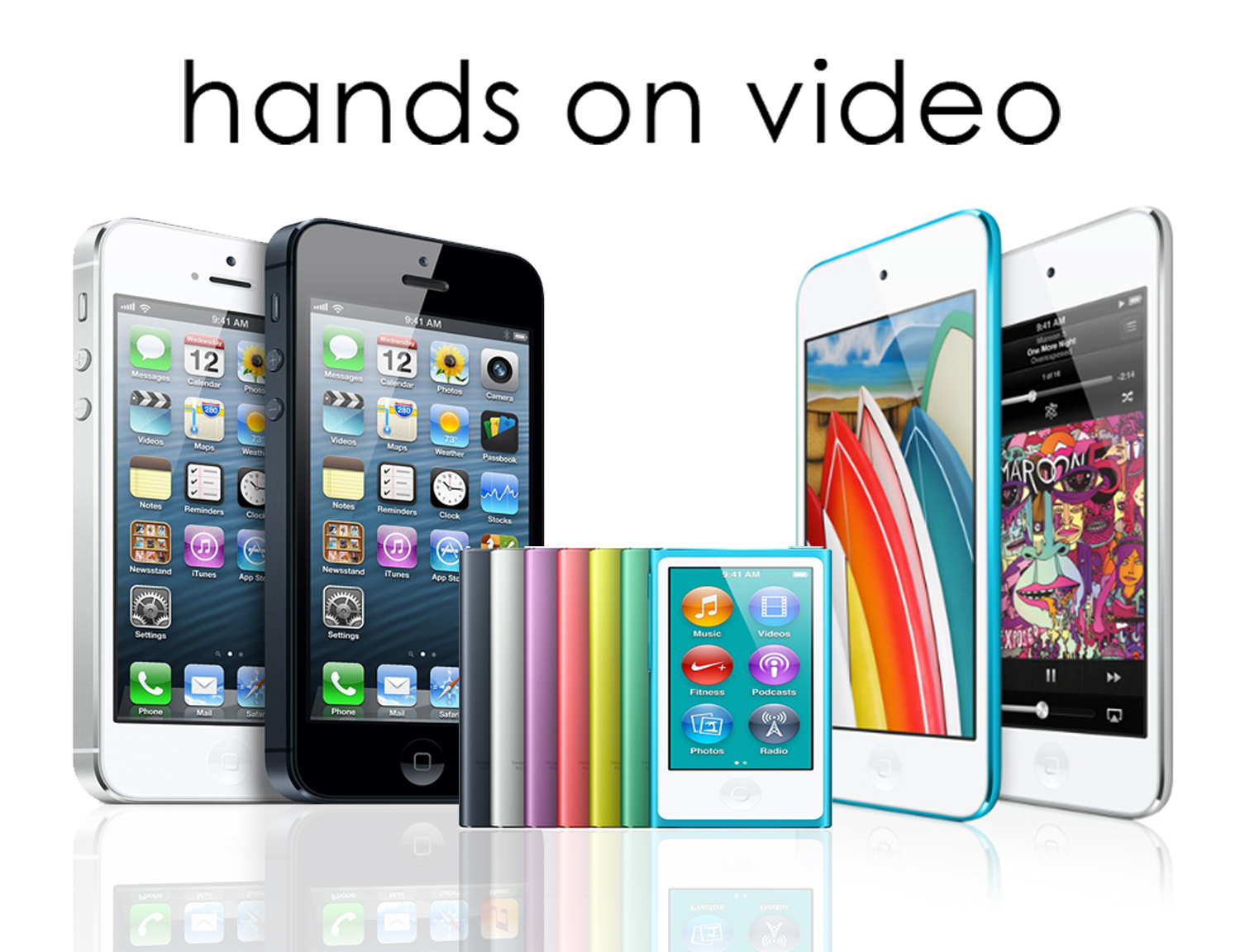
    On Wednesday, Apple unveiled the newest generations of the iPod touch, iPod nano, and the iPhone 5 to a public who was highly anticipating the “next big thing” in the technology market. Although the new iPod touch and nano caught a lot of attention with their new sleek, colorful design and advances in features such as the camera and the display, the iPhone 5 was the hottest topic.Image

    Over the past year, Apple fanatics have been wondering how the iPhone 4s could ever be topped. Before the unveiling, there were rumors that the iPhone 5 would come in many different colors, have a larger screen, and be made of liquid metal. After all of the hype, everyone fell silent around 10:00am on Wednesday, September 12, 2012 and finally caught a glimpse of the newest iPhone. Although it does not come in colors or liquid metal, the iPhone 5 has some notable changes in appearance.  At 7.6 mm thin, the iPhone is the thinnest and lightest smart phone on the market. In order to make the phone even lighter, the touch screen has also been altered and layers have been removed, increasing the clarity of the screen. Although the phone is thinner, it is a bit taller than the iPhone 4 and iPhone 4s.  Borrowing from the extremely popular MacBook, Apple has chosen to make the iPhone 5 from a combination of aluminum and glass.

    The sleek, sexy new design is not the only advantage of the newest iPhone.  For the photographer, Apple has included a camera with the ability to take panoramic shots, record HD video, and make edits.  Everyone’s favorite celebrity, Siri, has gotten even smarter than before and is capable of answering more questions.  A new application, called Passbook, is there to keep all of your tickets, boarding passes, and gift cards in one easy to reach spot.

    The iPhone 5 certainly has major developments, but will it be enough for people to trade in their iPhone 4s? Apple is marketing their newest creation as “the biggest thing to happen to iPhone since iPhone.” Many people believe that Apple has a tendency to sell society things they never realized they really needed and wanted until Apple told them it was important. Will their marketing techniques work? Or will people settle for holding on to their iPhone 4s for a little while longer?

    Jessie Butner, Meaghan Beam, Zach Abramo, Jack Lane

  • TechKNOWLEDGEy

    Changes in time catalyze changes not only in society but in the tools we use to connect with one another. From the telegraph to instant messaging our advancements in technology are so rapidly developing that some struggle to stay up to date. It has been a little over a century since the telephone was invented, and in that time we have managed to transform what we used to call a telephone into a device called a smartphone. We’re looking at you, iPhone. Not only have we managed to globalize communication in the last century but we have wrangled the use of the internet to help businesses communicate with their customers and allow friends to stay in touch. It is no wonder that with everything changing and developing so quickly that companies are turning to IMC consultants to help them keep up with the new technologies.

    As mentioned before, changes in time demands a change in tools. If a company can not manage their image there are people in public relations and integrated marketing communications that are fluent in the tools of social media and gauging the power of search engines. A smaller, local company may weaken if their consumers can’t access them as easily as others. Almost every business needs a website to maintain credibility and to inform the consumer of their services and locations. If it weren’t for technology, jobs for IMC and PR consultants wouldn’t have evolved into what they have become today. The more outlets for customer interaction the more roles that are needed to ensure a coherent brand message is being sent out and maintained through all possible points of contact. We are in constant change and with technology on the move it is imperative for a company to be able to communicate with its consumers by utilizing  the appropriate medium. Seriously, when was the last time you thumbed through the yellow pages to find a business? If you need to find something, you get on Google, enter your desired search and click on the best match that Google provides.

    For companies, staying relevant with modern technology is essential to creating a presence for your brand and technology today is allowing them to do so by employing multiple media outlets so that people can communicate with their brand. As the semester begins to draw to a close, a new crop of graduates will be entering into the job market, it’s imperative to keep in mind the true impact of the role of modernity. A company’s mastery of technology and multimedia tends to correlate with their success, in a time where “that was so five seconds ago” actually holds some truth. It is vital that businesses continue to make exponential progress, but unfortunately, this also means that like your now ancient VHS player and WalkMan, your brand new iPhone will soon be considered passe. Siri will be a thing of the past, something that the next generation will mock at throwback parties while rocking a Snuggie and some skinny jeans, poking fun at what lies in the past while riding the technological wave towards the future.

    By: Kacy Cox, Alexis Kapczynski, Sara Kaloudis, and Josh Bowman

  • Happy Data Privacy Day!

    Last month, Facebook updated the layout and features of users’ profiles, making it easier to share information with friends.  The upgrade also included tighter privacy settings.  Many users began complaining about Facebook’s privacy policy after learning that their personal information was being accessed by external sources without users’ permission.

    Facebook users also became wary of privacy settings on Wednesday when Facebook creator Mark Zuckerberg’s own Facebook fan page was hacked.  The hacker’s message encourages Facebook to become a publicly traded company “if facebook needs money, instead of going to the banks.”  The IP address connects the hacker’s location to the US Department of Defense office in Williamsburg, Virginia, although he could have hacked into their IP network.

    With users questioning Facebook’s privacy settings, the social networking site needs to appease its customer’s worries in order to keep them from moving to other similar sites.  This week Facebook is enabling HTTPS so that users can be sure that their information is being held by a secure connection.  If anyone tries to hack into a user’s Facebook page, they will not be able to see any of their information.  The catch, however, is that users must turn on HTTPS on their own.

    Facebook has also added authentication features that will ask for more information if suspicious activity is detected.  Photos and other information from a user’s Facebook page will be used to ensure their identity and questions will be asked that only the user could know the answers to.

    With all of these new privacy features being implemented with the help of Facebook’s public relations team, Facebook hopes their brand will remain legitimate and that they won’t lose any of their customers.  They have listened to the concerns of their users and have found multiple ways to calm down their worries.  With today being Data Privacy Day, we will see how long Facebook can keep their customers happy.

    -Brie Golden

  • Tablet here, tablet there, tablets everywhere!

    What in the world is a tablet? Last I checked, tablets were being used in the Flinstones to share information and, somewhere along in the Bible, Moses used them to share everyone’s favorite commandments.

    It all started with a device known as the Kindle. A simple, yet very effective e-reader created by Amazon. Its target market audience was certainly specialized in the sense that the only people purchasing this product would be those that could see the Kindle aiding in their avid reading habits. Then something happened. Technology-friendly giant Apple revealed to the world the iPad: basically a really, really ginormous iPhone. And what a success it has been. The iPad has sold over 2 million units. That translates to an iPad being sold every 3 seconds. Apple knew exactly the amount of lure and desire its iPad product would have on its loyal Apple customers because, as you may know, it costs a company five times as much to attract a new customer rather than to invest in the loyalty of its current customers. The amount of marketing and advertising that Apple has done for the iPad has exceeded well beyond any other tablet competitor on the market. The way they advertised it was also pretty ingenious. They marketed their product by showing the relevance of the iPad and how similar its functioning was to a laptop and PC; but it is perceived as cooler, sleeker, and geared towards the ever-evolving, fast paced, give-it-to-me-now technological society.

    So naturally, with the success of the iPad, came the injection of other technology giants to capitalize on this groundbreaking movement that somehow seems to be the next phase in this apparently unstoppable migration from big, clunky PCs to sleek, portable tablets.

    At the 2011 Consumer Electronics Show (CES), an unprecedented 45 new tablets were unveiled as being in the developing stages or already being moved into production. This mass influx of tablets is going to prove to be quite the competition for these companies as they begin to advertise and market their products towards consumers. One of the most important questions that all of these corporations are going to have answer is, “Why would someone need a tablet if they already have a laptop?” Apple seems to have already answered this question with the amount of exclusive user friendly applications designed specifically for their tablet that literally, cannot be accessed on any other device.Relevance and receptivity are going to be major components of the five Rs (relevance, receptivity, response, recognition, and relationship) of IMC that need to be addressed by companies somersaulting into the tablet arena. When will customers and prospects be most receptive to advertisements about tablets and at what point of brand contact will the customer be most receptive to the incentive to buy a tablet?

    It is going to be quite interesting to see how the market changes with this upcoming inoculation of tablets. Technology establishments will need to pay close attention to aggregation to determine just how many of their consumers are likely to jump on the tablet bandwagon. Instead of using segmentation to break down customers into different demographics, aggregation will allow companies to determine what exactly it is that customers do and how their behavior in the marketplace determines whether or not they will purchase a tablet. It was popular back in Fred Flinstone’s era; let’s see what happens in the next couple of years.

    -Deji Adeleke, Anna Kate Babnik, Katie Eagle, and Tiffany Evans