Tag: Social Media

  • Branded Letters

    Today marks the day that every little girl dreams of since the day her mother blessed her with her very own set of pearl earrings, high heel shoes, and sweet- but- sassy personality. Bid Day for sorority life at UNCW allows girls to put their collegiate fate in the hands of anxiously awaiting sorority women who only hope to have a new pledge class formed from the group of their various “rush crushes” developed over the course of the past five days of formal recruitment. After hours upon hours of chanting, smiling, talking, voting, and dancing, girls of UNCW can be associated with a sorority group on campus that they can call their own.

    With the recruitment process finally over, letter shirts are undoubtedly going to flood the length of chancellors walk. Girls won’t be able to fight the temptation to brand themselves under the stereotype of such letters; proud to be a part of the group that is associated with the letters sewn onto their shirts. However, sorority members must be fair-warned: this type of attire is a form of branding that should be used with caution and responsibility. The actions you take and words you say as you wear these letters not only represent you, but also represent how you want yourself and your chapter to be perceived by others.

    Each sorority on this campus offers something different. From reputation to reality, the young ladies involved in Greek Life all make an impression upon their peers according to how they act when they wear these prized letter shirts. If one girl wearing the letter shirt misses class; all sorority women skip classes. If one girl gossips while wearing the letter shirt; all sorority women gossip.

    At least in the minds of those who stereotype.

    This kind of branding is not only true for sororities. All organizations create their identity based on the kind of brand they hope to portray through their members. Each person has the power to represent their group as a whole based on how they act individually…creating an instant association built from one impression. The new members of the Greek system on UNC-Wilmington’s campus have the ability to either accept this brand that has been established for their particular organization or to enhance it. The perception of a group is something that can change with simple, consistent actions that are valued and upheld by all members. Therefore, the revealing of Bid Day today should also reveal hope to expand the brand that these women are newly associated with on UNCW’s campus.

    -Sally, Jared, Oliver
  • Turning the Channel

         Over the past week, the American public has been inundated with file footage from the events of 9-11.  Much of this footage has been a tribute to the heroes who gave their lives that day; however, the most graphic content reflects a much more horrific aspect of the moment- death and destruction.  No one can discount the painful reality of that day.  The destruction of the World Trade Center, the attack on the Pentagon, and the downing of the plane in Pennsylvania were an act of war, and with that came violence, chaos, and carnage; realizations that most people find unappealing even if it reflects the truth of the matter.  For those of us who have a tendency to shy away from all things bad, should we have been forced to revisit or see for the first time such graphic representations of the pain and death from that day?  As good Americans, we undoubtedly want to honor those who perished by being tuned in to the tributes presented by the media networks, but how much is too much?

         The videos of people jumping from the towers will forever be a tragic part of the archive of 9-11.  Some would cite these as the most horrific images from that day, yet much of the carnage was never publicly released because it was legitimately too intense for public viewing.  The images of thousands of burnt and twisted bodies is certainly something that few people yearn to see, and rightfully so, yet there lingers a debate about the release of this footage.  Roxanne Silver, a University of California Irvine professor of psychology and social behavior, had this to say about the matter, “It’s very clear to me that the repeated exposure of images of 9/11 serves no purpose for adults or children, and I would discourage parents from allowing their children to be exposed to graphic images.”  In regards to the children, it is easy to agree with this statement as it is a delicate task to educate young ones on these events without overexposing them.

         One of the authors of this post had the opportunity to speak to a fourth grade class about 9/11 yesterday and found himself at times challenged to describe certain events from the war, in particular, without being inappropriately graphic.  Children aside, many of these images, graphic and patriotic alike, serve as a rallying cry to serve justice on the persons who brought the war to us that day and will forever be a reminder of why we continue to remain vigilant.

    – LaPuasa, Claire Dillard, Louis

  • Osama=0, Facebook & Twitter=2

    Last night social media networks exploded with the news of Osama Bin Laden’s death. If you have a social media account, there was no way you did not hear the news before President Obama’s speech. Most people, especially members of the millennial generation, spread the news around the world like wildfire. On Facebook, statuses were updated every second with celebratory posts of the death of the most hated person since Adolf Hitler. Twitter set a new record on traffic, with an average of 4,000 tweets per second from the beginning to the end of President Obama’s speech.

    How does this relate to IMC? IMC incorporates social media, which helps create social capital. It is evident that last nights social media event fostered a community around the country and globe of American nationalism, helping to reunite the country once again as the United States of America. In all of our debates over whether social media inhibits social capital, it is now quite clear that social media is a driving force in creating social capital, and on a large scale.

    Here’s to you IMC, for helping create a community one status and tweet at a time.

    -Allison Day, Jessica Berinson, Megan Canny, Melissa Gagliardi, & Scott Burgess

  • R.E.C.Y.C.L.E. It begins with you and me!

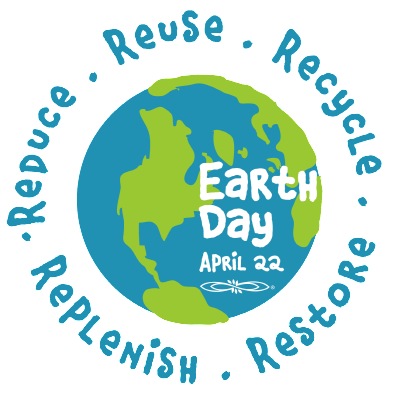
    Are you looking for a fun and easy way to help show support for Earth Day? If you are, there is an all natural rainwater car wash that features music, free food, and children’s activities such as birdhouse painting this Saturday, April 23. The event takes place from 11 a.m. to 3 p.m. at the corner of 16th street and Queen Street. It is hosted by the Wilmington-Cape Fear Home Builders Association, which our very own Allison Day interns for. The event is co-sponsored by the Carolina Green Building. The first ever Earth Day Rainwater Car Wash is completely free of charge and is 100% eco-friendly because the cars will be washed by natural rainwater that has not been contaminated by harmful chemicals.

    How does this relate to IMC? This event has been promoted by the Wilmington- Cape Fear Home Builders Association through non-traditional media with the use of a Facebook event, as well as the traditional media tactic of a press release. The event will also help foster social capital among families within the community by bringing people together to help continue the celebrations on the day after actual Earth Day.

    -Allison Day, Jessica Berinson, Megan Canny, Melissa Gagliardi, & Scott Burgess

  • Who Wants to Bowl Alone? Not Me?

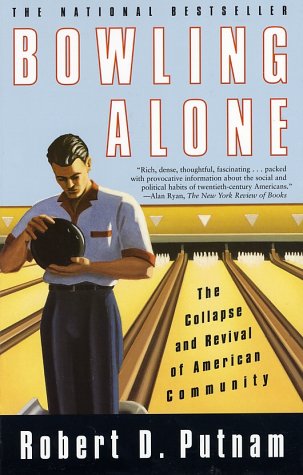
    One of the books we read this semester was called Bowling Alone, and no it is not about the sport of bowling, much less actually bowling alone. It is about fostering social capital in America. Back in the early to mid 1900s, people were involved in social groups, clubs, and organizations within their community. Everyone was involved, but over the past few decades involvement has dwindled, leading some to believe that social capital in America is non- existent. Before we can explore this book further, we must define social capital. According to Robert D. Putnam, the author of Bowling Alone, “The core idea of social capital theory is that social networks have value.” Basically, being connected with others is beneficial to ones life, and as a member of a group you are able to accomplish more. Life is more meaningful when you have friends, and someone to share happiness and trust with.

    Do you think that social capital is lacking in today’s society?

    Unfortunately, Putnam failed to take into account the age of social media, mainly in part that Bowling Alone was published before such a term existed.  The question now becomes in this day and age, “Does social media foster social capital?” Being connected with hundreds, perhaps even thousands of people, at the click of a mouse does create a network of individuals. On the other hand, can social capital really happen in the digital world? Social capital has always been within ones community, and now since the rise of technology has created a global community, is this still social capital?

    Overall, we think Putnam made valid claims about the diminishing amount of social capital in the United States, mainly in groups and clubs. We think that he should write a newer version of Bowling Alone and comment on the addition of social media to the equation.

    -Allison Day, Jessica Berinson, Megan Canny,  Melissa Gagliardi, Scott Burgess

  • Social Networking- A dictator’s worst enemy

    At this point, social networking sites are no new phenomena in the United States. Facebook gets more hits daily than even Google, and Twitter is becoming more and more popular by the day.  With the ability to follow, like, and friend people from around the world, news outlets have learned to use the social media sites of people involved in the recent revolutions to get minute to minute updates about protests around the world. Because of these quick updates, in both Egypt and more recently Libya, dictators clinging to power have quickly tried to shut down the country’s internet access in order to slow down anti- government protest information.

    In Egypt, Wael Ghonim, the marketing manager for Google in the Middle East and North Africa tweeted about different protests by the hour which eventually led to his arrest by the Egyptian government.  This only furthered his following and helped spread the word faster about his anti- Mubarak movements.  In the United States, Secretary of State Hillary Clinton participated in an online discussion with young Egyptians who were involved in the riots.  By answering their questions in an online interview which were eventually posted on an Egyptian social networking site, Clinton assured the citizens that the United States supported their democratic ideals.

    One of the many western journalists who have been following the chaos in the Middle East and Africa, National Public Radio’s Andy Carvin has been updating his twitter page constantly to keep people around the world up to date of current protests and government decisions. 

    With millions of people around the world participating and actively using several different social media sites, it allows information to be passed around at a greater rate than ever before. With the capabilities to follow sites from smart phones, laptops etc. it will be hard for any dictators over staying there welcome to keep ahead of the actions of their irritated citizens.

    -Chad Graves

  • Corporate Communication Wrap Up

    As our time in the Corporate Communication classroom comes to a close, the information and knowledge that we have gained will continue with us as we each venture out after graduation into our desired career field.  Among the class of communication majors are students interested in event planning, public relations, integrated marketing communication and advertising, just to name a few.  Corporate communication is involved in all of these industries.  As stated in Corporate Communication: a guide to theory and practice by Joep Cornelissen, one of our required readings for the course, “Corporate communication is a management function that offers a framework for the effective coordination of all internal and external communication with the overall purpose of establishing and maintaining favorable reputations with stakeholder groups upon which the organization is dependent.”

    When the course first started back in August, not a single student in the class knew what the definition of corporate communication was.  Even though everyone registered to take the class, no one really had an idea of what it entailed.  Today, every student in the class has a definition of corporate communication, as well as plenty of detailed and background information that will give people a better understanding of the topic.  A big improvement from three months ago, wouldn’t you agree?

    We have covered a variety of forms of corporate communication that take place in sports, music, movies, politics, crisis management and careers this semester.  We have learned that communication is essential when it comes to an organization’s corporate image and identity, reputation, stakeholders and shareholders.  We have learned what makes a company go from good to great, the characteristics of a great company and why every company should strive to become one.  We hope we have left everyone with a better understanding of corporate communication.

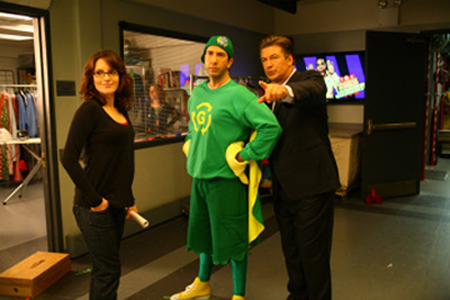
    REMINDER! This week is NBC’s Green Week!  Green Week runs from November 14-21.  All this week, green topics will be featured into news and your favorite shows on the NBC network, such as 30 Rock and The Office, as well as special reports, fundraisers and documentaries.  Join NBC in celebrating the numerous ways that you can make a difference in the environment.

    -Danielle Dorantich