Tag: Marketing

  • Finding IMC related career openings

    Thanks to unlimited online resources, job hunting in 2011 is far more different than what it used to be.   Some people have career ideas in mind, and some people are unsure about what is out there.  For the people who are unsure, we have some advice to help you figure out what careers are available and suited to your skills and talents.  For those who are interested in an IMC related career, advertising and PR firms are great places to start looking for openings.  Even if you don’t know which job is best for you, look at all the openings and read the descriptions, then you will be able to start matching your abilities and interests to the postings.  Eventually, it will become easier to identify job titles that you may be qualified for since most of the companies are set up similarly.

    If you still don’t know where to start, there are many publications, like AdWeek and PRWeek that contain news about communication related companies.

    Both publications have yearly awards that they give to exceptional firms, so if you want to research cutting edge and innovative companies, you should conduct a Google search, like “PRWeek awards 2010.”  Information about the award recipients will become available which is a great way to figure out the names of different firms, and to see what they do well.

    Many PR and advertising companies are owned by a few larger corporations that specialize in communication.  The three that we have noticed are Omnicom, WPP and Interpublic.  Each corporation owns multiple advertising and PR agencies and their websites provide links to the agencies.  When you visit the agencies’ websites, you can find more information about their clients and what they do.  Most agencies’ websites have a careers link as well, where you can start your job research.  Some agencies, like Burson-Marsteller, have a “careers path” section, explaining the levels of employment and how to apply for a position.  The next step is making sure you have a stellar resume and attention grabbing cover letter that displays talents and skills similar to those found in the posting to which you are applying.  Go to a career center for help so that you can have a better chance of landing your dream job or internship.  The UNCW Career Center is located in the University Union Room 2035 and is open Monday through Friday, 8am-5pm.  There will also be a resume coach assisting with tips on resume format and content in Randall Library Lobby on October 13 from 10am-3pm.  Good luck!
    -Stephanie Bakolia, Claire Outlaw, David Glaubach

  • A World Without Jobs

    When you think of the economy, you think jobs. When you think of the current status of the economy of the United States, you think “we have no jobs.” But, have you ever thought about a world without Jobs?

    Just over a month ago, the CEO of Apple Inc., Steve Jobs, stepped down from his position as the head of one of the most powerful companies ever to exist. Amidst health issues, Jobs resigned from his job as possibly the most brilliant and innovative software developers and business man of all time. When this happened, Apple enthusiasts’ around the world stopped to ask themselves, “what will Apple be like with no Jobs?”

    Just a little over a month ago, we considered Apple to be at a loss for losing Jobs, yet now the entire World is grieving over the passing of Steve Jobs. Yesterday, the 56 year-old mastermind behind the Macintosh Computer, the iPod, iPhone, and the iPad, passed away ending his battle with a rare form of pancreatic cancer.

    While we sit and listen to our iPod’s and play Angry Birds’ on our iPad’s and call our friends from our iPhone’s, we have a piece of Steve Jobs with us. While much of the nation remains unemployed and our economy’s fate is unknown, we can be at peace knowing we got to experience Jobs before he was gone.

    — Jordan Hill, Michela Noreski, Ashley Nelson

  • When the Going Gets Tough the Tough Get Going

    Although the economy is looking brighter than it has been in recent years, the marketing world is still facing two major problems: people are still feeling the effects of lay offs and are not quite in the position to spend money frivolously and companies are also feeling the wrath of the economy and don’t have the money to spend on expensive and elaborate ad campaigns. So what are they doing in order to get their message out? An age old trick in the marketing books and what most of us in IMC like to call, guerrilla marketing.
    It is more important than ever for companies to make their brand stand out and to develop loyal consumers who are actually able to come in contact with the brand. Guerrilla marketing provides both local and national companies that opportunity and gives them the chance to break though all the clutter and noise of traditional marketing.
    We all are familiar with the game Clue, right? Well take a look at how they are using guerrilla marketing to remind all of us of a favorite childhood game.

    And Clue isn’t the only one hopping on this train. Many companies and non-profit organizations are increasing their guerrilla marketing strategies in order to save money and gain direct contact with their consumers. What this innovative strategy and the downing economy have in common is that it’s forcing a lot of us to do something we haven’t done since elementary school: think outside of the box.

    -Alaethea Hensley, Jessica Kingman, and Lauren Phelps

  • Walking Billboards

    When we first hear the term “product placement” our minds invariably flash to ill-disguised attempts by companies to sling their brands into popular television shows and movies. The movie Transformers 3 was bashed for looking like one giant advertisement for a litany of companies including Mercedes, Nokia, and Apple.

    But what about the infamous red carpet? As stars twirl their way down these crimson lanes, they will all face one important question: Who are you wearing? By having a star tout your brand, it raises its stock tenfold. For instance, in 1998, Kim Basinger arrived at the Oscars in an Escada gown raising the then relatively unknown German fashion house’s profile to an international status. Jewelry also has a big stake in the red carpet industry. Jeweler Harry Winston can usually be found dripping off of no less than 20 celebrities, but when rival brand Chopard wanted a part of the red carpet action they offered celebrities Hilary Swank and Charlize Theron a six-figure paycheck to wear a pair of their earrings.

    Off the red carpet, celebrities are still walking billboards for fashion companies. Take a look at the Australian footwear brand UGG. After the tabloids started picking up shots of Cameron Diaz and Kate Hudson flouncing around town in their boots, sales went through the roof. At this point, almost everyone either has a pair of UGGs or knows at least two people who do. And in this vein, when The Today Show featured a segment about Madonna’s infatuation with designer Steve Madden’s Iglou boots, the company racked in 240 orders for the boots in a grand total of 13 minutes giving the company a whopping $30,000 in profit. 

    So what does this all mean? Must our favorite celebs only be seen as walking product placements? Do they not have any taste of their own? Of course, they do. But the next time you run out and buy a pair of shoes because Kim Kardashian was wearing them at her birthday party, think how you might be doing exactly what their marketers intended.

    -Jessica Kingman, Alaethea Hensley, and Lauren Phelps

  • Product Placement: The 90’s and Today

    Growing up in the 90’s was quite a rich experience. Alongside the bright colors, turtle necks, and psychedelic patterns that we all wore, an amazing new shoe graced the decade that had all of the kids talking. It was marketed as a shoe that could make any kid run faster, jump higher, and practically defeat gravity.

    It was the PF Flyer.

    These particular shoes were worn by Benny “THE JET” Rodriguez; the star of the movie, The Sandlot, who became the instant role model for every young boy dreaming of a baseball career. While wearing these shoes, Benny caught a baseball that was signed by the world famous player, Babe Ruth; diving for it against the clutches of a monstrous guard dog.
    After this movie hit screens, kids in the 90’s just had to get their hands on these PF Flyers. These shoes were marketed as something magical, all because of one slow-motion movie scene. They could not only make you run and jump higher, but these shoes were also instantly associated with the heroic catch made by Benny Rodriguez. If Benny could catch that ball, so could you. But only if you had your pair of PF Flyers.
    At the time, kids did not have the knowledge to dissociate Benny’s success among his friends and baseball from mere product placement. The placement of these shoes during such a critical point in The Sandlot was no mistake. Marketers from the brand knew very well what they were doing, and they did it well. The PF Flyers became a staple sneaker for every young kid in the 90’s. Perhaps the successful sales numbers were not solely because of the appearance on Benny Rodriguez’s feet, but it was simple placements such as this that made the brand attractive to families across America.
    Today, we see this kind of marketing everywhere we look. Movies and television programs lace their characters and settings with products as a result of eager marketers trying to solicit their image. When the marketer has the opportunity to take advantage of a hopeful, entertained audience through something as simple as product placement, they are diving into more than they may have originally intended. They are not only selling a product, but they are selling a brand message. By choosing which scene, character and setting to place products, the marketers are aiming to take advantage of a relationship that has been built between the audience and the movie. In doing so, they can only hope that the audience will feel so related to the movie that they will be reminded and persuaded about the “value” the product had in the film.
    So, would Benny Rodriguez have caught the infamous catch if he was wearing LA GEARS or NIKES? The marketers of PF Flyers want you to think not.

    Sally Shupe, Jared Sales, Oliver Evans

  • An ad is worth a thousand words


    This week, T.V. viewers all across the United States are preparing for the season premieres of this fall’s new television series. Stations such as Fox, CBS, and Showtime are all gearing up for the new seasons of their most popular shows as well as introducing new shows to the mix. Every season, many new series are introduced, yet many fail; could it be because of poor advertising?

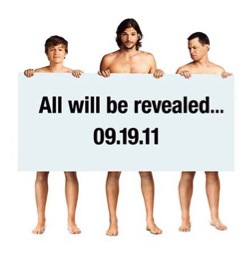
    Before many of these shows are aired, T.V. stations produce numerous ads promoting what’s new to fall television. In regards to Ashton Kutcher’s new role on CBS’ Two and a Half Men, much talk has been going around as to if the show will continue to be a success. Looking at the ad created for promoting its ninth season, Two and a Half Men is portrayed as a show filled with somewhat crude humor and mystery surrounding what’s to come.  The decision to not put the show’s name on the ad was a risk taken; however, it seems to draw even more attention to the show.

    It seems as though a good, comedic sitcom is hard to come by these days. Many of the newer sitcoms never survive the first couple weeks of airing due to poor T.V. ratings.  One comedy set to premier tonight is Fox’s new light and airy show, New Girl, starring Zooey Deschanel. Known for her quirky personality, Deschanel stands front and center of the television ad with an awkward expression on her face. At first glance, New Girl appears to be a show filled with humor and happiness. Perhaps the use of bright colors and that sneaky smile Deschanel wears will draw more viewers in.

    After looking at this season’s T.V. ads, it is evident that certain shows will more than likely draw a larger crowd than others. What it comes down to is: what do T.V. viewers want to watch on a regular basis?  Can looking at a preview advertisement and commercials set the bar for up and coming shows? We’d say so.

    Which shows will you be tuning into this fall?

    -Stephanie Bakolia, Claire Outlaw, David Glaubach

  • Breaking the Brand Bank

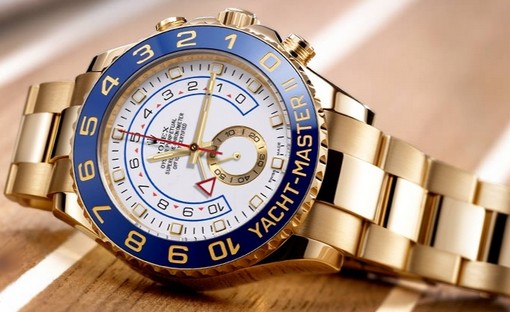
    It’s just a watch right? Wrong. It’s a representation of who you are as a person, an insight into your success and a statement of your style and character. It’s a Rolex and it costs a ridiculous amount of money.

    What do customers look for when shopping for a product? Quality? Price? For most people, this depends on the product. I am sure everyone can think of at least one consumer good in which you are loyal to a single brand. For me, this is my shampoo. Why pay twice as much for a bottle of John Frieda when I can easily get the knock off and save a buck? Because I have developed a brand loyalty; an unwavering devotion to John Frieda hair products and I don’t care if it’s on sale or not. I’m choosing this brand. For most other things in my life, I am content with generics or off brands that generally work as well as the name brands they imitate but when it comes to my hair care I never compromise.

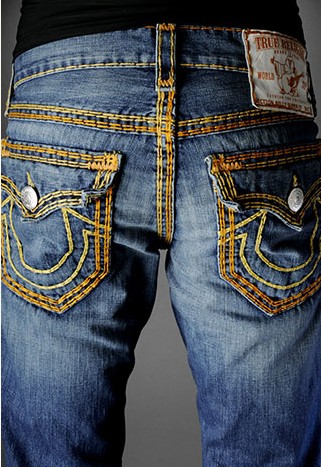
    What phenomenon is it that gets us to pay exponentially more for something that works just marginally more effectively? Does the $8000 Louis Vuitton suitcase really do the job better than your army issue canvas duffel bag? Do the $400 True Religion jeans really make your hips look smaller? The truth is it doesn’t matter. What matters is how we feel. Like the feeling that results from when out of the corner of your eye you notice someone taking an appreciative glance at your checked bag or the “Nice Trues!” from the guy at The Dirty Martini when you come off the dance floor…it’s all about feelings…and feelings matter…to the tune of over 4 trillion dollars domestically in 2009 alone.

    The theories behind brand loyalty run far and wide with arguably one of the more interesting being religion.  An article from futurepundit.com shares that Prof. Ron Shachar of Tel Aviv University’s Leon Recanati Graduate School of Business Administration says that a consumer’s religiosity has a large impact on his likelihood for choosing particular brands. Consumers who are deeply religious are less likely to display an explicit preference for a particular brand, while more secular populations are more prone to define their self-worth through loyalty to corporate brands instead of religious denominations.  Whether it’s religion, feelings, need or just plain greed motivating us, Americans consume labels and brands voraciously.  Perhaps we could all use a little less of both.