Tag: Communication

  • Challenge: Build Your #brand In 140 Characters

    Social media is a growing evolutionary electronic forum around the world.  Some argue that Twitter and other social media sites are becoming the journalism of the 21st century. There are numerous social media outlets which allow their users to instantly connect with thousands of online communities and share a limitless amount of information.  From celebrity Tweets to Facebook events, wall posts to Pinterest pins, people are staying connected in a variety of forms on the Internet.  Twitter, founded in 2006, has become one of the leading social media outlets allowing users to stay up to date with current events. From international businesses to famous celebrities, Twitter allows its users to feel connected to whomever they choose to follow.  Celebrities like @Kim_Kardashian, @Heidi_Klum, @Ryan_Seacrest, and @Snooki all use Twitter to enhance their #brand and attract followers.

    The use of social media sites is becoming one of the most dependable and fastest ways to sell and promote products. In just a few clicks marketers can have access to any target audience they desire. Twitter is an efficient way to connect people to ideas and enhance their #brand awareness. It also allows marketers to engage their audience in a manner where the consumers actually want to receive information. Twitter can also be used as a research method to learn what their target audiences are tweeting about and incorporate those ideas into their marketing strategies. Twitter can be used to build and enhance a personal #brand by making connections with their target audience and answering their questions and comments directly.

    With each tweet, celebrities are promoting and advertising themselves in 140 characters or less. Some celebrities control their own accounts while others are maintained by their PR agent. Using Twitter for publicity increases their popularity while establishing their #brand.  It also allows celebrities to establish more of a personal connection to their fans. Sometimes celebrities will re-tweet and reply to comments, questions or concerns that their fans send.  This gives them an understanding of what their fans like and dislike about their #brand. Twitter provides these celebrities an opportunity to prove that they are just like everyone else.

    @Kelsey_Bendig, @Brian_Burch, @Andrea_Blanton, @Brooke_Keller

  • Foursquare U

    Back before texting and tweeting, students on college campuses relied on announcement boards and gossip floating in the student center to find the popular hang out spots or know about the latest buzz. Today, news about and around campus is instant. Most major universities have embraced social media over the past decade and are using it to reach college students in a unique way. But how can universities gain access to real-time social trends on campus? Welcome to the new and evolving world of geosocial networks.
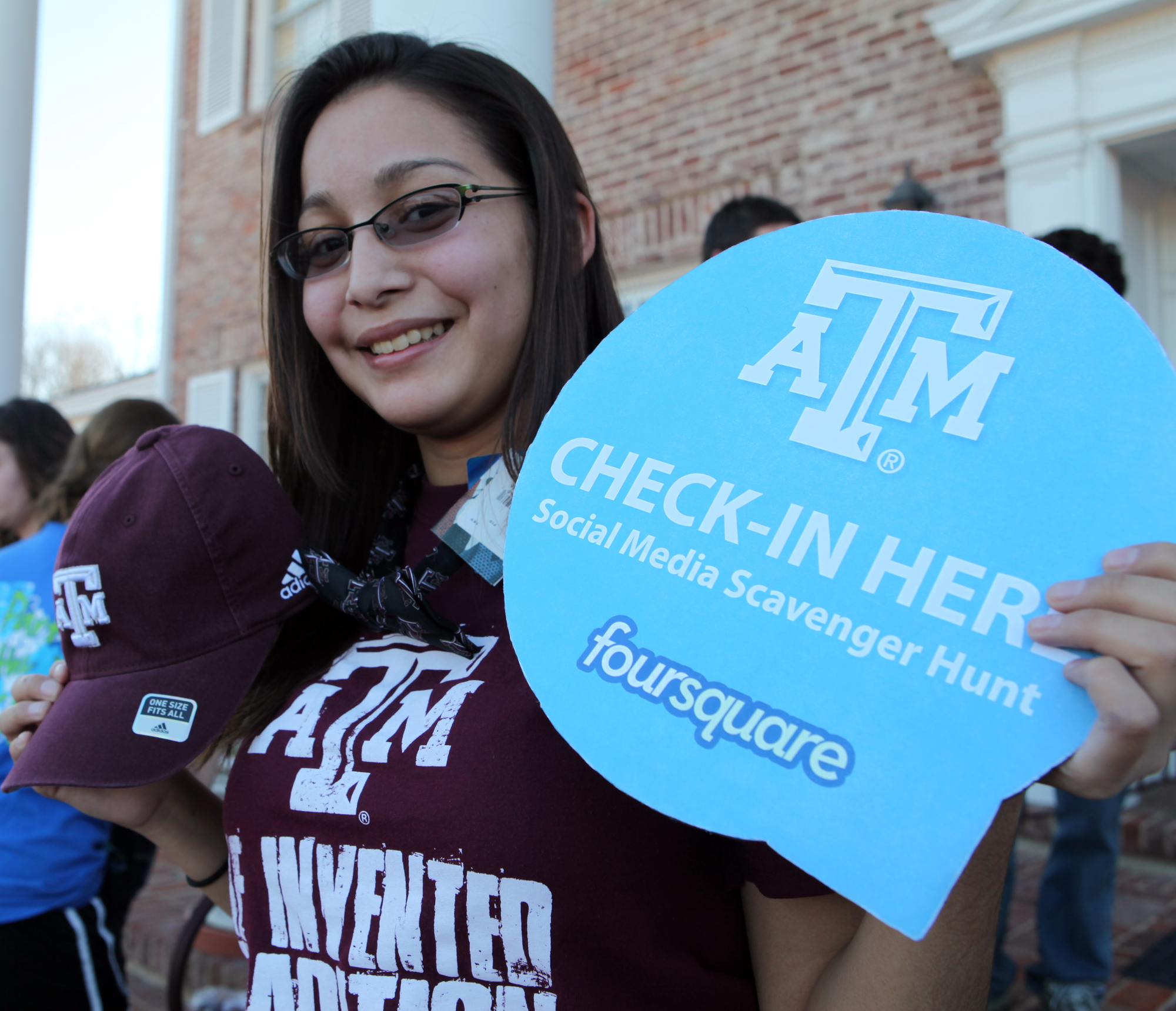
    Geosocial or “location-based” social networks are on the rise, with the forerunner being foursquare, a mobile app launched in 2009 that allows users to “check-in” to various locations and share where they are and what they are doing with their friends. Access to real-time location data from foursquare allows marketers and businesses to know what locations are “trending” as well as the demographics of users checking-in to their establishment. With the growing momentum of foursquare, universities are hopping onto the “check-in” train and recognizing foursquare on campus.
    Why should universities be interested in foursquare? For starters, foursquare currently has 15 million users and over 1.5 billion check-ins worldwide, with a growth rate of 3400% in 2010. Chances are that your business or venue is already on foursquare and users have probably checked in and maybe even left some tips. Information that users enter when creating a venue may be incorrect, but universities that claim their venues can add appropriate information to academic buildings to ensure the best overall experience for faculty, students, and guest.
    Universities are beginning to recognize the potential value of information gathered using geosocial networks. What does 4pm look like on campus? Is the library packed? Are students working out? Applications like foursquare can also attract visitors on campus by offering “check-in” deals (ex. 10% off a shirt when you check-in to the campus bookstore), creating a self guided mobile tour of academic venues, and leaving historic information or helpful tips for different locations.

    Most importantly, foursquare is free advertising (for now). Not only that, but it can be interactive and rewarding for users, perhaps by giving away free university gear for going to the library, attending a campus event, or staying healthy at the gym. The possibilities for university marketing are endless.

    By: Hunter Wilson, Josh Vester, Ashley Oliver, Molly Jacques

  • Social Media Backlash Against Komen

    Not only do companies have to worry about negative blogs and reviews to control during an organizational crisis, but now they have to be prepared to control all sorts of social media outlets as well. Susan G. Komen had trouble with just that as they released information to the public on January 31st saying they will no longer provide Planned Parenthood with funding for mammograms for low-income women for breast cancer screening. Immediately this became a very controversial topic on social media sites such as Twitter, Facebook, and Pinterest. Many believe that this decision was made because of political pressure from anti-choice groups. This is exactly what Komen is denying and released a statement after many Komen supporters were posting very negative comments. This statement said that the decision to cut funding to Planned Parenthood was not a political move; instead it was because they now have new funding criteria.

    Interestingly, Komen and Planned Parenthood had been in contact weeks before this came out to the public. So wouldn’t you think Komen had plenty of time to realize things could get touchy? To make matters worse, Komen started to delete the negative comments on their Facebook page. What Komen did not realize is the political power of social media and many need to learn from this. When the Associated Press reported the news that funding was going to be cut, Planned Parenthood blasted news releases on Twitter and Facebook. Once Komen realized they couldn’t change the public opinion around or even slow down the negativity on social media, they reversed their decision to cut funding.

    At a time of crisis in an organization, your message and speed of that message is very important to insure the least amount of damage. Komen was not ready for this backlash of so many people on their social media sites and once they actually responded, it was brief and too defensive. On the other hand, Planned Parenthood prepared for this for weeks before it went to the public and immediately posted to get fans and supporters involved. Some ways they got supporters involved is by asking for donations, sign an online petition, to Tweet or post about it on Facebook, and since then has added over 32,000 fans. Clearly, Komen should have taken a different approach in handling their social media sites and the communication with their avid supporters.

    By: Laura Simmons, Mollie Berthold, Christina Stevenson, Dorothy Conley

  • Have a Sexy Valentine’s Day, Gorgeous!

    A week from today, one of the most commercialized and superficial holidays will occur: Valentine’s Day. For those of you who are one half of a couple, Valentine’s Day is all about making your significant other happy, whether it involves showering him/her with gifts, making dinner reservations, or planning exuberant and normally unnecessarily expensive dates.

    The beginning of February marks the time when store fronts become clad with hearts, cupid cutouts, and pink and red streamers.  Around this same time, we begin to see an increasing number of men lurking around lingerie stores, especially Victoria’s Secret – and for good reason.  Victoria’s Secret has a dramatic increase in sales during the season of romance. With their sexy print ads in magazines, their silky almost-obscene commercials, and their free “Lacie Pantie” giveaway, what man in their right mind would avoid giving their girlfriend/wife the gift of sexiness?

    In their 2012 Valentine’s Day campaign, Victoria’s Secret Angels clad in pink and red barely-there bras and panties have advertised to their customers that with the gift of anything from their line of lingerie, their Valentine’s Day celebrations will be fabulous. In their sneak peek to their photo shoot, the Angels prance around in their under garments, smiling, laughing, and selling the ideas of sex and playfulness. In interviews, the girls claim that any man could win their hearts on Valentine’s Day by picking out something from the Victoria’s Secret shelves. One even says that if a man chooses something that he likes, it will give plenty of hints to his significant other.

    Not only does this campaign appeal to male shoppers, but it also appeals to women. The Victoria’s Secret Angels encourage their customers to feel sexy, and by offering specials, free panties, and coupons during this season, women will certainly be able to feel like Angels.

    So whether you are shopping for a significant other or are planning on spoiling yourself with brand new sexy lingerie, Victoria’s Secret will certainly be the place to shop this romantic season.  And don’t forget to have a sexy Valentine’s Day, Gorgeous!

    Love always, Christina Stevenson, Mollie Berthold, Dorothy Conley, & Laura Simmons

  • All The Single Ladies

    Valentine’s Day is a holiday dreaded by a great deal of people, both male and female, for various reasons. There is pressure on both genders to perform, declare emotions, and out-do previous years or expectations. Those who fail at this task of grandstanding may in fact find themselves without a date for next year. Okay, so there’s a ton of pressure on people in relationships, but what about those of us who are single? While some take pride in their solitude, others wish they had someone to be their valentine, and a few twitch at the mere thought of being in a relationship.

    According to an article in the New York Times, being single is a prevalent occurrence these days with 59.9 million single women in America. This staggering rate may surprise some, but companies like Dove chocolate see these table-for-one ladies as a prime marketing demographic. They hope to strike a chord with this growing independent group by catering their advertising to the women who are without companions. That is why this year Dove has made a campaign to remind women Valentine’s Day isn’t just about romance.

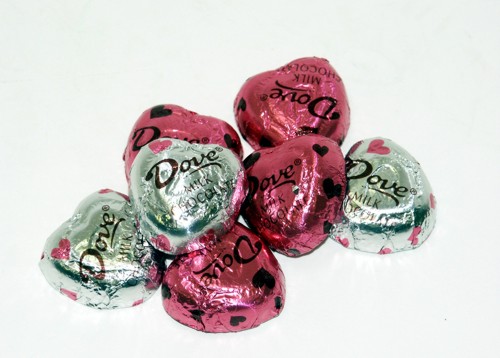
    Dove is banking on the stereotype that single women will turn to chocolate this year on Valentine’s Day. Instead of the standard “Call me” or “I’m yours” found on the candy hearts we used to share with our playground crush, Dove has created a host of witty comments and placed them on the inside of their chocolate wrappers. Some of the best include, “You’re gorgeous,” “Sometimes I buy flowers for myself,” “My flaws are fabulous” and even the ever so uplifting, “Love yourself in a moment.” The new commercial features women sharing their Dove chocolates with everyone from their barista to their neighbor, and most importantly, themselves. Is this a message of independence for the strong woman? Or rather, a cheap ploy based upon the assumption that women alone on Valentine’s Day will inevitably console themselves with chocolate? Either way it’s hard to dislike chocolate, especially when it’s making single girls smile and promising not to judge if we have more than one.

    By: Alexis Kapczynski, Kacy Cox, Josh Bowman, and Sara Kaloudis
  • Will The Force Be With You?

          It’s Super Bowl season and we, as viewers, are ready for the stream of entertaining advertisements that keep us occupied between breaks. I’m sure everyone remembers last years buzz worthy Star Wars inspired Volkswagen commercial. How can one not be enamored with a little boy in a movie quality Darth Vader suit that genuinely startles himself by using “the force” to turn on his dad’s new Volkswagen? Beyond all the cuteness, the commercial relays the push-to-start feature that the affordable (and apparently fun) German car has to offer.
         To top its success from the last Super Bowl, Volkswagen has returned with yet another Star Wars inspired ad and the entertainment factor is undeniable. Yet what do barking dogs and Star Wars really have to do with the German automobile company?
         Advertisers take full advantage of the hype surrounding the Super Bowl to create innovative, touching, and entertaining commercials. Companies will pay extraordinary amounts of money to ensure that their commercial is seen by the millions of viewers watching the game. After all, this one time of the year advertisers can assume that almost every single American is tuning in. What company wouldn’t want their product showcased at this time? It’s like a black Friday Christmas sale for advertisers. These companies want to bring attention to their product in anyway possible, even if that means their product isn’t even mentioned until the last three seconds.
         In the Volkswagen ad, the viewer is unaware of the association between Volkswagen and Star Wars until the very end. This proved to be a very strategic move on VW’s part. Last year, companies were able to monitor which commercials made the biggest impact on viewers via Twitter, FaceBook and other popular social platforms. They measured the ad’s success by the number of times it was mentioned in the digital realm and were able to realize what struck a chord with the vast audience. What once seemed to be a hail marry concept of integrating marketing, advertising, and social media, is now an easy field goal for the IMC commercial championship. Volkswagen is betting that we will remember how fond we were of last year’s Star Wars theme and associate those same feelings with their brand this year as well. You can’t go wrong with puppies and kids, right?
    -Alexis Kapczynski, Kacy Cox, Sara Kaloudis, Josh Bowman
  • The Race to be First

    Reporting any new information to the public can be risky, especially when it is a headlining topic.  As any social media expert, one should always make sure that the information they are providing the public is 100% accurate.  Any false information can put you and your company’s reputation at risk.

    With overwhelming attention surrounding the football program at Penn State, every tweet, wall post and blog comment brings more and more Internet traffic to the school and community.  In a society that completely thrives and relies on Internet access, acquiring information has never been easier or faster.  Along with the ability to supply millions with information via Twitter, Facebook or other social media sites, comes the responsibility to maintain an ethical mindset when sharing information.

    Joe Paterno, the recently released Penn State head football coach who served for 42 years, passed away at 9:25 am this past Sunday. On Saturday night, several hours before Paterno’s death, Onward State, a student-run news organization, reported through a tweet that the community icon had passed. The Onward State managing editor, Devon Edwards claims the tweet was based on an email hoax and has since resigned.

    It is shocking that a student organization (which presumably is more focused than professional organizations on performing tasks “by the book”) that is tied to an institution which has been so heavily shrouded in controversy recently, would fail to perform such a basic and necessary task as confirming information, especially when dealing with such an emotionally charged topic as the passing of Joe Paterno. Unfortunately, this is just the latest occurrence in what seems to be an ongoing problem with many forms of media.

    Managing Editor of Onward State’s Apology