Candidates have really been trying to “woo” young people to vote. This demographic can be quite difficult to motivate and actually get them to do something. They all just really need someone who they can relate to before we can make a decision, you know like a celebrity who is endorsing one of the candidates. Remembering back to the last election, this was very successful in Obama’s favor. Many famous people were sporting the always fashionable Obama gear. He even made it on the runway! Who wouldn’t want a president that has made it on the Paris fashion runway?
Of course, not all ploys to get the youth to vote are quite so extreme and over the top. Rock the Vote is one of the biggest organizations trying to get young people to vote. They use pop culture, music, and new technologies to get them to register and have successfully signed up over five million young voters. The Millennial Generation makes up about 1/4 of the voting population which makes them an important demographic for politicians to market themselves to. Just in the last presidential election alone Rock the Vote registered 2.5 million voters. This was by far their highest number they have had yet.
College campuses are another great outlet for getting the younger crowd to register to vote. Statistics show that there is a much higher rate of educated youth voting versus the ones who didn’t attend college. This is the most convenient way to motivate this apathetic age group. Having an on campus presence is a good reminder of how easy it is to register. Since the 2000 presidential election it has been forced by federal law for postsecondary institutions to make a good faith effort to distribute voter registration forms to all of their degree seeking students.
The Presidential candidates now take the Millennial Generation a lot more seriously, then they ever did before. They want their voting numbers to go up and this large demographic can be the boost they need. As a member of this generation, I wonder what tactic they will use next to sway my vote?
– Mollie Berthold, Laura Simmons, Christina Stevenson, Dorothy Conley
Back before texting and tweeting, students on college campuses relied on announcement boards and gossip floating in the student center to find the popular hang out spots or know about the latest buzz. Today, news about and around campus is instant. Most major universities have embraced social media over the past decade and are using it to reach college students in a unique way. But how can universities gain access to real-time social trends on campus? Welcome to the new and evolving world of geosocial networks.
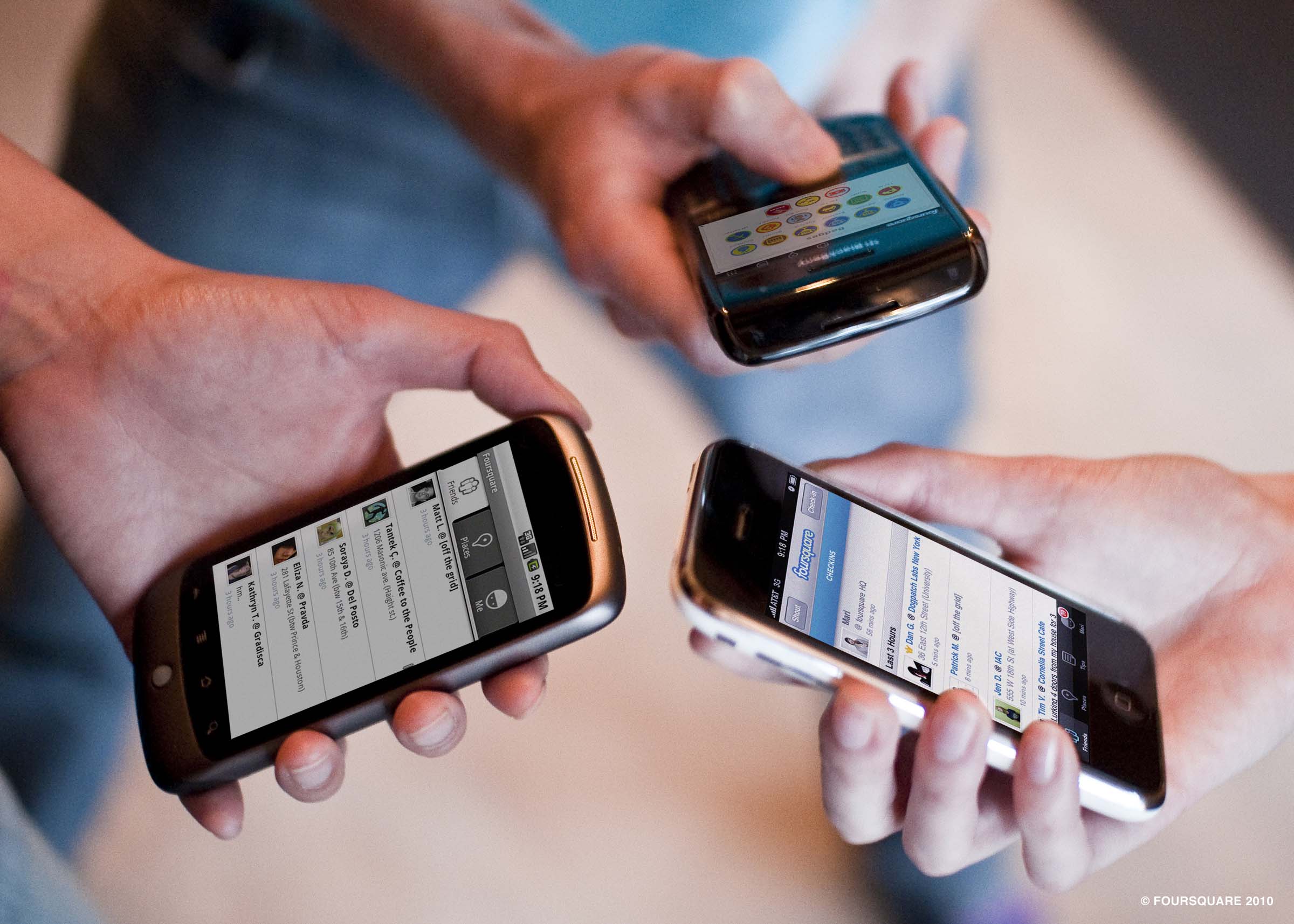
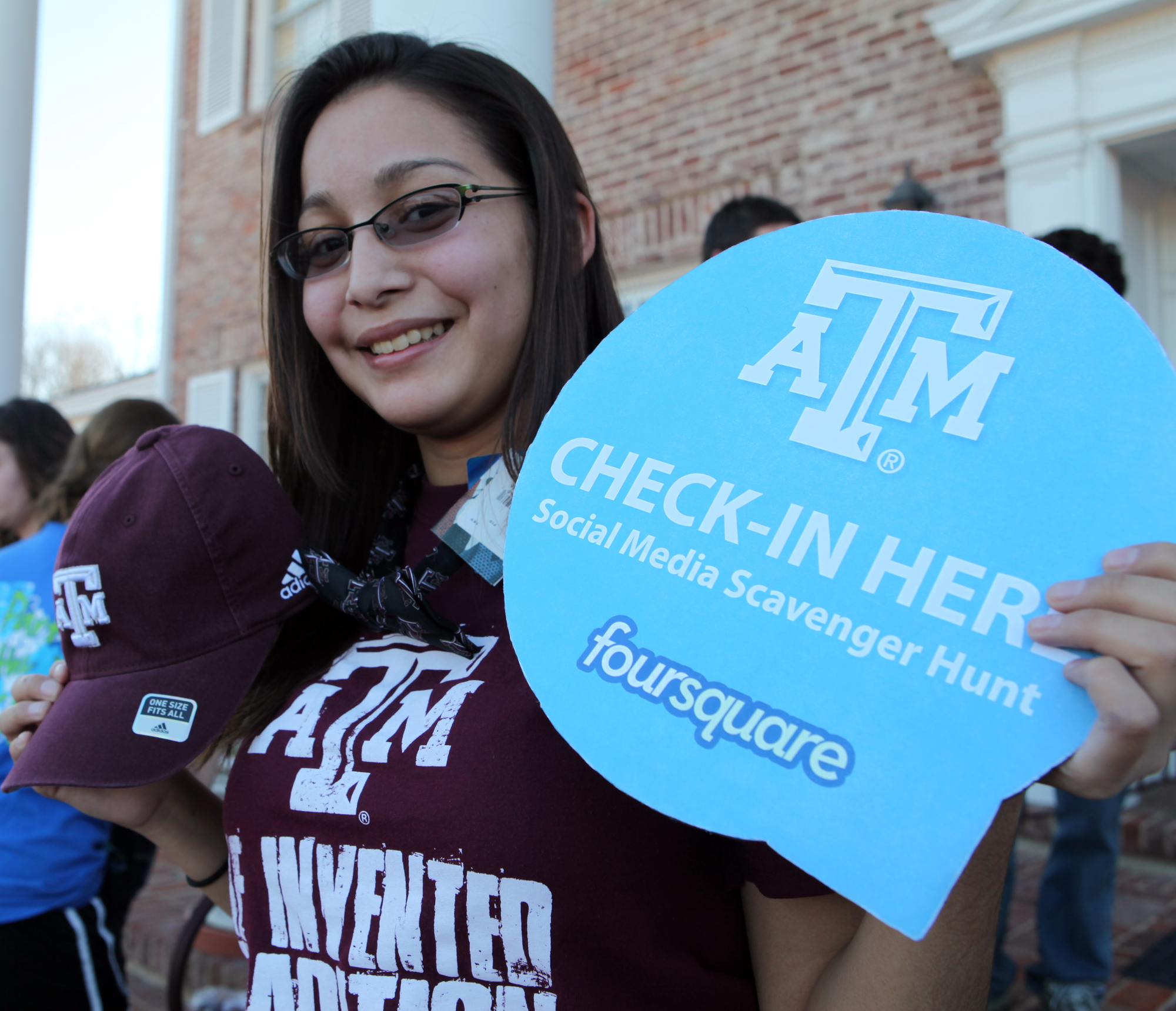
Geosocial or “location-based” social networks are on the rise, with the forerunner being foursquare, a mobile app launched in 2009 that allows users to “check-in” to various locations and share where they are and what they are doing with their friends. Access to real-time location data from foursquare allows marketers and businesses to know what locations are “trending” as well as the demographics of users checking-in to their establishment. With the growing momentum of foursquare, universities are hopping onto the “check-in” train and recognizing foursquare on campus.
Why should universities be interested in foursquare? For starters, foursquare currently has 15 million users and over 1.5 billion check-ins worldwide, with a growth rate of 3400% in 2010. Chances are that your business or venue is already on foursquare and users have probably checked in and maybe even left some tips. Information that users enter when creating a venue may be incorrect, but universities that claim their venues can add appropriate information to academic buildings to ensure the best overall experience for faculty, students, and guest.
Universities are beginning to recognize the potential value of information gathered using geosocial networks. What does 4pm look like on campus? Is the library packed? Are students working out? Applications like foursquare can also attract visitors on campus by offering “check-in” deals (ex. 10% off a shirt when you check-in to the campus bookstore), creating a self guided mobile tour of academic venues, and leaving historic information or helpful tips for different locations.
Most importantly, foursquare is free advertising (for now). Not only that, but it can be interactive and rewarding for users, perhaps by giving away free university gear for going to the library, attending a campus event, or staying healthy at the gym. The possibilities for university marketing are endless.
By: Hunter Wilson, Josh Vester, Ashley Oliver, Molly Jacques
Valentine’s Day is a holiday dreaded by a great deal of people, both male and female, for various reasons. There is pressure on both genders to perform, declare emotions, and out-do previous years or expectations. Those who fail at this task of grandstanding may in fact find themselves without a date for next year. Okay, so there’s a ton of pressure on people in relationships, but what about those of us who are single? While some take pride in their solitude, others wish they had someone to be their valentine, and a few twitch at the mere thought of being in a relationship.
According to an article in the New York Times, being single is a prevalent occurrence these days with 59.9 million single women in America. This staggering rate may surprise some, but companies like Dove chocolate see these table-for-one ladies as a prime marketing demographic. They hope to strike a chord with this growing independent group by catering their advertising to the women who are without companions. That is why this year Dove has made a campaign to remind women Valentine’s Day isn’t just about romance.
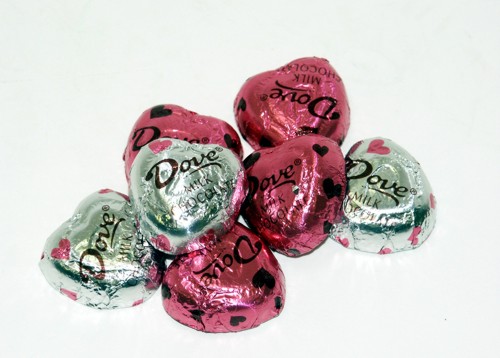
Dove is banking on the stereotype that single women will turn to chocolate this year on Valentine’s Day. Instead of the standard “Call me” or “I’m yours” found on the candy hearts we used to share with our playground crush, Dove has created a host of witty comments and placed them on the inside of their chocolate wrappers. Some of the best include, “You’re gorgeous,” “Sometimes I buy flowers for myself,” “My flaws are fabulous” and even the ever so uplifting, “Love yourself in a moment.” The new commercial features women sharing their Dove chocolates with everyone from their barista to their neighbor, and most importantly, themselves. Is this a message of independence for the strong woman? Or rather, a cheap ploy based upon the assumption that women alone on Valentine’s Day will inevitably console themselves with chocolate? Either way it’s hard to dislike chocolate, especially when it’s making single girls smile and promising not to judge if we have more than one.
By: Alexis Kapczynski, Kacy Cox, Josh Bowman, and Sara Kaloudis
During a regulation NFL game there is a 15 minute break between the 2nd and 3rd quarters. This halftime break was originally instituted so the participants of the game could catch their breath and re-energize. During the Super Bowl, halftime lasts for a minimum of 30 minutes. Not only is that plenty of time for a player to catch his breath, that could allow him an opportunity to take a nap and check some emails. The mid-game break is actually long enough that coaches usually alter practices leading up to the big game in order to prepare their players for dealing with the extended down time. Despite this, there has never been a serious motion to shorten the length of the break. On the contrary, every few years halftime will run a little long to better accommodate the length of more extravagant halftime shows.
This presents an interesting phenomenon. The Super Bowl, the game that decides who the best team is in the highest level of the most popular sport in America, is consistently interrupted for at least 15 minutes more than is necessary so an assortment of washed up and unknown artists can perform for a crowd that has paid at least double the average monthly income for a ticket to the game. It is widely known that companies spend millions of dollars for a chance to slip a commercial in between the biggest football game of the year, but this event has become so large that the game itself is being postponed in order to make room for the event that surrounds it. That’s the kind of marketing that is normally reserved for religious holidays and national celebrations.
So what makes the Super Bowl half-time show so special? It is the second most anticipated part of the event, besides of course, who wins the championship. The hype of who is performing is always a boost for the performers publicity, but what if Madonna blows it like the Black Eyed Peas did last year? What will that do to her brand as being Madonna, the Queen of pop? There is a lot at stake when involving yourself in the biggest event of the year. Let’s just hope there are no wardrobe malfunctions or fumbled lyrics this year.
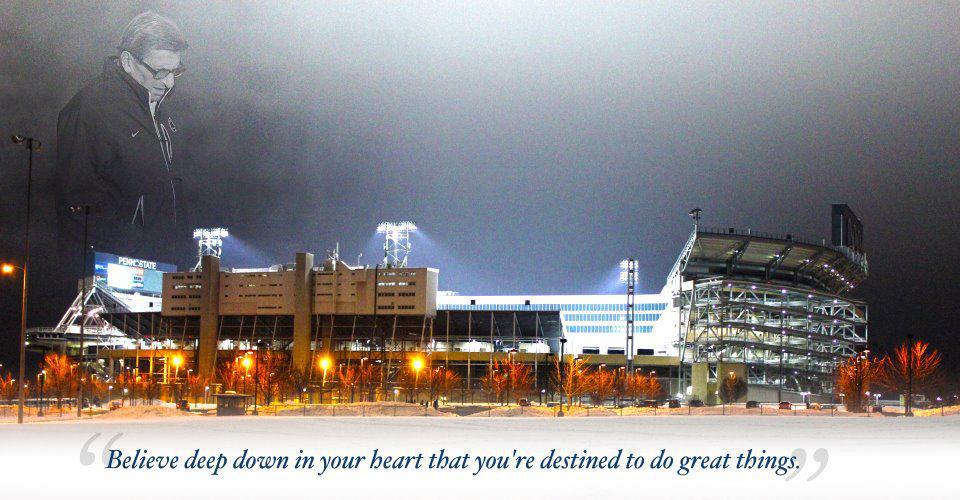
Anyone who has been tuned into ESPN recently knows that Joe Paterno, “JoePa”, was the football coach at Penn State for 42 years, starting in 1966. In the wake of a child abuse scandal centered around Jerry Sandusky, Penn State’s former assistant coach, Paterno was fired this past November. He was the face of Penn State and his brand was ultimately tarnished due to the scandal. Some are concerned that his tainted brand will overshadow his lifelong legacy. Sadly, Joe Paterno passed away on January 22nd due to his battle with lung cancer making it impossible to mend his stained brand.
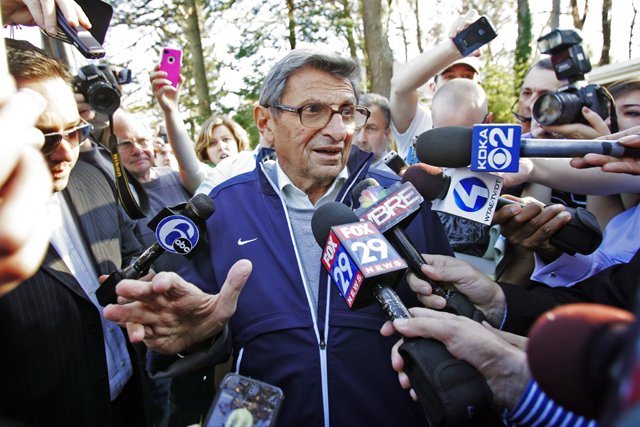
The media has been criticized for how they handled the situation regarding Joe Paterno; some even question if the media’s involvement aided in tarnishing his brand. The question is not whether the media has a legal right to report whatever they find newsworthy because the First Amendment guarantees that they do. The issue is how media managers should employ that freedom in their own decisions about what is ethical and professionally responsible. Some may view that the media took their interrogations too far by harassing Paterno at his home and accusing him of allegations before they even knew the whole story.
“The media jumped to the conclusion that Paterno was trying to cover up the scandal when it broke out. Because his name is so iconic, linking his name to the scandal would attract more viewers on their websites as opposed to Sandusky… more has been written about Joe Paterno’s involvement than Sandusky in the media.” – Chris Moore, Penn State University Senior
Is it ethical for the media to do whatever it takes to get the story out first even if it damages a man’s reputation beyond repair? On another note, people have a right to know what is going on in today’s world, so is doing whatever it takes to get the news as bad as it seems? Some argue that the media is just doing their job and presenting breaking news to the public. It was already too late for his reputation when the news came out that Paterno had told superiors about the issue in 2002. According to the Penn State Board of Trustees, their reasoning for terminating Paterno was partially based on his failing to uphold a moral responsibility to report allegations made in 2002 against Sandusky to authorities outside the university.
There is no question that Paterno let the victims, their families, and the university down by not pressing the issue with the police after he approached his superiors. In our opinion, Joe Paterno deserves to be remembered for who he was as a coach and as an individual; not as a man who was in over his head dealing with the worst scandal in his university’s history.
Kelsey Bendig, Brian Burch, Brooke Keller, Andrea Blanton
I can remember kindergarten graduation like it was last week. I had on my white dress, frilly socks with my shiny, white shoes (I never understood this style) – big white bow in my curled hair, and lipstick. I remember being incredibly embarrassed when I walked across the stage to get my diploma; simply because when they announced my name and my aspirations of being an ice skater when I grew up: the crowd burst into laughter. My graduating kindergarten class of 1996 was full of future firefighters, doctors, teachers, policemen, and then there was me – the future ice skater. Needless to say, where I am from we do not have ice rinks; we barely even get snow every other year. This experience at an early age, to realize that I was different and had an imagination, paved the way for how I would now approach my life. I branded myself creative. From this point on, I decided that I was going to be me – no matter how many people laughed at me.
Fast-forward 15 years and here I am graduating college.
It honestly feels like just yesterday I was moving into Cornerstone Hall on UNCW’s campus, a ‘fresh’ new student straight out of high school. When people say “time flies when you’re having fun,” they are referring to college. I cannot grasp the fact that in 10 days I will be a college graduate; time has definitely flown by. Before this semester began, I thought I had it all figured out, and that I was “ready” to graduate. However, I had it all wrong! My current feelings are similar to Peter Pan’s in that all I want to do is scream “I will not grow up! You cannot make me!” But, I realize that I am not Peter Pan and I do not live in Neverland; I am a Communication Studies student who is about to step foot into the real world. It may be scary, and I might not like it at first, but its life. I shouldn’t worry though – I am prepared for it. I have taken so many different classes at UNCW, have experienced so many different things, and have learned from all of them. I have dealt with my share of “crazy” roommates, the difficult realization that UNCW will never have a football team, and also a climate that is all but predictable. As I am about to graduate, I can honestly say that I am a better person after my time spent as a Seahawk. Although I am not 100% sure what I want to do with the rest of my life, I know that UNCW has prepared me for anything.
An excerpt from Robert Fulghum’s book, All I Really Need to Know I Learned in Kindergarten, is the list of things learned in kindergarten – with the insight I have gained over the past 15 years in parentheses:
Share everything. (but write your name on it, roommates sometimes steal from you!)
Play fair.
Don’t hit people. (it is against the law when you get older)
Put things back where you found them.
Clean up your own mess. (if you don’t, no one will)
Don’t take things that aren’t yours. (you will get caught)
Say you’re sorry when you hurt somebody.
Wash your hands before you eat. (getting sick in college is not fun- your mom can’t make you soup!)
Flush.
Warm cookies and cold milk are good for you. (but you should probably visit the Rec Center too)
Live a balanced life – learn some and think some and draw and paint and sing and dance and play and work every day some.
Take a nap every afternoon.
When you go out into the world, watch out for traffic, hold hands, and stick together. (especially when you ‘go out’ downtown)
Be aware of wonder.
Remember the little seed in the styrofoam cup: The roots go down and the plant goes up and nobody really knows how or why, but we are all like that. Goldfish and hamsters and white mice and even the little seed in the Styrofoam cup – they all die. So do we.
And then, remember the Dick-and-Jane books and the first word you learned – the biggest word of all – LOOK. Everything you need to know is in there somewhere.
The Golden Rule and love and basic sanitation. Ecology and politics and equality and sane living. Take any of those items and extrapolate it into sophisticated adult terms and apply it to your family life or your work or your government or your world and it holds true and clear and firm.
Think what a better world it would be if all – the whole world – had cookies and milk about three o’clock every afternoon and then lay down with our blankies for a nap. Or if all governments had a basic policy to always put thing back where they found them and to clean up their own mess. And it is still true, no matter how old you are – when you go out into the world, it is best to hold hands and stick together.
Some things change and some things stay the same but in the end we all have to grow up. But for the next week and a half that I have left as a student, and for everyone else that has time left here, and for the future Seahawks – I suggest we listen to the lesson that Jay-Z and Alphaville live by and stay “Forever Young.”
Going green. It seems to be at the top of every corporation’s priorities. In this day and age we have a better understanding for how unsustainable our daily lifestyles have been since the start of industrialism. In the past, building and developing areas was praise-worthy. Urbanization has supplied new jobs and opportunity for the ever-increasing population. It is only in last fifteen to twenty-five years that we have started to realize that depleting our natural resources and burning fossil fuels cannot persist at the rate at which they are.
Alternatives must be sought out.
Today, we can still live freely without compromise, however, the media has brought on an underlying pressure to conserve and to use less. People are speaking out about Global Warming’s effects and the public is listening. The message is now resonating that the way we do business personally and professionally needs to change. With a heightened awareness of going green amongst the general public, it has opened up a new avenue for companies to use in appealing to their target audience.
“Green this, organic that”… business motives have shifted and companies are doing whatever they can to show they are a green, sustainable business. Marketers have leaped into branding “green” through strategies and ideas that promote the better goodness of the environment. Besides a company’s involvement in becoming more sustainable, the main concern lies within the image they portray. Today, for the general public green equals good. In going with a “green” company, it allows people to grant themselves with a feeling that they are doing the right thing for themselves, their environment, and the future based on what the mass media has hyped about the environment. The color green symbolizes many positive aspects about a company’s values, making it crucial for any business to incorporate the theme into the design of their logo, website, advertisements etc. Having an overall look of being clean, simple, sustainable, organic or recyclable seems to be what’s driving some of the most successful companies around us today.





 IMC Hawks Blog