Tag: Branding

  • Do campaign ads sway your vote?

    In just under two months, we will celebrate the arrival of a new year. There will be plenty of things to anticipate in the coming year: the optimists will make their resolutions striving to reach them by the year’s end and the pessimists will continue to raise their voices about the end of the world. But 2012 also brings another event with it: the presidential election.

                As the presidential campaigns begin to get into full swing, our television sets once mainly confirmed to the usual commercial advertisement bombardment will face another kind—the political advertisements. Every four years we are exposed to the constant cycle of emotional ads, attack ads, biographical ads, issue ads, and on and on and on. And the reason is simple: the person who spends the most money in the races is usually the victor. This was demonstrated in the 2008 presidential election with Barack Obama outspending John McCain 3 to 1 on political advertisements on television. In the 2008 congressional campaigns, in the 426 House races, the person who spent the most money won 397 of those races. Also in the races for seats in the Senate, the biggest spender won 30 out of 32 races.

                This does not necessarily mean that if a candidate spends more money on advertising that they will win. However, it could be an indicator of just how much influence advertising has on our election process.  We are inundated with ads and messages about political candidates from TV to radio to simple guerilla marketing tactics and it obviously impacts our voting decision. So take a step back and think about it as you begin to listen to these ads. Are you voting for this person because you truly feel they are the best candidate or are you voting because the candidate’s ad campaign was great?


    For a closer look at how much politicians are spending on political advertising, head over to http://www.opensecrets.org/pres08/

      -Jessica Kingman, Alaethea Hensley, Lauren Phelps
  • Symbols: The Real Creeper

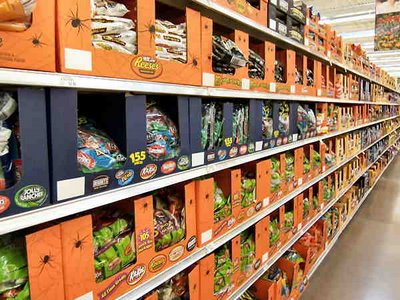
    When we thought of Halloween, many things came to mind: witches, bats, pumpkins, ghosts, and anything black and orange. These things together do not make Halloween, but they certainly reflect and symbolize the holiday. If you came out of hibernation and had no idea what time of the year it was and entered the nearest grocery store to find aisle after aisle of candy, costumes, and spooky decorations, you might get the hint that Halloween is here. Characters, Candy, costumes, and scary décor are some of Halloween’s most notorious symbols. Symbols serve as great resources for allowing the public to recognize a brand, whether it’s a holiday or simply a pair of shoes. Symbols stick in customers’ minds. Think about all of the symbols that most Americans would recognize in a heartbeat; the infamous golden arches (McDonalds), a the check mark on the side of a tennis shoe (Nike), an apple with a bite taken out of it (Apple).  These aren’t just pictures, and they are certainly not chosen at random.  These logos and symbols are not the product itself, but a representation of the brand. So why the overload of spooky sound effects and Dracula fonts around stores and on TV? Because everyone knows it’s almost Halloween, and these symbols are reinforcing this fact and preparing you for tricks and treats whether you realize it or not. Creepy, huh?

    -Claire Dillard & LaPuasa

  • The Spooky Branding Reality of Halloween

    What is the most important thing about Halloween?  Your costume!  When we were younger, we thought running around the neighborhood for a few hours trick or treating was the essence of Halloween.  But as college students, we start pondering our costumes weeks or even months in advance, while candy and parties are afterthoughts.  A Halloween costume allows you to express yourself more freely than you can in everyday clothes, and for many college students it is the most important outfit of the year.  Some people spend hundreds of dollars putting together the perfect costume, complete with make-up, wigs and props.  Last year, the costume most searched on Google was Lady Gaga.  This year, the two top searches appear to be Nicki Minaj and Charlie Sheen.  Among other popular searches are Pan Am, Amy Winehouse, Rihanna and Katy Perry.
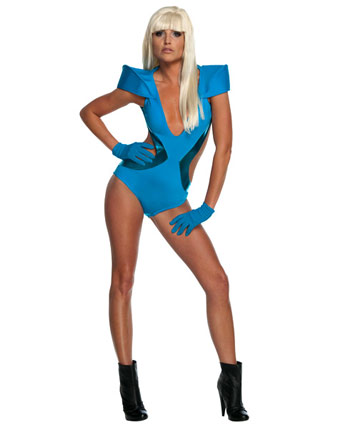

    When we were children, we dressed up as witches, robots, zombies and the occasional super hero.  Today, we dress up like celebrities.  Maybe this indicates that during college, our behaviors are influenced by ethos more than when we were younger.  The fact that many college students transform themselves into their favorite stars for Halloween may correlate with the general spending habits of people ages 18-24.  If many people are buying things to look like celebrities for Halloween, it is safe to assume that they are buying things related to celebrities for everyday items as well.

    Being in the headlines helps celebrities promote their brand whether it’s intentional or not.  Halloween gives celebrities the greatest opportunity for celebrities to increase their brand awareness.  Those featured in the news and by other media outlets are getting their brand out there.  The people dressing up as these celebrities for Halloween are ultimately walking advertisements for the celebrity they are trying to imitate.

    -Stephanie Bakolia, Claire Outlaw, David Glaubach

  • Moogfest 2011

    While most of North Carolina will be adding the finishing touches to their Halloween costumes next weekend, Asheville will be jamming out to some of the hottest artists in electronic music.  The second annual Moogfest will be taking place at various venues throughout the north side of downtown Asheville on October 28th-30th.  Although this is only the festival’s second year,  there is a lot of buzz about its highly anticipated lineup of over 70 artists from around the world, including big names such as Flaming Lips, Moby, and Passion Pit, just to name a few.

     The three-day festival was created to honor one of electronic music’s pioneers Bob Moog—the inventor of the Moog synthesizer.  This legendary instrument has changed modern music forever and has been used by hundreds of artists, from legends like the Beatles, the Rolling Stones, and Stevie Wonder, to some of today’s all-stars like Daft Punk, Dr. Dre, and even Michael Jackson. The celebration of Moog’s legacy will even go beyond the music; there will also be visual art exhibitions, film screenings, a costume contest, and some of the wildest installations created from Bob Moog’s own imagination.

     What sets Moogfest apart from other music festivals?  At Moogfest, attendees have the opportunity to interact with some of the artists in panel sessions, and workshops.  There are even workshops that allow festival-goers to actually learn how to play some of the different Moog instruments. This is a perfect example of audience-brand interaction and experiential marketing.  What better way to create brand awareness than to let consumers experience your products?  Or in this case, create an experience for them?

    Here’s a little taste of how and why last years artists created that experience at Moogfest 2010

    The best part about Moogfest is that there are still tickets available!
    For more information about tickets or the festival itself, check out the Moogfest Facebook, Twitter, or website: www.moogfest.com .

    To learn more about Bob Moog and Moog instruments, you can visit his website: www.moogmusic.com.

    -LaPuasa, Dillard, Reinhardt

  • Connecting to Potential Jobs

    When it comes to the big job hunt, there are a plethora of considerations that come to mind. Seeking out career fairs, perfecting your resume, and getting the right professional look all seem to be high on the list. However, there’s one tool we sometimes neglect when it comes to seeking out jobs in our field, whether it be Marketing, Advertising, PR, or IMC: social networking. Sites such as LinkedIn provide a huge leg up for those looking for a job in our current market. You will be able to get your resume out to multiple different audiences with the click of your mouse, while also putting your resume out to employers who you may have initially overlooked.

    Not only is LinkedIn important for initially creating new job opportunities, it is also useful in growing and cultivating new connections and relationships. Networking is extremely important in the field of IMC and every connection you get could be a potential for a new opportunity. Active use of this resource shows those you have connected with, what you are up to, how you are looking to grow professionally, and if you are currently looking for employment options. With the current economic state, we have to exploit every avenue we can to ensure that we are able to find a job upon graduating.  While it is necessary that we have a strong resume and good interviewing skills, we also have to remember that our potential job opportunity could be found through LinkedIn.

    – Lauren Phelps, Alaethea Hensley, Jessica Kingman


  • What’s all the fuss about?

             So what’s all the fuss about on Wall Street? Oh wait, you haven’t heard? Not surprising. The major media outlets have all but ignored the events taking place in their own back yard. For almost three weeks, thousands of people have converged on this eight-block-long stretch of asphalt and skyscrapers in lower Manhattan. For what purpose, you ask? That answer remains a bit unclear. Some explanations offered by the media include: the downfall of capitalism, an end to corporate tax incentives, world peace, racial justice, freedom for prisoners, and a slew of others issues boldly displayed on signs and posters covering every inch of usable space.

                                     Image: Occupy Dallas protest

            Only in the last few days have  the demands from the protestors have become somewhat understood, although their presence in the city has cost Mayor Bloomberg two million dollars in police overtime alone. When you consider the damage to local businesses from lack of access, the burden of cleaning up behind thousands of unruly campers, the inevitable strain on the judicial system from the ever-growing number of arrests, and a multitude of other factors the price of these shenanigans is certain to be staggering. So where is the media coverage? Just now are we beginning to see headlines addressing this controversy. With the addition of several powerful workers unions and a handful of celebrities taking up the cause, we are beginning to formulate a picture of the reason for the last three weeks of frustration. A decade of costly foreign war, millions of Americans out of work, skyrocketing foreclosure rates, and the disappearance of stock portfolios and pension plans galore are all contributing factors. Americans are angry and apparently it’s time to show it. But why go through the trouble of protesting if you are not even marketing your purpose?
           No one is blind to the problems we face as a nation, yet the solution seems beyond reach. Take to the streets or take to the polls? No matter what you choose, if no one knows what you are fighting for, you are wasting your time. You could have the best idea or the most sensible solution, but ultimately it’s about marketing your idea clearly that determines if you will make any difference at all.

    -Claire Dillard, LaPuasa, Reinhardt

  • Walking Billboards

    When we first hear the term “product placement” our minds invariably flash to ill-disguised attempts by companies to sling their brands into popular television shows and movies. The movie Transformers 3 was bashed for looking like one giant advertisement for a litany of companies including Mercedes, Nokia, and Apple.

    But what about the infamous red carpet? As stars twirl their way down these crimson lanes, they will all face one important question: Who are you wearing? By having a star tout your brand, it raises its stock tenfold. For instance, in 1998, Kim Basinger arrived at the Oscars in an Escada gown raising the then relatively unknown German fashion house’s profile to an international status. Jewelry also has a big stake in the red carpet industry. Jeweler Harry Winston can usually be found dripping off of no less than 20 celebrities, but when rival brand Chopard wanted a part of the red carpet action they offered celebrities Hilary Swank and Charlize Theron a six-figure paycheck to wear a pair of their earrings.

    Off the red carpet, celebrities are still walking billboards for fashion companies. Take a look at the Australian footwear brand UGG. After the tabloids started picking up shots of Cameron Diaz and Kate Hudson flouncing around town in their boots, sales went through the roof. At this point, almost everyone either has a pair of UGGs or knows at least two people who do. And in this vein, when The Today Show featured a segment about Madonna’s infatuation with designer Steve Madden’s Iglou boots, the company racked in 240 orders for the boots in a grand total of 13 minutes giving the company a whopping $30,000 in profit. 

    So what does this all mean? Must our favorite celebs only be seen as walking product placements? Do they not have any taste of their own? Of course, they do. But the next time you run out and buy a pair of shoes because Kim Kardashian was wearing them at her birthday party, think how you might be doing exactly what their marketers intended.

    -Jessica Kingman, Alaethea Hensley, and Lauren Phelps