Tag: brand

  • Networking, Personal Branding, and Tumblr


    Personal Branding is an important tool in order to introduce and further promote one’s self to a target market in an effective and decisive manner. Industry guru, Colin Bates says, “A brand is a collection of perceptions in the mind of the consumer.” But the concept of “brand” does not apply – as we are often led to believe – just to companies, their products and their services, but also individuals, regardless of the profession they practice. 

    It is important to keep in mind that strategies for personal branding often revolve around three main tactics: 


    • Competence – analyze and improve the characteristics and attitudes of your own persona by producing value on the market.


    • Visibility – stand out from the crowd through communication strategies, which may be coordinated both online and offline.


    • Networking – be consistent with your own personality, while being open to dialogue and exchange in order to further broadcast yourself and create your own network of contacts with whom to interact.


    Ultimately, a personal brand that is strong and empathic is built by offering uniqueness and originality: it is necessary to orient your public and target audience towards values that are positive ​​and consistent at every level. In order to successfully accomplish this it is necessary to establish resources, along with a consistent and constructive dialogue with others. 


    Different social media outlets are ways to create one’s personal brand. Specifically, Tumblr offers a very unique way for people and brands to express themselves. It’s a relatively new type of blog that features all types of small niches; something for everyone to find. It’s a little bit like a more informal Pinterest.  One chooses to follow certain blogs, and only posts from those blog show up on one’s “dashboard”. It’s also quite interesting because unless you know someone’s Tumblr URL, there is no way to search for anyone specifically. One finds pages they like through tags and going to the pages of people they follow to find other people and tags. 

    This makes me think of the book, “The Filter Bubble” by Eli Pariser. In this book he talks about how people have “click signals” when they use the Internet. For instance, everything that shows up on one’s Facebook news feed is due to their click signal, as well as all of the advertisements. Facebook saves information from what one clicks on, to what one likes, to how long one is on a certain page, and uses this info to create one’s Facebook home page. Meaning one only sees information that is filtered for them; only information click signals believe they will like.  This creates one to be more close-minded due to the fact that they only see things they prefer to see, and not things people with different opinions post. I believe Tumblr somewhat breaks the filter bubble though, because even though one chooses which blogs to see, there are very few blogs that only post one specific subject. Most blogs have a variety of different types of posts, from movies and music, to science and politics, even adult entertainment. Unlike Pinterest, there aren’t specific boards one can choose to follow on another’s page; instead it shows everything that user posts. So even though one follows a blog because they see a post they like, chances are they are going to see a variety of other things as well. 

    Although Tumblr is still gaining awareness and users, it is still a fun, new way to express one’s personality on the Internet in a truly unique way from the rest.

     

    Jay Reilly

  • Pepsi: Born in the Carolinas

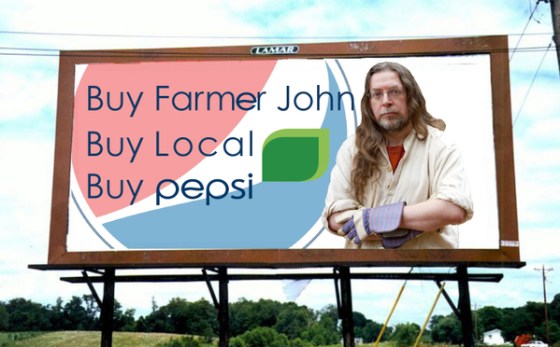
    Many large brands use their historic background to promote their product. Pepsi Cola, a known trademark product distributed all over the world, uses their product’s birthplace to market and draw in more customers. Pepsi recognizes the push to buy local as they advertise heavily in North Carolina, as well as adjacent states. “Born in the Carolinas” is an official trademark of Pepsi Cola. New Bern, North Carolina is the location where Pepsi was first invented in 1898 by a local pharmacist and University of North Carolina at Chapel Hill graduate named Caleb Bradham. According to the official Pepsi Store website, http://www.pepsistore.com/, the “Birthplace of Pepsi is owned and operated by the Minges Bottling Group located in Ayden, North Carolina, and first opened the doors to the Birthplace of Pepsi Store on the 100th Anniversary of Pepsi-Cola in 1998.” Seventeen years after the invention by Caleb Bradham, a man named Roy C. Megargel, a well-known broker, bought out Pepsi-Cola as well as the Pepsi trademark and immediately formed the Pepsi-Cola Corporation as it is known today.
    When Pepsi was founded in 1898, it was originally called “Brad’s Drink” and was later patented as Pepsi-Cola. In recent years Pepsi has released a series of new ad campaigns aimed at reviving sales of its brand. Sales of the Pepsi beverage have recently been declining compared to its number 1 rival Coca Cola. To more effectively advertise and increase sales, Pepsi marketed a new advertising campaign that aims to “capitalize on rising soft drink sales,” which have been in tight competition with the variety of Diet Coke products. One of the most recognizable TV commercials openly takes a shot at their rival Coca-Cola brans, by starring Santa Claus shunning a Coca-Cola in favor of a Pepsi. The company has also since spent close to $60 million on a promotional deal with the popular show “The X Factor.”Coca-cola still outsells Pepsi worldwide and in most of the US but there are exceptions such as India and Guatemala. Also, in Buffalo, New York, Pepsi outsells Coca-Cola nearly 2:1. Pepsi continues to attempt to improve their brand as they compete with Coca-Cola and other soft drinks.

    Pepsi has had a vast variety of slogans over the years. The first slogan was “Twice as Much for a Nickel” and lasted from 1939 to 1950. Since then, there have been many more Pepsi slogans including “Say Pepsi, Please” (1957), “The Choice is Yours” (1992), and “Live for Now” (2012). In the 90’s they also had a mascot named “Pepsiman” who appeared in 12 different commercials delivering Pepsi to quenched individuals. He even appeared in a few video games as well before they retired him.
    Even though Pepsi has practiced many marketing strategies over the years in an attempt to outsell competitors, they have always stayed loyal to North Carolina. With the economy in such a state, local governments are urging citizens to shop local. Pepsi has recognized this marketing fad and has hopped the bandwagon. Though there are many Pepsi distributing centers worldwide, the birthplace will always be New Bern, North Carolina, which makes “Born in the Carolinas” a lasting slogan.

    Sasha De Vecchi, Lindsay Gallagher, Jay Reilly, Cary Welborn

  • Celebs of Hogwarts

    Harry Potter is a name that is known by people worldwide. Known both for the book series and the movies, this brand seems to be everywhere. Although plenty of merchandise sells because of its affiliation with the Harry Potter series, Harry Potter itself is much more than a brand. Harry Potter fans have read the books and seen the movies, and have developed a deep connection with the characters involved. There is an emotional attachment to this brand and therefore anything that sells with the picture or logo for Harry Potter means something more to them. But what seems to be the most representative visual for this brand? Not the creator, J.K. Rowling. This would be Daniel Radcliffe, Rubert Grint, and Emma Watson.


    Chances are, if you began watching the movies before you finish reading the books, you would start to imagine these actors in your head as Harry, Ron, and Hermione, instead of the people you imagined before these actors were selected to play the parts. To many Harry Potter fanatics, these people are not just your average celebrities- they are friends.  The actors no longer have any choice but to be marketers for the Harry Potter brand no matter what they are doing. If Daniel Radcliffe gets married, it almost seems as though Harry Potter is getting married. If Emma Watson wears a provocative outfit, it feels like Hermione is being scandalous. So is this type of celebrity life better or worse than those celebrities who are famous just for being themselves? I think it means that these actors have a lot more riding on them than it initially seems.

    -Claire Dillard, Liz LaPuasa


  • Selling Yourself

    When preparing for the aggressive, less-than-thriving job market, it is important to be confident in your abilities to “sell yourself”. The cover letter, resume, and interview process that stands between you and the job of your dreams can all be enhanced based on how you understand your unique skill set and experience. By feeling comfortable with what you have to offer a potential employer, you can have an unmatched advantage over the competition. In order to reach this level of comfort and self-confidence, it is critical to understand the “brand” that you are trying to “sell”.

    Looking for a career can be intimidating at any time in life; however, it can be successful if you can apply the characteristics of marketing as it relates to promoting a brand image. By branding yourself as a diligent, experienced, positive worker throughout the employee recruitment process, the employer is likely to feel confident in the decision to hire you. However, if you are tardy to interviews, send unprofessional emails, and lack the ability to converse with the interviewer, it may be hard to stand out from the competition. By taking advantage of leadership opportunities, working well with others, and being serious about school work, it will be easy to create confidence for what you have to offer a company. The more experience you gain throughout life, and the more consistent you are with your habitual work habits, the more reliable your “brand” will seem to employers.

    -Sally Shupe, Jared Sales, Oliver Evans