Blog

  • Pumpkin $pice

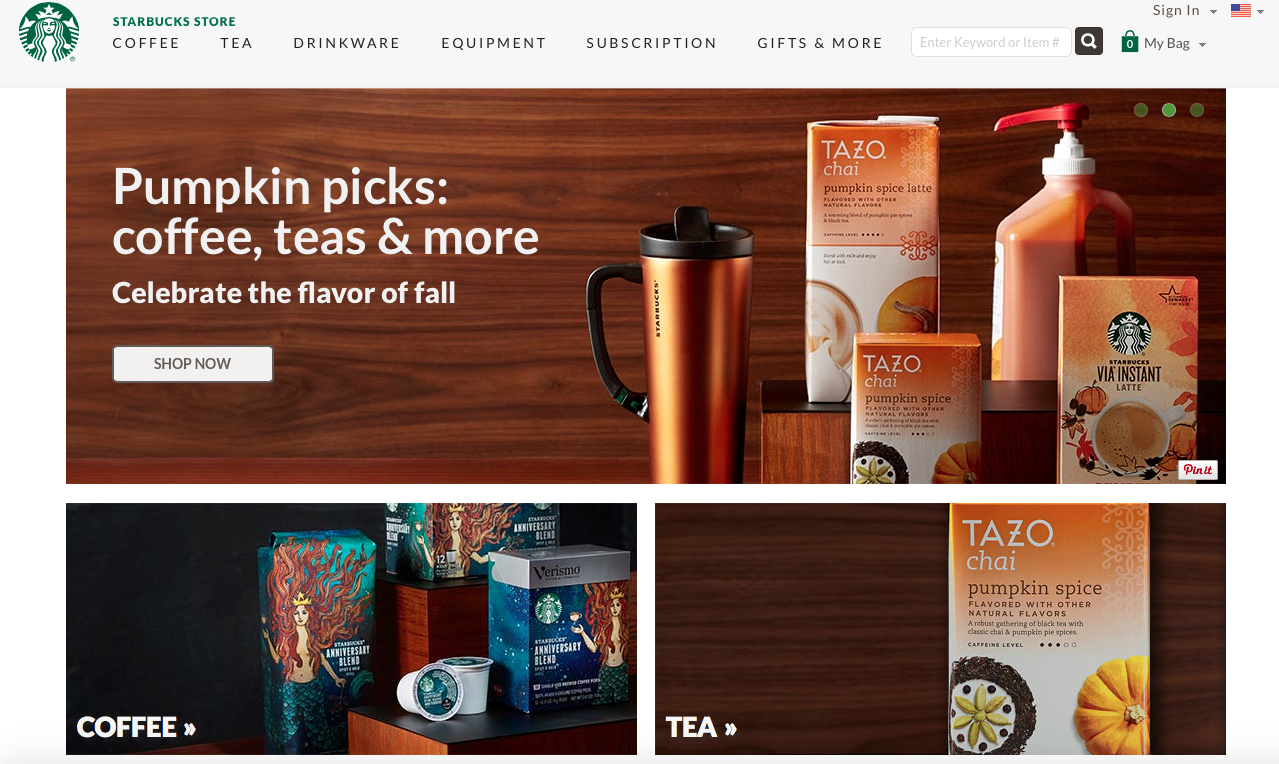
    Although today is the official first day of fall, pumpkin flavored lattes and #sweaterweather advertisements have filled our newsfeeds for weeks.  Preparation for America’s “favorite season” is a prime example of strategic planning when it comes to IMC.  Companies, such as Starbucks, take no mercy on branding fall for a profit.  Take a look at the Starbucks home page:
    Screen Shot 2015-09-21 at 1.45.54 PM

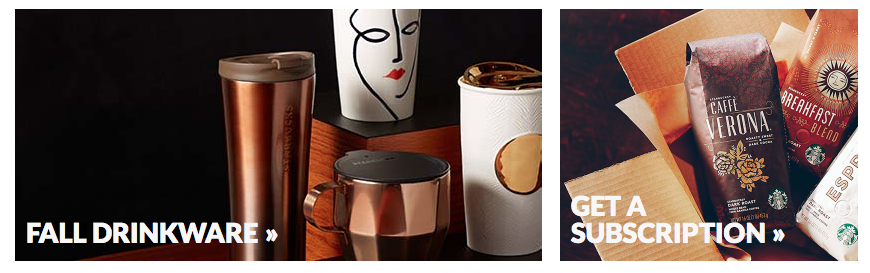
    “Celebrate the flavor of fall” with pumpkin spiced teas and pump bottles of artificial pumpkin flavor.  Starbucks goes above and beyond by defining fall and reminding us it is time to put a dent in the pumpkin population and enjoy this fantastic, fall sensation.  Keep scrolling and you will find the “Fall Drinkware” section of their website, offering a variety of different orange coffee mugs for about 20 bucks a piece.
    Screen Shot 2015-09-21 at 1.45.42 PM

    A little much?  Well, according to Fortune Magazine, Starbucks reported a 10% increase in the fiscal fourth-quarter sales in 2014.  Evidently pumpkin spice does come at a price.  The company is reportedly brewing up more ideas and plan to add to the recipe by creating a “fall flavored” line of sodas, smoothies, and yogurts.  Limiting the availability of these fall treats help build upon the chic image Starbucks maintains to its publics.  Though some may gasp at the thought of paying over 5 dollars for one of these sought after lattes, to many, fall just wouldn’t “be in the air” without them.

    S. Alyssa Groom wrote in her article, Integrated Marketing Communication Anticipating the “Age of Engage”, that it is now impossible to create a marketing plan to follow at the beginning of the year.  Starbucks’ creation of this fall line is a prime example of Groom’s theory.  The company has broken the marketing year into segments and focuses on specific aspects of what is popular and “hip” during that market period.  Groom also mentions that “marketing can no longer stand alone” and the importance of customer engagement.  Through social media pages dedicated to this fall line and the creation of hashtags, Starbucks makes purchasing one of their fall items interactive.  Allowing for customers to post pictures, tag the company, generate new hashtags and register for giveaways.  These strategies get the customer excited about going out and buying Starbucks products.  Customers now “buy into” the Starbucks brand, going beyond a simple cup of coffee.

    -Luke, Dan, Amanda, Meleah and Kendall

  • Falling in Love with Pumpkin Spice Lattes

    psl-starbucks.0.0Pumpkin is the flavor of fall. Products that offer limited edition seasonal pumpkin flavors and scents include pumpkin beer, pumpkin M&Ms, pumpkin spice marshmallows, pumpkin candles, pumpkin scented shampoo… and according to testers at the TODAY Show pumpkin spice Oreo’s are “especially tasty”.

    But no one does it better than Starbucks and the Pumpkin Spice Latte.

    Pumpkin Spice Lattes first appeared on the Starbucks menu in the fall of 2004. This is the beverage that kicks off their holiday seasonal drinks, even though it comes out in late August. The creamy pumpkin pie sensation mixed with a subdued coffee flavor created a taste that consumers immediately latched on to. One sip can bring you down memory lane, sharing an evening with your family, exchanging laughs and stuffing your bellies.

    Along with scarves and sweaters, sipping on a Pumpkin Spice Latte has become a new fall accessory. The drink option reminded loyal customers why Starbucks was their brand of choice and offered incentive for potential new customers to engage in their products.

    Seattlemet.com states that in October 2004, just one month after releasing the Pumpkin Spice Latte,  Starbucks noted an 11 percent spike in their company sales compared to the previous year. It was official…the brand had struck orange.

    In 2013, forbes.com reported that Starbucks has sold over 200 million pumpkin spice lattes and generated a revenue of over 80 million dollars.

    But popularity has a price. The seasonal drink got so popular that it seemed to reach a tipping point. Last year in 2014, some consumers were losing their sense of identity from feeling too conformed by the Starbucks pumpkin spice fad. Customers became critical of the product and and found some weak spots to pick on. The beverage’s ingredients did not actually include pumpkin and did include caramel coloring. These two things were enough to start an anti-PSL movement. This movement grew to such a size that Starbucks revisited its IMC plan.

    tumblr_nu0dm5sSD81tg0kfio1_500After 11 years with the same successful recipe, Starbucks reformulated to accommodate disgruntled customers. In addition to adding real pumpkin, the company devoted a large IMC effort towards branding this product. They have created a tumblr, an instagram, a twitter, and an entire brand identity just for one drink. The real Pumpkin Spice Latte now takes selfies and interacts with its audiences. Starbucks Efforts include having its own trending hashtag (#PSL), offering an iced version for warmer weather, and even a password that allows people to buy the drink earlier than it is official release date.

    Will Starbucks be able to revive the pumpkin spice latte trend once again? Or will the PLS critics find some other problem to cling to?

    Love Pumpkin Spice Lattes? Use the #PSL on Twitter, Instagram, or Facebook to gush about your love for this hot beverage. Or leave us a comment below and let us know what you think!
    Watch Starbucks 2015 Campaign here: https://www.youtube.com/watch?t=112&v=la-h1sE3igs

    -Aki Suzuki, Lexie Trimnal, Carey Shetterley, June Wilkinson, Carey Poniewaz

  • Semiotics of Halloween

    Fall marks the start of the holiday season, none more mischievous than Halloween. Through semiotics we use signs and symbols to interpret the world around us. Ferdinand de Saussure originally defined semiotics as a science that studies the life of signs within society, part of both social psychology and general psychology. When thinking what signs or symbols constitute Halloween, pumpkins, costumes, and candy may come to mind. These are consistent symbols in our society, but Halloween begins to represents different things as we get older. Younger children are only interested in trick-or-treating, carelessly walking through the neighborhood getting candy as a cautious parent or two watch from the bottom of each driveway. Teenagers tend to use the holiday in a more rebellious way as they cover trees in toilet paper, throw eggs at neighbors’ houses, and scare their younger counterparts. College students embrace Halloween as a time for costume parties and excessive drinking.

    Alcohol always seems to increase the chance of risk for any situation. For those who tend to get a little too rebellious, Halloween can represent a night they wish they could forget. Outrageous, appalling actions will also change the image portrayed by an organization, a university, and its students. East Carolina University suffered such an incident last year the day before Halloween when a large party at Riverwalk Townhomes could not keep people from attending and eventually turned into a riot. The following night being Halloween, WITN news reported, “In an email to all students last night, Chancellor Steve Ballard said any student involved in illegal activities on Halloween or the day after will also face possible disciplinary action from the university.” Although a diverse group of people were responsible for the riot, ECU’s image was put to shame and must implement a plan to restore their image to their publics. Semiotics is the science of communication and sign systems and the ways people understand phenomena and organize them mentally. The students that were a part of the riot last year have a different understanding of the semiotics of Halloween than most others would that did not have such an experience. The pumpkins and costumes may have been replaced with handcuffs and drinking tickets, replacing the previous symbols they associated with the holiday.

    Particularly in America, symbolism is inspired by classic film like Dracula and Frankenstein, and characters such as these are artifacts for understanding a typical American Halloween. Black and orange define Halloween as the traditional colors, supernatural forces and spirits of the dead are brought back in the societal light, and black cats and spiders represent the bad omens that the holiday can bring about. For a number of ECU students, Halloween itself was a bad omen and the university is still dealing with image issues as they near the next Halloween. No organization seems like an inviting place after a major controversy that negated societal values. Remember to enjoy Halloween, but not too much!

    – Griffin Weidele, Austin Moody, Allen Wooten, Luci Keefer, Scott Uraro

  • Fuzzy Image on TealTV

    Last Friday, TealTV — UNCW’s student-ran television program organization — aired this year’s first episodes of Seahawk Central News, a program informing students of news going on around campus. According to their YouTube channel, the four-video episode gathered about 250 views. This number is nothing compared to the 569 views the organization received for their latest episode of “Dub after Dark,” a more light-hearted, funny segment.

    TealTV not only specializes in news coverage. They have produced a sit-com and have featured pieces along with their news coverage. However, these less-newsy materials (like “Dub after Dark”) have drawn in more viewers than their flagship show, Seahawk Central News. The difference in viewership could be attributed to the image their social media outlets portray.

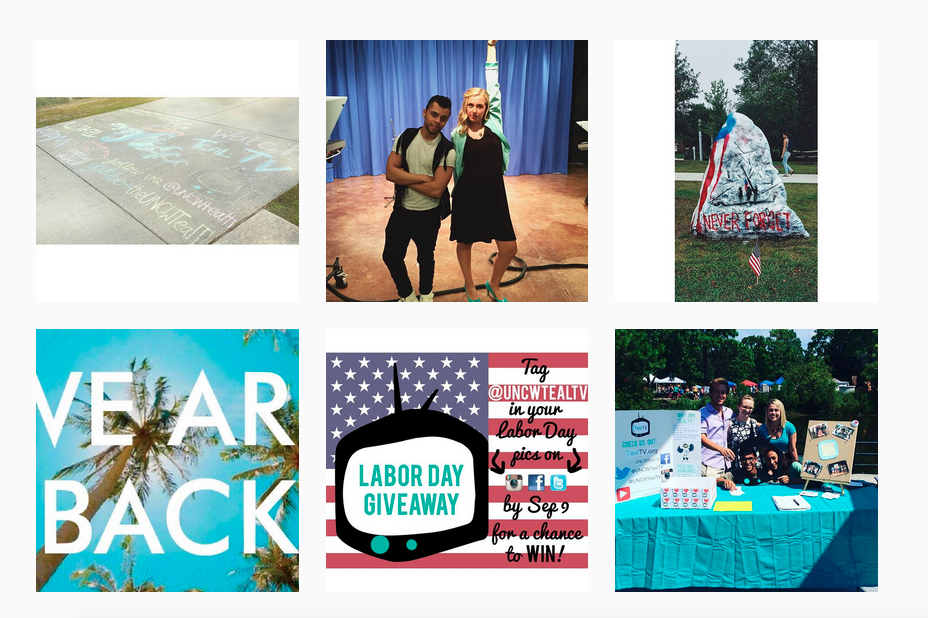
    The organization’s Instagram is filled with behind-the-scenes photos and colorful promotions, different from the usual photo and link to the story one would see from a news organization. The juxtaposition of a news organization posting photos of that nature may deter potential news viewers. Students may search TealTV’s social media outlets looking for news coverage or breaking news, but, unfortunately that content is not there.

    Screen Shot 2015-09-18 at 10.28.46 AM

    Separating the images of the segments within TealTV’s lineup may help drive specific viewers to their website and YouTube page. While their brand is strong, they may not be reaching the viewers they intend to.  

    Take a look TealTV’s social media pages (@uncwtealtv); do they have an image problem?  

    – Nick, Melanie, Mary & Patrick

  • (A)Broadening Your Horizons

    10156134_880936395269873_65763143285790249_nThe study abroad program is one of the leading assets provided through majors at UNCW. Students and faculty/staff can take advantage of the chance to study in a foreign country. The university does a wonderful job promoting this opportunity given to all. Through the use of IMC with the Study Abroad Ambassadors, the program continues to grow each semester.

    According to the Institute of International Education 290,000 university students studied abroad for academic credit in 2012-2013. At UNCW, more than 500 programs in over 50 countries are offered, with many academic majors requiring students to gain credits abroad.

    Similar to other universities with enrichment programs, UNC Wilmington allows study abroad returnees, who are passionate about their experiences, to join the Study Abroad Ambassador program. Ambassadors assist the Office of International Programs with promoting and marketing their study abroad experiences through on-campus events and social media portals.

    Walking down Chancellors can be chaotic for most students and faculty members. Many ignore organizations passing out pamphlets and stickers to never noticing the chalk from Wag to Randall. The variety of outlets the Study Abroad Ambassadors utilize to promote opportunities helps reach a broader audience.

    • Study Abroad Fair
    • On-Campus Tabling
    • Banners
    • Intercultural Festival
    • Pre-Departure Organization
    • Classroom Presentations
    • Individual Meetings/Guest Speaker Events

    The Ambassadors at UNC Wilmington are passionate about study abroad programs and helping others gain access to any information, making dreams of studying abroad become a reality. The Study Abroad Fair and the Intercultural Festival are two prime examples of promotional events with on-campus marketing techniques. The Ambassadors who attend these events significantly contribute to the brand of the program. They generate content for various on-campus events and serve as a face for the organization. Through their donation of time, they add credibility to the organization, showing fellow students their passion for the program. Walk into Fisher Student Center or Randall and notice organizations tabling? Most student organizations at UNC Wilmington use that technique to market their purpose and mission. The study abroad program uses Ambassadors to promote the idea of traveling across the world, from freshman to seniors.

    Recently, the Office of International Programs released the Study Abroad Online Magazine– containing pictures and testimonies from Ambassadors and study abroad returnees. Offering easy access to information and keeping up-to-date with today’s marketing techniques. Similar to other on-campus organizations, the study abroad program has up-to-date social media accounts. On Facebook, Twitter, and Instagram, students and faculty/staff are informed on informational sessions, scholarship opportunities, and photo contests.

    -Jonathan Callahan, Erin Fouhy, Julia George, Joseph Hines, and Sarah Suggs

  • A.C.E. – Your Source for Campus Entertainment

    Please nod your head if you have ever taken another route to class pretending to be on your cell phone or completely ignoring someone who was trying to give you an event flyer. If you give your computer screen a nod, we applaud you.  However, if you are like 99% of the student population at UNCW and nodded your head–we understand.

    There are over 250 student organizations vying for our attention, membership and time so how do we pick what to attend? Our choices depend on how, or if, we hear about the event and how creative the marketing is. The Association for Campus Entertainment is the university’s student programming board Did you enjoy Hoddie Allen last year? That was ACE. What about when Maci Bookout from Teen Mom was here in the spring? That was ACE too.

    In the midst of everything college kids have going on, ACE provides an outlet for free entrainment. But just like every other student organization, they have to compete for your time as well. Integrated Marketing Communication, IMC,  allows us to diversify the means by which we achieve our marketing goals. A public relations campaign? Check. Social media presence? Also check. Cool and engaging advertising? Also IMC.

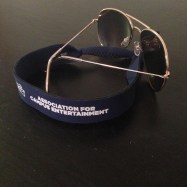
    ACE does this through an array of promotional tools each year, the first being through giveaways what college student doesn’t like free things? This year ACE gave phone wallets, Croakies, car USB adapters and staplers. This may seem like a mishmash of items but each one served a purpose: to be seen and get the ACE name known. Whether it is letting a classmate use the ACE braded stapler, or paying for food in Wag as you pull your OneCard out of your ACE branded phone wallet, ACE is marketing their brand. The goal is to increase the number of times a student sees a brand and how they associate it—hopefully in a positive light.

    image1

    There is more to promotions than simply getting a name out; ACE must also promote their events. There are the standard campus marketing methods such as banner, chalking and flyers, but in order to infiltrate the calendars of college students, you must take efforts farther. ACE is a brand that thrives on creative promotions, whether this be acting out a scene from an upcoming movie in the campus theatre or handing out paint brushes across campus for a Cheerwine and Design event. There is always something being passed out.

    A successful marketing campaign goes beyond creating and implementing the campaign. The ultimate goal of IMC, is to not only change one’s beliefs, but to change his or her actions. Whether this be successfully convincing students to change their plans and attend an event or sign up for ACE, we want them to act on our suggestions. So how do you think ACE stacks up, do you hear about their events through traditional means of advertising or through creative promotions across campus? Furthermore – how do you prefer to be wooed into coming to an organization’s event or do you organically decide to attend? Let us hear your thoughts and comments blow!

    -Amanda, Daniel, Kendall, Meleah and Luke

  • Campus Dining: Fueling Your Education

    Students can be hard to please, but that doesn’t stop schools from trying. Universities cater to their students needs in many ways from providing tutoring services and career building seminars, to fulfilling the most basic and necessary task of feeding their students.

    Campus Dining
    facebook.com/uncwcampusdining

    UNCW Campus Dining has a large customer base that has a high turnover. With each new generation of Seahawks and the constant evolution of food trends in society, Campus Dining must stay updated on their consumer needs. An effective IMC plan begins and ends with research. Each semester Campus Dining sends out surveys asking students and faculty what changes they would like to see. Questions include asking for locations where students and faculty feel dining options are lacking and also what variety of food options they would like to see offered.

    Campus Dining stays relevant through a nearly constant evolution of dining locations. Anyone who has had a meal plan for more than a couple semesters has probably seen Dub’s remodeled multiple times. With redecorations, menu changes, dietary need additions, we don’t have time to get bored before it is new again. Currently Dubs has an emphasis on local and healthy options.

    Campus Dining brand also embraces sustainability efforts. You may have heard about the fish tank in Wag. This aquaponics system (a small ecosystem that raises plants and fish in a mutually beneficial environment) is just one of the most recent updates. This semester the cafeteria provides more fresh fruit and veggies (due to survey requests) and wag sushi on Fridays. These are just some examples of Campus Dining improvements.

    Aside from keeping up with the foods that students request, UNCW goes one step farther to keep their students happy by offering a variety of promotions. This semester, along with the updated meal plans, UNCW has a “VIP” option for students in Non-Traditional housing who purchase meal plans. By getting a meal plan between May 18th and August 24th, eligible students were enrolled in a rewards program that allows them free surprises every month.  Some of these specials include free coffee at Port City Java, a free bagel, a free sandwich at The Landing, a free Chick-fil-a sandwich, and other exciting surprises. This IMC strategy is an incentive for students who are not required to purchase a meal plan to do so, and a way for UNCW Campus Dining to retain more customers.

    All these initiatives show Campus Dining’s commitment to generating consumer enthusiasm and engagement to keep their brand relevant against off-campus dining competition. In addition to their guaranteed return on investment from students living on campus who are required to get meal plans, Campus Dining’s IMC plan draws in extra revenue by encouraging everyone to make them their choice for nutritional value.

    Want to learn more about campus dining? Follow them here:

    Twitter: @UNCWDining

    Instagram: @uncw_dining

    Facebook: www.facebook.com/uncwcampusdining

    -Carey Poniewaz, Aki Suzuki, Alexis Trimnal, Carey Shetterley and June Wilkinson