Blog

  • Bier, Bratworst, Lederhosen, Oh My!

    OktoberfestCheers/Prost! Oktoberfest is known as a celebration of beer, food, and all things fun in Germany. But, the festival’s roots extend into a more romantic history. What is today’s excused to consume different breweries, German foods, and participate in many activities, started as a way to celebrate the marriage of the Crown Prince Ludwig and Princess Therese von Sachsen-Hildburghausen on October 12, 1810. This couple took the concept of an “open bar” wedding to new levels, by having a festival five days later with horse races, performers, and Maerzen beer- an amber-gold lager with 6% alcohol and unique German hops. Over time, the festival has been tweaked and embellished with details like lederhosen and dirndls for the attire, parades, and multiple pubs in participation. More than 7 million people attend the opening ceremonies, and many are entertained from the first Saturday in September to the first Sunday of October.

    When you hear Oktoberfest, what do you think? Many individuals go straight to, “beer festival!” But, Oktoberfest is not a beer festival per se. We know… you’re probably experiencing shock and horror. What you are feeling is cognitive dissonance, experiencing a feeling of tension when your beliefs do not align with actions. There is nothing wrong with thinking Oktoberfest is a beer festival. Since Germany’s brand is associated with beer- that assumption is not far off. But as we stated before, this festival was originally to celebrate the marriage of two individuals in the 1800’s and as time went on, the original meaning faded due to tourists and lack of knowledge.  

    OktoberfestMovie_Teaser_PosterSo how did Oktoberfest get this brand associated with drinking beer and eating German foods? Besides the stereotype that Germans drink beer heavily, marketing through mass media has played a part in portraying this brand image. Popular movies such as Oktoberfest (2005) and Beerfest (2006) depict the common beliefs, attitudes and habits of what is assumed to occur at the festival in Munich, Germany. Since this event has been successful for the past 182 years, it’s brand engagement has spread internationally. The annual festival has become so large that Canada, Brazil, and Hong Kong are just a few countries that try to replicate it. In Michigan, as an imitation of the horse race they hold a Weiner dog race. The festival cliche does the marketing itself. A huge gathering with access to lots of food, drinks, and exciting activities! Who could turn down this celebration? People get excited about experiencing the brand of Oktoberfest that provides the collaborative culture.

    Lucky for us, we don’t have to travel to Munich to have a festival. Germany may have been the first to hold Oktoberfest, but the United States hasn’t missed out on the fun. Here are a few American cities who have taken their own twist on this German tradition.

    • Cincinnati, Ohio: Known for having the world’s second largest Oktoberfest, right behind Munich. Covering six blocks of downtown, the festival holds events which are quite unique:Running of the Weiners- Dachshund Dog race
      • Bratwurst-eating contest
      • Playing of the largest collection of Alpenhorns-Long wooden horn musical instruments.
      • As if the events and size are not enough, party goers can attend this festival for free!oktoberfest_mashup600x422
    • Glendale, Wisconsin has held its own Oktoberfest for more than 60 years. With its German roots dating back to the early 1800s when German immigrants first settled. This festival has a heavy focus on different foods:
      • Bratwurst, Spanferkel (pig roasted over a spit)
      • Pretzels
      • Beininstich (vanilla custard-filled dessert topped with almonds)
      • This festival occurs every Friday and Saturday night in September!
    • Mount Angel, Oregon hosts an Oktoberfest complete with bands, music, and dancing. The streets are lined with food and entertainment booths called Biergarten, Wiengarten, Prostgarden and Alpinegarten  – offering pretzels, German chocolate cake, sausage and wurst. This festival you don’t have to leave the little ones at home! That’s right – the festival has a “Kindergarten” with face painting, pony rides, and a petting zoo. Kids can participate in the Oktoberfest fun, despite being unable to fill their steins with cold brews like their parents.

    Revellers salute with beer after the opening of the 179th Oktoberfest in Munich September 22, 2012. Millions of beer drinkers from around the world will come to the Bavarian capital over the next two weeks for the 179th Oktoberfest, which starts today and runs until October 7, 2012. REUTERS/Michael Dalder(GERMANY - Tags: SOCIETY ENTERTAINMENT) ORG XMIT: MDA28

    It’s interesting to look at the way words and symbols change over time. If you look through the history of any phrase or word, you will find the meanings behind them are often changed or have evolved over time- often landing far from where they started. This is explained in part by the theory of semiotics of language. Words take on new meanings, sometimes intentionally, most times naturally. In this case, we are applying the theory to an event, which is not its original purpose. You can look back year-by-year as the Oktoberfest transformed from a horse race that celebrated marriage, to an international beer and food festival.

    The 2015 Oktoberfest brought in 5.9 million guests from Munich and all over the world! This fall festival is on our bucket list, what’s on yours?

    -Jonathan Callahan, Erin Fouhy, Julia George, Joseph Hines, and Sarah Suggs

  • Carolina BalloonFest

    Screen Shot 2015-10-19 at 1.52.45 PM

    What is it?

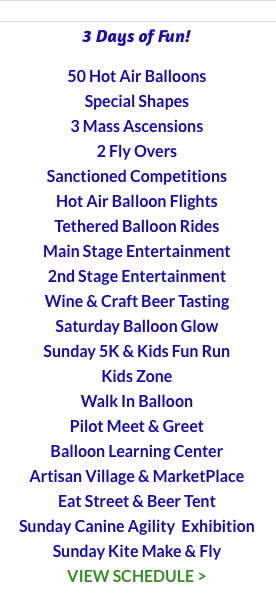
    Every year Statesville, North Carolina hosts the annual Carolina BalloonFest.  This is a three-day event full of hot air and fun.  With over 50 hot air balloons taking to the sky, Carolina BalloonFest will definitely leave you speechless.  This festival consists of numerous family-friendly events to keep everyone entertained.  From hot air balloon rides to a balloon 5k run, this festival has a little of everything.  The festival includes: ballon viewings, balloon flights, live music, beer and wine tasting, kite making and much more.

    Screen Shot 2015-10-19 at 1.52.34 PM

    Tickets are $10 dollars and can be purchased onsite at the festival.  For more information regarding the festival see: http://www.carolinaballoonfest.com.

    For a Cause

    Each year the festival chooses a variety of local charities to support.  Last year, over 17 charities received donations from the event.  Distributing over $76,000 dollars last year, Carolina BalloonFest not only provides fun and entertainment to the community, but also, a helping hand to those in need.  The organization states on their website that over the past five years they have contributed over $274,000 dollars to the community.  Ranging from cancer organizations to Boy Scout troops, many benefit from this weekend of fun.

    Screen Shot 2015-10-19 at 1.52.06 PM

    Com as Design

    Think of words you would use to describe fall.  Was “festival” one of the words?  To many, fall means dedicating weekends to a vast variety of festivals.  County fairs, pumpkin patches, corn mazes, and apple picking are all part of the fall theme.  But what is it we find so attractive about these events?  Is it the goods sold at them?  Or the idea of a group of people coming together for a united reason?  The design an organization or company decides to pursue for an event is very important.  Promoting what their target markets will find most attractive is crucial.

    By focusing on language in their design, Carolina BalloonFest uses phrases such as “help continue our charitable mission” and “experience the magic” to persuade their target audiences to attend their event.  This organization has decided to put a large emphasis on the charitable aspects of the festival.  The website has a section labeled “Our Mission” that describes exactly what charities benefit from the proceeds.

    The festival also places a large emphasis on being family-friendly.  Adding a list of activities that will take place over the course of the event, Carolina BalloonFest uses strategic naming of these activities to catch a parents’ eye.  “Kid Zone,” “Kid Fun Run,” and “Learning Center” are a few examples of designing language to fit a certain target market.

    Screen Shot 2015-10-19 at 2.02.27 PM

    It is clear when dealing with communication, design is key.  Remembering the power of design aspects, such as language, will ensure that you are successful in your communication efforts.

    Sources:

    http://www.carolinaballoonfest.com

  • Commodity Fest

    Here at UNCW, you are more than likely going to hear someone rave about the upcoming annual Beer & Wine Festival in October. The tickets range from $40- $75. This is a relatively decent price for college students to pay to drink unlimited beer and wine, but more often times than not festivals are expensive…think Bonnaroo or Firefly. With bills, student loans and other debt it can be hard for students to afford the ‘extras.’ Because of this, some students look for more affordable ways to attend festivals. Students can volunteer and attend the festivals for free admission. They can help sell artist CD’s, setting up tents, chairs and other items, or even being a door monitor for the event making sure all patrons are wearing the correct wristband. If you aren’t interested in being a volunteer, you can always turn to the internet to help you find cheaper tickets.

    groupon
    groupon.com

    Groupon is a deal-of-the-day coupon service that has become widely popular in today’s consumer market. Groupon keeps its brand relevant by updating its electronic coupon offers every 24 hours, providing customers with recommendations for nearby businesses in addition to a 40 % to 60% discount upon purchasing the service.  As many internet based start-ups like Scoutmob and LivingSocial prove, marketing services online allows a much wider potential consumer base to become more aware of what commodities are out there and more likely to invest in them. Groupon typically is associated with promoting restaurants and stores, but consumers can also turn to Groupon to get access to their festival of choice. Groupon offers discounted entry into a wide variety of festivals from culinary to cultural or holiday themed fests.

    polish girls
    ststanspolishfestival.org

    Groupon contributes to the commodification of festivals by providing a means of access for people outside of the culture and community, and more affordable prices for everyone. Festivals are becoming more of a commodity than a cultural event. For example, St. Stanislaus Roman Catholic Church in Castle Hayne, NC holds an annual Polish Festival in November. On their website, they claim to be “authentically” Polish, featuring food, beer and wine, dancers and music, and traditional Polish activities. However, the festival loses its cultural authenticity by harnessing Polish culture and turning it into the opportunity to create a consumer experience with the selling of cultural foods, activities and entertainment. Commodifying festivals can even instigate business partnerships such as the Annual Polish Festival teaming up with Front Street Brewery to make a special Polish beer made for the occasion. Commodities are goods that are bought and sold in a social system and a commodity culture is when those goods are central to cultural meaning. From a small farming community celebrating the harvest to Bonnaroo, festival’s are a way to promote cultural goods.

    polish fest
    ststanspolishfestival.org

    http://www.ststanspolishfestival.org/

    http://www.lighthousebeerandwine.com/about-beer-festival/

    • Aki Suzuki, Alexis Trimnal, Carey Poniewaz, Carey Shetterley, and June Wilkinson
  • The North Carolina State Fair Has it All

    The North Carolina State Fair, an event whose humble origins begin with a small four day agriculture event held in 1853, has become a yearly tradition for many North Carolina natives. Much of the reason for the fairs current success is perhaps the diversity of attractions it offers. Whether you go for the fried food or displays of giant vegetables, livestock judging or pig racing, to peruse the craftsmanship in the Village of Yesteryear or to pursue the coveted prize of a giant stuffed animal at one of the many carnival games, there is a little bit of everything for everyone.

    2015 has already seen record attendance numbers with its first Thursday, the 15th of October, setting an opening day record at 47,677 guests, breaking the previous record set in 2010. Many more visitors will make their way to Raleigh as the week continues and they are drawn to the many events and attractions.

    Of the many events and attractions, perhaps one of the most publicized is the State Fair’s fried food that has become infamous for being as creative as it is unhealthy. As a part of the State Fair’s social media, there is a blog run by the fair called the Deep Fried Blog. Of this years many deep fried sensations, the star of the show is a newcomer called, “Fry Me Over the Moon”, a combination a Moon Pie, Hostess Cupcake, Oreos, and Reese’s Cups, all deep fried into a single creation. Not only has this been publicized on the State Fair’s blog, but many other media outlets have covered this State Fair delicacy such as WNCW, The News and Observer, and WRAL, just to name a few.

    Fry me Over The Moon

    While this modern fried phenomenon draws much attention, a less advertised, but long running tradition for many is the more relaxing Heritage Circle, a place where visitors can get fresh home made ice cream from the Grist Mill and listen to the line up of bluegrass musicians at the Bluegrass Stage. While bustling energy surrounds the novelty fried food vendors as people squeeze their way through the busier segments of the fair, Heritage Circle offers a completely different state fair experience. It is tucked away from the heavy foot traffic of the main paths in a much quieter wooded area where visitors can sit and enjoy the feeling of a simpler time.

    Heritage Circle

    Today’s fair goers are offered a wide variety of attractions that range from experimental to traditional. There is something for everyone this fall at the NC State fair grounds as the festivities continue until October 25th.

  • Come Rock with Us

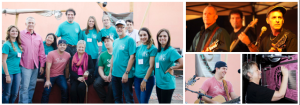
    Tonight marks the 9th annual Rock for a Cure event benefiting the New Hanover Regional Medical Center Foundation’s Pink Ribbon Project. The event is hosted by the Communication Studies Society and will be held at the Reel Cafe, located in downtown Wilmington. The event is to help raise awareness and funds for the Pink Ribbon Project.Screen Shot 2015-10-16 at 11.05.49 AM

    There will be performances from The Schoolboys and UNC-Wilmington senior, Lake Gibson. The auction will contain sports memorabilia, concert tickets, jewelry and other items. Aside from the auction, a raffle will also be held, with prizes such as an iPad mini 3, more concert tickets, gift cards and more. Thanks to the contributions provided by the sponsors and donors, Rock for a Cure is able to provide great prizes that have raised over $33,000 since its inception.Screen Shot 2015-10-16 at 11.03.43 AM

    Rock for a Cure is successful by appealing to not only college students, but also the Wilmington community. The event is only $5 to attend, which makes it one of the most affordable philanthropic events in the area. This allows community members to contribute more towards the auction and raffle, which is a prime generator of the funds. However, the low entrance cost makes the event appealing for students because they can be a part of the event and help the cause.

    The fun kicks off a 6 p.m. tonight. Don’t miss out on this opportunity to give back and have a great time. If you can’t make it, what other ways are you giving back to your community?

    – Nick, Melanie, Mary & Patrick

  • For the Cure: Breast Cancer Awareness or Bank Account Awareness?

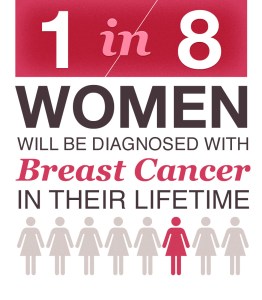
    57e514ad84f3780932dff41d5c63ee2cDid you know one in eight women in the United States will develop invasive breast cancer? And that every two minutes in the United States a woman is diagnosed? Cancer is one of the most feared words in American culture. We focus a whole month to supporting one specific type of cancer. Breast cancer awareness month is an incredible way our nation unites through multiple organizations, to support a good cause. The process is extremely easy for anyone to donate and feel like their money is going to a good cause…or is it?

    Susan G. Komen for the Cure is a widely known non-profit organization that supports breast cancer research. The purpose behind this organization appears to be transparent- but has it gotten to the point where it is just money hungry? Only 20% of the money raised or donated goes directly to breast cancer research. Although this is not out of the ordinary compared to other widely known non-profit organizations, it is misleading how their partnerships also support “for the cure.” Susan G. Komen partnered with KFC to create “buckets for the cure.” KFC’s diet aids to cancer cell growth and the main reason for partnering was to, “reach out to millions of woman they might not otherwise reach…” But, Breast Cancer Action claims, if you want to reach communities that are underserved, then the Susan G. Komen organization needs to reach out to the community health clinics. Clearly from this example of their partnership tactics, there are suspect business practices within the organization. The list of controversial issues that the Susan G. Komen organization has accrued over time is actually surprising considering the foundation started with a good cause in mind.

    Pink-RibbonFor the better part of the last decade, the popular breast cancer charity Susan G. Komen has been racked by controversy. Things began to go awry in 2012 when they pulled support for Planned Parenthood, amid pressure from Republican lawmakers. The non-profit responded to accusations that its actions were, “anti-woman,” saying that the funds were not pulled because of ideological conflicts, but because planned parenthood was under investigation by congress. This is a questionable statement, as the corporate structure of Susan G. Komen has strong ties to pro-life entities. Among other accusations, the organization has taken heat for using donor money to sue other non-profits for infringing on their various trademarks. Notably the phrase “For the Cure,” which has been the subject of many cease-and desist orders, even when the organization had nothing to do with breast cancer. After all of the hits the company took, rather than step down, the CEO took a huge page raise.

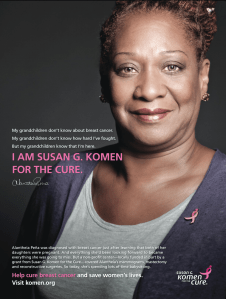
    susangkomenFollowing Susan G. Komen’s changes in grant rules, barring Planned Parenthood’s funds, supporters increased on Planned Parenthood’s side. According to Politico, Planned Parenthood’s Facebook page increased by 10,000 in a few days. Anti-Susan G. Komen for the Cure Facebook pages increased- with titles similar to “De-fund the Komen foundation.” As the news broke regarding Susan G. Komen’s course, Planned Parenthood and #PlannedParenthood started trending on social media and became a topic of interest in mainstream media. Susan G. Komen for the Cure did not convey its message well in response to the crisis. After the crisis, the Komen foundation used storytelling as a way to reconnect with the community- starting a print and television advertising campaign, “I Am Susan G. Komen“. This campaign spotlighted four-breast cancer survivors- using their stories to market Susan G. Komen for the Cure.

    An important thing for organizations, especially nonprofits, to remember is their brand identity and their actions need to match up. Cognitive Dissonance is when someone experiences a feeling of tension when their beliefs do not align with their actions. This theory states that when someone experiences this inconsistency, they will do what they can to reduce this uncomfortable feeling. The Susan G. Komen organization received backlash after developing a perfume “Promise Me”, which contains toxic and hazardous chemicals. Breast Cancer Action exposed the use of Toluene, banned by the International Fragrance Association as well as Coumarin, banned by the Food and Drug Administration.

    People donate to Susan G. Komen, which presents itself as a non-profit organization donating its funds to breast cancer research. When those who donate hear about Susan G. Komen partnering with organizations, which do not promote health, such as KFC, creating harmful fragrances for sale, and giving only a small amount of money to breast cancer research, cognitive dissonance occurs. They may feel uncomfortable because of the inconsistency in what the organization presents itself as doing and what it is actually doing. Those who donate will oftentimes choose to reduce this feeling by stopping their donations to the organization altogether. If a non-profit organization wants to thrive financially, they need to ensure that their actions align with how they present themselves and their original intent.

    breastcancerawarenesslogo1

    Reading the information on Susan G. Komen for the Cure, one might expect all nonprofit organizations follow their guidelines. Here are other foundations and organizations supporting breast cancer research and finding a cure:

    It is easy to show how significant the topic of breast cancer is within the United States. There are countless statistics about the impact breast cancer makes- that would shock any reader. So, hearing that one of the most well-known organizations, whose existence is centralized around breast cancer research and finding a cure- may not be the hero it has portrayed itself to be, is concerning.

    We, as the American public, have a duty to be alert to the aspects that make up our charities and nonprofit organizations, and be diligent in how we distribute our donations. As a reader, what are your opinions on Susan G. Komen for the Cure? Would you donate your time and money to this organization?

    -Jonathan Callahan, Erin Fouhy, Julia George, Joseph Hines, and Sarah Suggs

  • A Symbol of Hope or Shopping?

    1
    http://www.sportivostlucia.com/?attachment_id=780

    Whether it be the NFL, Yoplait’s pink lids, or local breast cancer benefit events, like UNCW Communication Studies Society’s Rock for a Cure this Friday night, the color pink is plastered all over the nation during the month of October. As it stands, the pink ribbon is a universal symbol representing the fight against breast cancer. Over the past few years some critics have emerged saying this beacon of hope has merely become an annual marketing campaign. Nancy Stordahl, a blogger for the Huffington Post, criticizes the campaign and in 2012 she composed a list of the ten things she felt were wrong with the pink ribbon.

    You can find the full article here, but there are two points in particular she relates back to marketing that raise an interesting discussion. The first is that the pink ribbon is being used to sell stuff and has lost its original purpose, a purpose to unite this country and show our commitment to finding a cure. Today, marketers are using the pink ribbon to tie the cause to the products they are trying to sell. Stordalh even calls breast cancer the “shopping disease.” Customers are no longer buying just the product but they are now buying into the pink ribbon and what it has traditionally stood for. The typeology approach to IMC acknowledges that companies have products that look like another company’s products and services. However, it also points out that the market depends on common interests between themselves and the people who can help their company thrive. While the number of pink ribbon branded products on the market may be alarming, maybe marketers are giving consumers what they want – a deeper connection to a brand that allows them to make a contribution to something that has seemingly impacted them both.

    The second point Stardahl makes is that marketers are selling the idea of “selling good will.” If the consumer purchases a product that will lead to a company’s contribution, the consumer views this purchase as their contribution to the cause. This tactic allows corporations and organizations to sell more products and increase profits while enhancing their corporate social responsibility at the same time. In turn, consumers are able to buy into the commodity culture that surrounds the pink ribbon. They become part of the fight and part of the cure all while donning their pink ribbon branded merchandise.

    3
    http://www.shescribes.com/2010/10/free-60-day-membership-to-bjs-wholesale-club-for-everyone.html

    Next time you have the opportunity to join the fight, think local and try to avoid the marketing tactic of “selling good will” and supporting the “shopping disease.” If what critics say is true, and the pink ribbon has lost its symbolism for hope, strength and a unified commitment to a cure, is it ethical for marketers to continue using this symbol on their products? Let us know what you think about the national attention that is brought to the pink ribbon. Do you think it has become a marketing tactic or does it still representation of the fight to find cure?

    http://www.huffingtonpost.com/nancy-stordahl/breast-cancer-pink-ribbons_b_1951319.html