Blog

  • Corporate Identity: Today’s Politics

    democrat-v-repub

    How do you recognize your favorite brands? By what they do? Their logo? The places and ways they make themselves known? Perhaps even their colors? Everything that you recognize, all of the moving parts of a brand, forms the corporate identity.

    Political parties play a huge role in America. Primarily, we have two large political parties– corporations, if you will – that brand and identify themselves with traits and characteristics audiences will be able to identify. The Republican party has a logo of an elephant, the Democratic party a donkey. The Republican party primarily brands with the color red, the Democratic party with the color blue. The Republican party is well-known for holding traditional, conservative values, while the Democratic party promotes itself as built for change. Both identities allow the audience (American citizens) to recognize the party with all of their promotional materials.

    To create specific corporate profiles for today’s political parties is to understand the ways the organizations are seen by the public, to recognize how the signs that represent each party are both received and transformed into a corporate image. How does a corporate identity differ from that of a corporate image? A corporate image is the official self-image or ‘reputation’ of a given organization, while the corporate identity is the collection of signs and symbols people associate with it. The two, therefore, consist of complementary parts that feed off each other. The recognition of the brand behind each of the two political parties comes from the communication each party constructs for itself according to ‘external’ impressions by the audience. These perceptions are often based on controlled messages (ads, releases, political slogans, logos, and even endorsements) put forth by the parties, allowing the organizations to help mold the image. In turn, the corporate identity can change as decision makers (party leaders) take these impressions into account.

    The corporate identity of both the Democratic and Republican parties are influenced by their persuasiveness and credibility, or rhetorical power, in a world filled with signs and symbols. Each slogan, logo and ad must transfer rhetorical messages that connect with voters and call them to act. Do you think the symbols our country’s political parties use appropriately convey their brand? How do you interpret and connect with these symbols? Do you feel as though the “symbols” of each party were more relevant this year than with past elections? Let us know!
  • Nike vs. Adidas

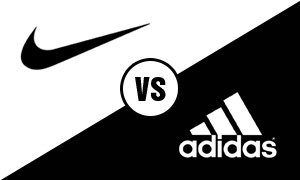
    When looking at the Nike and Adidas logo, what do you see?

    nike

    Semiotics is often over looked by the consumers of brands such as Nike and Adidas. As for these billion dollar companies, they use semiotics to enhance their brand without you even realizing it. Semiotics is the study of signs or symbols and their use or interpretation.

    nik

    Nike was established in 1972 by Phil Knight and Bill Bowerman. It has become the worlds largest athletic company that brings in billions of dollars. The Nike logo has become the single most recognizable logo in sports. The Swoosh represents speed and motion. The word ‘swoosh’ is onomatopoeia for the sound from the motion and speed. Nike also has the slogan “Just Do It” and it serves as a cornerstone to go along side the swoosh. You can recognize either one of these, the swoosh or the slogan “Just Do It” and automatically know it is the Nike brand.

     adidas

    Adidas was started in 1949 by a man named Adolf Dassler in Herzogenaurach, Germany. It is the second largest athletic company right behind Nike. I personally believe Adidas is on the same level as Nike when it comes to recognizing it’s logo in sports. When you see three lines that kind of look like a pyramid, you instantly know it is Adidas. This logo is said to symbolize “the challenge to be faced and the goals to be achieved.” Adidas has a slogan as well, “Impossible is Nothing”, but it does not resonate with it’s consumers as much as the “Just Do It” slogan does with Nike’s consumers.

     nikee

    Both Nike and Adidas brands play to both sides of the consumer spectrum, attracting both the active and casual lifestyle. Three main areas of their products is sneakers, apparel and equipment. I personally only wear Nike because growing up in the Tar Heel state and being a huge Michael Jordan fan, I always saw him wearing Nike and I wanted to be just like him. This just goes to show how the power of a symbol can be instilled in a child at a young age, and with this, gaining a lifelong costumer.

  • Say Yes to Voting

    Say Yes to Voting picture1


    Voting for the next President of the United States is a BIG DEAL! Some people are not even registered to vote, some people just don’t care, and some people just are lazy and are go with the flow. WELL…. HELLO it’s your duty as an American Citizen that you should vote. We should be glad that we have the freedom, both men and women to vote! Take advantage of your right! It’s a great time to be alive. Say Yes to voting!

    Semiotics are used in political slogans and advertisements to try to grasp the attention of their audiences. For the most part these things do work, yet some people still do not even make the time to vote.

    So, here are 8 reasons why you as an American citizen should go vote:

    1.You get a Cool Sticker to Show Your American Pride!

    picture2


    2.Your Vote Counts!

    picture3

    3. It’s Your Civic Duty!

    picture4

    4. It is an American Freedom!

    picture5

    5. If you Vote, You Can’t Complain!

    picture6

    6.It Makes you Feel Like an Adult!

    picture7

    7.You Are Not Just Voting For the President, You’re Voting for America!

    picture8

    8.Every Vote Matters!

    picture9

  • There’s Always a Reason to Give Thanks

    Now that Halloween is over and we have reached the beginning of November, let’s not jump to Christmas just quiet yet! One of my favorite holidays that I cherish most is Thanksgiving. Many things probably come to your head with the thought of Thanksgiving coming up like turkey, stuffing, gourmet home cooked meals, and spending time with loved ones. This is such a special time of the year that often people take for granted or even look over since it is so close to Christmas. I know it’s hard, because who doesn’t like putting up their Christmas tree early?!

    Thanksgiving-Dinner-In-Progress.jpg

    This is the time of year where it is important to be thankful. Being able to go home from the stress of crazy schoolwork and tests, and spend time with your family is something to be grateful for. For those of you who live out of state, I’m sure you know how special this time is as well, even if you can’t go home and are just able to be surround by friends.images.jpeg

    So I encourage each of you to take the time of Thanksgiving to take off from school work (unless you have some massive paper/test/project), kick back and relax with family or friends. Don’t take this time for granted, especially when it comes to having a full and happy stomach. Maybe even watch some football and daydream about UNCW having a football team. We can only dream…

    images-1.jpeg

  • “Happy Holidays” instead of “Merry Christmas”?

    With Halloween being over, the new focus of commercials, paper ads, stores, etc. is now the wonderful holiday that is Christmas. I know you’re thinking “what happened to Thanksgiving?”. I ask myself that question every year. Around Christmastime everyone seems to be in the best mood possible. Everyone is constantly smiling, baking cookies, throwing Christmas parties, and singing their hearts out to Mariah Carey’s “All I Want for Christmas”. Christmas is a very cheerful time.

    download-1

    As you notice I keep using the word “Christmas” when speaking about the upcoming holiday. This is something that companies and organizations try to stay away from these days. The reason for that is contextual communication ethics, an approach to communication ethics that recognizes variations in culture, persons, and communication settings. When companies utilize contextual communication ethics, they are considering each individual person that benefits from their company and they are also protecting themselves. The perfect example that is going to be very apparent soon is saying “happy holidays” instead of “merry Christmas”. Have you noticed over the years that more and more businesses stray away from saying “merry Christmas”? This is because in America diversity of culture is growing rapidly. Saying “merry Christmas” to someone that celebrates another holiday such as Kwanzaa or Hanukkah could easily that person. So companies have began changing the way that they celebrate the holiday.

    Now on advertisements like commercials and print ads, “happy holidays” is used to avoid alienating people that do not celebrate Christmas. A few years ago, many Americans were very upset that they barely heard “merry Christmas” while shopping anymore. Christians workers, especially, were angry that the company they worked for enforced the new “happy holidays” saying. A recent dispute that relates to “happy holidays” is the red Starbucks catastrophe that occurred last year. Basically, Christians felt that Starbucks changed their holiday cup design to be less-Christian because the cups no longer said “merry Christmas”, (an example of Starbucks utilizing contextual communication ethics). This controversy turned into one of the biggest issues of 2015. Recently, Starbucks released their holiday cups and they are now green. People are now even more outraged. There is no winning with Starbucks’ customers apparently.

    starbucks_-_red_cups

    However, besides the Starbucks fiasco, as the years go on it is becoming more acceptable to say “happy holidays” instead of “merry Christmas”. Overall, companies see this as a way to include various types of people that come from various backgrounds and cultures. Whether its “happy holidays” or “merry Christmas”, I just hope everyone watches Home Alone, spends time with their family, and eats a great big feast.

    1443520136-tumblr-legksf9ti81qfjyauo1-400

    – Jordan S

  • We the Brand, for the People


    like-image

    Have you ever bought a certain item because x amount of the proceeds were going to a good cause? Ever shopped at one store because they stood for something you admired? Or perhaps you boycotted another because you were disappointed in their service or beliefs?  

    Brands often take stances on issues that their CEOs or founders or managers support. Sometimes though, these stances can come from views that have hopes to potentially support their business. Stances on issues that support and promote their brand with types of ethos, pathos, or logos. This approach falls under universal humanitarian communication ethics, a way in which a brand can become more than a brand. Standing up for something gives a brand a three-dimensional life, a way they can show they are for the people, with the people. A demonstration of a company’s care and concern for current events and those who are hurting. This could be an organization collecting supplies for hurricane victims, a restaurant passing out food to the homeless, a company donating to relief efforts after a natural disaster, this could even characterize a business that sends employees out to work on service projects in their community once a year.

    Facebook is a social networking site, a brand that is known throughout the globe for shares and likes, pictures and videos, clever statuses and live feeds. It can be characterized in many ways, by many things it, or its users do. One thing Facebook has recently launched, is supporting those in need in tragedies. When bombings happened in Paris, Brussels, and Orlando, Facebook was one of the first large organizations to react. They quickly set up a profile picture changing, user friendly, mechanism so that anyone around the world could show support of the cause.

    By doing so, Facebook reflects Immanuel Kant’s theory of universal humanitarian ethics, to achieve the greatest amount of good for the greatest amount of people. The humanitarian principle of Kant’s theory stems from an individual’s drive and dedication of fulfilling a moral duty or obligation to the human community.

    The Internet today can be used as a giant support system. A brand built entirely on ranking the things that matter most, Facebook ignites a sense of community among its users. Presenting users with a way to change their profile pictures to reflect the event of a recent tragedy, communicates a behavior that helps to both protect and promote the greater good. A brand for the people, Facebook sets forth the notion that as a collective we must stand together, that even doing something so simple as changing one’s profile picture to represent the flag of a country affected by tragedy, communicates the universal element that together, we are stronger and will be there to help one another.

    Facebook is just one of the many companies that always keeps current on the events happening around the world to show that they care for the customers using their brand. This really shows how influential and powerful a company can really be and even start trends that catches on with people from around the world. Do you think sometimes a brand can correlate itself with a potentially insulting cause or charity? Let us know what brands you choose to identify or not identify with because of what it stands for!

  • Cam Newton: Authentic or Not?

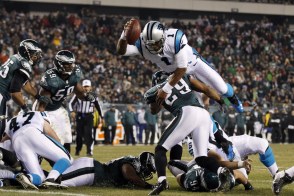
    The word authentic can be taken in many different ways depending on the context. Cam Newton plays the game of football with passion and tenacity that has never been seen at the quarterback position, but is his character really authentic? When you think of the word “authentic” I’m sure that many things come to your mind. Whether that be that something or someone is genuine and pure or that it is of true legitimacy. Some might say that it is tough to argue one way or the other whether or not Cam Newton is authentic. He has been leaving press conferences after losses and has also been having a poor attitude when they lose or when things don’t go his way. newton1Yes, Cam loves the game and plays his heart out. He is literally a superhero to thousands of kids all over the United States as he flies over and through defensive lines week after week. However, as the MVP of the 2015 season and quarterback of his team, wouldn’t one think that for him to be truly authentic he must represent himself, his family and his team well in every situation?
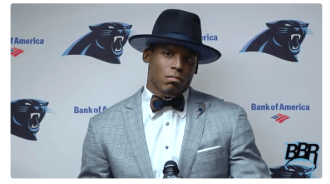
    Cam Newton has been under quite a bit of scrutiny as he walked out of his press conference after the Super Bowl against the Denver Broncos in February. He also most recently walked out of a press conference after a loss against the Atlanta Falcons in week six of this year as well. Many argue that he lets his emotions get to him too much and that he needs to gain more understanding of the business aspect of the sport that he must be involved in. However, for Cam to be considered truly authentic, would he really be able to push aside his emotions?
    cam-newton-madThere is a difference between being fake in a press conference and being authentic. There is a strong line between what it takes to be authentic and what it means for someone to be faking it. Cam surely does not fake it as you can see his true emotion in his press conferences.
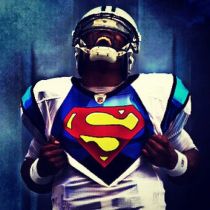
    There are so many aspects of Cam Newton’s play on the field that show his love and passion for the game. Watching Cam score a touchdown (whether you hate him or love him) is one of the most spectacular things to watch in the world of sports today. To top it off he even runs the ball over to the first kid he sees in the stands. He has turned the quarterback position into something completely different than it has ever been – something of pure authenticity that is his own work of art.

    cam-supermancam-newton-handing-ball


    The league has never seen anything like him, so it must be difficult to live up to all of the hype when you are just 27 years-old. To make something your own it takes originality and creativity, as well as uniqeness and God-given talent. Cam Newton surely has all four of those characteristics to make his case for being authentic.

    The way Cam handles his press conferences only shows how authentic he really is. He allows his emotions to get the best of him – when they win he has the biggest, brightest smile on the field and when they lose he pouts the most out of anyone on the field – and that speaks to his authentic character. Cam has always had a huge heart for the kids of this country as well. He knows that he has a great platform to be a role model and example to kids all over the United States. Two things are for sure, and they are 1)that he uses his platform to make a difference in young kids lives’ and 2) that he certainly puts his full effort out there on the field. These also speak to his authenticity as he takes hit after hit every week and continues to punish defenders. While doing all of this he is able to continue to change the lives’ of our nation’s youth as well.

    – Joshua J