Every company perceives themselves differently. They have a mission, values, and organizational culture that sets them apart from other organizations. Based off of these values, each company constructs a brand identity in order to communicate those values to their target audience. On the flip side, every brand has an image that goes along with their identity. A brand’s image is the public perception of the brand, and how they view their organization. The identity is simply the face that the organization puts on for the public. Anything and everything from an organization’s public relations, to the symbols and color patterns used in advertising contributes to the construction of brand identity.
A lot of what an Integrated Marketing Communication practitioner does is mediating this relationship between the brand (identity) and the consumer (image). The overall goal is to construct a singular, consistent message to send the target audience that is concise and to the point. However, there are numerous challenges to overcome in order to achieve this goal.
The first issue is external versus internal audiences. Organizations have multiple audiences to appease, and because of this, an organization’s message can become somewhat ambiguous. The external audience refers to those outside the organization, typically the consumer. Without support from this external audience, your sales will decrease, and ultimately put your company at risk of going out of business. That being said, you must also keep in mind certain internal audiences that also keep your organization in business. This audience could be investors, parent companies, and various organizations who you have gone into business with. A hypothetical example of a problematic situation pertaining to this issue could be the consumer’s desire for an organic, or reliable product at a low price, while also dealing with investors who want to keep cost of production down while still utilizing cheap materials in order to turn a larger profit. At what point will you no longer be able to honestly say that the quality of your product is superior when constructing advertising campaigns. To summarize, the challenge is to construct one message that keeps multiple parties with varying interests happy simultaneously.
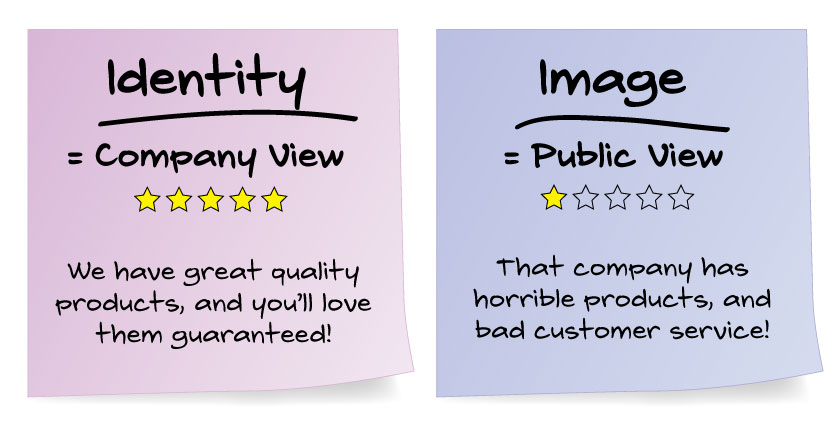
Another issue that is evident among almost all consumers, is false representation by corporations. Many perceive corporations to have a true identity that goes unchanged over time, despite contrasting advertisements and public relations. An example can be seen with Starbucks Coffee. They have been accused of being a “greenwashed” company, meaning they put out disinformation to present an environmentally responsible public image. Corporate social responsibilities for any organization can be taken with a grain of salt, but the issue of transparency is a major concern for consumers. It is the IMC practitioner’s job to not only ensure that one clear and consistent message is being sent to the external audience, but that it is transparent, and ethically sound.
The major challenge of an IMC practitioner is to successfully integrate all aspects of an organization’s communication into one “package” for the consumer, while communicating consumer feedback right back to the organizations. This why I describe an IMC practitioner as being a “mediator” between an organization, and its external audience. On the organizational side, it can sometimes be difficult to construct one singular message, when you’re working with all communication departments of an organization such as; public relations, advertising, customer relationship management, social media, etc.
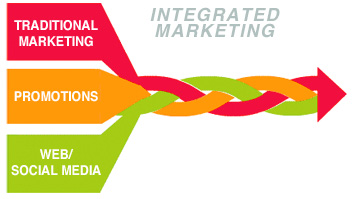
For prospective students, IMC can at first seem like a somewhat ambiguous concept, many associating it with a single entity such as advertising, or public relations. If we are to equate IMC to composing a musical score, social media could be the violin, advertising the trumpet, social media the piano, and so on. A composer’s job is to integrate all these musical instruments to compose one harmonious sound. Likewise, an IMC professional’s job is to integrate all platforms of communication within an organization in order to send a concise, clear and consistent message to an audience, and in turn relaying audience feedback. In order for an effective message to be sent to the audience, effective communication must exist within all areas of the organization. If all of these departments, or instruments, are not fluid and clear with their communication, the message will not have the desired impact on the target audience.


 The 2013 film “
 Samsung recalled about 2.5 million Note 7s following complaints that its lithium-ion battery explodes while charging… and in
  The Gulf oil spill is recognized as the worst oil spill in U.S. history. Within days of the April 20, 2010 explosion and sinking of the Deepwater Horizon oil rig in the Gulf of Mexico that killed 11 people, underwater cameras revealed the BP pipe was leaking oil and gas on the ocean floor about 42 miles off the coast of Louisiana. By the time the well was capped on, 87 days later, an estimated 3.19 million barrels of oil had leaked into the Gulf. Not cool BP. The fury over BP’s role in the Gulf spill erased the progress BP had made on the corporate responsibility fronts in the previous decade. And to make matters worse,
  Chipotle built its business over the course of more than two decades on a simple premise: being better than the fast-food chains. Its food is locally sourced-when possible- and grown and raised according to strict standards. Its employees are paid well compared to other restaurant chains, and even hourly workers receive benefits like paid vacation time and tuition reimbursement.
  Volkswagen’s is proof that a company’s reputation, and fortune, can change due to a single incident. For years, clean diesel was presented as an alternative to hybrid engines and was promoted as a major reason for consumers to buy cars with turbocharged direct injection (TDI) engines. Last year, the EPA accused VW of deliberately designing its vehicles to circumvent emissions tests. This was eventually confirmed, and overnight, the company went from an esteemed automaker to one of the most widely-disliked major companies. Volkswagen sales plummeted as a result, ruining their corporate image… at least for now.
 Donald Trump, President of the United States, or “The Donald”? I know we are all tired of hearing about the election, but the marketing and communication strategies used by the new president-elect stand out from many before him. Donald Trump has been a public figure for years now, and over the course of this election, we have seen his image change from businessman to politician. How do we separate these identities? One appeal to some voters this election was the shift that Trump brought by not being the typical politician running for the presidency, but a real estate mogul and even reality television personality who decided to change his career path. (Who remembers “The Apprentice”?)

 Pedigree dog food built its brand by focusing on the need for people to adopt homeless dogs. Funding the support and care of these animals and sponsoring a national adoption drive, Pedigree’s 2009 goal was to distribute $1.5 million in grants to 1,000 shelters and breed rescues. Pedigree donates one bowl of food to animal shelters every time it gets a Facebook fan, and it did the same when the company’s 2009 Super Bowl commercial was viewed online. Pedigree’s goal is to donate “4 million bowls of dog food annually”, enough to feed every shelter dog in America for one day. Their corporate identity resonates with animal lovers worldwide. Who wouldn’t want to buy a brand that helps out man’s best friend?
 The well-known shoe company TOMS is another great example of a company with strong corporate identity. Owner Blake Mycoskie started Toms Shoes on the premise that for every pair of shoes sold, one pair would be donated to a child in need. TOMS Shoes recognized that consumers want to feel good about what they buy, and thus directly tied the purchase with the donation. In just four years, Toms Shoes has donated more than 400,000 shoes, evidence that consumers have clearly embraced the cause. It’s a brilliant corporate social responsibility model that many companies have adopted for themselves in the past few years. Their “One for One’ policy is a win-win for everyone involved!
 Located right here in Wilmington off New Center Drive, Bitty & Beau’s Coffee markets itself as being “more than a cup of coffee”. When you buy your coffee beverage here, you are supporting people with disabilities and are their inclusion in the workplace! The shop is run by people with intellectual and developmental disabilities. Bitty & Beau’s Coffee currently employs 40 employees who create a warm and inviting atmosphere that makes every customer feel special. They create a culture where diversity is not just appreciated, it’s celebrated! This has become their corporate identity and this is something that customers will draw customers in and get them to skip the Starbucks. Statistically, 70% of people with a disability in the nation are unemployed. By buying your coffee from Beau’s, you are supporting these individuals with disabilities! It is a coffee experience like no other.
 Since opening its doors in 1973, Patagonia has been a leader in the industry when it comes to Corporate Social Responsibility. Patagonia’s products are produced and made out of sustainable materials by ethical labor practices. In turn, Patagonia provides exceptional high-quality products that consumers can feel good about buying. They pride themselves on their apparel being made to last so that customers do not have to buy new clothing as frequently. They truly are business that accounts for the impact of their activities on customers, employees, communities and the environment. Additionally, Patagonia puts in the extra effort to promote fair labor practices and ensure good working conditions in our factories, which many companies fail to do. Fair Trade is one of the first tools they use at Patagonia to raise workers’ wages, improve their standard of living and move them closer to earning a living wage. Bottom line, Patagonia strives to always treat their workers and the environment with the respect. While their products are on the higher end of the price spectrum, you can feel better about your expensive purchase because you know you are supporting a good company.
 Burt’s Bees is another NC based company that is providing good products and doing good out in the community! The company partners with Habitat For Humanity to build eco-friendly homes! In 2007 they established The Burt’s Bees Greater Good Foundation, which is funded by a percentage of their sales. Its goal is “to help empower non-profit initiatives whose efforts resonate with our own mission, particularly in the areas of natural health and well-being, the environment and social responsibility.” The company also gives back in another way by working to develop sustainable packaging made from recycled materials. In addition, they are a huge advocate for bees! The decline in the bee population over the past century impacts our eco-systems on multiple levels, so Burt’s Bees has tried to help raise awareness and bring attention to this issue. Their corporate image and identity is one that people recognize as an all-natural and eco-friendly company. So do yourself a favor and buy a stick or two of Burt’s Bees! Not only will it keep your lips moisturized this winter, but you can also know that you are supporting the bees at the same time! Now that’s something to buzz about!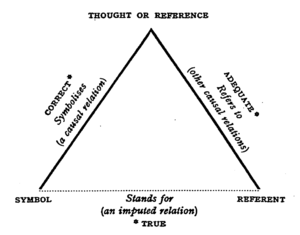
 When you see Sammy, what comes to mind? Sammy Seahawk is the referent and this image of Sammy is our symbol. What is our thought or reference then? It can vary from person to person. When I see this symbol, I think of all of the students at UNCW and how Sammy is meant to represent them. Others may see him and think of athletics and might think of a memory of when they saw the Sammy Seahawk mascot at a game. It can even bring a feeling of joy when you see the symbol.

 IMC Hawks Blog