Blog

  • So I Heard You Didn’t Vote

          On Tuesday, November 6th, millions of Americans utilized their civic duty and voted in the 2018 midterm elections. While voter turnout has increased since the last midterm election, overall participation of eligible individuals who exercise their right as to vote is still at less than 50% of the total voting population according to USA Today. Some of the underlying issues of voter turnout involve feeling less informed about the world of politics. As Com Studies students it is our job to keep up with current events and help spread awareness of all issues even political ones. It is sad to see that several of our peers have chosen not to exercise their right to vote because they did not know enough to made an educated vote in the midterm elections. In an effort to combat these feelings of uncertainty, here are five tips to help you (an important potential voter) feel more educated and involved when making your next decision at the ballot box.

    achievement-america-american-flag-1550340.jpg

    (Photo by Element5 Digital on Pexels)
    1. Download An App

            As simple as it sounds, there are several applications for Apple and Android that have the sole goal of cutting stories down to a few digestible bullet points. These apps reduce the amount of time you as the reader have to spend searching for information and can be read within the short breaks throughout your daily activities. Some app suggestions are theSkimm, BriefMe, and iCitizen. TheSkimm synthesizes all the important stories for the day into one page. BriefMe gives you the top 10 stories from each day according to the amount of social media engagement with that story. iCitizen organizes stories in order of personal importance to you; for example, if you care about Gen X in the water, iCitizen will notify you of information and updates on that issue.

    apps blur button close up
    Photo by Pixabay on Pexels.com
    1. Politifact.com is your friend

            Since their start in 2007, this website is run by a not-for-profit organization that has dedicated their cause to accessing the statements of political figures and the truth behind their statements. In their about page you can read about their non-partisan process and funding as well as how they score statements. You can browse various political issues like food safety or gas prices and then see how political officials approach these issues. Then you can see if they publish truthful statements about these issues or if they are lying to their audience. They also have different branches for each US state so you can read issues that are local to your area. This website will also take you to the exact articles where these statements where taken and can be a great reference when creating content about a political topic. It can give you a general overview of issues and serve as a good starting point before creating any strategic marketing or crisis management plans. Though it is a stressful job, someone has to manage public officials’ crisis and it might as well be an educated Com Studies student.

    tom-halftrue-pfEDIT.jpg

    (Photo from PolitiFact.com)
    1. Turn on CNN

             According to Pew Research Center, CNN caters to a politically moderate audience and thus is more unbiased than say Fox News or MSNBC when it comes to reporting on politics. While it does have a slightly left lean, CNN covers all issues in American and international politics. They also have short videos on their website that condense all the stories of the day into ten minutes so one can watch it as they get ready for their day. If you find yourself in a bind to get information about the world around you, CNN provides a way to get informed fast and lets you go about your daily routine. But remember, try to check multiple sources of news media before you make a decision on a situation. That way you can limit the bias you have on a topic and see both sides of an discussion. It is important when studying communication that we access all information available, even if it does not match our personal beliefs on the issue.

    news.jpg

    (Photo from makeameme.org)
    1. Check out USA.gov

                      Curious about our civic history? Well USA.gov has an extensive collection of data sets and resources to help you grow your bank of knowledge especially when it comes to voting. They are not only a resource for historical reference, but also explain the different processes of elections we have in the United States. You can learn the details of what makes a Presidential election different than the midterms as well as key voting laws within your state. In addition to personalized laws, they can also help you find your voting center and help you register to vote online. It’s never too early to register to vote!

    close up photo of people holding usa flaglets
    Photo by rawpixel.com on Pexels.com
    1. Volunteer in the Community

    The best way to learn about the needs in your community is to volunteer with a local nonprofit. Through this form of engagement you will make connections with members of your community and learn what hinders development in your surroundings. You get to see the first hand impact of a new law on voter ID requirements or affordable healthcare when you put yourself in an environment where you will be exposed to these issues. We as Americans are often apathetic because we have not felt the pain of those in need around us and the only way to lift their burdens is to extend a hand by volunteering. When you give your time to a cause, you are not limited to fixed the immediate problem in front of you but you are also creating the change for a brighter future.

    four smiling people standing on green grass
    Photo by rawpixel.com on Pexels.com

    All in all, every single one of us has a voice that is important and deserves to be heard. If you did not vote in this past election just remember that your vote does matter and that you can help those who have yet to be granted the ability to vote in this country. Think of those are not old enough to vote or have had their voter registration put on hold because of corrupt laws. When you vote you are deciding what is acceptable for your family, your friends, and yourself to held accountable to in the long run. So stop reading this blog, get out there in your community, and do something to make yourself heard.

    -Ginny


    Check out these links about the midterm elections and register to vote:

    https://www.usa.gov/how-to-vote

    http://www.theweek.co.uk/donald-trump/95501/midterm-elections-2018-why-they-are-important

    https://www.usatoday.com/data/elections/2018/results/senate/
  • No _____ November.

    Movember is also known as no shave November.Image result for mustache

    You may be wondering how this all began. Why not shave for a month?

    No shave November/Movember began in Australia in 2003 to raise awareness for prostate and testicular cancer. This makes sense since it is mainly known for men growing out their beards and mustaches.

    No shave November’s (a separate organization) main purpose is to donate the money you would use to buy grooming products for the month of November to the American Cancer Society. This organization was founded on Facebook in 2009.

    Image result for No shave november memes

    More recently this has become something fun to do, and in some cases, guys to have an excuse to live their facial hair dream. If you cannot grow a luscious bear or stash, you are still welcome to join this movement because no one has a perfect beard or mustache. According to Paul Cousgrove, the chief executive of the American Mustache Institute says “there’s no such thing as a perfect mustache. Every mustache is perfect in its own unique way; they’re the snowflakes of the face.”

    This month isn’t only for the men to participate in. Of course wives, girlfriends, or friends can mention this to the men in their lives, but if you’re feeling it ladies, you can join the Movember movement as well! Image result for No shave november memes

    ABC News states that “Prostate cancer is one of the most common types of cancers in the United States with an estimated 233,000 new cases in 2014, according to the National Cancer Institute. That means it accounts for 14 percent of all new cancer cases.” Over 8 thousand people have been diagnosed with this cancer in a given year and over 300 people will die from it. Next, to heart disease, this is the next leading source of death in the United States.

    You can post a selfie and put #Movember or #NoShaveNovember to spread the awareness of this life-threatening cancer and show off that luscious facial hair.

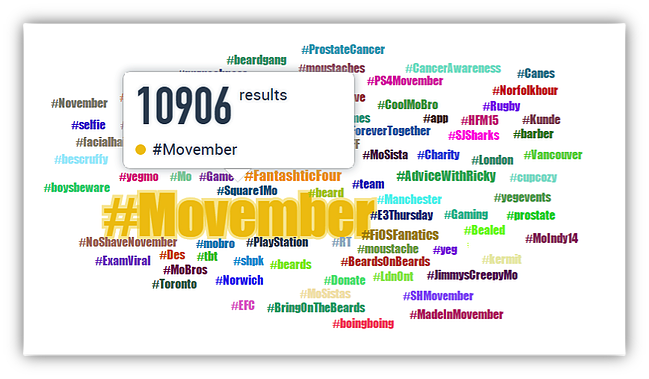
    Over the years, the mention of #Movember and other mentions like it have grown.

    hashtags-1


    Will you #participate? 


    By: Jessica Rohe


  • DID YOU VOTE?

    If you haven’t heard that question in the past week, you probably live under a rock. With any remote connection to social media, chances are you have been “cyber bullied” (for lack of a better term) into voting. Everyone, I mean everyone, from Beyoncé to Willie Nelson to Google were vocal in encouraging their followers to 1. register to vote and 2. actually go vote in this year’s midterm election. Saying it is our civic responsibility and that “every vote counts;” photos, videos, stories, and articles flooded news feeds for weeks leading up to the big day.

    IMG_1661-1

    Celebrities and brands have influence. If Sarah Hyland is waiting in long lines, filling out ballots and posting “I voted” pictures, you best believe I am too. Jokes aside, that is not the only reason to vote, BUT celebrities do have a huge platform where they have the freedom to voice their opinions and they took advantage of it on Tuesday.

    Did this trendy encouragement work? According to TIME Magazine, 2018 was a historic year for midterm voter turnout, with many states recording levels of voter participation not seen for a non-presidential election in decades. Approximately 114 million votes were cast in U.S. House races in 2018, compared to 83 million in 2014, according to estimates by the New York Times. For a midterm election, this was a big deal and Americans should be proud that they have the opportunity to express their views. These celebrities and brands that spoke out about the importance of voting had an impact on raising awareness and creating a new energy surrounding the voting process, but really it is up to each and every citizen individually to want to have their voice heard. If you voted, congratulations, you are changing history!

    So, two days later, what is the consensus? DC is divided. Democrats seized the House majority, while Republicans kept the Senate. There was no sweeping win for either party, but the energy surrounding this election gives us a glimpse into what the next presidential election will look like.

    -Blaine Blackburn

    References:

    http://time.com/5447210/2018-voter-turnout/

  • The Power of Persuasion in Politics

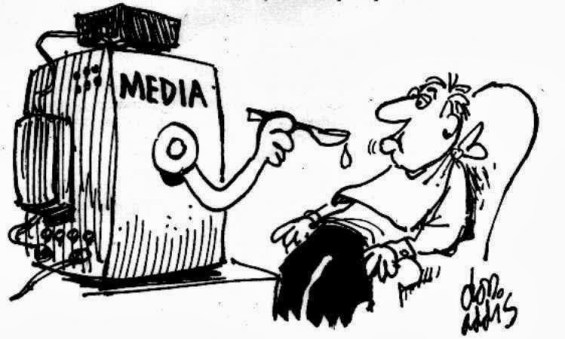
    Throughout our education, we have all learned about the power of persuasion. The idea of trying to sell someone on something can be difficult and requires a lot of thought to get their attention. One major platform to use persuasion is political campaigns. Campaigns are a time for politicians to reach out to people’s needs and concerns and let them know how they plan to take action and work to make improvements. The media often shows bias and seems to twist information so that a certain politician’s views appear misconstrued, making it frustrating to know the truth. The media plays a critical role in how the public understands a politician’s beliefs and how they view the politician as a potential officer (Samuel L. Popkin). But when used properly, persuasion can help a politician successfully prove to a voter that siding with them is the right decision.

    media-spoonfeeding-cartoon.jpg

    Each time an election occurs, people are eager to learn about the candidates and learn whose views they align with the best. Though there are many ways to stay informed about what is going on with the government and politics during the months and years leading up to an election, we only have a limited understanding of how governmental actions are affecting our daily lives when following the media (Popkin). Politicians have the opportunity to give prospective voters the information desired about these matters that are causing uncertainty and earn their trust when campaigns begin (Popkin). Using persuasion, politicians use their campaigns to speak about what people want to hear. They incorporate ethos, pathos, and logos to establish themselves as the credible candidate who will lead the country in the right direction.

    63287668-two-speakers-debate-political-debates-or-speeches-at-the-conference-two-speakers-with-speech-bubbles.jpg

    New studies are finding that the consequences of a person’s actions shape their political attitude (Pazzanese, 2015). Researchers are using cognitive dissonance theory to better understand that when a politician wins someone over with persuasion, it is usually because a person adapts their attitude if they were previously proven wrong by a candidate they once felt was the right fit (2015). People’s beliefs may change over time if they feel disappointed with their last decision. It is up to the candidates to effectively get voters to side with their views and validate their choice that voting for them is the right action. Research also suggests that if candidates can encourage someone to vote for them, they feel it increases the person’s affiliation toward that political party and turns them into a habitual voter over time (2015). After gaining a voter’s interest, is the responsibility of that party to continue to uphold the values that made the voter choose them the first time.

    Politicians have been using persuasion since day one. When used efficiently, it is a huge factor in winning the public’s vote. Stay alert during the next big election and see if persuasion affects your decision!

    -Kelcy Duffy

    References:

    https://news.harvard.edu/gazette/story/2015/06/the-art-of-political-persuasion/

    https://s3.amazonaws.com/academia.edu.documents/

  • Election Day Voter Guide

    its-voting-day-lets-do-this-meme

    Over the past few months we have been overwhelmed with political campaign advertisements for candidates whether it’s been on social networks, TV, or in print ads. We have seen our family, friends, and even celebrities endorse candidates and their campaigns and it has become a social media trend to post a selfie with your “I voted” sticker. As Americans, being able to express our concerns and beliefs is part of the individuality of our culture.

    If you did not choose the early voting option, do not fret, there is still time to vote and post your own “I voted” selfie! Election Day is finally here and the polls will be open from 6:30 a.m. until 7:30 p.m.

    Kate-Hudson-took-selfie-after-voting

    Where to Vote: If you waited to vote till Election Day, you must vote in the precinct where you are registered to vote. With over 40 polling places in New Hanover County, you can easily search your address here to find the correct polling place!

    What to Bring: Although a photo ID is not a requirement to vote, certain voters such as first time voters who did not initially provide their North Carolina drivers license number may have to bring an acceptable form of HAVA ID. For example, a valid photo identification or a document such as a utility bill, bank statement, or government document that shows your name and address will be accepted. You can find more information here.

    Candidate Information: Deciding which candidate to vote for can be stressful. It is important to research about each of the candidates and learn their political point of view on a variety of issues and policies. Even if a political issue does not necessarily affect you personally, it is important to remember that many policies can affect the people around you. When deciding on a candidate to vote for, remember to do your own research! Sometimes the media can be one sided and as a voter, you want to make sure you understand who and what you are voting for. You can find a list of the candidates here

    Having the option to vote should not be taken for granted and voting gives us the opportunity to make our voice heard. So, do not forget to go vote today!

    anigif_sub-buzz-26141-1478538969-3

    For more information on this year’s elections in North Carolina, you can visit https://www.ncsbe.gov/Elections/2018-Election-Information

    – Emma Adamcik

  • Elections are overwhelming, but not as overwhelming as bad public officials!

    Elections are overwhelming, but not as overwhelming as bad public officials!

    It should be no surprise that the midterm elections are around the corner. I’m sure we’ve all seen the plethora of ads and commercials that have taken up every inch of public space recently. Multichannel marketing is a sure-fire way to make certain your targeted audience doesn’t miss your message and the candidates this season knew what they were doing. They were all over your mail, your street signs, Facebook, Twitter, and YouTube. Even if you didn’t know their message, you knew their name. tenor

          Both tragically and thankfully, this election season is nearly over, however there is still plenty of time to get educated and get to the polls! Don’t let the rhetoric and oversaturated market you’re seeing scare you away!

    I understand how it could feel overwhelming with how intense our political climate seems to be nowadays. New policies and claims appear to be made daily that threaten the lives of minorities, women, the LGBT+ community, and many others. From DACA to birth control to trans livelihoods to gun control, there seems to always be something new and confusing to comprehend in the political sector.

    64b814bd-9f6f-496f-83f9-6f0ba3d07703       The issues lie with all the campaign ads you see, and the crazy claims being made by publications and political groups. Don’t let all the talk freak you out. This is an exciting and promising time in politics-we can make a real change. Take all the advertising you see with a grain of salt. We know to be responsible communicators and go into the world with honesty and transparency, and to do good. Unfortunately, not everyone communicates in this way and it’s important to keep that in mind. So, when the opportunity presents itself to make a difference about who gets to represent you in Washington, you need to take it.
    200w_d (1).gif

     Here’s five steps you can take to tackle this as educated as possible!

    1. Register
      Several states allow voters to register on election day! If you’re lucky enough to live in those few states, congratulations! If you’re a resident of NC I hope you planned and registered ahead of time, because the deadline has unfortunately passed. Registering to vote is the first step in our voting process and if the number of ads we see to encourage registration is anything to go by, it might be the most important. What can you do if you aren’t registered? If you missed the deadline this time around, don’t worry. There is a lot you can do to help the candidates you support. The rest of this list won’t be too useful for a while but feel free to continue reading anyways and share it! You never know who could need a little push in the right direction.
      2. Think
      You know what’s important to you and what values you want upheld. Really think of how you believe those values should be fought for in office. What do you want your candidates to stand for? Guide yourself by the issues you see discussed on the news, online, in your classes. How do you feel about gun control, abortion, education, universal healthcare? While I do believe the information we see is highly polarized and a lot of times dramatized, those are issues that matter. There are so many policies to have opinions on and the more you understand your own, the better you can decide who should stand up for you in government.
      3. Search
      Looking up a sample ballot for your address is the easiest way to conduct a search about the candidates you need to learn about. It’s not very helpful to distract yourself with all the political discussions when you don’t even know who’s running in your district.
      4. Check
      Read up and check on the candidates now! See who fits best with what you want to see in government. Once you’ve researched your ballot, spreading out and looking at other districts and states could be helpful to see whom the candidates associate with and endorse. We know the candidates in different levels of government will often associate publicly and belong to the same public groups to spread their message. Association is a powerful force when marketing and that sort of branding doesn’t come easy. Reputations matter, both in politics and in marketing.
      5. Vote!
      This is my favorite step. Go out to your voting place and fill in your ballot. Don’t forget to grab a sticker and share it online!

    My Post (4)

    More Readings!
    Main Source

    -Rachel Montesinos Jorro

  • Do Celebrity Endorsements Change the Way People Vote?

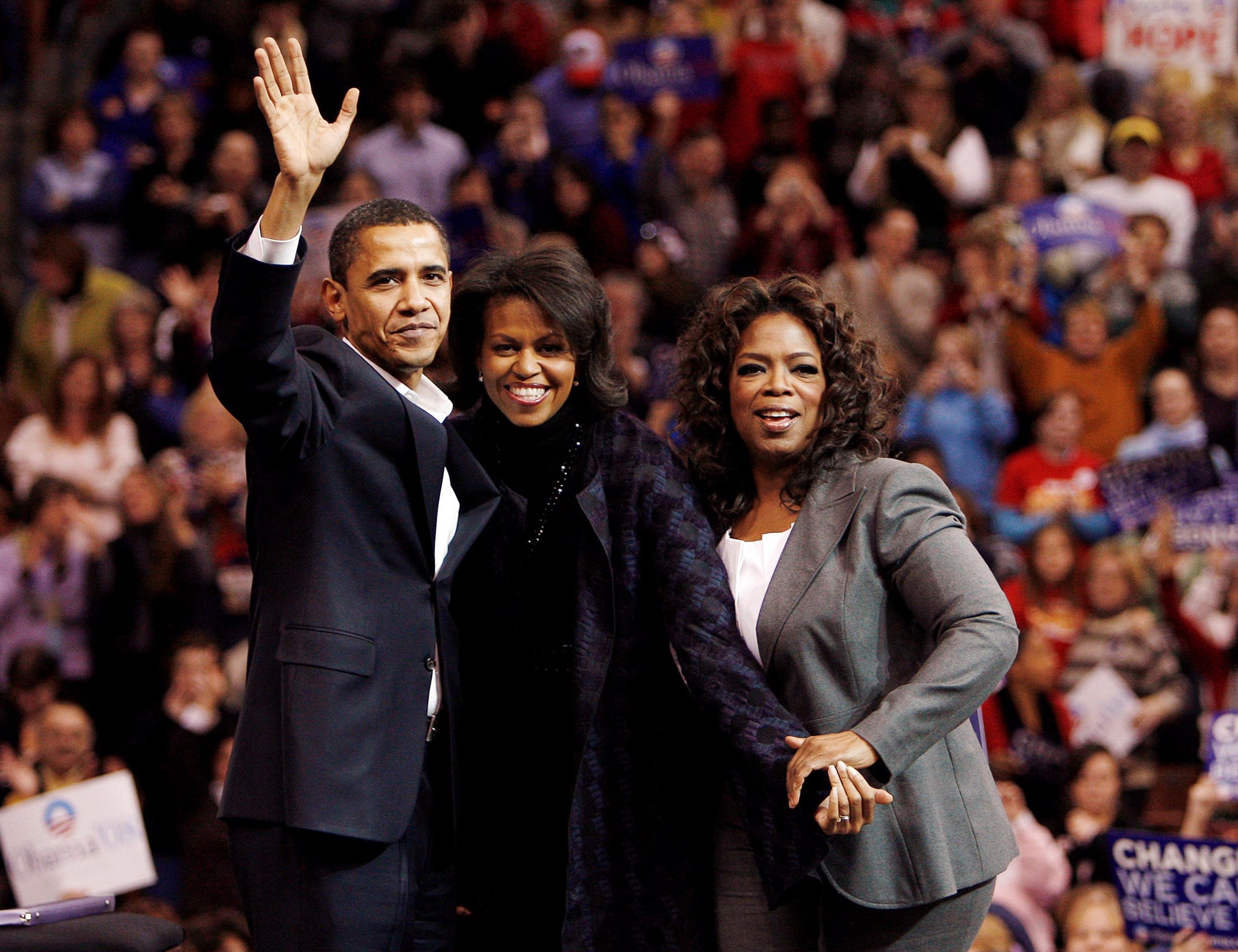
    180108-oprah-winfrey-michelle-obama-ac-532p_0fbd7ab0e3ab6c8a230fb18bc50e8ab0.fit-2000wThere is no denying how impactful celebrity endorsements can be on the public, especially in today’s political landscape. As the 2018 midterm election approaches, more and more celebrities are attempting to mobilize people to get to the polls and vote! But are these endorsements actually affecting candidates’ numbers?

    Many celebrities have been seen personally endorsing candidates from their home states. Recently, Taylor Swift posted on Instagram that she will be voting for Tennessee candidates Jim Cooper and Phil Bredesen. Will Ferrell was spotted knocking on doors in Georgia endorsing Stacey Abrams for governor. Jack Black and Meryl Streep made large donations to Senator Claire McCaskill’s reelection fund. Even the Houston native, Travis Scott, voiced his support for Beto O’Rourke.

    ifxeonmt9clbgaoywl0b.png

    It is obvious celebrities have an effect on the way people think. People are more likely to use a product if they see a celebrity using that product or endorsing it.  Also, the more credible celebrities have a much higher impact on people’s opinions and decisions.  However, this does not seem to apply to the political scene.

    According to Gallup, Pew, and CBS News, celebrity-endorsed campaigns do not matter to the overwhelming majority of voters. CBS News polls revealed that 78% of people expected celebrity endorsements to have little to no effect on the election. Some experts say poll numbers may not accurately reflect the true impact that big-name celebrities have on campaigns.

    dt1.jpg

    So maybe, celebrities that endorse politicians aren’t doing the trick. One study found that an increase in young voter participation could be attributed to celebs that influence fans to “get out and vote”. Many celebrities are posting pictures of their “I Voted” stickers and tweeting to their fans the importance of having your voice heard by voting.

    1108-rocking-the-vote-primary-3-1200x630

    Overall, a voter who typically votes for one party is not going to turn around and become a supporter of another party because a celebrity told them to. But people who were undecided or weren’t planning on voting in the first place could be persuaded to get out to the polls. The link between celebrity power and politics has a long history and most studies claim it does not affect the way people vote. Perhaps the question we should ask is, “Do celebrity endorsements make you pay more attention?”

    – Lizzy Regnery


    References:

    http://theconversation.com/us-election-what-impact-do-celebrity-endorsements-really-have-66204

    https://www.marieclaire.com/politics/g24442884/celebrity-endorsements-politics-2018/

    http://www.electionanalysis2016.us/us-election-analysis-2016/section-2-campaign/us-election-what-impact-do-celebrity-endorsements-really-have/

    https://www.today.com/news/oprah-effect-can-celebs-sway-voters-wbna27227264