Blog

  • The Spooky Branding Reality of Halloween

    What is the most important thing about Halloween?  Your costume!  When we were younger, we thought running around the neighborhood for a few hours trick or treating was the essence of Halloween.  But as college students, we start pondering our costumes weeks or even months in advance, while candy and parties are afterthoughts.  A Halloween costume allows you to express yourself more freely than you can in everyday clothes, and for many college students it is the most important outfit of the year.  Some people spend hundreds of dollars putting together the perfect costume, complete with make-up, wigs and props.  Last year, the costume most searched on Google was Lady Gaga.  This year, the two top searches appear to be Nicki Minaj and Charlie Sheen.  Among other popular searches are Pan Am, Amy Winehouse, Rihanna and Katy Perry.
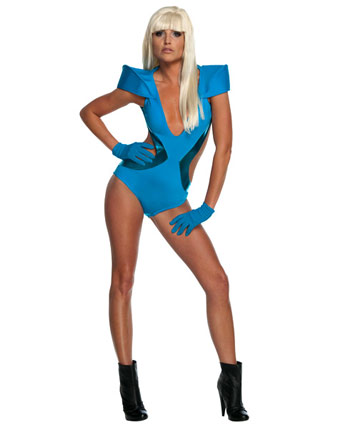
    When we were children, we dressed up as witches, robots, zombies and the occasional super hero.  Today, we dress up like celebrities.  Maybe this indicates that during college, our behaviors are influenced by ethos more than when we were younger.  The fact that many college students transform themselves into their favorite stars for Halloween may correlate with the general spending habits of people ages 18-24.  If many people are buying things to look like celebrities for Halloween, it is safe to assume that they are buying things related to celebrities for everyday items as well.

    Being in the headlines helps celebrities promote their brand whether it’s intentional or not.  Halloween gives celebrities the greatest opportunity for celebrities to increase their brand awareness.  Those featured in the news and by other media outlets are getting their brand out there.  The people dressing up as these celebrities for Halloween are ultimately walking advertisements for the celebrity they are trying to imitate.

    -Stephanie Bakolia, Claire Outlaw, David Glaubach

  • Trick or treat..Smell my feet..IMC

    To many people, Halloween strictly means candy, tricks, costumes, and monsters. However, Halloween actually has a history rooted in religious conquests and power struggles; a characteristic that most people are unaware of. This national holiday dates back to Celtic pagan festivals that celebrated the end of the harvest season.Druid ceremony They believed that on this day the spirits would come back to earth and roam free; causing mischief and looking for living souls to possess. The people would dress up in frightening costumes, make blood sacrifices and leave food outside of their front doors in an attempt to ward off the evil spirits and appease their appetites. Halloween only fundamentally changed when the Romans took the Celtic lands and forced Christianity among its people. The Romans adopted the Celtic celebrations, infusing their religious beliefs into the concepts, and named it “All Saints Day” in order to honor the saints that did not have a day of their own.  By the 1500s, “All Saint’s Day” had become “All Hallows’ Day”, and the Celtic festival had begun to be known as All Hallows’ Evening, Hallow Evening, and eventually… Halloween. 
    This holiday fell somewhat dormant until 1921 when the first citywide celebration of Halloween began in Anoka, Minnesota; followed by New York and L.A. Only about 5% of the American population celebrated this holiday until now, as it has become one of the most celebrated holidays in the US. With this mainstream evolution in mind, many businesses are in debt to the creators of such a day. From candy to costumes, this day turns out to be one of the most profitable of the year, making the importance of marketing efforts vitally important. The goal of the holiday is no longer to ward off evil spirits; but rather to have the best costume and best collection of candy. For one day every year, people feel it necessary to build a costume based on their perception of a person, product, or trend; driving attention to some of the biggest “hits” of the year. Since everyone is now participating in the tradition, the role of marketers is to offer these costumes and candies to every main audience of Halloween: children, parents, teenagers, and young adults, in hope that their variety will be selected as the “hot item” this year.
    Jared Sales, Sally Shupe, Oliver Evans

  • Moogfest 2011

    While most of North Carolina will be adding the finishing touches to their Halloween costumes next weekend, Asheville will be jamming out to some of the hottest artists in electronic music.  The second annual Moogfest will be taking place at various venues throughout the north side of downtown Asheville on October 28th-30th.  Although this is only the festival’s second year,  there is a lot of buzz about its highly anticipated lineup of over 70 artists from around the world, including big names such as Flaming Lips, Moby, and Passion Pit, just to name a few.

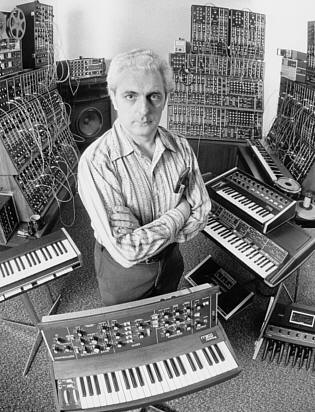
     The three-day festival was created to honor one of electronic music’s pioneers Bob Moog—the inventor of the Moog synthesizer.  This legendary instrument has changed modern music forever and has been used by hundreds of artists, from legends like the Beatles, the Rolling Stones, and Stevie Wonder, to some of today’s all-stars like Daft Punk, Dr. Dre, and even Michael Jackson. The celebration of Moog’s legacy will even go beyond the music; there will also be visual art exhibitions, film screenings, a costume contest, and some of the wildest installations created from Bob Moog’s own imagination.

     What sets Moogfest apart from other music festivals?  At Moogfest, attendees have the opportunity to interact with some of the artists in panel sessions, and workshops.  There are even workshops that allow festival-goers to actually learn how to play some of the different Moog instruments. This is a perfect example of audience-brand interaction and experiential marketing.  What better way to create brand awareness than to let consumers experience your products?  Or in this case, create an experience for them?

    Here’s a little taste of how and why last years artists created that experience at Moogfest 2010

    The best part about Moogfest is that there are still tickets available!
    For more information about tickets or the festival itself, check out the Moogfest Facebook, Twitter, or website: www.moogfest.com .

    To learn more about Bob Moog and Moog instruments, you can visit his website: www.moogmusic.com.

    -LaPuasa, Dillard, Reinhardt

  • Potato — Po-ta-to : Sweet Potato vs. Yam

    North Carolina is known for celebrating many odd and obscure things. For instance, our great state has festivals glorifying everything from pickles to blueberries, from crabs to mules, and in this case: both sweet potatoes and yams. Are you following along – sweet potatoes and yams are two separate entities!

    yams

    In the United States, yams are really just another name for a sweet potato. However, a true yam is usually imported to America from the Caribbean. When cooked, yams are a soft, sweet, orange concoction. I know what you’re thinking – this sounds just like a sweet potato! The US Department of Agriculture requires that the label “yam” always be accompanied by “sweet potato” to avoid the confusion because they are generally used interchangeably.

    North Carolina is known for specializing in this crop of ‘related-vegetables’. The sweet potato is a native crop in North Carolina and is primarily grown in the coastal plain area of the state.  We are also recognized for our crops in tobacco, cotton, blueberries, and peanuts.

    But, why should we celebrate a vegetable? The answer is, why not! October 22nd and 23rd, in Tabor City, N.C., the NC Yam Festival celebrates its agricultural heritage by saluting the yam. From 1947 until 1961, the little border town of Tabor City played host to one of North Carolina’s largest festivals.  Since 1947 the Carolina Yam Festival has been attracting as many as 15,000 visitors each year, to this tiny community of less and 2,000. The following weekend, in Snow Hill, N.C., Greene County will be celebrating the vegetable at the 4th annual N.C. Sweet Potato Festival.

    Each event is sure to be a good time, with the Sweet Potato festival having entertainment such as Jason Michael Carroll at this years’ event.  But, if you look at it like these North Carolina growers do, more is always better – so check out both festivals!

    If you are not craving a sweet potato/yam after all of this, hopefully this will at least ease your mind: the main difference in these two vegetables is that their individual festivals are held on different weekends in October and are about 2.5 hours away from each other! These festivals combined don’t need any marketing, they rely on word of mouth to promote these fantastic events for people of all ages to have a yam good time!

    – Michela Noreski, Jordan Hill, Ashley Nelson

  • Rock for the Cure


    UNCW Communication Studies Society is rocking out this Friday evening for a great cause. October is Breast Cancer Awareness month and to make our mark in fighting for the cause, UNCW students and faculty invite everyone to participate in Rock for the Cure Friday, October 21st, 2011 on the second floor of Reel Café, downtown Wilmington N.C. at 7:00pm. The admission to this event is $5 and all proceeds will go to New Hanover Regional Medical Center’s Pink Ribbon Project. The profits will help fund uninsured women in the greater Wilmington area to receive free mammogram screening and also provide “comfort bags” with items that include a pink fleece blanket to be used to warm patients as they receive treatments, a satin pillowcase for comfort after hair loss and an herbal eye pillow to help with relaxation during this time. Rock for the Cure will also raise money through a silent auction and raffle. With the help from you and others we can make a difference for the incredible success of the Pink Ribbon Project and help provide early diagnosis and comfort to women in our area.

    -Michela Noreski, Jordan Hill, Ashley Nelson

  • The Greatest Lecture Ever Sold

    I remember the first time I watched “Super Size Me” and how impressed I was that someone would actually decide to eat McDonalds for 30 days. After watching the documentary, I was completely disgusted by the fast food industry but, Morgan brought an important issue about our society to attention and that is why I liked the film so much. “The Greatest Movie Ever Sold” is a great film. I really enjoyed watching it and Morgan Spurlock definitely made the film enjoyable. I think it is so important to notice the brands in your every day life and in the movies/tv shows you watch.

    Attending the Morgan Spurlock lecture was the icing on the cake after watching “The Greatest Movie Ever Sold” because in person, he makes the film come to life. It was so interesting hearing all about the little things that went into making the “docbuster” as he likes to call it. From the very inspiration that went into creating it (an episode of Heroes with overtly blatant product placement) down to the fact that he had a “Faken” – fake version of his son Laken in the final cut of the bathtub scene.
    I also really appreciated the time he took afterwards to make sure that everybody, and I mean everybody, had their questions answered. Even after Professor Fernando let him know that he would be going over his allotted time, he wasn’t at all worried about getting out of there. One student asked: “What motivates you to create movies?” Morgan answered: “If you can help, then you should. If you can change things, then you should.” He took the time out of his evening to stay with us and keep the conversation going. Overall, the lecture allowed me to take even more from the film, and to gain quite a bit of respect for Mr. Spurlock.
    I think what Morgan said to the student describes who he is exactly. He just wants to make a change and also to make a difference by putting light on subjects that need to be discussed.

    -Micaela Fouhy and Kacy Cox

  • The North Carolina Seafood Festival

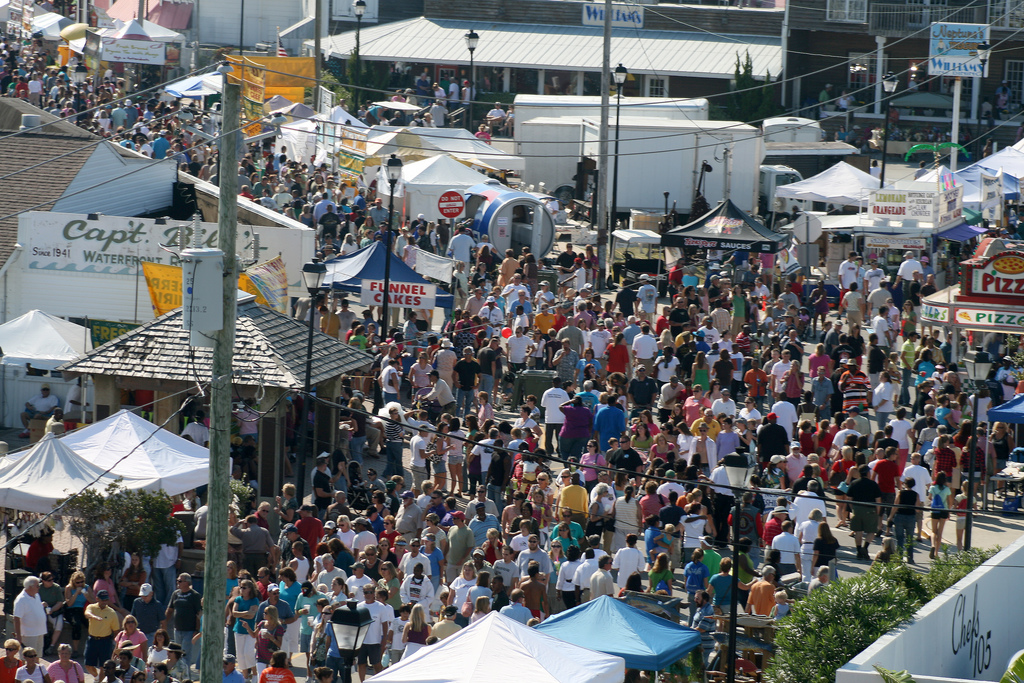
    The month of October brings many things to look forward to: crisp fall air, the eruption of auburn hues from the trees, and Halloween to name a few. But in the small, seaside community of Morehead City, North Carolina there is one more thing to add to that medley of feelings: The North Carolina Seafood Festival. The streets of downtown Morehead become alive with carnival rides and booths upon booths of delicious seafood to be consumed. You name it and it can probably be found amongst the crowded booths that weave their way down the main and side streets of the festival, shrimp, crab, oysters, clam, calamari, eel, sea urchin, flounder, rockfish, redfish, any kind of fish. With almost 150,000 people attending each year, the Seafood Festival, which celebrated its 25th year this past year, isn’t something that should be overlooked.
    With an emphasis on promoting the seafood industry’s positive economic and social impact on the state of North Carolina, the booths filled with the fresh seafood are one of the main reason people keep coming back year after year. Thus when marketing the festival to remind those who have experienced it before and to garner the attention of those who have yet to attend, focusing on the coast is an integral part of the campaign. Ad campaigns feature footage of the festival the year before, but also focus on the people who make the festival happen: the fishermen. Ads have been known to focus on their stories and what part they play in making the festival come alive. This personal touch brings a deeper meaning and connection with the festival for patrons. The promotion of the Seafood Festival digs deep into the roots of the festival and that is what has been continually celebrated for the past 25 years.

    -Jessica Kingman, Alaethea Hensley, and Lauren Phelps