Blog

  • Scandalicious

    The ‘jelly’ to politics’ ‘peanut butter’ is without a doubt,
    scandal; they go together hand-in-hand. It seems you can’t have one without the other. From John Edwards’ love-baby, to Bill Clinton’s “I did not have relations with that woman,” Anthony Weiner’s sexually-charged social media, to the more recent Herman Cain allegations of sexual harassment, politics and Capitol hill know scandal.

    The first step each of these political figures made when
    their scandals broke was to deny any involvement. John Edwards said “that’s not my baby,” Bill Clinton said “no way,” Anthony Weiner said the pictures were not him, and currently Herman Cain is claiming the allegations are smear campaign created by his opponents. But, is denying involvement the best move? What ever happened to honesty is the best policy? Is this the way political figures should market themselves and market the United States?

    It’s tough when public figures behave badly for they are scrutinized more than the average Joe. One celebrity feeling the impact of his actions is Former California Governor Arnold Schwarzenegger. In case you missed the story, he recently admitted to his wife, Maria Shriver and his entire family, that ten years ago he fathered a love child with the maid.

    Being a former celebrity turned politician Arnold
    understands the importance of “spin” and “damage control.” These are two words
    that needed to act upon now more than ever, in addition to hiring a top-notch
    crisis management PR firm.

    This is not the first time a celebrity or politician has
    fathered a love child, or had a sexual harassment suit filed on them and it
    won’t be the last. In time, Arnold will gain back his stature as well as his
    credibility and integrity like Clinton has over the years, Weiner will learn
    that social media is not a toy to mess with; in all situations time heals all
    wounds.  If political leaders took this much energy to trot around the scandals, and not just come clean when a true incident arises and own up to it, then there would be no need for PR managers to enforce crisis control  and society would have more trust in these leaders we elected. Just like peanut butter and jelly, these scandals are sticky, messy, and oh so good to read about, but it is how these leaders will market themselves in the future to clean up their muddy messes. Time
    will tell, until then another scandal will arise.

    — Michela Noreski, Jordan Hill, Ashley Nelson

  • Do campaign ads sway your vote?

    In just under two months, we will celebrate the arrival of a new year. There will be plenty of things to anticipate in the coming year: the optimists will make their resolutions striving to reach them by the year’s end and the pessimists will continue to raise their voices about the end of the world. But 2012 also brings another event with it: the presidential election.

                As the presidential campaigns begin to get into full swing, our television sets once mainly confirmed to the usual commercial advertisement bombardment will face another kind—the political advertisements. Every four years we are exposed to the constant cycle of emotional ads, attack ads, biographical ads, issue ads, and on and on and on. And the reason is simple: the person who spends the most money in the races is usually the victor. This was demonstrated in the 2008 presidential election with Barack Obama outspending John McCain 3 to 1 on political advertisements on television. In the 2008 congressional campaigns, in the 426 House races, the person who spent the most money won 397 of those races. Also in the races for seats in the Senate, the biggest spender won 30 out of 32 races.

                This does not necessarily mean that if a candidate spends more money on advertising that they will win. However, it could be an indicator of just how much influence advertising has on our election process.  We are inundated with ads and messages about political candidates from TV to radio to simple guerilla marketing tactics and it obviously impacts our voting decision. So take a step back and think about it as you begin to listen to these ads. Are you voting for this person because you truly feel they are the best candidate or are you voting because the candidate’s ad campaign was great?


    For a closer look at how much politicians are spending on political advertising, head over to http://www.opensecrets.org/pres08/

      -Jessica Kingman, Alaethea Hensley, Lauren Phelps

  • Political Bias in the Media

    Campaigning for the 2012 presidential election has begun.  Republican hopefuls are working to convince voters that they are the right choice to defeat President Obama, while the president is trying to convince everyone that he should remain in office.  In 2008, the Democratic and Republican parties shared some of the same beliefs on certain issues, but had opposing viewpoint on others.  Democrats were in favor of requirements to hire more women and minorities, repealing tax breaks for the wealthiest Americans, and removing troops from Iraq.  Republicans were in favor of three strikes sentencing laws, taking steps to strengthen the economy and more anti-drug initiatives.  Both parties were in favor of limits on political campaign funds, and a path to citizenship for illegal immigrants.  The sentences above about the different parties were straightforward and un-biased, but it is difficult to find such information from one source.  You must be very careful in 2012 while selecting the information you are going to consider, regarding the candidates.  Beware of the agenda setters!

    Certain types of media will tell you that the Republicans are money hungry classists who are only in favor of appeasing the rich, with the intent to modify tax laws in order to behoove large corporations.  Then, that same media outlet will likely show a documentary on the sub-prime mortgage crisis, featuring interviews with families in middle America who lost everything.  There will be a lot of content promoting public programs for the under-served, and illustrating the Democrats as the humanitarian party.  That media outlet selectively left out good points about the Republican party on purpose.  It is called agenda setting, and it is when the media controls the amount of exposure certain news gets.  The more exposure people get to certain types of news, the more important it becomes.  If messages about middle Americans losing everything reach you every day, it will become important to you because it will inadvertently be on your mind.  There could be a more pressing issue out there, but if it is not prominent in the media, how will you know?

    You may be fooled into thinking that all Republicans are overly conservative and old-fashioned, and that Democrats are big spending and incautious if you don’t investigate for yourself. With regards to IMC, each party tends to portray the opposing side negatively. This poor image can potentially end a candidate’s campaign. With this in mind, it is up to the people to figure out which issues are important and research them from both angles. Ultimately,  politics can be quite biased, filled with false information and one-sided opinions. When you vote in this upcoming election remember: you cannot believe everything you hear or see.

    -Stephanie Bakolia, Claire Outlaw, David Glaubach

  • Trending Topics: Political Campaigns

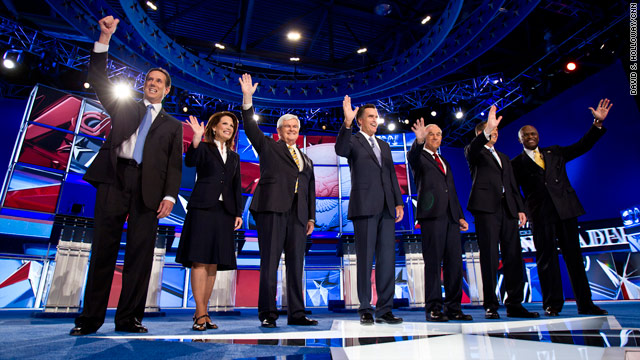
    With the next presidential elections only one year away, political campaigns are in full swing. The republican candidates have met multiple times to debate various topics of high concern to the American people in an attempt to pull voters early. With Obama having only one more year of his term in office, he is also working to attract voters to support him to another four years of Presidency. In fact, his recent announcement of a new college loan plan seems to be another attempt of attracting young voters; the voters who most popularly voted him into office in 2008. However, debating and new Presidential plans are not the only ways these candidates can depend on to win American voters in November of 2012; they also are in need of intensive marketing of the brand they want to represent via various strategies.
    The use of traditional and non-traditional marketing tactics will be the primary difference between this election in comparison to those historically. The typical running of television, magazine, radio advertisements will most certainly be used; however these candidates will also need to perfect the art of social media if they are looking to appeal to the younger generational voters. These candidates will only stand out among the competition if they can look savvy to all generations while still maintaining consistency in their messages and vision for our country. The use of social media and non-traditional marketing tactics will not only bring attention to these candidates, but will also give a positive indirect message that they are embracing the advancement of social and technological advancements around them. Building an image, brand through these tactics will be a huge change in comparison to campaigns in the past, allowing their messages to gain momentum faster and build a following of all audiences successfully.

    – Jared Sales, Sally Shupe, Oliver Evans

  • Symbols: The Real Creeper

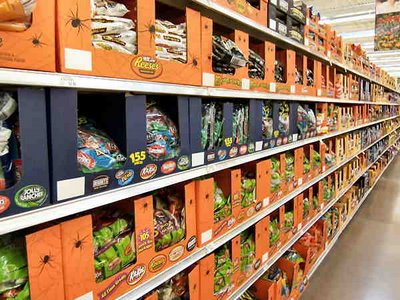
    When we thought of Halloween, many things came to mind: witches, bats, pumpkins, ghosts, and anything black and orange. These things together do not make Halloween, but they certainly reflect and symbolize the holiday. If you came out of hibernation and had no idea what time of the year it was and entered the nearest grocery store to find aisle after aisle of candy, costumes, and spooky decorations, you might get the hint that Halloween is here. Characters, Candy, costumes, and scary décor are some of Halloween’s most notorious symbols. Symbols serve as great resources for allowing the public to recognize a brand, whether it’s a holiday or simply a pair of shoes. Symbols stick in customers’ minds. Think about all of the symbols that most Americans would recognize in a heartbeat; the infamous golden arches (McDonalds), a the check mark on the side of a tennis shoe (Nike), an apple with a bite taken out of it (Apple).  These aren’t just pictures, and they are certainly not chosen at random.  These logos and symbols are not the product itself, but a representation of the brand. So why the overload of spooky sound effects and Dracula fonts around stores and on TV? Because everyone knows it’s almost Halloween, and these symbols are reinforcing this fact and preparing you for tricks and treats whether you realize it or not. Creepy, huh?

    -Claire Dillard & LaPuasa

  • The 31 days of Hallomedia

    On a scale of one to fun — Halloween is by far the most-fun holiday of all holidays. Christmas is great, Easter is swell, and Hanukkah has the tendency to get crazy, but Halloween tops them all in terms of an all-around good time. It is such a good time that there is an entire month, “Monstober,” dedicated to it on the Disney Channel! On ABC Family, 13 solid-packed nights of Halloween are sure to get you in the spooky-spirit!

    And how could we ever forget the infamous annual hour-long special of “It’s the Great Pumpkin, Charlie Brown”, which airs tonight at 8pm on ABC.  Other holidays are also heavily recognized in the media, such as Christmas and Valentine’s Day, however, they do not compare to the hype of Halloween and the month of October.

    If you think about it, although Christmas is considered a Christian holiday, it is celebrated by a large number of non-Christians as well. The only thing is, Christmas is surrounded by other holidays that “steal its thunder,” if you will. Hanukkah and Kwanza, with New Years’ celebrations shortly after, withdraw some of the attention to Christmas. On the other hand, Halloween has October’s attention-span all to its self!

    Every morning in the month of October talk shows across network television showcase all that Halloween has to offer in terms of recipes, decorating, and entertaining. The Today Show with Kathy Lee and Hoda provide you with the tasty treats and monstrous-mixed drinks. LIVE with Regis and Kelly share ideas for how to dress the snazziest at your Halloween event, while The Martha Stewart Show gets you ready to decorate your house in a ghoulish, yet glamorous way.

    When else can you convert a fruit or vegetable into a bird! Our own blogger, Jordan, made these adorable Angry Bird-inspired pumpkins.

    Later on in the day, while you are prepping your plans for the holiday with all of your newfound knowledge, holiday favorites are featured on T.V. Who doesn’t love seeing the Disney Channel’s Halloweentown and its three other entries, Halloweentown II, III, and IV. Hocus Pocus, Beetlejuice, Nightmare Before Christmas, and Casper round out some of the classics featured on television during the month of October. It’s amazing, if you think about it — all of these great movies and shows that are featured each year were filmed many years ago; yet, they continue to market to us and we keep tuning in!

    With Hallomedia, we can enjoy the entire month of October with all it has to offer, not just the last day!

    — Michela Noreski, Jordan Hill, Ashley Nelson
  • Some “Scary” Effects of Halloween Marketing

    Fall is here and you know what that means- crisp autumn leaves, the weather’s cooling off, and of course Halloween is almost here!  As we look back on our previous years of trick-or-treating, we remember our costumes and of course which houses had the best candy. But when did this tradition evolve from simplistic and childish fun into a marketing frenzy? In 2010, $2 billion was spent in Halloween candy sales, and each American household spent around $22 dollars on candy.  And this amount is only predicted to grow with this coming year. With America’s huge obesity problems, doesn’t this seem to be a lot of money to be spending on candy? Marketers for the big candy companies couldn’t disagree more.

    Since there is a lapse between back-to-school shopping and Halloween, there is a rush to fill this space with something. Instead of maybe taking a little break, we are asked to engage in a month and a half long Halloween shopping extravaganza.  Mars, Inc, hosting candy bars such as Snickers, are taking full advantage of the Halloween season, with a Halloween-themed commercial featuring an entire 5 rows of Snickers candy bars. Sure this is great for the economy, but is it great for our health? The average American consumes about 24 lbs of candy per year, most of it in the immediate period of time following Halloween. Although there’s nothing wrong with having a little candy on Halloween, it might be helpful to step back and look at our consumption.

    -Lauren Phelps, Jessica Kingman, & Alaethea Hensley