Blog

  • “The Most Interesting Blog In The World”

    One organization that does an exceptional job building their brand and message through effective corporate communication is DOS EQUIS. Dos Equis has been brewed since 1900 and was developed by master brewer Wilhelm Haase who emigrated from his native, Germany, to Mexico and fused brewing traditions from both places to make a unique, blended beer. This brand has grown in popularity ever since, but has recently skyrocketed thanks to some effective marketing and advertising ploys.  The “most interesting man in the world” campaign made its debut in 2006 and was designed by the marketing firm Euro RSCG for the Cuauhtémoc Moctezuma Brewery. The ads feature Jonathan Goldsmith as “the most interesting man” and are narrated by Frontlines Will Lyman.
    Rather than an embodiment of the brand, “The Most Interesting Man” is a voluntary brand spokesperson: he and Dos Equis share a point of view on life that it should be lived “interestingly”. According to the company, U.S. sales increased each year between 2006-2010 and tripled in Canada in 2008. Although exact figures were not provided, sales of Dos Equis have increased by 22% at a time when sale of other imported beer fell 4% in the U.S. This campaign changed their identity from a mere beer brewing company to a revolutionary product; thanks to the endorsement from one of the most accomplished men on the planet. Not only is the endorsement a golden ticket for the company, but their advertisements have also proven to be successful. The ads are surrounded with catchy quotes, including: “He is the life of parties he has never attended” and “Sharks Have a week dedicated to him” as ways to connect with common themes that the audience will recognize. Goldsmith recently said in an interview that he realized how successful the campaign had been when a man came up to him in a restaurant, telling him that he had asked his young son what he wanted to be when he grew up, and the boy replied, “I want to be The Most Interesting Man In The World”.
    “Stay thirsty my friends”.   – Jared Sales, Sally Shupe, Oliver Evans

    IMC's very own JARED SALES

  • Celebs of Hogwarts

    Harry Potter is a name that is known by people worldwide. Known both for the book series and the movies, this brand seems to be everywhere. Although plenty of merchandise sells because of its affiliation with the Harry Potter series, Harry Potter itself is much more than a brand. Harry Potter fans have read the books and seen the movies, and have developed a deep connection with the characters involved. There is an emotional attachment to this brand and therefore anything that sells with the picture or logo for Harry Potter means something more to them. But what seems to be the most representative visual for this brand? Not the creator, J.K. Rowling. This would be Daniel Radcliffe, Rubert Grint, and Emma Watson.


    Chances are, if you began watching the movies before you finish reading the books, you would start to imagine these actors in your head as Harry, Ron, and Hermione, instead of the people you imagined before these actors were selected to play the parts. To many Harry Potter fanatics, these people are not just your average celebrities- they are friends.  The actors no longer have any choice but to be marketers for the Harry Potter brand no matter what they are doing. If Daniel Radcliffe gets married, it almost seems as though Harry Potter is getting married. If Emma Watson wears a provocative outfit, it feels like Hermione is being scandalous. So is this type of celebrity life better or worse than those celebrities who are famous just for being themselves? I think it means that these actors have a lot more riding on them than it initially seems.

    -Claire Dillard, Liz LaPuasa


  • Gone, but never forgotten: Joe Paterno

    Fact: Joe Paterno is and will always be a legend in the sport of college football.

    Fact: Joe Paterno is the winningest coach in top-level college football.

    Fact: After 46 years as head coach, Joe Paterno is no longer the leader of the Nittany Lions.

    Previous to this week, Joe Paterno was considered the most respected man in college football. He is small in physical stature, greying, wears outdated glasses, and has a soothing-yet rough voice; basically, he fits the description of a typical grandfather. To his fans, the thousands upon thousands of Nittany Lions across the nation, he is their grandfather. His abrupt and unexpected departure from his long-held post as leader of Penn State Football has left his fans in a state of hysteria.

    Students at the university are outraged over the board of trustees’ decision to fire Paterno. These students fully support their beloved coach, regardless of this situation, but why? How can anyone support a person who was aware of such wrongdoing and allowed it to go unreported? Penn State students are different. On Wednesday night, students hit the streets voicing their love for “Joe Pa”, knocking down sign posts, yelling at police, shattering car windows, and turning over trash cans and newspaper boxes. Students even overturned a television news van in an attempt to illustrate their infuriation with the media, which they largely blame for the boot of the beloved coach.

    Under Paterno’s leadership, and motto of “success with honor,” a program was able to defy records and challenge teams across the nation. Although ‘Joe Pa’ was an amazing coach on the field, it takes more than Saturday games and weekly practices to make a good coach. Because Paterno neglected to consider the other duties of being a leader, a man was allowed to repeatedly desecrate innocent young children. In a 15-year period, 8 boys were sexually abused by one man, Jerry Sandusky. This one man has been charged with 40 counts of child abuse, 21 of which are felonies; however, because of him a powerhouse program has been forced to start all over.

    Paterno had announced Wednesday morning that he would step down as coach at the end of the season. But amid the outrage, Penn’s State’s Board of Trustees held an executive session late Wednesday night and fired him and the schools President Graham Spanier, triggering the protests and media frenzy.

    The Penn State story has been a lesson in what not to do in terms of crisis management from a public relations perspective. In a world filled with social media and news happening 24/7, companies, and in this case a university, cannot afford to mishandle a major crisis. It requires preparation and nurturing. One cannot just announce the events in such a manner that Penn State did.  They waited too long to address the allegations after the story had gone live-online, and began being broadcast on news outlets. Not only this, the university cancelled Paterno’s weekly-football press conference, which then caused chaos among the media. If anything good can come out of this, it will be that horrific instances such as this, and men such as Jerry Sandusky, never happen again.

    – Jordan Hill, Michela Noreski, Ashley Nelson

  • Justin Bieber wants YOU to adopt an animal.

    We all know that celebrities play a huge role in the commercial and marketing industry. We have all seen the Proactiv commercials featuring a long list of celebrities that struggle with acne or a commercial like the one featured in yesterday’s post with Pauly D. In fact, according to the International Journal of Advertising about 25% of all US advertisements use celebrity endorsements and whether we want to admit it or not (ahem…third person media effect), what celebrities do or buy does have an effect on us. But that doesn’t always have to be a bad thing. What about when a celeb uses their influence and power for the greater good? When they help draw attention to a social problem?

    Oprah Winfrey is probably one of the most famous philanthropic celebrities of our time. She has used her show to shed light on many social issues and world issues as well raise millions of dollars for charities across the globe. Her influence is so high that economists at the University of Maryland stated that when she publicly endorsed Obama in the 2008 election, she may have brought in up to one million votes with her. That’s a lot of power. Other celebrities have also started to take a public stance on social issues in order to gain public interest. Jennifer Aniston along with many  other celebrities do commercials for St. Jude’s or in support of animal adoption.  Or as seen in the picture, Justin Bieber has joined with PETA in an effort to get people to adopt animals from their local shelters. The list could go on and on.

    So there’s some food for thought. Although we usually discuss celebrity endorsements with an air of negativity, we should also look at how they help organizations and causes that we, as the general public, might not have noticed without them.

    -Alaethea Hensley, Jessica Kingman, & Lauren Phelps

  • The Miracle of Celebrity Endorsement

    The key to success when promoting a product, whether old or new, is by using a familiar face to associate with it. Many companies hire celebrities to advertise their products in hopes of increasing sales.  The widely known sandwich staple, Miracle Whip, recently came up with a marketing strategy to promote their product using celebrities. These ads aren’t like anything you have seen before.

    Paul DelVecchio, commonly known as DJ Pauly D from MTV’s Jersey Shore, stars in one of the commercials:

    What’s different about these ads is that Kraft chose to highlight individuals who dislike their product. The “which side are you” campaign has brought much attention to Miracle Whip. Even though Pauly D despises the sandwich spread, the commercial still succeeds in catching the viewer’s attention. Kraft made a wise decision in choosing Pauly D as a spokesperson for their product because of his connection to a different viewing audience. Many of today’s generation tune in every Thursday evening to catch the latest episode of the hit show. By choosing Pauly D instead of a big-time celebrity such as George Clooney or Brad Pitt, Kraft is targeting a younger audience in hopes of attracting buyers who have never tried Miracle Whip before.

    Which side are you on?

    -Stephanie Bakolia, Claire Outlaw, David Glaubach

  • Karda$hian

    The power of the media as we know it is fierce, strong and overwhelming to say the least.  We all have access to so much information through the use of the internet, television and social media; however, it always leaves us wanting more.  Even with all the important news and current events that should be prioritized via these forms of information, one of the most popular topics revolves around our societal obsession with celebrities.

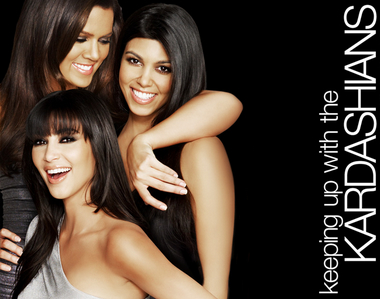
    Today, talent and accomplishments is no longer important to most Americans following celebrities; rather it is a matter of what outlandish actions a person is willing to take. Through personal branding, celebrities purposefully say and do things in order to increase their publicity.  Essentially, the more media attention they get, the more money they will make.  In recent years with social media and reality TV, certain celebs have exploited themselves in order to claim more fame. Recently, Kim Kardashian has proven to be a great example of someone who has manipulated the mass media leaving us asking: “What will she do next?”  Her recent announcement of her divorce from husband, Kris Humphries, after a seventy-two day marriage should come as a shock. However, due to her reputation and past behaviors…the news is less than a surprise.  A multi-million dollar wedding that was aired and viewed nationally made Kardashian a rumored $18 million dollars. Now with the divorce in progress, she is bound to make another fortune.  Although it could be that the marriage legitimately did not work out, it is much easier to assume that it was a business decision from the beginning. After all…any publicity is “good” publicity.

    Kim Kardashian’s establishment of fame only confirms the fact that our society and media sources have the ability to brand people under certain labels based on the actions that we see on television and through gossip columns. Her recent story is a clear example of how mass media can mold any “character” on television into the kind of person they can most easily be made into. So regardless of whether the fame was deserved or not…it is us as a public that make keep these stories on the headlines and keeps the celebrities fighting for their chance at redefining and establishing their “genuine” image.

    – Oliver Evans, Sally Shupe, Jared Sales

  • A Good Slogan Can Go a Long Way

    A key ingredient to any election is marketing and campaigning, and election campaigns are in a league of their own. From an IMC point of view, candidates are just another brand.  The goal of the campaign is to inform and persuade voters to vote for them.  And although there are many different marketing methods and tools that are used in a presidential campaign, there is one strategy that seems to never leave a voter’s mind:  a slogan.

    Slogans are created to summarize the candidate’s purpose and goals in a few words.  Selecting the best campaign slogan is a pretty significant factor. This phenomenon does not only apply to political campaigns, but to any marketing campaign. Slogans should typically be short, effective, and to the point. If the slogan is effective, the public will be able to know what brand, or candidate, is associated with it. Examples of effective slogans include “Just Do It,” “Where’s the Beef?,” and “Got Milk?,” just to name a few, and of course there is our most recent example of Obama’s “Change” campaign.

    So what are some ground rules that one must consider before deciding on a slogan specifically for an election candidate? For one, it has to be relevant to what the candidate truly stands for. An example of this is the slogan for Mike Huckabee that states, “Faith. Family. Freedom.”What seems to be an equally important factor is to match the slogan with the current times. This means that the slogan should not just address what is important to you as a candidate, but what is important to the citizens at the time of the election. There seems to be no greater example of this than the slogan Ronald Reagan used in 1980 that read, “Let’s Make America Great Again.”

    Slogans may be short, but they are powerful and meant to represent the brand and what it stands for. When considering everything that goes into preparing a political campaign, something as small as a slogan may not seem very important, but selecting the right one is just another way to take advantage of improving your brand awareness and recognition.

    An Oldie But Goodie: Here’s one of our favorite examples of a slogan! It may seem silly, but you’ll probably find yourself humming the tune after you hear it.  Would a song like this have swayed your decision in the election?

    -Claire Dillard & Liz LaPuasa