Blog

  • Going Green, Brings Green

    Brands can promote themselves through almost any medium nowadays. Pens, stickers, posters, billboards, you name it, you can put your brand on it. Planet Earth Promotions is a company that is designed to help brands promote themselves in an eco-friendly way. There is constantly increasing awareness about environmental protection and a greater consciousness about how important it is to protect these environmental and natural resources. Planet Earth Promotions is leading the way for this “EcoSmart” promotional item trend.

    Planet Earth Promotions’ mission statement indicates that their “goal is to help companies and corporations around the nation proactively enhance their brand through the use of environmentally conscious and educational promotional items”. They have certainly delivered in this respect. This company has been ranked #1 in promotional advertising for the past ten consecutive years. Not only are they paving the way for other companies, they have become a greatly successful brand that is little to no impact on the environment. Planet Earth Promotions has built a successful brand on a trend that is becoming increasingly important as time goes on. This brand is very strong considering they have remained at the top of the list from Arizona Magazine for the last ten years and they are here to help other brands.

    They are able to offer many alternatives for companies to help cut back on environmental damage by providing recycled goods, information about recycling and environmental days in the USA and tips to bring pollution down. With so many companies shifting focus to being the “EcoSmart” companies and LEED (Low-energy electron diffraction) certified, it is a challenge to stay on top. Planet Earth Promotions has paired up with other environment-friendly companies such as AWEA (American Wind Energy Association) and Women’s Business Enterprise to built a very powerful and successful brand and continue to pave the way for other companies looking to create environment-friendly products and solutions for all varieties of businesses.

    – Julius Roberts, Leanna Marshall, Leslie Tyler and Bryce Koonts

  • Filter Your Way To A Greener Earth


    “What do you want for dinner honey, how about plastic?” This may seem like a ridiculous statement, but it’s one that needs to be taken seriously. The Great Pacific Garbage Patch is a large island in the Pacific Ocean that is full of tires, plastic, nets, and lots and lots of trash. To be clear, the largest landfill isn’t on land, it’s in the ocean. An estimated 80% of the garbage in the ocean comes from land sources and plastic composes 90% of the trash floating in the oceans around the world. The size of the Great Pacific Garbage Patch is not verified, but some say that it is twice the size of the state of Texas while others say the garbage island is 3.8 million square miles. The trash leaves human hands, goes into the ocean, and kills sea animals. Sea turtles become entangled by fishing nets, eating plastic bags mistaking them as jelly fish, and dying because of it. Birds are also scooping up the trash and feeding it to their young mistaking it for food and dying from starvation or ruptured organs. How does this process come to a full circle? The trash leaves humans hands, goes into the ocean, animals then eat the trash, bigger animals eat the smaller animals that have ingested the trash, the animals are then caught by fisherman, and then the fish, which have ingested trash and plastic, ends up on your dinner plate. Sounds delicious right? No, I didn’t think so.

    Mostly everyone can agree with the statement that we live in the “Age of Plastic”. However, it has been a growing issue within the world that plastic is harmful to the environment. But has anyone stopped to think of what it is doing to the human body? Werner Boote has and that is why he created the documentary called Plastic Planet. Boote traveled all over the world to understand how plastic is made and used throughout the countries. During the video he speaks to the world’s foremost experts in biology, pharmacology, and genetics to receive some answers about the effects of plastics. A shocking revolution of this video is that plastic is actually in our blood. He created this video to educate those about the risks of plastic and how long the material really lasts on earth. This video is encouraging those to limit the use of plastic and to educate the next generations of children so that they understand what kind of a plant they are being introduced to. Last year, the Green Team on UNCW’s campus collaborated with another sustainability group to play this movie for the students to see. People should be educated on the effects of plastic and understand how harmful it really is.http://firstrunfeatures.com/plasticplanetdvd.html

    Many companies are now producing products to help save the environment and cut down on the amount of plastic bottles the world uses every year. Brita water filters has made technology so that customers can make tap water from their home safe from harmful bacteria and pure while using their own glasses. Brita has a new campaign, Brita For Good, which asks customers to use their bottle and pitcher filters to save about 300 plastic bottles from being used and thrown away. The average filter needs to be thrown away every two months, so you don’t have to constantly be worrying about changing the filter. Camelbak is another company striving to save the environment from being consumed by waste. They have recently designed a product to solve water purification problems with a system that uses UV light. The bottle takes 60 seconds to purify the water inside, which is not too long to wait for pure and fresh water.

    -Kelsey Bendig, Brooke Keller, Andrea Blanton, Brian Burch

  • Barefoot? Not with TOMS Shoes!


    Many of us are familiar with the shoe brand TOMS. The company, started by Blake Mycoskie, commits itself to donating one pair of shoes to a child living in poor conditions for every pair of shoes it sells. TOMS’s program of giving was the result of its owner traveling to South America and finding that many children were contracting diseases through their bare feet, as they were unable to afford or obtain shoes. Mycoskie decided to manufacture his company’s shoes in an eco-friendly and vegan manner. TOMS are made using supplies from an organization, Livity, specializing in “low environment impact materials” (information based on a 2008 interview between Mycoskie and San Diego Loves Green reporter Allie Bullock Kagamaster).

    Not only does TOMS market their product as a philanthropic exercise, but it also markets itself as an organization dedicated to environmentally sound products. The company is able to create establish integrity for its product among potential customers who are concerned with social and environmental issues. Partnering social and environmental values, allows TOMS products to stand out amongst competitors.

    TOMS has gone a step further than its usual shoe donation program; by implements its “One Day Without Shoes” campaign. This campaign is meant to raise awareness of the dangers faced by individuals who do not have shoes to walk in, in areas where environmental conditions, such as chemical contamination and littering of glass, syringes and debris, can cause multiple diseases. “One Day Without Shoes” also encourages individuals to buy shoes from the company so that TOMS can donate shoes to these individuals.

    The “One Day Without Shoes” campaign is designed in a way that the company’s customers and followers can actively participate in it. When going to the company’s website, a person can email the page to their friends and family, post it on Facebook, or follow the campaign on Twitter. This implementation of social media shows that TOMS Shoes is aware of the powerful impact individuals can have when marketing a message, just by sharing information with friends on social media they are already using, and that can be viewed by mass numbers of friends and peers.

    Also on the campaign’s website, TOMS Shoes encourages individuals to share videos and photos of themselves without shoes and an explanation of what the experience meant to them. Followers can find their own marketing devices to spread the word of the campaign on the website. Rally signs, street stencils, pocket info cards, stickers, profile pins and banners, DIY t-shirts, and displays can be downloaded from the campaign’s website for the event.

    “One Day Without Shoes” has also found many corporate partners to participate in its campaign. These partners are Aol., Discovery, essie, flickr, just wink by American Greetings, Kiehl’s, Kind Healthy Snacks, and SIMS. The “One Day Without Shoes” campaign shows the ways in which organizations rely on various societal values and corporate marketing techniques to draw attention to their brand or promotion.

    -Ashley Oliver,Hunter Wilson, Josh Vester, Molly Jacques

  • Just Calling to Say “Happy Earth Day!”

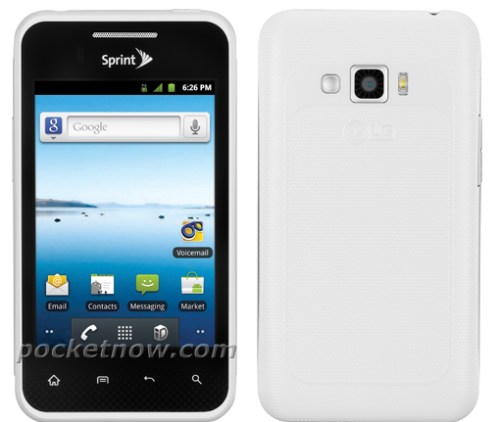
    LG and Sprint have made celebrating Earth Day a little easier this year with the release of their new mobile phone with eco-friendly features.  The LG Optimus Elite will be available through the Sprint 3G Network on Sunday, April 22 through sprint.com and will be Sprint retail stores on May 18.

    Image

     The LG Optimus Elite is the third eco-friendly device launched by Sprint and LG this year.  The company released their first environmentally device in 2010 and continued with the release of two other cell phones earlier this year.  Sprint’s Vice President of Production Development, David Owens, released a statement saying “As a leader in environmental responsibility and sustainability, Sprint continues to expand its portfolio of eco-friendly devices and services by providing consumers with strong device choices,” while continuing to call the LG Optimus Elite “a dynamic and affordable green option for customers who want to go green without sacrificing the latest features”.  The company is thrilled that the release of this phone is happening on Earth Day, which reaffirms the company’s move for sustainability.

     The LG Optimus Elite is sleek and stylish while still exhibiting eco-friendly attributes.  This new cellphone even has UL Environment Platinum Certification, which is the highest level of

    environmental performance recognized by sustainable requirements.  The certification is established by UL Environment and Sprint.  The phone is protected by a casing made of fifty percent recycled plastics, is RoHS compliant, meaning it is free of any hazardous material, and includes a charger that exceeds the EC Code of Conduct on energy efficiency and only consumes 0.03 watts of power when plugged into a wall socket without being connected to the phone.

    Image

    Even the packaging to this phone is eco-friendly: the box is made from fully recycling packaging, printed with soy inks, and contains over 85% post consumer paper.

    Sprint is a corporate leader in sustainability and is ranked the third in Newsweek’s 2011 greenest companies.  The company is committed to reduce greenhouse gas emissions, committed to renewable energy, and encourages cell phone recycling.  In addition, Sprint’s policies and practices showcase their strong efforts in being eco-friendly.

    So how should you celebrate Earth Day this year?  By buying the brand new, eco-friendly LG Optimus Elite!

    -Christina Stevenson, Mollie Berthold, Dorothy Conley, & Laura Simmons

  • Growing Grassroots

    “Community organizing builds power by helping people understand the source of their social or political problems, connect with others facing the same challenges and, together, take action to win concrete change.” -NCRP report,  “Cultivating the Grassroots”

    The NCRP (National Committee for Responsive Philanthropy) recently released a report showing grassroots movements to be one of the most effective ways to positively impact the environment. According to the report, local grassroot movements typically receive significantly less funding than massive environmental agencies, yet it is these grass root initiatives that lead to the biggest change in awareness and behavior concerning the environment. Thanks to IMC, the smallest movements can make the biggest impact. One example, is Oceana, an organization that has one solid, singular environmental goal; save the oceans. Oceana has been successful in utilizing grassroots marketing in order to spread their message. In the video, you’ll see how Oceana members asked UNCW students to take a moment and participate in a petition to stop offshore drilling. The video not only spreads Oceana’s message, but it also encourages others who are interested to start the photo petition in their community.

    Social media makes it much easier for a group to get their message out to a large number of people without paying the high costs of advertising. Grassroots marketing is specifically concerned with companies that don’t have the financial ability to advertise heavily. IMC allows these organizations to invite their audience to share the message through word-of-mouth and various social media platforms, ensuring that their voice is heard . The best part about social media? It costs virtually nothing. By utilizing simple social media tools such as Facebook and Twitter  anyone can easily spread knowledge and collect interest in an environmental issue they believe in. Social media also allows grassroots teams to measure how many people the message reaches and find out how quickly it is spreading. Great ideas may begin with a small following but if they harness the power of social media they have the ability to make a big change. Being able to easily share these stories about local environmental issues has increased the power and effectiveness of grassroots movements worldwide.
    -Kacy Cox, Alexis Kapczynski, Sara Kaloudis, Josh Bowman
  • The Technology Dilemma

    The first machine capable of recording telephone conversations was invented in 1898. The first device that could be considered an “answering machine” was invented in 1935, and the first machine that could answer a phone call and perform tasks based on touch-tone responses was invented in 1983. It took 105 years to go from the groundbreaking phone call by Alexander Graham Bell to being able to complete calls with only one live person interacting.

    In the years since, practicality, fiscal benefits, and customer demand have led to virtually every company of any significant size adopting either partially or fully automated answering services. This splurge in technology has brought about an interesting scenario. With every company having the option of using automated answering services, actually using them doesn’t make any one organization stand out greatly. To complicate matters further, unlike with most other technologies, consumers seem to be at odds with whether they prefer to navigate through an automated system or want to speak to an actual person. With this is mind, companies must choose whether they want the convenience of an automated system or the personal touch of a real person representing their brand.

    Bryce Koonts, Leanna Marshall, Julius Roberts, Leslie Tyler

  • Watch TV on your own time

    Digital video recorders, also known as DVR’s, have been around since 1999. Replay TV and TiVo were the first two digital video recorders launched at the Consumer Electronics Show in Las Vegas. DVR’s have become increasing popular because it allows you to record your favorite shows or movies and watch them later when you have more time. Now there is no need to rush home or stay up late just to catch the news or E! True Hollywood Story. DVR is changing how we watch television. With DVR on everyone’s mind, cable companies have created apps so that their users can set their DVR’s to record even when they are not home. Another feature of DVR that has caught many people’s attention is the fact that you can fast forward through the commercials. People can enjoy their favorite shows without interruptions. This has made it difficult for advertising companies to get the viewers to watch their advertisements.

    With the development of DVR and television show recording programs, companies have to find new and effective ways to market their products to their target markets.  Television viewer’s ability to fast forward through commercials is thought to be affecting buying habits of consumers.  Companies and marketing experts have to peruse other means of getting their products out to the public.  Social media sites such as Twitter, Facebook, and especially Pinterest are effective ways for companies to market their products in a way to get consumer attention.  Through this marketing hardship, integrated marketing communication is very important to gain and retain interest.

    -Kelsey Bendig, Brooke Keller, Andrea Blanton, Brian Burch