Blog

  • Swooning over Small Businesses

    As we take the time to be thankful for the amazing people in our lives, we also want to take time to thank the amazing small businesses in our community! Wilmington has a wonderful array  of local businesses that give the town character. Businesses like Freaker USA, Flaming Amy’s Burrito Barn and Bowl, Blue Moon Gift Shops, and Carolina Farmin’ help make Wilmington the city we know and love. These are just a few examples of small businesses that give Wilmington its character and charm. With restaurants like Flaming Amy’s Burrito Barn and Bowl, we as consumers are instantly attracted to the unique decor, plethora of food options and friendly employees. These businesses thrive because of our local support.

    Small businesses help build communities. This fact sheet from WWAY News gives six reasons as to why it is important to shop at a local small business rather than a chain store. One of the most striking statistics that is presents is that for every $100 spent at a local business, $68 stays within the community versus $14 when spent at a national chain and $0 returning when the money is spent online. Additionally, small businesses generate more tax revenue per dollar which helps to keep our taxes lower. These are just a few of the reasons we think our Wilmington businesses need a huge thank you.
    Luckily, we aren’t the only people who recognize what small businesses can do. Three years ago, American Express created Small Business Saturday. The holiday is celebrated on the Saturday between Black Friday and Cyber Monday to help bring some of the holiday traffic back to the local stores. Sounds great, right? We thought so too, at first. After looking into Small Business Saturday and American Express, the issue isn’t as clear cut.

    As a brand, American Express doesn’t have a good reputation with small businesses. Even with the increased number of American Express card holders, many small businesses take any credit card other than American Express. Why is this? This NY Times blog offers an answer: American Express charges small businesses a higher interchange fee than any other credit card company on the market. This means that when two people buy the spend the same amount of money, but one customer pays with Visa and the other with American Express, the business will make less money off of the latter sale.

    The question then becomes: why would American Express want to create a day to celebrate small businesses when small businesses don’t want to do business with American Express? The answer is pretty simple: by offering American Express cardholders incentives to shop locally on Small Business Saturday, the small businesses who do take American Express will see an increase in sales. Thus the small businesses who don’t accept American Express will lose out on this holiday, and no small business wants to miss out on the opportunity of a huge day of sales. American Express is getting small businesses more business by forcing them to accept the credit card they hate the most.

    There are still other factors to consider when looking at this holiday. American Express offers an online marketing tool kit for small businesses who agree to participate. For the consumers, the incentive program that American Express offers is as follows: spend $25 at a local business on Small Business Saturday with your American Express credit card and receive a $25 statement credit. Now, there’s no denying that is quite generous of American Express. Cardholders can register every American Express card they have, and every card they use is eligible for an individual credit back. Unfortunately people are working to take advantage of this system at a cost to the small businesses. Check out this blog that informs people on the best way to get the most credits back. One tip suggests splitting one purchase between several American Express cards. The problem here is that for each swipe of an American Express card, there is an interchange fee the small business must pay. These multiple mini-transactions can easily drive up the costs for the small business.

    After all of the information we discovered, we were left questioning the ethics behind the creation of this holiday. We love the idea of an entire day devoted to celebrating small businesses, but we get a little defensive when big companies like American Express try to take advantage of our favorite local places. So this year we will be celebrating Small Business Saturday, just not the way American Express intended us to. Even though some of our favorite small businesses don’t accept American Express, we still plan on celebrating their businesses and helping them to continue to thrive within our Wilmington community!

    – Alexandra HussCaroline MerrillAlyssa MorrelloLauren Van TrigtDann Williams

  • It’s Time to Be Thankful for Large Corporations and Brands

    During the month of November, it is important to remember everything in our lives that we are thankful for. The obvious things include being thankful for being a member of our family and for loved ones. However, among the vast number of things we are grateful for, many people may overlook all the big name businesses and companies that give back to our society. A very large number of brand name organizations contribute millions to great causes and are often overlooked. In regard to their great services, these companies deserve a “thank you” for the effort they put back into our community.

    Mary Kay Ash, who was committed to enriching women’s lives, founded renowned cosmetics company Mary Kay. In fact, as part of that commitment, the company has contributed more than $18 million to domestic violence shelters and programs across the country. Mary Kay is also a strong advocate against teen dating abuse, which is evident by the company’s partnering with the nonprofit organization “Break the Cycle” to sponsor the “Ending Violence” classroom DVD. During the past few years, the company has helped launch a national online campaign encouraging lawmakers to regulate domestic violence prevention education in public schools.

    Another brand that has been giving back throughout the years is Trident. The gum brand donated $1.5 million over three years to “Smiles Across America”, a nonprofit that provides dental care to children in underserved communities. Trident’s donation also helped fund dental clinics around the country. The company’s ultimate goal is to give the 16.3 million children in the U.S. who are not receiving essential dental care the “healthy smiles they deserve.”

    In America, the average school teacher spends over $1,500 of his or her own money to purchase necessary classroom supplies. Taking into consideration all of the extra time and effort teachers already put into to their low-income jobs, they shouldn’t feel pressured to pay for the materials essential to the success of their students. The fast-food chain restaurant Sonic has recognized this as an issue, and in return has partnered with DonorsChoose.org to work together to help teachers that are in need of funding for their classrooms all over the nation. Since 2009, Sonic and DonorsChoose.org have already donated more than $2.7 million to various school teachers’ projects to improve the education of children. Sonic’s “Limeades for Learning” Program has been Sonic’s biggest charitable campaign yet. This past September, Sonic customers who purchased any type of Limeade got the opportunity to go online and vote for the teacher’s classroom project of choice. There were 1,457 willing teacher’s classroom projects all over the United States; Sonic donated over $500,000 to fund these winners. “We want schools to have the resources they need in order to help children reach their full potential,” Nancy Robertson, Sonic’s Senior Vice President explained in an interview.
    Brands that give back to their community not only establish positive credibility with their customers, but they gain a sense of pride knowing their product is giving and not just receiving. The widely-know, bath and body production company, Burt’s Bees, has been giving back ever since their first product was created. Each and every Burt’s Bees product is, and “always will be” Eco-friendly.   “We’re committed to protecting the planet and also to improving our community,” Yola Carlough, the company’s director of sustainability stated. Burt’s Bees has a long-term commitment to both preserving the environment and to the “Habitat for Humanity” Charity in Durham, North Carolina. Many of Burt’s Bees employees have dedicated much time and effort to improving the lives of many Durham residents by building numerous houses over the years through Habitat for Humanity. Burt’s Bees has also held fund-raisers at various Restaurants in Durham, where 20% of all proceeds made were donated to the charity.

    While it is important for people to humble themselves during the holiday season and recognize how thankful they are for their family, support system etc., it is also important to recognize the positive things that many large companies add to the community.  In today’s society, companies are out to get every penny from the consumer.  It is satisfying for many consumers to see these large companies be selfless and willingly give back to the community, especially when there is no obligation to do so.  Companies such as Mary Kay, Trident, Sonic and Burt’s Bees are great examples of what amazing things larger companies can do with just a small percentage of their profits.

    Sasha De Vecchi, Lindsay Gallagher, Jay Reilly, Cary Welborn

  • The “Face” Behind the Letters

    Game night has long been a valued tradition in families across the globe, but with new technology some of the long-standing board games have been pushed to the side for virtual games on systems such as Wii and Xbox Kinect. Scrabble, for example, has been a part of the game world for over 60 years, but how often do families still bring out their Scrabble boards?

    Earlier this year, the advertising agency Pereira & O’Dell took over Mattel’s games account. This November, Pereira & O’Dell have released several 30-second spots in several different countries to bring back the association of Scrabble and fun. These advertisements bring personalities to three of the Scrabble squares: P, Q, and Blank. At first, the image of Scrabble pieces as faces on human bodies may seem a little strange. However, after viewing the advertisements a person may find themselves attached to the pieces.

    Each of the Scrabble pieces has their own unique personality. When you “meet Blank” you might notice that he seems to be a bit arrogant and definitely the life of the party. After all, everyone always wants to draw the blank square during the game, right?

    Q, on the other hand, is a bit of a loner. He has his heart broken by U and seems to be a bit timid. What is there not to love about the bashful, lonely Q? A viewer may almost feel guilty for hating the Q piece in the Scrabble game. It is heart-warming to see that, in the end, Q gets the girl.

    Pereira & O’Dell definitely get points for being clever with these advertisements. The strange image of the pieces having personalities seems to work, however, the question is: will the viewers relate to the pieces? Mattel wants to bring people together over their Scrabble game board for decades to come but only time will tell if it will actually work.

  • Have You Experienced the Rainbow?

    If you haven’t been to the Skittles website in a while (or perhaps, ever) now would be a good time to take a peek.  What you might expect to be a typical site, designed to provide advertisement and purchase opportunities, has undergone quite a facelift.  Unlike most sites, the website for Skittles has been reborn as a social media machine disguised as a blog.  Near the top of the page is the familiar Skittles slogan, “Taste the Rainbow.”  Scroll down a bit, and you’ll find an entirely irrelevant tweet from the Skittles Twitter account. @Skittles says, “It’s all fun and games until the chinchillas show up with the karaoke machine.” Next come a few phrases like “lace the train slow,” “trace the vein bro,” and “encase the faint glow,” all with coordinating pictures and all rhyming with the original slogan of “taste the rainbow.” Add a few quirky videos, more interesting tweets from fans, and many opportunities to share things via social media, and  you’ve pretty much summed up Skittles’ entire online marketing tactic.

    The Skittles commercials take on a similar level of oddity as their website.  Whether it’s a teenager catching “Skittles pox” from a “highly infected” friend with the message to “contract the rainbow,” or a guidance counselor eating Skittles out of a student’s unibrow with the message to “pluck the rainbow,” these commercials seem to be getting stranger and more extreme year to year.  So, do these weird messages work to promote their product?  Their 23 million Facebook fans, 47,000 followers on Twitter, and nearly 10 million views on YouTube would suggest that they do.

    As a product that has been a favorite with candy-lovers since their appearance in 1979, Skittles has little need for getting their brand noticed so much as keeping their brand relevant.  That’s exactly the idea behind their weird marketing.  By showcasing their social media followers on their website, and giving fans something different to talk about, Skittles is making people rethink what they already know about Skittles and driving them back to their brand.  The genius behind this tactic is that the product hasn’t changed.  What they are changing is stated right at the top of their site.  “Experience the rainbow.”  Skittles is changing the whole experience associated with their little chewy candies in a colorful shell to be more exciting and hilarious than before.

    What seems to appeal to consumers these days, especially to Skittles’ target market of pre-teens and adolescents, is the eccentric and the humorous.  Skittles has mastered both of these arts.  Not only are they staying relevant, they’re staying interesting.  As advertising trends continue to shift, Skittles will doubtless continue to meet the needs of their consumers and remain a favorite fruity snack to all.  The only question now, is what comes next.

    Ally Walton, Hannah Eure, Gene Lee, Lauren Habig, Erin Kiffmeyer

  • Reframing Our Reality

    This week the Department of Communication Studies was lucky enough to host Dr. Jacob Storch. Dr. Storch is the Senior Director of the consulting firm Attractor. His practices range from different areas such as organizational communication, coaching, leadership development, and organizational change. Within his lecture he focused on the application of communication theory to real world organizational practices.

    Dr. Storch brought some interesting ideas to the COM Department. He emphasized the impact the language we use can have on our reality. Language is a fluid, ever developing system. By consciously choosing the way we label the world around us, we can purposely affect the situations that are presented to us. Dr. Storch gave an example of a choice he was faced with when the economy began to look bleak. His company wanted him to address the “recession” and he chose to speak about “re-session.” Instead of focusing on the challenging times ahead, Dr. Storch challenged his colleagues to “re-session.” He explained re-sessioning as thinking of the market in a new, open mindset. As consultants, he said, they should begin to prepare for new questions that clients will have in the face of an unpredictable market and anticipate the changes that may arise in client needs.

    As we continued to listen to Dr. Storch’s lecture we began to notice his infectious realistic optimism. His example was just one demonstration of the impact our language can have on our world. By reframing the way we talk about our reality, we can positively impact the messages we send via language. Gatorade is a strong example of how positive language can impact a brand’s narrative. By promoting ad campaigns with headlines like, “Win from Within” and “Everything to Prove,” Gatorade is motivating their consumers to push their limits and give it their all with a positive and inspiring message. Their word choice intentionally gives their consumers a vision of motivation and success. From their commercials to the labels on the bottles, they are re-framing what most people may see as challenges as opportunities to improve.

    Dr. Storch also made us think about how we are conditioned as students. Our education system conditions us to seek out patterns and follow the instructions explicitly given to us. Often we are so concerned with following the map we are given that we forget how to take a minute and observe the world around us. The problem with this is that businesses do not need someone who can follow all the instructions. As Dr. Storch pointed out, “imagination is much more important than certainty.” Businesses need someone who can critically analyze the world around them and envision the future in a way no one else has. No pressure. Seriously, though, as Dr. Storch stated, “there is no place for average in our end of the business world.”

    Thank you, Dr. Storch and Dr. Cronen!

    – Alexandra HussCaroline MerrillAlyssa MorrelloLauren Van TrigtDann Williams

  • Starburst: A Pack of Contradictions

    The latest news on the Starburst brand is that Starburst has launched a new campaign where it focuses on “contradictions.” The most recent Starburst commercial plays on the candy’s “contradiction” of solid, yet with a juicy consistency. The company’s new commercials come off to be very strange, which is exactly the point. With all of the commercials that are constantly played throughout the world, more specifically the United States, it is getting increasingly difficult for advertisements to stand out among the others. In an effort to stand out, companies are creating commercials that seem to be strange but memorable. An example of one of these weird Starburst commercials is the commercial where a Korean man is portrayed as a Scottish man due to the bagpipes and kilt he is wearing. This man is standing with a child who is dressed the same way but eating a Starburst and states, “One contradiction eating another!” Another commercial consists of a screaming mime that is supposed to portray a contradiction. Clearly mimes are not supposed to talk. The most famous of these Starburst commercials though, is a commercial where a dog is riding in the car with a group of men. The dog has its back side sticking out of the window of the moving car, and one guy in the car claims that the dog is a contradiction for doing so, since normal dogs stick their heads out of windows. It is clear that this commercial was effective in at least making a memorable impact on consumers, whether the impact was positive or negative. The commercial’s growing popularity is displayed through the 43,900 results that appear on Google after searching “Starburst your dog is a contradiction”.

    ImageThis Starburst commercial was very successful; however there is much scrutiny that is coming from it. There are many articles and blogs published about how the people shown in these Starburst ­­commercials are not actually a contradiction. One article specifically, titled “Ass-Backwards Starburst Dog Isn’t Really a Contradiction” discusses how the people in these commercials have traits that deem to be opposites, but are not actual contradictions. Author Tim Nudd states, “Now, we get this new spot with a dog who likes to hang his ass out a car window—and he’s called a contradiction. Isn’t he really just a dog with an unusual preference?” There are numerous articles similar to Nudd’s, claiming that these commercials do not actually portray contradictions at all. Therefore, their whole message is distorted and their credibility is in question. Both sides can be argued extensively due to the fact that the word contradiction has many different definitions.
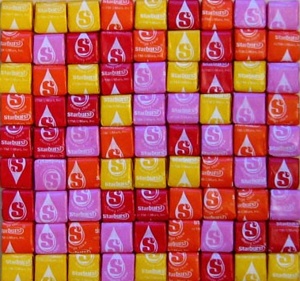
    Under the Dictionary.com definition, a contradiction is a “person, thing, or situation in which inconsistent elements are present”. Based off of this definition, these commercials would correctly portray contradictions. However, under other definitions such as, “a contradiction is two propositions used in combination where one makes the other impossible. It is something that is A and non-A at the same time. A contradiction, therefore, cannot exist in reality, since existence exists” would not consider the people or the dog in the Starburst commercials to be contradictions. These commercials are being closely examined for the accurate or inaccurate usage of the word “contradiction” by many viewers all over the world; however, this brand of candy’s new campaign theme, “Celebrating the contradictions that make life so interesting,” is capturing thousands and thousands of fans daily. The Starburst brand has also created an online “Contradictions Project,” which is seeking to involve fans all around the nation to log on to the Starburst Facebook page and submit common contradictions of their choice. For every contradiction a fan lists, that person will be added to the $250,000 donation, which is partnered with VH1’s Save the Music Foundation, to restore music programs across the country. Whether these new Starburst commercials are considered to be weird, incorrect, humorous, or just plain stupid, the reality of it is, their new theme is making the Starburst brand even more popular than it already was.

    Image

    Sasha De Vecchi, Lindsay Gallagher, Jay Reilly, Cary Welborn

  • Running a Positive Campaign Can Be Done

    North Carolina voters faced a tough decision Tuesday when they went to cast their vote for the next governor of the state.  The two candidates for the 2012 election were republican, Pat McCrory, and democrat, Walter Dalton.  North Carolina has not had a republican governor for twenty years.  Voters who turned out to the polls on Election Day showed they were ready to end the GOP drought for North Carolina.  The state turned over the governorship and the power of the house to Republicans.

    Image

    Back in 2008 Pat McCrory ran against governor Beverly Perdue but lost just shy of four percent.  McCrory and the rest of his supporters thought after the loss of the gubernatorial race his career in politics was over.  However, Pat McCrory decided to run again and this time he promised to run an only positive campaign.

    McCrory carried out this promise by making it a key factor in speeches, fundraising, and catching the attention of voters, republicans, democrats, and independents.  In his acceptance speech on Tuesday night which he gave at the Westin in Downtown Charlotte, he made it clear why he believed his campaign was so successful.  McCrory won over the Lt. Governor Dalton by  ten percent.  In his speech McCrory stated, “I think the two unique things we did, first of all, we ran a positive campaign.”

    During his campaign McCrory never ran one negative TV or radio ad against his opponent, Walter Dalton.  In every ad his campaign created he talked about what he wanted to do as governor of North Carolina, his polices, his issues, and his plan for the future of the state.

    With North Carolina being the tenth largest state in the United States McCrory did a fine job of running a positive statewide campaign.  It is rare you see only positive campaigns being run not only in North Carolina politics but in national politics as well.

    Wednesday morning at a press conference Pat McCrory celebrated his victory with the following statement: “You can win with a positive message.”  Maybe it is time that not only the state political parties but also national political parties take note of McCroy’s victory.  Positive campaigns help candidates and their message to be conveyed to all political parties.  McCrory won big on Tuesday, his positive campaign may just be the “Carolina Comeback” and the come back national politics needs.

    Zachary Abramo, Meaghan Beam, Jessica Butner, Jackson Lane