Category: Communication Studies

  • Why work for free?

    Communication Studies has become a popular major among students at UNCW over the past few years. With a wide variety of sub-fields, including media production, public relations, and communication technologies, the department certainly gives students many options for potential careers. Prior to graduation, students are encouraged to gain knowledge and work experience in the communication studies field through an internship. An internship gives students a chance to actually apply their training and knowledge, and gain more insight into that type of work.

    Searching for internships can be difficult. Places such as CMT and MTV have been popular places to look for internships outside of the Wilmington vicinity that are still related to communication studies. But there are numerous opportunities for internships in Wilmington as well. Competition is high, but the experience is once in a lifetime. Whether paid or not, everyone walks away with more experience than before.

    Internships are extremely beneficial when searching for a possible career in the field of communications. Although many students would prefer having an internship with a large and well-known company, any experience is better than none at all. As an intern with the event coordinator at the Bluewater Grill, I have learned a great deal about event planning and the work experience has certainly been beneficial.

    The Communication Studies department at UNCW works with students to find the perfect internship to suit their needs. The department offers credit hours in place of getting paid for the internship. Sure, getting paid would be ideal, but why not get school credit for such valuable work experience? Through the Communication Studies website, students may access information on how to find an internship, along with how to get course credit for their internship.

    The value of an internship cannot be put into words. Not only can internships open doors for future jobs and careers, but having the ability to combine the formal training with realistic practice makes the internship well worth the time. As an intern, I can only hope that everyone finds their internships as beneficial as I have. Communication Studies is a hands-on major, and an internship in this field will give students a chance to put their knowledge to work.

    Lacey Inman
  • CFCI 10th Anniversary Planning Project

    Our class group has assumed the responsibility of planning the event celebrating Cape Fear Center for Inquiry’s ten years of education. Upon meeting with representatives from the local charter school, we established a budget, a venue, food, supplies, and guest speakers. Our client’s motive is to provide a friendly atmosphere for the current students, alumni, and their families, thus a local arboretum on a Sunday afternoon in April seemed appropriate. Our next step was to make a decision about food. Taking budget into consideration and acknowledging that food is usually the single most expensive item at any event, we have begun asking for donations from local restaurants and establishments. Supplies will include tables, beverages, T-shirts, raffle prizes, seating, a tent and podium for guest speakers and special recognitions.

    Contacting the public and media is crucial in the planning of any event, so we have a media kit in the works. Our client would like for any and all alumni to attend and since most of them may not be in direct communication with the school, we are utilizing all of our resources through the local media as an outreach tool. Awards for the three founders will be presented that afternoon as well.

    We have planned to meet with our client exactly one month before the event to make sure all arrangements have been made, invitations and media kits sent, and that thank you letters for donations have been written.

    Mandy Baker

  • IMC – The Next Generation

    Don and Heidi Schultz’s book, IMC—The Next Generation, is one that many of the students in this advanced IMC class have read at some point in our undergraduate careers. To those new to the discipline of integrated marketing communication, this book offers insight into developing relationships with customers and shows marketers how integrating their organization can help them focus on the customer. There are numerous cases and real-world examples provided that reveal how to use the IMC model presented in the book.

    They start the book by describing IMC as “a process through which companies accelerate returns by aligning communication objectives with corporate goals.” The importance of branding is emphasized throughout the book as they explain how much of an organization’s marketing efforts switched from focusing on the company’s products to focusing on the establishment of brands. Just as the primary focus of almost any successful business is also the customer, the primary focus of the book is the customer, stating that in a value-oriented IMC program, “Customers and prospects are treated as individuals, not as markets.”

    Readers of this book range from students studying IMC, to professionals trying to establish themselves in the business world. Other reviews are almost all positive and full of praise. One review stated, “If you care anything about Integrated Marketing Communications, you’ll read this book. This book has been a bible of sorts for me over the past few years. Anyone trying to figure out what’s going on in social media and the changing nature of the buyer should take a read through this first. Some of the areas may be a bit hard to grasp, but the methodology makes sense, and the Schultz team breaks it down into a step-by-step process that will make your marketing programs measurable (if you follow their advice).”

    Overall, IMC—The Next Generation comes highly recommended from critics, students and readers in general. It offers insight from a husband and wife team of professionals who understand IMC and how it can be used in the business and professional world.

    Nicole Doherty
    Stephanie Saulsbury
    Lacey Inman

  • Who Dat Nation

    With Super Bowl XLIV reaching nearly 100 million viewers, it’s easy to say that football encompasses a large part of American society, and even contributes to how Americans identify themselves. This may be the reason why we usually have one team that is given the title “America’s Team.” For several years this team was known to be the Dallas Cowboys; but in light of recent events, the New Orleans Saints now have the esteemed title.

    After all that New Orleans endured following Hurricane Katrina nearly four and a half years ago, the team as well as the city has made a lot of progress. It was hard not to be excited for the Saints as they played in their first Super Bowl. Fans seemed to come from everywhere, with most of the country offering their support. According to Rasmussen Reports, 54 percent of people who participated in a national survey wanted to see the Saints win, even though only 38 percent thought they actually would win.

    In an Associated Press article, Colts safety Antoine Bethea was quoted, “There’s a reason America is pulling for New Orleans, and why wouldn’t they? They’ve been through a lot. Sports tend to pull people together, so it’s commendable for New Orleans to be, as I guess you’d say, America’s Team right now.”

    Quarterback Drew Brees has contributed to the Saints image as a community-oriented team through his work in several reconstruction projects. In a Reuters article, Brees said about the game, “Our city, our fans, give us strength, we owe this to them — to Saints fans all over the country, and I think we might have gained some after yesterday.”

    Nicole Doherty

    Stephanie Saulsbury

    Lacey Inman

  • Social Media and a Snowball Fight

    It may be hard for Wilmington to imagine, but this past weekend, the Washington D.C. area accumulated almost three feet of snow. When the power is out and the roads are unplowed it’s hard to come up with anything exciting to do. However, a group of young professionals in DuPont Circle formulated a plan that brought people of all ages together. The secret to their success: social media.

    When news of the snow was announced on Thursday, Ami Greener and her friend Michael Lipin decided to put their Twitter accounts to a new use. As friends who live on opposite sides of DuPont Circle, they figured it would be fun to arrange a massive snowball fight for the whole city to participate in.

    “You keep reading in the media how companies are using Twitter,” Greener said. “I said, ‘Okay, I’m going to do that.’ ”

    The tweet went out on Thursday night, along with a Facebook group advertising the snowball fight. On Thursday the group had 33 members, but by Saturday morning it had over 5,000. On Saturday afternoon over 2,000 people, including children, young professionals and lawyers had congregated in DuPont Circle to participate in a good old fashioned snowball fight.

    The fight was a carefree attempt to unite a community and take advantage of the record breaking storm.  However, without the help of Twitter and Facebook, it would have undoubtedly been a much smaller event.

    Stephanie Saulsbury

  • Who is your doppelganger?

    Doppelganger; German for a literal meaning of the look-alike of another person.  Doppelganger has become a commonly used word especially among the social networking realm of Facebook users.  This past week has slowly caught on to be known as “Doppelganger Week” amid the young and old profiles of Facebook, generating a common denominator between people all over the world.  Although this denominator is not an organization that people have signed up for with the intent of membership, it is similar in that people have chosen to participate in a world-wide activity, linking them to one another.  It is also producing questions among geographically close friend such as “who is your doppelganger” or “do you think Suzy Q’s pictures truly look like her?”
    What is Doppelganger Week you ask?  The idea of Doppelganger Week is to change one’s Facebook profile picture to a celebrity or icon that they have been told they most look like.  The chosen doppelganger is not the celebrity one thinks they most look like, but the celebrity the user is most commonly told they look like.  If you have never been told you have a celebrity twin, you’re in luck!   MyHeritage.com is a site specifically made for web users to discover their celebrity counterpart.  The website uses face recognition technology to analyze the facial features of submitted photos.  Once a preferred picture is uploaded, the site searches a database full of recognizable individuals to match your facial features.
    Aside from the fun aspect of Doppelganger Week, the question remains if social networking sites can cultivate social capital.  Moreover, can the web enhance invisible friendships?  Some may answer yes as so many people have yielded to the Facebook trend.  In addition to the doppelganger craze, Facebook recently had another trend emerge during the “color of my bra” rage which swept statuses of female Facebook users to support and raise awareness to breast cancer.  Both trends are paving the way in which social networking can build a connection among people who would not otherwise know one another.  It is not certain that people are being united solely on the factor of profile pictures or status updates, but it does create wonder for social networking users.
    We now ask what trend will be created in the upcoming weeks, and will you be a participant of what is to come?

    -Allyson Corbin

  • The Not So “Private” Facebook

    With the new privacy settings on Facebook even more of us are in denial that people on the outside can view our private information. Many believe that when you utilize the privacy features on Facebook, including restricting the search options for yourself, you are in control of who sees that information. Well you could be wrong, and it could be more than just a future employer analyzing your information.

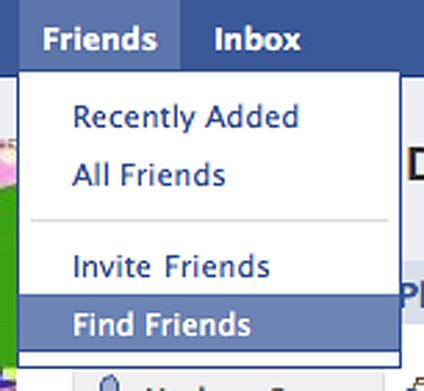
    Recently a marketer who wishes to know more about their cliental base, created a targeted marketing strategy or profit from selling the rights to this information which can now be used with Facebook. According to Ryan Singel of CNN.com, marketers can take advantage of a feature on Facebook intended for its users to find their friends by scanning through their email addresses in the feature known as “friend finder.” Marketers can take a list of email addresses they have collected and run them through this feature. Voila! Now they can see your full name, age, friends, gender, job and even location. Next they can even process all that data and make inferences about race, hobbies and sexual orientation. This would be a dream tool to any marketers to gain an even more inside look into their customers and their needs.


    Many users have tried to restrict who can search for them through the search privacy options, but if your email address is known they can view the rest of your profile, which is now considered public information by Facebook. This information includes your name, current city, picture and networks. Facebook says it is working hard to find scammers and setting a limit on the number of email addresses that can be run through friend finder by an individual.  The site also says it encourages people to monitor their profile and adjust their privacy settings accordingly.

    As of now it is unclear whether or not marketers have taken advantage of this outlet, but it would be very hard to know for certain.

    -Jessica Smith