Tag: UNCW

  • What’s Your Unique Brand Style?

    UNCW’s Communication Studies Day includes an informative Dress for Success Fashion show for college students of all ages and levels. The fashion show will also include skits demonstrating the importance of an elevator speech, professional attire, portfolios, and how necessary it is to be prepared for interviews. This year the theme, “Will You Make the Cut?” is based upon the Food Network show “Chopped.”

    One idea about IMC manifested in this fashion show is that company image and brand management is very vital for growth and success. Individuals, as well as companies, have always had their own image and have to manage their own brand. It is sometimes hard for college students to transition from a student image that they have had for the past 13 years to a business professional image. The great part about the fashion show is that it shows students how to transition from their current image and brand to something more professional.

    Whether people realize it or not, we are branding ourselves every day through the types of clothes we choose to wear in professional or unprofessional settings. Your unique brand style can be a description of who you are in a job interview setting. It is very important to make interpersonal connections with job interviewers through your developed style and authenticity that will make you stand out from others. Branding yourself when looking for a job is very similar to branding a product. Basically, you are selling yourself as a product to your potential employer with the goal of standing out amongst the rest. Are you casual business, formal business, chick, trendy, preppy, classic, or a hybrid of several?

    By: Laura Simmons, Mollie Berthold, Dorothy Conley, Christina Stevenson

  • Where to go, Where to go.

    I’d like to tell you a story about “My Friend”. My friend is a senior enrolled at UNC-Wilmington, and though he is very low on funds, he really wanted to enjoy his final spring break. After some consideration, he decided to make the short drive to Myrtle Beach, South Carolina with his girlfriend where they could live it up like true college students. After my friend returned from his 4 day trip he took a few moments to relive his getaway and came to an abrupt realization. When he was in Myrtle Beach, his schedule consisted of very few things that couldn’t have been done right here in Wilmington. He got up at the break of noon, spent the afternoons lounging on the beach, the evenings relaxing at the local eatery and the nights chilling at the local pub. So if all of these things could have been accomplished in Wilmington, why didn’t my friend just stay in Wilmington? More importantly, why don’t other college students from all around flock to Wilmington to celebrate their time off?

    After some consideration and a little observation, I think I have discovered the answers to these questions: college students don’t come party in Wilmington because Wilmington doesn’t want them to come party here. Wilmington, and more specifically Wrightsville Beach, consists of well-developed (expensive) beach houses and family friendly entertainment offerings. If flocks of college students flocked here every spring then Wilmington could potentially become a less desirable location to bring your family or spend your retirement. It almost comes to a point where a city that is blessed with the kinds of attributes that make it a destination must choose what segment of the population they want to be a destination for. Though the marketing of geographic locations is often not as aggressive as that of traditional businesses, it can be an important decision in the life of a city.

  • Surfing Your Way to Success

    Entrepreneurs, as well as many other companies, rely on Integrated Marketing Communication to get the word of their business out to the public with multiple methods. A fellow UNCW Senior in the Communication Studies department, James Connolley, has been an entrepreneur using IMC to promote his business, JC Surf Camp. James has been teaching people of all ages how to surf for 8 years and has been an entrepreneur, owning JC Surf Camp for 6 years. His decision to start his own surf camp business started with a conversation with his high school bible study leader. James has a love for surfing, kids, and Jesus and decided the best way to combine all the things he loves into his surf camp. He likes to share his message through his surf camp by the quality and professionalism in his every day work.

    When the surf camp started in 2006, the only way James was communicating with his publics was by posting fliers in the storefront of a local surf shop. His business quickly started to grow and in 2007, James decided he wanted to market his business to a broader audience. He paid someone to build his own website and just recently added new content and features. James uses many other ways to communicate to his public by using mass emails, direct mailing, brochures, website, and social media. The best marketing overall with JC Surf Camp is word of mouth advertising and partnerships with other local camps in Wilmington. More recently, James was able to advertise his business through the local news station WECT.

    Link to WECT Live bit on JC Surf Camp

    The JC Surf Camp team considers surfing one of the greatest blessings in life and goes to great lengths to ensure others see it the same way. Each instructor at JC Surf Camp has gone through an extensive SurfInstruct Training Program before becoming a surf instructor. This program was developed to ensure every instructor knows ocean safety, surf safety, CPR and First Aid certified, and knowledge of different teaching methods for all levels, such as, kids, teens, groups, or private lessons. Another way James and his team ensure safety is by providing UV protected rash guards and soft-top surfboards. Safety is very important to all the JC Surf Camp instructors to make sure they are providing a safe learning environment. James stated it perfectly when he said if people feel safe, they are able to have fun. This is one of the messages James tries to communicate to retain and maintain customers.

    Many times entrepreneurs start from the ground up and have to take what they have and make the most of it. Since James is in the communication studies department at UNCW, he has been able to take the knowledge learned in communication classes and IMC classes and implement that in his business. James, as a student and entrepreneur, thinks of entrepreneurship as an adventure and has far exceeded what many entrepreneurs his age are capable of.

    Learn how to surf today!

    By: Laura Simmons, Dorothy Conley, Christina Stevenson, Mollie Berthold

  • Foursquare U

    Back before texting and tweeting, students on college campuses relied on announcement boards and gossip floating in the student center to find the popular hang out spots or know about the latest buzz. Today, news about and around campus is instant. Most major universities have embraced social media over the past decade and are using it to reach college students in a unique way. But how can universities gain access to real-time social trends on campus? Welcome to the new and evolving world of geosocial networks.
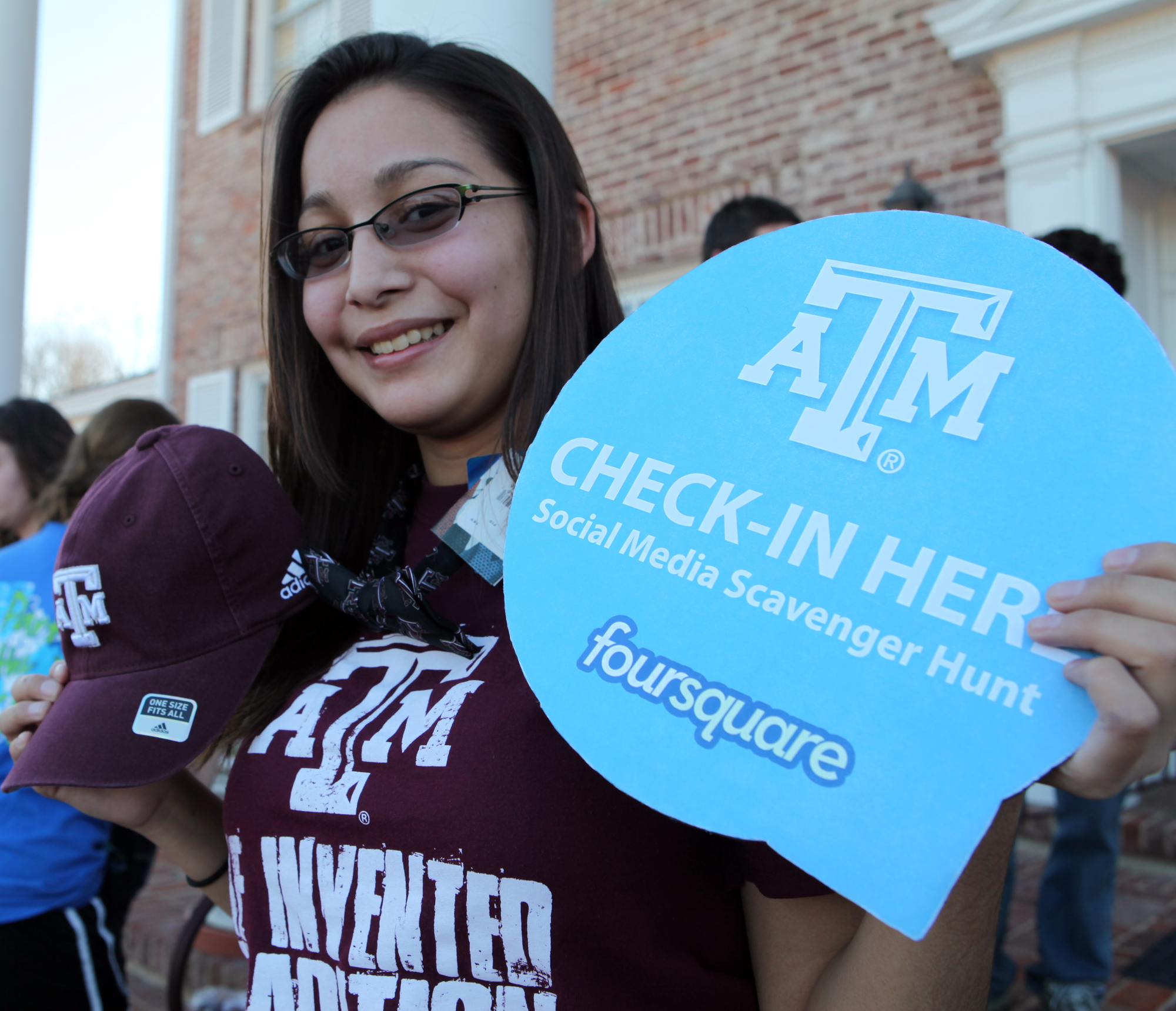
    Geosocial or “location-based” social networks are on the rise, with the forerunner being foursquare, a mobile app launched in 2009 that allows users to “check-in” to various locations and share where they are and what they are doing with their friends. Access to real-time location data from foursquare allows marketers and businesses to know what locations are “trending” as well as the demographics of users checking-in to their establishment. With the growing momentum of foursquare, universities are hopping onto the “check-in” train and recognizing foursquare on campus.
    Why should universities be interested in foursquare? For starters, foursquare currently has 15 million users and over 1.5 billion check-ins worldwide, with a growth rate of 3400% in 2010. Chances are that your business or venue is already on foursquare and users have probably checked in and maybe even left some tips. Information that users enter when creating a venue may be incorrect, but universities that claim their venues can add appropriate information to academic buildings to ensure the best overall experience for faculty, students, and guest.
    Universities are beginning to recognize the potential value of information gathered using geosocial networks. What does 4pm look like on campus? Is the library packed? Are students working out? Applications like foursquare can also attract visitors on campus by offering “check-in” deals (ex. 10% off a shirt when you check-in to the campus bookstore), creating a self guided mobile tour of academic venues, and leaving historic information or helpful tips for different locations.

    Most importantly, foursquare is free advertising (for now). Not only that, but it can be interactive and rewarding for users, perhaps by giving away free university gear for going to the library, attending a campus event, or staying healthy at the gym. The possibilities for university marketing are endless.

    By: Hunter Wilson, Josh Vester, Ashley Oliver, Molly Jacques

  • Have a Sexy Valentine’s Day, Gorgeous!

    A week from today, one of the most commercialized and superficial holidays will occur: Valentine’s Day. For those of you who are one half of a couple, Valentine’s Day is all about making your significant other happy, whether it involves showering him/her with gifts, making dinner reservations, or planning exuberant and normally unnecessarily expensive dates.

    The beginning of February marks the time when store fronts become clad with hearts, cupid cutouts, and pink and red streamers.  Around this same time, we begin to see an increasing number of men lurking around lingerie stores, especially Victoria’s Secret – and for good reason.  Victoria’s Secret has a dramatic increase in sales during the season of romance. With their sexy print ads in magazines, their silky almost-obscene commercials, and their free “Lacie Pantie” giveaway, what man in their right mind would avoid giving their girlfriend/wife the gift of sexiness?

    In their 2012 Valentine’s Day campaign, Victoria’s Secret Angels clad in pink and red barely-there bras and panties have advertised to their customers that with the gift of anything from their line of lingerie, their Valentine’s Day celebrations will be fabulous. In their sneak peek to their photo shoot, the Angels prance around in their under garments, smiling, laughing, and selling the ideas of sex and playfulness. In interviews, the girls claim that any man could win their hearts on Valentine’s Day by picking out something from the Victoria’s Secret shelves. One even says that if a man chooses something that he likes, it will give plenty of hints to his significant other.

    Not only does this campaign appeal to male shoppers, but it also appeals to women. The Victoria’s Secret Angels encourage their customers to feel sexy, and by offering specials, free panties, and coupons during this season, women will certainly be able to feel like Angels.

    So whether you are shopping for a significant other or are planning on spoiling yourself with brand new sexy lingerie, Victoria’s Secret will certainly be the place to shop this romantic season.  And don’t forget to have a sexy Valentine’s Day, Gorgeous!

    Love always, Christina Stevenson, Mollie Berthold, Dorothy Conley, & Laura Simmons

  • All The Single Ladies

    Valentine’s Day is a holiday dreaded by a great deal of people, both male and female, for various reasons. There is pressure on both genders to perform, declare emotions, and out-do previous years or expectations. Those who fail at this task of grandstanding may in fact find themselves without a date for next year. Okay, so there’s a ton of pressure on people in relationships, but what about those of us who are single? While some take pride in their solitude, others wish they had someone to be their valentine, and a few twitch at the mere thought of being in a relationship.

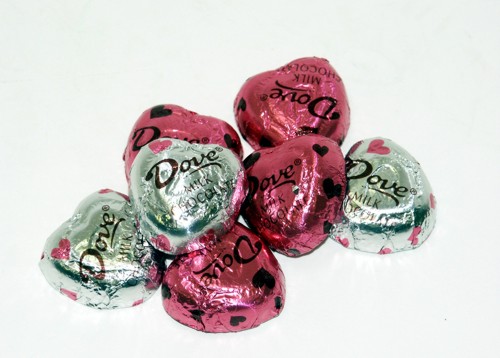
    According to an article in the New York Times, being single is a prevalent occurrence these days with 59.9 million single women in America. This staggering rate may surprise some, but companies like Dove chocolate see these table-for-one ladies as a prime marketing demographic. They hope to strike a chord with this growing independent group by catering their advertising to the women who are without companions. That is why this year Dove has made a campaign to remind women Valentine’s Day isn’t just about romance.

    Dove is banking on the stereotype that single women will turn to chocolate this year on Valentine’s Day. Instead of the standard “Call me” or “I’m yours” found on the candy hearts we used to share with our playground crush, Dove has created a host of witty comments and placed them on the inside of their chocolate wrappers. Some of the best include, “You’re gorgeous,” “Sometimes I buy flowers for myself,” “My flaws are fabulous” and even the ever so uplifting, “Love yourself in a moment.” The new commercial features women sharing their Dove chocolates with everyone from their barista to their neighbor, and most importantly, themselves. Is this a message of independence for the strong woman? Or rather, a cheap ploy based upon the assumption that women alone on Valentine’s Day will inevitably console themselves with chocolate? Either way it’s hard to dislike chocolate, especially when it’s making single girls smile and promising not to judge if we have more than one.

    By: Alexis Kapczynski, Kacy Cox, Josh Bowman, and Sara Kaloudis
  • What’s the Real Show?

    During a regulation NFL game there is a 15 minute break between the 2nd and 3rd quarters. This halftime break was originally instituted so the participants of the game could catch their breath and re-energize. During the Super Bowl, halftime lasts for a minimum of 30 minutes. Not only is that plenty of time for a player to catch his breath, that could allow him an opportunity to take a nap and check some emails. The mid-game break is actually long enough that coaches usually alter practices leading up to the big game in order to prepare their players for dealing with the extended down time. Despite this, there has never been a serious motion to shorten the length of the break. On the contrary, every few years halftime will run a little long to better accommodate the length of more extravagant halftime shows.

    This presents an interesting phenomenon. The Super Bowl, the game that decides who the best team is in the highest level of the most popular sport in America, is consistently interrupted for at least 15 minutes more than is necessary so an assortment of washed up and unknown artists can perform for a crowd that has paid at least double the average monthly income for a ticket to the game. It is widely known that companies spend millions of dollars for a chance to slip a commercial in between the biggest football game of the year, but this event has become so large that the game itself is being postponed in order to make room for the event that surrounds it. That’s the kind of marketing that is normally reserved for religious holidays and national celebrations.

    So what makes the Super Bowl half-time show so special? It is the second most anticipated part of the event, besides of course, who wins the championship.  The hype of who is performing is always a boost for the performers publicity, but what if Madonna blows it like the Black Eyed Peas did last year?  What will that do to her brand as being Madonna, the Queen of pop? There is a lot at stake when involving yourself in the biggest event of the year.  Let’s just hope there are no wardrobe malfunctions or fumbled lyrics this year.

    Read more about the halftime show here!