Tag: Social Media

  • Foursquare U

    Back before texting and tweeting, students on college campuses relied on announcement boards and gossip floating in the student center to find the popular hang out spots or know about the latest buzz. Today, news about and around campus is instant. Most major universities have embraced social media over the past decade and are using it to reach college students in a unique way. But how can universities gain access to real-time social trends on campus? Welcome to the new and evolving world of geosocial networks.

    Geosocial or “location-based” social networks are on the rise, with the forerunner being foursquare, a mobile app launched in 2009 that allows users to “check-in” to various locations and share where they are and what they are doing with their friends. Access to real-time location data from foursquare allows marketers and businesses to know what locations are “trending” as well as the demographics of users checking-in to their establishment. With the growing momentum of foursquare, universities are hopping onto the “check-in” train and recognizing foursquare on campus.
    Why should universities be interested in foursquare? For starters, foursquare currently has 15 million users and over 1.5 billion check-ins worldwide, with a growth rate of 3400% in 2010. Chances are that your business or venue is already on foursquare and users have probably checked in and maybe even left some tips. Information that users enter when creating a venue may be incorrect, but universities that claim their venues can add appropriate information to academic buildings to ensure the best overall experience for faculty, students, and guest.
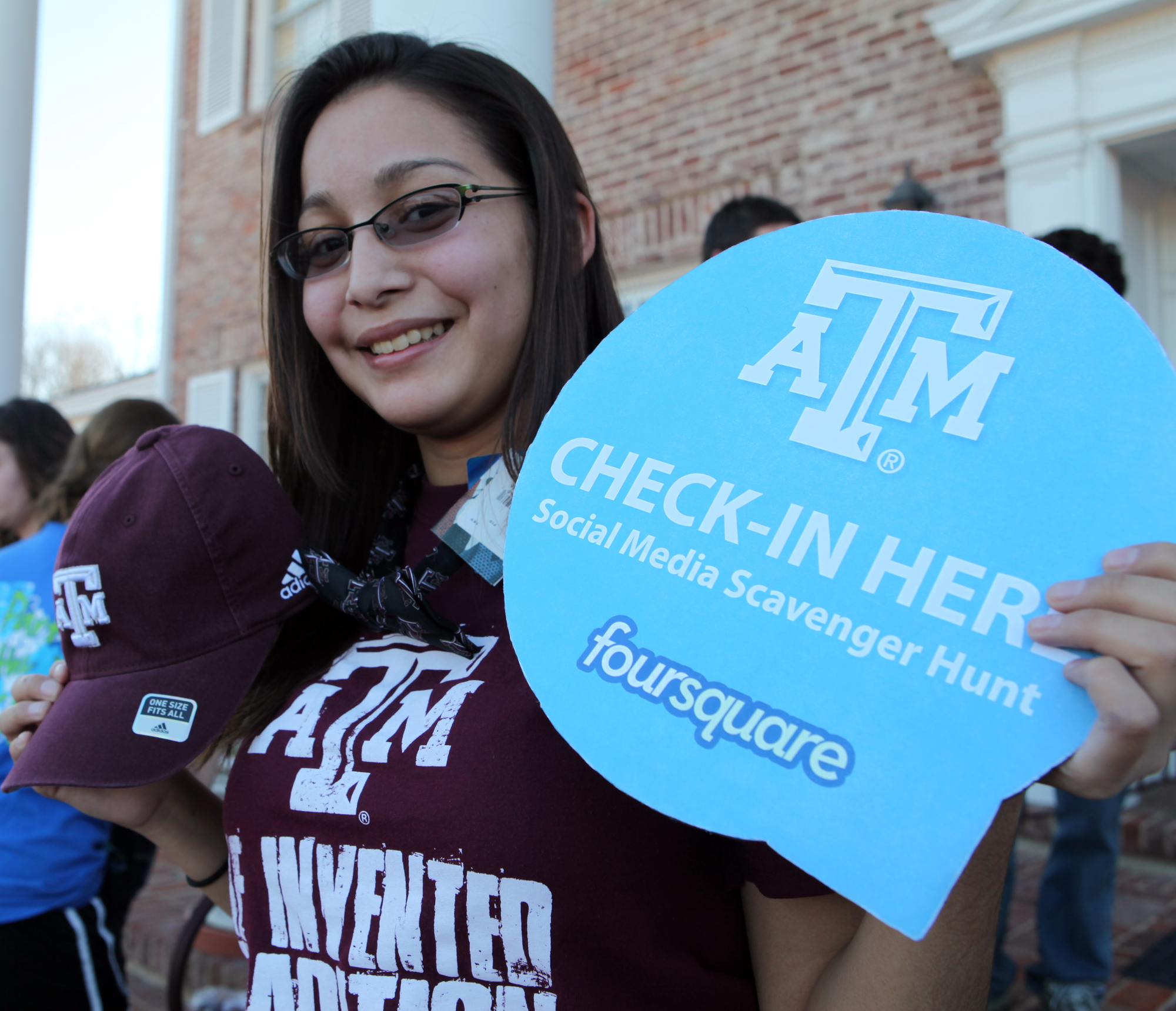
    Universities are beginning to recognize the potential value of information gathered using geosocial networks. What does 4pm look like on campus? Is the library packed? Are students working out? Applications like foursquare can also attract visitors on campus by offering “check-in” deals (ex. 10% off a shirt when you check-in to the campus bookstore), creating a self guided mobile tour of academic venues, and leaving historic information or helpful tips for different locations.

    Most importantly, foursquare is free advertising (for now). Not only that, but it can be interactive and rewarding for users, perhaps by giving away free university gear for going to the library, attending a campus event, or staying healthy at the gym. The possibilities for university marketing are endless.

    By: Hunter Wilson, Josh Vester, Ashley Oliver, Molly Jacques

  • Social Media Backlash Against Komen

    Not only do companies have to worry about negative blogs and reviews to control during an organizational crisis, but now they have to be prepared to control all sorts of social media outlets as well. Susan G. Komen had trouble with just that as they released information to the public on January 31st saying they will no longer provide Planned Parenthood with funding for mammograms for low-income women for breast cancer screening. Immediately this became a very controversial topic on social media sites such as Twitter, Facebook, and Pinterest. Many believe that this decision was made because of political pressure from anti-choice groups. This is exactly what Komen is denying and released a statement after many Komen supporters were posting very negative comments. This statement said that the decision to cut funding to Planned Parenthood was not a political move; instead it was because they now have new funding criteria.

    Interestingly, Komen and Planned Parenthood had been in contact weeks before this came out to the public. So wouldn’t you think Komen had plenty of time to realize things could get touchy? To make matters worse, Komen started to delete the negative comments on their Facebook page. What Komen did not realize is the political power of social media and many need to learn from this. When the Associated Press reported the news that funding was going to be cut, Planned Parenthood blasted news releases on Twitter and Facebook. Once Komen realized they couldn’t change the public opinion around or even slow down the negativity on social media, they reversed their decision to cut funding.

    At a time of crisis in an organization, your message and speed of that message is very important to insure the least amount of damage. Komen was not ready for this backlash of so many people on their social media sites and once they actually responded, it was brief and too defensive. On the other hand, Planned Parenthood prepared for this for weeks before it went to the public and immediately posted to get fans and supporters involved. Some ways they got supporters involved is by asking for donations, sign an online petition, to Tweet or post about it on Facebook, and since then has added over 32,000 fans. Clearly, Komen should have taken a different approach in handling their social media sites and the communication with their avid supporters.

    By: Laura Simmons, Mollie Berthold, Christina Stevenson, Dorothy Conley

  • All The Single Ladies

    Valentine’s Day is a holiday dreaded by a great deal of people, both male and female, for various reasons. There is pressure on both genders to perform, declare emotions, and out-do previous years or expectations. Those who fail at this task of grandstanding may in fact find themselves without a date for next year. Okay, so there’s a ton of pressure on people in relationships, but what about those of us who are single? While some take pride in their solitude, others wish they had someone to be their valentine, and a few twitch at the mere thought of being in a relationship.

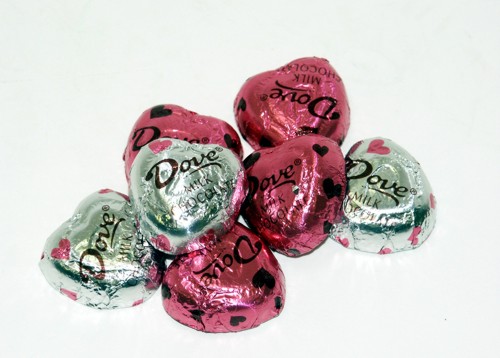
    According to an article in the New York Times, being single is a prevalent occurrence these days with 59.9 million single women in America. This staggering rate may surprise some, but companies like Dove chocolate see these table-for-one ladies as a prime marketing demographic. They hope to strike a chord with this growing independent group by catering their advertising to the women who are without companions. That is why this year Dove has made a campaign to remind women Valentine’s Day isn’t just about romance.

    Dove is banking on the stereotype that single women will turn to chocolate this year on Valentine’s Day. Instead of the standard “Call me” or “I’m yours” found on the candy hearts we used to share with our playground crush, Dove has created a host of witty comments and placed them on the inside of their chocolate wrappers. Some of the best include, “You’re gorgeous,” “Sometimes I buy flowers for myself,” “My flaws are fabulous” and even the ever so uplifting, “Love yourself in a moment.” The new commercial features women sharing their Dove chocolates with everyone from their barista to their neighbor, and most importantly, themselves. Is this a message of independence for the strong woman? Or rather, a cheap ploy based upon the assumption that women alone on Valentine’s Day will inevitably console themselves with chocolate? Either way it’s hard to dislike chocolate, especially when it’s making single girls smile and promising not to judge if we have more than one.

    By: Alexis Kapczynski, Kacy Cox, Josh Bowman, and Sara Kaloudis
  • What’s the Real Show?

    During a regulation NFL game there is a 15 minute break between the 2nd and 3rd quarters. This halftime break was originally instituted so the participants of the game could catch their breath and re-energize. During the Super Bowl, halftime lasts for a minimum of 30 minutes. Not only is that plenty of time for a player to catch his breath, that could allow him an opportunity to take a nap and check some emails. The mid-game break is actually long enough that coaches usually alter practices leading up to the big game in order to prepare their players for dealing with the extended down time. Despite this, there has never been a serious motion to shorten the length of the break. On the contrary, every few years halftime will run a little long to better accommodate the length of more extravagant halftime shows.

    This presents an interesting phenomenon. The Super Bowl, the game that decides who the best team is in the highest level of the most popular sport in America, is consistently interrupted for at least 15 minutes more than is necessary so an assortment of washed up and unknown artists can perform for a crowd that has paid at least double the average monthly income for a ticket to the game. It is widely known that companies spend millions of dollars for a chance to slip a commercial in between the biggest football game of the year, but this event has become so large that the game itself is being postponed in order to make room for the event that surrounds it. That’s the kind of marketing that is normally reserved for religious holidays and national celebrations.

    So what makes the Super Bowl half-time show so special? It is the second most anticipated part of the event, besides of course, who wins the championship.  The hype of who is performing is always a boost for the performers publicity, but what if Madonna blows it like the Black Eyed Peas did last year?  What will that do to her brand as being Madonna, the Queen of pop? There is a lot at stake when involving yourself in the biggest event of the year.  Let’s just hope there are no wardrobe malfunctions or fumbled lyrics this year.

    Read more about the halftime show here!

  • Will The Force Be With You?

          It’s Super Bowl season and we, as viewers, are ready for the stream of entertaining advertisements that keep us occupied between breaks. I’m sure everyone remembers last years buzz worthy Star Wars inspired Volkswagen commercial. How can one not be enamored with a little boy in a movie quality Darth Vader suit that genuinely startles himself by using “the force” to turn on his dad’s new Volkswagen? Beyond all the cuteness, the commercial relays the push-to-start feature that the affordable (and apparently fun) German car has to offer.
         To top its success from the last Super Bowl, Volkswagen has returned with yet another Star Wars inspired ad and the entertainment factor is undeniable. Yet what do barking dogs and Star Wars really have to do with the German automobile company?
         Advertisers take full advantage of the hype surrounding the Super Bowl to create innovative, touching, and entertaining commercials. Companies will pay extraordinary amounts of money to ensure that their commercial is seen by the millions of viewers watching the game. After all, this one time of the year advertisers can assume that almost every single American is tuning in. What company wouldn’t want their product showcased at this time? It’s like a black Friday Christmas sale for advertisers. These companies want to bring attention to their product in anyway possible, even if that means their product isn’t even mentioned until the last three seconds.
         In the Volkswagen ad, the viewer is unaware of the association between Volkswagen and Star Wars until the very end. This proved to be a very strategic move on VW’s part. Last year, companies were able to monitor which commercials made the biggest impact on viewers via Twitter, FaceBook and other popular social platforms. They measured the ad’s success by the number of times it was mentioned in the digital realm and were able to realize what struck a chord with the vast audience. What once seemed to be a hail marry concept of integrating marketing, advertising, and social media, is now an easy field goal for the IMC commercial championship. Volkswagen is betting that we will remember how fond we were of last year’s Star Wars theme and associate those same feelings with their brand this year as well. You can’t go wrong with puppies and kids, right?
    -Alexis Kapczynski, Kacy Cox, Sara Kaloudis, Josh Bowman
  • Will JoePa Rest In Peace?

    Anyone who has been tuned into ESPN recently knows that Joe Paterno, “JoePa”, was the football coach at Penn State for 42 years, starting in 1966.  In the wake of a child abuse scandal centered around Jerry Sandusky, Penn State’s former assistant coach, Paterno was fired this past November. He was the face of Penn State and his brand was ultimately tarnished due to the scandal. Some are concerned that his tainted brand will overshadow his lifelong legacy. Sadly, Joe Paterno passed away on January 22nd due to his battle with lung cancer making it impossible to mend his stained brand.

    The media has been criticized for how they handled the situation regarding Joe Paterno; some even question if the media’s involvement aided in tarnishing his brand. The question is not whether the media has a legal right to report whatever they find newsworthy because the First Amendment guarantees that they do. The issue is how media managers should employ that freedom in their own decisions about what is ethical and professionally responsible. Some may view that the media took their interrogations too far by harassing Paterno at his home and accusing him of allegations before they even knew the whole story.

    “The media jumped to the conclusion that Paterno was trying to cover up the scandal when it broke out.  Because his name is so iconic, linking his name to the scandal would attract more viewers on their websites as opposed to Sandusky… more has been written about Joe Paterno’s involvement than Sandusky in the media.” – Chris Moore, Penn State University Senior  

    Is it ethical for the media to do whatever it takes to get the story out first even if it damages a man’s reputation beyond repair? On another note, people have a right to know what is going on in today’s world, so is doing whatever it takes to get the news as bad as it seems? Some argue that the media is just doing their job and presenting breaking news to the public. It was already too late for his reputation when the news came out that Paterno had told superiors about the issue in 2002. According to the Penn State Board of Trustees, their reasoning for terminating Paterno was partially based on his failing to uphold a moral responsibility to report allegations made in 2002 against Sandusky to authorities outside the university.

    There is no question that Paterno let the victims, their families, and the university down by not pressing the issue with the police after he approached his superiors. In our opinion, Joe Paterno deserves to be remembered for who he was as a coach and as an individual; not as a man who was in over his head dealing with the worst scandal in his university’s history.

    Kelsey Bendig, Brian Burch, Brooke Keller, Andrea Blanton

  • SOPA/PIPA : The end of blogs

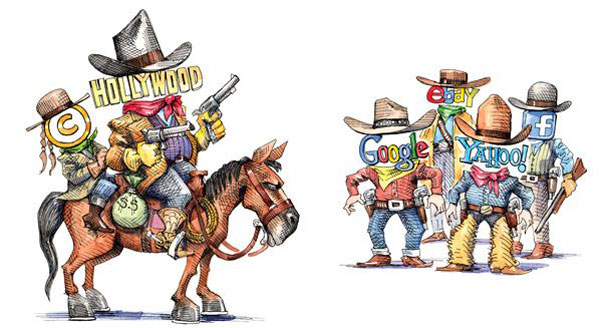
    The Internet as we know it today is vast and full of amazing features that allow us to communicate in ways that its original inventors would have never dreamed of.  What began as a way for the US government and military to communicate with each other has turned into a platform in which millions of Americans recently protested against the ominous SOPA and PIPA bills.  Today’s generation of young people have finally spoken up and we’ve seen small but significant changes as a result of our awe-inspiring protests.  Since SOPA and PIPA were shelved after an overwhelming opposition from the public we’ve lost sites that were the largest culprits of Internet piracy, such as Megaupload. This is only the beginning of what will likely be a long fight for ethical Internet laws that stop piracy and abuse without censoring creativity.

    The truth is, this blog and the billions of other blogs and content on the Internet would not exist with these bills in place.  Musicians, artists, designers, and various creative types rely on blogs to showcase their content to people they could never reach before.

    Simply featuring a product in a blog post can bring loads of traffic to brand’s site, for free! Getting featured on a popular blog is great for small businesses with tiny advertising budgets.  In fact, numerous bloggers get paid to feature and review products.  Blogs have turned in to a great source for marketing and advertising.  If a blogger whose opinions you respect recommends a product, you are more likely to believe her than the advertisement to the left of the page. Blogs are not new, but the concept of using blogs to bring brand awareness and reach new customers is new to Integrated Marketing Communication, as is the practice of IMC itself.

    Lets hope we find an ethical solution that will keep blogs, social media, and the creative exchange of ideas still alive.

    -Molly Jacques