Tag: Social Media

  • Remember When… Social Media Was Not Overrun With Ads?

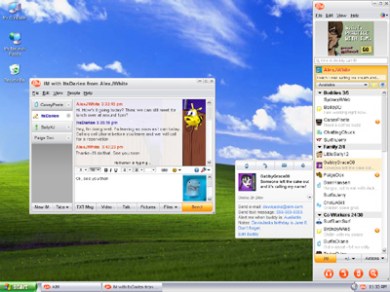
    Do you know how to transfer your buddy list? What is your Myspace song today? Why did you lower me in your Top 8? Where did you get your buddy icon? Remember when these were your biggest worries on social networking? Nowadays, a social networker must be fully aware of everything they post, every picture they are in, and even everything they click on.                            Image
    When social media first began, it is doubtful that anyone could have predicted where it is today. Employers search Facebook, Twitter, and LinkedIn before hiring new staff. School systems are implementing cyber bullying policies across the nation. Even our parents are sending us friend requests. It is hard to come by someone who doesn’t have a Facebook or Twitter. Due to the popularity of social media, it is no surprise advertisers want to tap into this huge online market.

    Image

    What began with AOL Instant Messenger, evolved into the Myspace fad, and now Facebook, Twitter, FourSquare, Pinterest, LinkedIn, and Instagram have joined the scene. After Myspace died out, there was much debate about how long Facebook would last. With the help of advertisers, it seemed like it could potentially last forever. Unfortunately, with the rise of other social networking sites, Facebook has seen a less than desirable decline in popularity. Now Mark Zuckerberg, the CEO of Facebook, is having to persuade advertisers to continue investing. In an interview covered by ABC News, he “[promised] better results as Facebook’s mobile app is made friendlier to advertisers.”

    What does this mean for users?  More advertising headed your way! If you’ve seen Facebook’s login page lately, you might notice that it has officially been sold. It is hard not to notice as it takes up more than three-fourths of the screen. When Myspace sold their front page, it was the first sign they were not cutting it anymore. Does this mean Facebook’s “in” time is ending soon too? Not if Zuckerberg can help it.

    You might notice the sidebar ads following more closely to your internet searches. As Facebook tries to evolve to keep up with the market, Zuckerberg stated that he would like to make Facebook a search engine that could compete with Google. It is no coincidence that the items you were looking for on Amazon a couple of days ago are popping up in the ads you see on Facebook.  Long gone are the innocent days of simply “lol”ing with your buddies on AIM.  It seems now more than ever before the public will become a constant target for advertisers.

    Will this increase in advertising on Facebook lead to a shift in which social network is the most popular? Will Instagram and Twitter combined be able to wipe out Facebook? Would it even matter because Facebook owns Instagram? Or will the dark horse network, Google +, take the internet by storm?

    G2G. Mom needs the comp. TTYL 🙂 ❤

    Alexandra Huss, Caroline Merrill, Alyssa Morrello, Lauren Van Trigt, Daniel Williams

  • “Tweeting” the Way (Back) Into the White House?

    This Labor Day weekend, as thousands of North Carolinians made a trek to the beach, others headed inland to Charlotte in anticipation of the Democratic National Convention and the preliminary festivities. On Monday, the excitement was palpable in Uptown as “CarolinaFest” served to get audiences pumped up for the opening day of the DNC. The streets were overflowing with vendors, street performers, temporary exhibits and thousands of chanting supporters, who all came together in celebration of North Carolina’s first-ever national convention.

    After experiencing the fervor first-hand, it was hard to imagine that (as right-leaning media suggested) the Democrats would have problems filling seats at either venue where the speeches were originally scheduled to be given. Convention officials were unfazed by this possibility and rightly so; enthusiasm at the event and via social media was at an all-time high for the first night of speeches. Signs were hung from various booths in the heart of the DNC activities to “keep calm and Tweet #DNC2012” and on the first night of speeches, viewers all over the country did just that.

    In the opening night of DNC speeches alone; the continuously trending  topics #DNC2012 and comparable terms received almost 3 million tweets…roughly 3/4ths of the final tweet count (taken over the entire three-day period) of the Republican National Convention. While all of the openers were well received (the numbers don’t lie!), the most prominent twitter conversations took place during the speeches of the Mayor Julian Castro (of San Antonio, TX.) and our First Lady, Michelle Obama.

    Mayor Castro’s speech peaked at 11,503 tweets per minute (TPM) which was higher than all of the GOP speakers excluding Mitt Romney himself. However, the “magic” really happened when Michelle Obama took the stage to officially open the convention. Peaking at 28,003 TPM, Mrs. Obama’s speech received twice the amount of “Twitter action” than Mitt Romney’s GOP acceptance speech, which saw 14,289 TPM at its peak. It is truly remarkable that one 25 minute speech could garner so much attention and foster a virtual discussion of mammoth proportions. While the content of the tweets in question undoubtedly varies, the important thing is that it got people talking.

    The use of twitter as a forum for political discussion and debate among average Americans and major media entities alike continues to grow and evolve as we near the 2012 election season. Will this explosion of Democratic enthusiasm continue all the way to the polls? Only time will tell. One thing is for certain: Democrats are using all of their available media to ensure that their voices are heard.

    (The twitter stats listed above were taken from the Twitter Blog (http://blog.twitter.com/) additional information regarding the DNC can be found at http://www.demconvention.com/ )

    Lauren Habig , Gene Lee, Hannah Eure, Erin Kiffmeyer, Ally Walton

  • Barefoot? Not with TOMS Shoes!


    Many of us are familiar with the shoe brand TOMS. The company, started by Blake Mycoskie, commits itself to donating one pair of shoes to a child living in poor conditions for every pair of shoes it sells. TOMS’s program of giving was the result of its owner traveling to South America and finding that many children were contracting diseases through their bare feet, as they were unable to afford or obtain shoes. Mycoskie decided to manufacture his company’s shoes in an eco-friendly and vegan manner. TOMS are made using supplies from an organization, Livity, specializing in “low environment impact materials” (information based on a 2008 interview between Mycoskie and San Diego Loves Green reporter Allie Bullock Kagamaster).

    Not only does TOMS market their product as a philanthropic exercise, but it also markets itself as an organization dedicated to environmentally sound products. The company is able to create establish integrity for its product among potential customers who are concerned with social and environmental issues. Partnering social and environmental values, allows TOMS products to stand out amongst competitors.

    TOMS has gone a step further than its usual shoe donation program; by implements its “One Day Without Shoes” campaign. This campaign is meant to raise awareness of the dangers faced by individuals who do not have shoes to walk in, in areas where environmental conditions, such as chemical contamination and littering of glass, syringes and debris, can cause multiple diseases. “One Day Without Shoes” also encourages individuals to buy shoes from the company so that TOMS can donate shoes to these individuals.

    The “One Day Without Shoes” campaign is designed in a way that the company’s customers and followers can actively participate in it. When going to the company’s website, a person can email the page to their friends and family, post it on Facebook, or follow the campaign on Twitter. This implementation of social media shows that TOMS Shoes is aware of the powerful impact individuals can have when marketing a message, just by sharing information with friends on social media they are already using, and that can be viewed by mass numbers of friends and peers.

    Also on the campaign’s website, TOMS Shoes encourages individuals to share videos and photos of themselves without shoes and an explanation of what the experience meant to them. Followers can find their own marketing devices to spread the word of the campaign on the website. Rally signs, street stencils, pocket info cards, stickers, profile pins and banners, DIY t-shirts, and displays can be downloaded from the campaign’s website for the event.

    “One Day Without Shoes” has also found many corporate partners to participate in its campaign. These partners are Aol., Discovery, essie, flickr, just wink by American Greetings, Kiehl’s, Kind Healthy Snacks, and SIMS. The “One Day Without Shoes” campaign shows the ways in which organizations rely on various societal values and corporate marketing techniques to draw attention to their brand or promotion.

    -Ashley Oliver,Hunter Wilson, Josh Vester, Molly Jacques

  • An “Augmented” Look Into the Future of Advertising

    Last week Google unveiled Project Glass, their latest developmental project set out to design and build augmented reality eyeglasses. Google upload a video to YouTube entitled “Project Glass: One day…”, which shows viewers what Project Glass could potentially look like. Project Glass would allow you to communicate with friends, schedule appointments, get directions, take pictures, and even hold video conferences all by using the augmented reality interface and voice commands. While this technology is in the earliest stages of development, Project Glass has the potential to be a realistic and marketable product in the future.

    While the announcement of Project Glass is only a week old, there is already concern about user privacy and advertisements. Google already uses search terms to customize advertisements, and are even beginning to push ads based on your location, so just how far would Project Glass go? Would advertisements pop-up in front of you if you are close enough to a store? Could marketers use where you go and what you look at throughout the day to better understand what type of consumer you are? The parody video below shows how pop-up ads with Project Glass might look if they were implemented:

    While this idea of “forced advertising” seems a bit extreme, it’s already happening with several other projects. Twitter now adds Promoted Tweets to your timeline, which are sponsored announcements from businesses that merge together with the other tweets from people you follow. Pop-up ads are common with free Android and iPhone apps, and some applications even send ads as a notification. Amazon sells discounted Kindle e-Readers with “special offer” advertisements that appear on your screen. It seems that with every new piece of technology, the first idea that is addressed is how to advertise on it. With Project Glass, the possibilities for customized advertising are much more personal. How will marketers adapt to changing technology? Will consumers be willing to sacrifice their privacy and accept interruptive advertisements in order to use Project Glass? Only the future will tell.

    -Hunter Wilson, Joshua Vester, Ashley Oliver, Molly Jacques

  • Learn about Communication Studies at COM Studies Day

    When Communication Studies majors share their idea with others they are often met with a variety of  questions. These questions often range from “what is Communication Studies” to “what on earth are you going to do with that?!,” and can leave the student wondering just why exactly did they pick this major in the first place. Fortunately the UNCW Communication Studies department is hosting its annual Communication Studies Day this Friday and will answer many of these questions.

    The Communication Studies Day  will have panel presentations of UNCW graduates from the major discussing their careers and experiences since college. Students will be able to hear from individuals who are currently doing things with their Communication Studies degree that they are considering doing after graduating, such as marketing, graduate school, broadcasting, and public relations. Many of the panelists graduated recently and will be able to relate to the students attending the presentations as they only recently were in the same point of approaching graduation and having to decide what they wanted to do and how to go about it. There will also be networking sessions for students to speak with faculty, friends and alumni. Another aspect of Communication Studies Day is the Dress for Success fashion show, in which attendants will get to see outfits of business casual and business professional attire. Attire is an important component of a professional image and many students are unsure about how they are expected to dress for a successful career.

    photo

    Communication Studies Day is not just an event that is simply put on by faculty and that students can show up to if they want to. The event is being  coordinated and marketed by UNCW Communication Studies students. Dr. Persuit’s IMC II class will be tweeting, posting photos, and sharing information about the event as it is occurring on this blog. Individuals can learn more about the event by following #DressForSuccess2012 and #COMStudiesDay on twitter.

    ~Molly Jacques, Josh Vester, Ashley Oliver and Hunter Wilson

  • What’s Your Unique Brand Style?

    UNCW’s Communication Studies Day includes an informative Dress for Success Fashion show for college students of all ages and levels. The fashion show will also include skits demonstrating the importance of an elevator speech, professional attire, portfolios, and how necessary it is to be prepared for interviews. This year the theme, “Will You Make the Cut?” is based upon the Food Network show “Chopped.”

    One idea about IMC manifested in this fashion show is that company image and brand management is very vital for growth and success. Individuals, as well as companies, have always had their own image and have to manage their own brand. It is sometimes hard for college students to transition from a student image that they have had for the past 13 years to a business professional image. The great part about the fashion show is that it shows students how to transition from their current image and brand to something more professional.

    Whether people realize it or not, we are branding ourselves every day through the types of clothes we choose to wear in professional or unprofessional settings. Your unique brand style can be a description of who you are in a job interview setting. It is very important to make interpersonal connections with job interviewers through your developed style and authenticity that will make you stand out from others. Branding yourself when looking for a job is very similar to branding a product. Basically, you are selling yourself as a product to your potential employer with the goal of standing out amongst the rest. Are you casual business, formal business, chick, trendy, preppy, classic, or a hybrid of several?

    By: Laura Simmons, Mollie Berthold, Dorothy Conley, Christina Stevenson

  • Shave Time. Shave Money. Go Viral.

    You may have seen the latest viral ad campaign that has surged through the Internet and created quite the buzz. It’s a video from DollarShaveClub.com, a recent startup company that ships high quality razors for as little as $1 a month. The video has reached close to 700,000 views on YouTube in just two days.

    The video features Michael Dublin, founder and CEO of Dollar Shave Club, leading the viewer through the company’s warehouse. Michael claims that their blades aren’t just good, they’re “f***ing great”. Michael continues by bashing the competition and “fancy razors” with high-tech gear, saying how handsome your grandfather was with just one razor. The level of absurdity in the video has been compared to the success of the Old Spice campaign, which features deadpan humor and ridiculous situations.

    The marketing campaign may have been more than Dollar Shave Club bargained for. The reaction was so strong that the company’s website crashed soon after the video launched due to the amount of traffic they were receiving. With the website shut down, Dollar Shave Club potentially lost revenue from the overwhelming demand. In the world of modern business, success can literally happen over night, as displayed by Dollar Shave Club’s huge viral impact. With startup companies trying to get their name out there in the fastest and cheapest way possible, creating a hit video may be the way to go, as long as your prepared for the traffic flow afterwards.

    The popularity of the campaign raises some questions regarding the changes in modern advertising. Having your CEO star in a video where you pronounce that your blades are “f***ing great” is risky,  but it seems that the risk, blatant honesty, and the ability for a company to poke fun at itself is what drives a business to viral success. In comparison to the Old Spice campaign, Isaiah Mustafa’s character became so popular that Old Spice went beyond TV adverts and began answering viewer questions on YouTube. While this is still just a character that sells deodorant, it became much more than that to viewers because it didn’t feel like a commercial. If commercials have a self-awareness of what they are, the audience recognizes that awareness and is more lenient to simply enjoy an advertisement as entertainment. Perhaps this is what Dollar Shave Club was going for, simply telling people what they are in the most honest, exciting, and fun way that they knew how.

    By: Hunter Wilson, Josh Vester, Ashley Oliver, Molly Jacques