Tag: Pepsi

  • Pepsi: Born in the Carolinas

    Many large brands use their historic background to promote their product. Pepsi Cola, a known trademark product distributed all over the world, uses their product’s birthplace to market and draw in more customers. Pepsi recognizes the push to buy local as they advertise heavily in North Carolina, as well as adjacent states. “Born in the Carolinas” is an official trademark of Pepsi Cola. New Bern, North Carolina is the location where Pepsi was first invented in 1898 by a local pharmacist and University of North Carolina at Chapel Hill graduate named Caleb Bradham. According to the official Pepsi Store website, http://www.pepsistore.com/, the “Birthplace of Pepsi is owned and operated by the Minges Bottling Group located in Ayden, North Carolina, and first opened the doors to the Birthplace of Pepsi Store on the 100th Anniversary of Pepsi-Cola in 1998.” Seventeen years after the invention by Caleb Bradham, a man named Roy C. Megargel, a well-known broker, bought out Pepsi-Cola as well as the Pepsi trademark and immediately formed the Pepsi-Cola Corporation as it is known today.
    When Pepsi was founded in 1898, it was originally called “Brad’s Drink” and was later patented as Pepsi-Cola. In recent years Pepsi has released a series of new ad campaigns aimed at reviving sales of its brand. Sales of the Pepsi beverage have recently been declining compared to its number 1 rival Coca Cola. To more effectively advertise and increase sales, Pepsi marketed a new advertising campaign that aims to “capitalize on rising soft drink sales,” which have been in tight competition with the variety of Diet Coke products. One of the most recognizable TV commercials openly takes a shot at their rival Coca-Cola brans, by starring Santa Claus shunning a Coca-Cola in favor of a Pepsi. The company has also since spent close to $60 million on a promotional deal with the popular show “The X Factor.”Coca-cola still outsells Pepsi worldwide and in most of the US but there are exceptions such as India and Guatemala. Also, in Buffalo, New York, Pepsi outsells Coca-Cola nearly 2:1. Pepsi continues to attempt to improve their brand as they compete with Coca-Cola and other soft drinks.
    Pepsi has had a vast variety of slogans over the years. The first slogan was “Twice as Much for a Nickel” and lasted from 1939 to 1950. Since then, there have been many more Pepsi slogans including “Say Pepsi, Please” (1957), “The Choice is Yours” (1992), and “Live for Now” (2012). In the 90’s they also had a mascot named “Pepsiman” who appeared in 12 different commercials delivering Pepsi to quenched individuals. He even appeared in a few video games as well before they retired him.
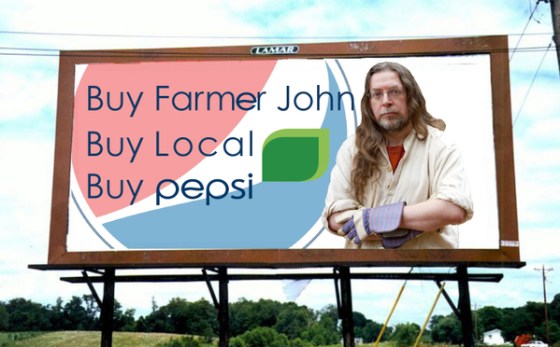
    Even though Pepsi has practiced many marketing strategies over the years in an attempt to outsell competitors, they have always stayed loyal to North Carolina. With the economy in such a state, local governments are urging citizens to shop local. Pepsi has recognized this marketing fad and has hopped the bandwagon. Though there are many Pepsi distributing centers worldwide, the birthplace will always be New Bern, North Carolina, which makes “Born in the Carolinas” a lasting slogan.

    Sasha De Vecchi, Lindsay Gallagher, Jay Reilly, Cary Welborn

  • To sponsor or not to sponsor…

    Penn state is an iconic brand it itself. This brand’s football team alone generates $53 million in revenue annually from the football games, and the entire athletic program receives an additional $24 million in sponsorships and merchandising deals. The team’s brand: The Nittany Lion, has been in jeopardy since the sexual abuse scandal began unraveling and continues to be making headlines in the news. With the story still on the minds of students and faculty, it is still a heavy situation for the sponsors of the school and team. Pepsi announced on Wednesday that it will remain a sponsor of the school and its team. Pepsi has been one of the university’s largest corporate partners, and is on prominent on both in both the sports stadiums as well as Penn State’s main State College campus. In its original deal with the school in 1992, Pepsi Co. paid Penn State $14 million over 10 years for exclusive vending and advertising rights. In this deal, soft drinks are served in Pepsi cups on game day and the signage is anchored by a permanent Pepsi logo on the scoreboard of the 106,537-seat football stadium.

    The Penn State situation eerily reflects the Tiger Woods scandal along with his loss of sponsors. The status of Penn State’s other advertisers other than Pepsi remains uncertain. Mohegan Sun Casino in Uncasville, Conn, on Wednesday expressed that the casino’s deal with Penn State football “technically” ended for the year. Penn State also has sponsors from AT&T (T), Berks Hot Dogs and Chesapeake Energy (CHK). For now, these sponsors still remain, but the future of their sponsorships of the university are uncertain.

    Other high-profile sponsors such as Chevrolet, PNC Financial, John Deere, State Farm Insurance and the American Red Cross are staying put for now. So what does this all mean? Large corporations are also in jeopardy of being in the line of fire for continuing to sponsor a school that has done nothing to protect victims of sexual molestation. Iconic Brands like Penn State and Pepsi have a developed a strong relationship over the years, and will continue to keep their partnership. It poses the question that when is a situation too much for a corporation; what is the breaking point? With modern-day heroes such as Joe Paterno (Penn State) and Tiger Woods, being the center of major scandals which in turn led to the loss of major sponsorship and thus embarrassment for them and their sponsors;  is it in the best interest of Pepsi to remain with Penn State? You be the judge?

    — Michela Noreski, Jordan Hill, Ashley Nelson

  • Ad it all up

    The anticipation of the 2011 TV line up is almost complete as we
    are wrapping up the first week of an intense premiere season. Coming soon we
    will view the Nielson rating which will say which show came out on top with the
    most viewers and what networks picked the best shows to debut. However, there is
    more to just ratings from a show that make it popular, there are strategies
    weaved into placing certain advertisement’s along with the viewers of those
    shows.

    When watching the recent Emmy award-dominating force, Modern
    Family, on Wednesday
    evening
    ,  did you notice that actress Sofia Vergara, who plays the role
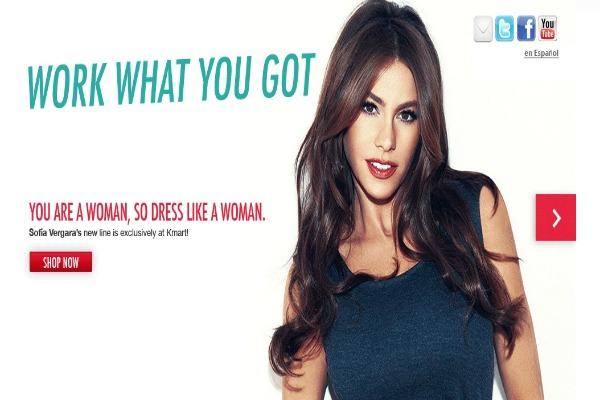
    of gorgeous Gloria Pritchett, debuted her new clothing line at K-Mart for the “
    You are Woman, So dress like a Woman line”? Maybe the nostalgic 60
    second Pepsi commercial caught your attention while watching the hit show X
    Factor on Fox which took the audience on a journey through the
    past. The commercial starts off as a new performer about to enter
    the stage but before he goes on he picks up a can of Pepsi, takes a swig, then
    stares at the logo it then evokes emotion from the new performer and, it
    sends him into a tumbling daydream full of Pepsi’s pop stars past commercials,
    such as the late Michael Jackson, Ray Charles and Mariah Carey to name a few,
    then you are left to a blurred vision of this man about to enter the stage and
    become his own start like those who drank Pepsi its first big brand spot touting
    its connection to the program.

    Is it a coincidence for both of these commercials to premiere
    simultaneously with these shows? You would be silly to consider such a
    thing. Thematically, the spot placement of each advertisement is
    seamless. Pepsi really is wondering who will become the next, since they have
    promised the winner of The X Factor a starring role in a Super Bowl commercial
    this winter.  Sofia Vergara knew she had the “mom” and “working
    women” audience during the Modern Family season premiere; ABC and Sofia knew
    those mom’s and working women were those who helped nominate her for the 4
    Emmy’s this year. It was a perfect fit for one of the highly anticipated comedy
    shows to integrate Sofia’s personal achievements.

    The Nielsen rating suggests that consumers are watching TV more
    than ever before, which makes what they are watching an integral and essential
    part of a marketing campaigning for brands. This is there one opportunity this
    fall season to make impact on those targeted viewers to entice them to purchase
    a can of Pepsi over Coke, or that leopard Mini skirt at K-Mart over the
    over-priced department stores. These are ad placement strategies, brands and
    networks have merged together to get more bang for your buck.

    – Jordan Hill, Ashley Nelson, Michela Noreski

  • Healthy Competition

    Ever heard of the term “Healthy Competition?” Well perhaps instead of seeing competition as a driving negative force behind brands going head to head in their advertisements (i.e PCvsMAC or PEPSIvsCOKE), we as consumers actually get an insight into a wider variety of products that we can choose to purchase/support.

    First, let’s look at the how competition helped, rather than hurt, pepsi/coke in these advertisements.

    Coke zero was implemented into markets in 2006, starting out in western Europe. Considering it is still in stores, selling out shelves and soda machines is not only encouraging, but motivating! Just after two years of selling and marketing this new Coke product, sales went up 34% from when Zero began! USA Today reports, “Men are about 45% of Diet Coke drinkers but about 55% of Coke Zero buyers. It has a stronger, more Coke Classic-like flavor and seems to be holding onto Male customers who’ve become more calorie-conscious with age but still want more flavor than most diet colas.”

    Seeing the success in Coke Zero, Pepsi knew that such a strong competitor couldn’t go unnoticed. While PepsiMAX was created in 1993, Pepsi took action in response to Coke Zero’s success, as they strategically changed their name “Diet Pepsi” to “PepsiMAX” in 2009. These advertisements prove that the two companies have the exact same product, can cause argument between better tastes, but ultimately, they are putting each other in the spotlight for the consumer to decide for themselves.

    Also, PC got their fair share of shots from MAC, with the MACvsPC commercials featuring Justin Long and John Hodgman.

    MAC took focus on how much “cooler”, more “Attractive”, more “Stylish” and efficient their models were to PC. One can’t deny that these commercials weren’t strategic, effective, and fun to watch, but they were so hard to touch on PC’s weaknesses that Window’s gained enough strength to improve and implement an entire new Vista system.

    It mimics the idea of MAC’s leopard operating system, all while adding non-mac features like the tablet touch screen, TV recorder, and WiFi with WPA 2 support. But what did MAC do in return? Welcome, Snow Leopard.

    So hopefully we see now that competition is nothing short of evoking advancements in every product/line in the business. Competition helps business’s not only thrive upon existing technology, but drive improvements and innovations in this evolving economy.

    -Maxann Keller