Tag: Marketing

  • S.O.S.

    The night has progressed and you are about to make your move when the inevitable question arises, “do you have a condom?” This is the premise that Durex has based their new campaign on. The S.O.S. campaign is an “app powered” one-hour condom delivery service discreetly operating between 4pm and 4am. When one first runs across this ad they may think it is a parody, but this is a service that already exists in certain cities, such as Dubai. The company plans to further expand the campaign to more cities. In today’s busy world, everyone loves a delivery service. How else would we get our last-minute pizzas, packages, flowers…condoms? The new Durex campaign, launched by the Buzzman firm, is ingenious and definitely outside the realm of normal advertising. The unique aspects of this campaign clearly exemplify why this firm has been credited with the development of captivating campaigns in the past. Future endeavors should not be far behind when examining their exciting new usages of message, labels, and systems.

    S.O.S. (short for “Save Our Souls”) is globally recognized as a distress signal. Viewing the YouTube commercial on Durex condoms it is evident that the sense of urgency, emergency, distress (if you will) associated with an S.O.S can easily be transferred to something less immediately life-threatening.  It was genius to associate their entire campaign on the premise that this product and service is not only a service people may want, but a good they most definitely NEED!  The name itself alerts potential consumers of this product to the fact that it could be important for their lives.  Buzzman of Paris is the firm credited for the original development of this campaign, which may explain why Paris is the leading city in votes for implementation of delivery service (or is it because Paris is truly the city of love)?  Either way there is definitely potential for geographic growth.

    sos_condoms

    http://www.sos-condoms.com/

    Not surprisingly, YouTube is a vehicle for advertising both the product and service.  Social media is being adopted by most modern businesses as a way to connect with audiences on a personal level which allows them to identify and solve the needs and wants of their target audience. The sensual and provocative usage of filming in the commercial fits perfectly the “edginess” that the campaign strives for, while remaining appropriate to the standards of social media. Not only does this medium provide unlimited amounts of information, it builds brand image and is yet another way to gain valuable information about its consumer.  A win-win for Buzzman,Durex and the customer!

    Retailing is the sales of goods and services from businesses to the end users. Durex, in this retail plan, concentrates on its brand image and loyal consumers for selling the product itself (the condom) but this plan furthers the retailing process by integration of a new supply chain of their product.  Rather than purchasing their products by the counter at a pharmacy, or even online, the timeliness and personal service is considered.  Why should pizzas be the only show in town?  Condoms have hit the big time in this retail venture.  It should be interesting to see how this takes off.  The worst-case scenario is that Durex gets people talking, and their condoms “protect” Buzzman’s reputation for fresh ideas.

    – Zach AbramoCallie FenlonLauren Habig,  Alexandra HussMichael Nunes,Daniel Schaefer

  • The Old and The Reckless

    The commercials from last Sunday’s Super Bowl have been flooding social media sites as they get passed around by friends. The Taco Bell “Viva Young” commercial has been  particularly popular with over two million views on YouTube. The commercial starts with a nurse at a retirement home putting an older man to bed. Then the old man sneaks off with friends to acquire the life of the young and, of course, “Fourth Meal” at Taco Bell.  This unusual group of pranksters are seen pool hopping, lighting firecrackers and even getting down in the clubs. The group building up a hunger ends their night at the Taco Bell Parking lot, and walking back to the retirement home as the sun rises. The song “We Are Young” by Fun, is played in Spanish (of course)to maintain brand continuity. Interestingly, that particular song became popular during last year’s Super Bowl; when it appeared in a Chevy commercial.

    While watching the game, a friend said “talking babies and crazy old people always make the best commercials”. It is interesting to me that the most entertaining commercials are based on events that do not happen often (or at all!) The concept of “old folks” having partying hard and reliving their youth is entertaining and hilarious. This idea has been used before; the artist Modestep released a music video for their song “Sunlight”. This video was posted on YouTube on July 3, 2011 and has over twenty-two million views. The Modestep video has the same idea as the commercial but is not censored by the FCC. The Taco Bell commercial is a “clean” version of this music video as much of the material is not suitable for U.S. television. It Is remarkable to see music culture influencing the types of commercials we see.

    The stylistic features of the commercial and music video are similar. Certain aspects, such as the shot angle and exposures, are close to the same. The idea of the older people going crazy and partying hard that Taco Bell portrays take you by surprise, particularly while considering that most of the commercials promoting their unique concept of “Fourth Meal” have been targeted to their younger consumers (who are more likely to be up late). This commercial appears to actively debunk the stereotype that elderly people are typically in bed by nine. It is interesting to see the commercial feature a group of people who may or may not consume Taco Bell given the primary target audience of most Super Bowl ads. Is this an opportunity for Taco Bell to expand to more mature (or not-so-mature) markets or just another opportunity to entertain the younger population at the expense of the older one? Regardless it is a reminder to “Live Mas” and while doing so, fill your hunger with Taco Bell.

    – Zach Abramo, Callie Fenlon, Lauren Habig,  Alexandra Huss, Michael NunesDaniel Schaefer, Dann Williams

  • Pepsi: Born in the Carolinas

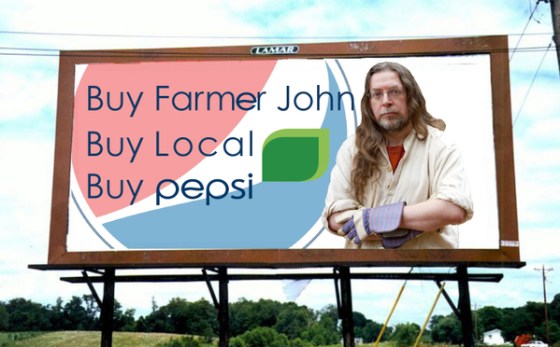
    Many large brands use their historic background to promote their product. Pepsi Cola, a known trademark product distributed all over the world, uses their product’s birthplace to market and draw in more customers. Pepsi recognizes the push to buy local as they advertise heavily in North Carolina, as well as adjacent states. “Born in the Carolinas” is an official trademark of Pepsi Cola. New Bern, North Carolina is the location where Pepsi was first invented in 1898 by a local pharmacist and University of North Carolina at Chapel Hill graduate named Caleb Bradham. According to the official Pepsi Store website, http://www.pepsistore.com/, the “Birthplace of Pepsi is owned and operated by the Minges Bottling Group located in Ayden, North Carolina, and first opened the doors to the Birthplace of Pepsi Store on the 100th Anniversary of Pepsi-Cola in 1998.” Seventeen years after the invention by Caleb Bradham, a man named Roy C. Megargel, a well-known broker, bought out Pepsi-Cola as well as the Pepsi trademark and immediately formed the Pepsi-Cola Corporation as it is known today.
    When Pepsi was founded in 1898, it was originally called “Brad’s Drink” and was later patented as Pepsi-Cola. In recent years Pepsi has released a series of new ad campaigns aimed at reviving sales of its brand. Sales of the Pepsi beverage have recently been declining compared to its number 1 rival Coca Cola. To more effectively advertise and increase sales, Pepsi marketed a new advertising campaign that aims to “capitalize on rising soft drink sales,” which have been in tight competition with the variety of Diet Coke products. One of the most recognizable TV commercials openly takes a shot at their rival Coca-Cola brans, by starring Santa Claus shunning a Coca-Cola in favor of a Pepsi. The company has also since spent close to $60 million on a promotional deal with the popular show “The X Factor.”Coca-cola still outsells Pepsi worldwide and in most of the US but there are exceptions such as India and Guatemala. Also, in Buffalo, New York, Pepsi outsells Coca-Cola nearly 2:1. Pepsi continues to attempt to improve their brand as they compete with Coca-Cola and other soft drinks.

    Pepsi has had a vast variety of slogans over the years. The first slogan was “Twice as Much for a Nickel” and lasted from 1939 to 1950. Since then, there have been many more Pepsi slogans including “Say Pepsi, Please” (1957), “The Choice is Yours” (1992), and “Live for Now” (2012). In the 90’s they also had a mascot named “Pepsiman” who appeared in 12 different commercials delivering Pepsi to quenched individuals. He even appeared in a few video games as well before they retired him.
    Even though Pepsi has practiced many marketing strategies over the years in an attempt to outsell competitors, they have always stayed loyal to North Carolina. With the economy in such a state, local governments are urging citizens to shop local. Pepsi has recognized this marketing fad and has hopped the bandwagon. Though there are many Pepsi distributing centers worldwide, the birthplace will always be New Bern, North Carolina, which makes “Born in the Carolinas” a lasting slogan.

    Sasha De Vecchi, Lindsay Gallagher, Jay Reilly, Cary Welborn

  • Have You Experienced the Rainbow?

    If you haven’t been to the Skittles website in a while (or perhaps, ever) now would be a good time to take a peek.  What you might expect to be a typical site, designed to provide advertisement and purchase opportunities, has undergone quite a facelift.  Unlike most sites, the website for Skittles has been reborn as a social media machine disguised as a blog.  Near the top of the page is the familiar Skittles slogan, “Taste the Rainbow.”  Scroll down a bit, and you’ll find an entirely irrelevant tweet from the Skittles Twitter account. @Skittles says, “It’s all fun and games until the chinchillas show up with the karaoke machine.” Next come a few phrases like “lace the train slow,” “trace the vein bro,” and “encase the faint glow,” all with coordinating pictures and all rhyming with the original slogan of “taste the rainbow.” Add a few quirky videos, more interesting tweets from fans, and many opportunities to share things via social media, and  you’ve pretty much summed up Skittles’ entire online marketing tactic.

    The Skittles commercials take on a similar level of oddity as their website.  Whether it’s a teenager catching “Skittles pox” from a “highly infected” friend with the message to “contract the rainbow,” or a guidance counselor eating Skittles out of a student’s unibrow with the message to “pluck the rainbow,” these commercials seem to be getting stranger and more extreme year to year.  So, do these weird messages work to promote their product?  Their 23 million Facebook fans, 47,000 followers on Twitter, and nearly 10 million views on YouTube would suggest that they do.

    As a product that has been a favorite with candy-lovers since their appearance in 1979, Skittles has little need for getting their brand noticed so much as keeping their brand relevant.  That’s exactly the idea behind their weird marketing.  By showcasing their social media followers on their website, and giving fans something different to talk about, Skittles is making people rethink what they already know about Skittles and driving them back to their brand.  The genius behind this tactic is that the product hasn’t changed.  What they are changing is stated right at the top of their site.  “Experience the rainbow.”  Skittles is changing the whole experience associated with their little chewy candies in a colorful shell to be more exciting and hilarious than before.

    What seems to appeal to consumers these days, especially to Skittles’ target market of pre-teens and adolescents, is the eccentric and the humorous.  Skittles has mastered both of these arts.  Not only are they staying relevant, they’re staying interesting.  As advertising trends continue to shift, Skittles will doubtless continue to meet the needs of their consumers and remain a favorite fruity snack to all.  The only question now, is what comes next.

    Ally Walton, Hannah Eure, Gene Lee, Lauren Habig, Erin Kiffmeyer

  • Reframing Our Reality

    This week the Department of Communication Studies was lucky enough to host Dr. Jacob Storch. Dr. Storch is the Senior Director of the consulting firm Attractor. His practices range from different areas such as organizational communication, coaching, leadership development, and organizational change. Within his lecture he focused on the application of communication theory to real world organizational practices.

    Dr. Storch brought some interesting ideas to the COM Department. He emphasized the impact the language we use can have on our reality. Language is a fluid, ever developing system. By consciously choosing the way we label the world around us, we can purposely affect the situations that are presented to us. Dr. Storch gave an example of a choice he was faced with when the economy began to look bleak. His company wanted him to address the “recession” and he chose to speak about “re-session.” Instead of focusing on the challenging times ahead, Dr. Storch challenged his colleagues to “re-session.” He explained re-sessioning as thinking of the market in a new, open mindset. As consultants, he said, they should begin to prepare for new questions that clients will have in the face of an unpredictable market and anticipate the changes that may arise in client needs.

    As we continued to listen to Dr. Storch’s lecture we began to notice his infectious realistic optimism. His example was just one demonstration of the impact our language can have on our world. By reframing the way we talk about our reality, we can positively impact the messages we send via language. Gatorade is a strong example of how positive language can impact a brand’s narrative. By promoting ad campaigns with headlines like, “Win from Within” and “Everything to Prove,” Gatorade is motivating their consumers to push their limits and give it their all with a positive and inspiring message. Their word choice intentionally gives their consumers a vision of motivation and success. From their commercials to the labels on the bottles, they are re-framing what most people may see as challenges as opportunities to improve.

    Dr. Storch also made us think about how we are conditioned as students. Our education system conditions us to seek out patterns and follow the instructions explicitly given to us. Often we are so concerned with following the map we are given that we forget how to take a minute and observe the world around us. The problem with this is that businesses do not need someone who can follow all the instructions. As Dr. Storch pointed out, “imagination is much more important than certainty.” Businesses need someone who can critically analyze the world around them and envision the future in a way no one else has. No pressure. Seriously, though, as Dr. Storch stated, “there is no place for average in our end of the business world.”

    Thank you, Dr. Storch and Dr. Cronen!

    – Alexandra HussCaroline MerrillAlyssa MorrelloLauren Van TrigtDann Williams

  • Running a Positive Campaign Can Be Done

    North Carolina voters faced a tough decision Tuesday when they went to cast their vote for the next governor of the state.  The two candidates for the 2012 election were republican, Pat McCrory, and democrat, Walter Dalton.  North Carolina has not had a republican governor for twenty years.  Voters who turned out to the polls on Election Day showed they were ready to end the GOP drought for North Carolina.  The state turned over the governorship and the power of the house to Republicans.

    Image

    Back in 2008 Pat McCrory ran against governor Beverly Perdue but lost just shy of four percent.  McCrory and the rest of his supporters thought after the loss of the gubernatorial race his career in politics was over.  However, Pat McCrory decided to run again and this time he promised to run an only positive campaign.

    McCrory carried out this promise by making it a key factor in speeches, fundraising, and catching the attention of voters, republicans, democrats, and independents.  In his acceptance speech on Tuesday night which he gave at the Westin in Downtown Charlotte, he made it clear why he believed his campaign was so successful.  McCrory won over the Lt. Governor Dalton by  ten percent.  In his speech McCrory stated, “I think the two unique things we did, first of all, we ran a positive campaign.”

    During his campaign McCrory never ran one negative TV or radio ad against his opponent, Walter Dalton.  In every ad his campaign created he talked about what he wanted to do as governor of North Carolina, his polices, his issues, and his plan for the future of the state.

    With North Carolina being the tenth largest state in the United States McCrory did a fine job of running a positive statewide campaign.  It is rare you see only positive campaigns being run not only in North Carolina politics but in national politics as well.

    Wednesday morning at a press conference Pat McCrory celebrated his victory with the following statement: “You can win with a positive message.”  Maybe it is time that not only the state political parties but also national political parties take note of McCroy’s victory.  Positive campaigns help candidates and their message to be conveyed to all political parties.  McCrory won big on Tuesday, his positive campaign may just be the “Carolina Comeback” and the come back national politics needs.

    Zachary Abramo, Meaghan Beam, Jessica Butner, Jackson Lane

  • “Dare to Soar”

    Colleges and universities are places that can unify people from all over the world.  They have sports, clubs, fraternities and sororities, honor societies and many other groups and opportunities to unify the student body.  Another way schools have started to unify people is with words.

    This year will be the first year with Gary Miller as the chancellor of UNCW.  When he was inaugurated in early May 2011, Miller brought with him a new way of thinking and a new school slogan: “Dare to Soar.”  With this new slogan, Miller wanted to try to echo the school motto, which is “dare to learn,” and bring students together in hopes of achieving higher goals than were previously set.

    Image

    Miller hopes that this new slogan will help build the UNCW brand.  The school already has a very solid brand because of its academic values and Miller hopes this new slogan will further better the brand name.  He hopes that this new slogan will show an aspiration to reach higher goals in the future and reflect the soaring growth of our school.

    As UNC Wilmington students, we noticed the attempt to unite the school and motivate the student body with words. There are many other schools which have created slogans that have utilized powerful words that were intended to convey specific messages to students, faculty, and the community surrounding these colleges. After the shootings at Virginia Tech, the school used the words “Together We Stand” to make sure that the students who had survived the horrific events could all unite to get through the tragedy.

    Some words have been associated with certain campuses for decades. Harvard University, for instance, has the word “veritas” written across the university arms. Originally, the phrase was long and dealt with the truth of Christ and the church. However, today the campus has changed the motto to simply mean “truth” and is a reminder of the morals and standards at Harvard.

    Image

    Many campuses attempt to bring these powerful phrases onto their campus to motivate and unite their students. The question is, do these words always create the campus environment that they are trying to create? Are these words really powerful, or are they just trying to be powerful? How long will the students remember these slogans and mottos?

    Zachary Abramo, Meaghan Beam, Jessica Butner, Jackson Lane