Tag: IMC

  • Social Media Influencers and Their Impact on a Brand

    By Julia Dolinshek

    (Photo from Unsplash)

    What is a Social Media Influencer?

    Within the last decade, social media has become an extremely popular outlet for individuals of all kinds to interacts with family, friends, and brands that they love. The rapid growth of social media has caused brands to hire social media influencers to promote their products and spread a positive light onto their company (Singh, et al., 2020). With so many people being active users of social media, brands took advantage of the ones with a high following to not only promote their products, but also represent their brand as a whole.

    Reports indicate that over two thirds of multinational brands around the world plan to increase spending on influencer marketing within the coming years (World Federation of Advertisers, 2018). Global spending in social media marketing and communication are expected to reach $15 billion by 2022 (Schomer, 2019). Social media influencers typically consist of individuals who have a sizable audience who are willing to create content based on different products and ideas that they support.  Their followers are likely to trust any brand or product that they are endorsing, with an end goal of more people supporting the brand being promoted. With social media influencers using effective communication and marketing skills, while also being paid by the brand, everybody wins. Although the publicity is great for both parties, issues can arise when the personal lives of influencers are brought to life. This has the potential to impact a brand for the better or for the worse.

    Social Media Influencer’s Impact on a Brand – Better or Worse?

    It’s no secret that humans are all imperfect. We all try our hardest to be our best selves, both publicly and privately. It is easy for someone who is not in the public eye to make a mistake. They are able to realize a mistake, learn from it, and grow as a person because of it. There is not a large following of people to bash them and make them feel like they are unforgivable. As a social media influencer, this is not the case. Social media influencers are held to a high standard for many reasons. These individuals can be representing multiple well-known companies at a time. They are also the inspiration and role models to many of their followers. Research has shown that recommendations from social media influencers enhance consumers’ positive perceptions about a brand and consequent purchase intentions (Lu, Chang, & Chang, 2014). When a social media influencer makes a public mistake, it immediately reflects negatively on the brands that they are collaborating with. It causes the brands image to look poor, which can cause a loss of many valued customers. In today’s time, there are so many different brands to support and love. If an influencer who is promoting a particular brand is involved with a public scandal, it may cause supporters of the brand and the influencer to step back and find other competing brands to support instead.

    For Worse

    Social media influencer Olivia Jade was followed and looked up to by millions. She was a fashion, beauty, and lifestyle influencer. She had various partnerships with well-known companies such as Sephora, HP, Lulus and Amazon. In spring of 2019, it was discovered that Olivia Jade’s parents, Lori Loughlin and Mossimo Giannulli had paid $500,000 in bribes to get her admitted into the University of Southern California. Followers and supporters of Olivia were all baffled by the news, stating that she was the “poster child for white privilege” (Clark, 2020). This not only made Olivia Jade look bad, but also the companies that chose to partner with her. This scandal led to all of these companies dropping Olivia Jade as a social media influencer for their brand.

    For Better
    (Photo from Unsplash)

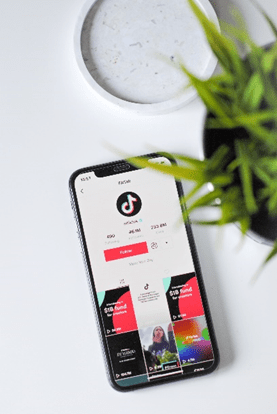
    Companies also sponsor individuals who will make their brand look even better than ever. Tik Tok star, Charli D’Amelio, is sponsored by popular brands such as Dunkin Donuts, Invisalign, Pura Vida Bracelets, Hollister Co., and more. Charli promotes to over 160 million followers. In 2020, Charli used her voice to speak out on topics such as Black Lives Matter, the murder of George Floyd (Charli D’Amelio: Trading card, 2021). This not only educated her large following on important events, but let others know that she is an ally and supportive of equality for all. This specific example would reflect positively on brands that she collaborates with.

    Bringing it all together

    Influencers hold great power for brands within the world of social media. Appealing to the correct target audience while effectively communicating positives about products will have great impacts on what consumers chose to purchase and support. Social media is bigger than ever before. Brands are choosing to pay social media influencers top dollar in order to shine a positive light on their company.

    Sources

    Charli D’Amelio: Trading card. SponsorUnited. (2021, November 24). Retrieved February 7, 2022, from https://sponsorunited.com/charli-damelio-trading-card/#:~:text=TikTok%20superstar%20Charli%20D’amelio,influence%20on%20social%20media.

    Clark, Chavaz. (2020, December 9). Olivia Jade Giannulli, Lori Loughlin’s daughter, breaks silence on college admissions scandal, says she was “poster child of white privilege”. CBS News. Retrieved February 7, 2022, from https://www.cbsnews.com/news/olivia-jade-giannulli-lori-loughlin-college-admission-scandal-interview/

    Lu, L. C., Chang, W. P., & Chang, H. H. (2014). Consumer attitudes toward blogger’s sponsored recommendations and purchase intention: The effect of sponsorship type, product type, and brand awareness. Computers in Human Behavior, 34, 258–266. https://doi.org/10.1016/j.chb.2014.02.007

    Schomer, A. (2019). Influencer Marketing: State of the social media influencer market in 2020

    https://www.businessinsider.com/influencer-marketing-report?r=US&IR=T Accessed

    29th Feb 2020.

    Singh, J., Crisafulli, B., Quamina, L. T., & Xue, M. T. (2020). ‘To trust or not to trust’: The

    impact of social media influencers on the reputation of corporate brands in crisis. Journal

    of Business Research, 119, 464-480. https://doi.org/10.1016/j.jbusres.2020.03.039

    World Federation of Advertisers. Brands to invest more on influencers. (2018). https://

    www.wfanet.org/news-centre/multinational-brands-focus-on-influencertransparency/

    Accessed 30 July 2018.

  • The Future of Marketing and Social Media

    By Jaime Mull

    (Photo by Austin Distel at Unsplash)

    Social media is constantly evolving, and new trends are occurring every day online. It can be difficult to keep up with the constant renewing and recycling of trends on apps like TikTok and Instagram. Companies, now more than ever, are using their various social media outlets to target consumers with current trends and memes to sell their brand or product. Well-known brands have used social media to sell their products for many years, but it hasn’t been until recently that they’ve truly engaged with consumers and actively participated in the trend cycle that is occurring. If brands are now using social media as their main selling source and are constantly posting and engaging with customers, how will their engagement evolve in the next few years? What will we see from brands on social media in the next few years that we haven’t seen yet?

    How is Social Media Used Today?

    Social media is not just a one-dimensional outlet for people to share their life and thoughts with others. Over the past few years, social media has evolved into so many different things, and has allowed people to communicate and share ideas in various ways. Specifically for marketing, social media has now become the main outlet for brands and companies to share products and communicate with their consumer-base. With apps like Instagram and Twitter, consumers can comment on a brand’s post or tweet, and the brand has the ability to respond right away. This gives brands a huge advantage and allows them to show consumers how reliable of a company they are.

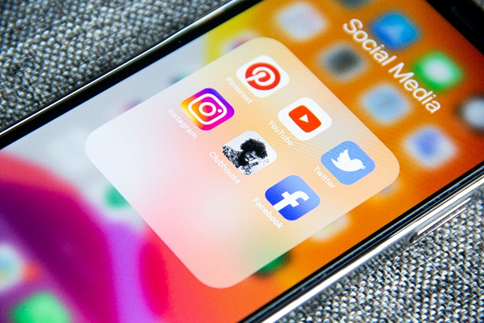
    The growth of social media platforms has also created an omni-social presence, which suggests that almost every aspect of a consumer’s decision-making process is prone to social media influence (Appel et al., 2019). With the amount of different apps and websites that brand’s can post on (TikTok, Instagram, Twitter, LinkedIn, Snapchat), it is almost impossible for the consumer to avoid a product or specific brand message. If a brand wants people to see their message, they have several options for sharing and can pay to promote themselves even more.

    The use of influencers and celebrities in marketing has also increased greatly and is extremely popular today. Considering the possible reach and engagement influencers command on social media, companies have either begun embracing influencers on social media, or plan to expand their efforts in this domain even more (Appel et al., 2019). This means that influencers being used to promote a product or brand isn’t going to change in the near future, because it has shown to be effective.

    Brands will Become your Best Friend

    A safe assumption to make based on past and current trends is that brands will become even better equipped to answer consumer’s questions and meet consumer’s needs. For example, new platforms have emerged to make the connection between customer and firm effortless. Much of this is via instant messaging applications for businesses, which several leading technology companies have recently launched as business-related features in existing platforms (Appel et al., 2019). Brands are going to become even more accessible in the next few years due to platforms like this, that will allow customers to reach someone within the company in less than a few minutes. Consumers are tired of waiting for days to hear back from a brand’s customer service line, and they’re tired of hearing the same excuses for why certain products don’t work. Brands are going to become much more personable and honest with consumers, as well as make themselves available for questions and feedback at a much faster rate.

    The Future of Political Collaboration

    Something we saw in social media in the last few years that wasn’t as evident in the past was the increase in posts regarding politics, specifically from brands. Many popular brands, ranging from Ben & Jerry’s to Bumble, spoke up during the 2020 Presidential election and were very clear about which side they were taking in the race. It is becoming a growing trend for brands to show their support for political figures, which is interesting because there’s always the chance that they lose customers who don’t agree with their stance.

    There is also the case of politicians themselves utilizing social media more in the future, essentially to market themselves. A relevant example of this is with Donald Trump and his run for office in 2016, and 2020. Research has shown that with simple interventions, social media platforms can increase targeted audiences’ likelihood of voting (Appel et al., 2019). We will definitely see more social media use from politicians, as well as brands in support of politicians, in future campaigns and election years.

    Social Media is Always Evolving

    While it is always interesting to analyze social media and predict what trends and themes will happen in the next few years, no one really knows for sure what will happen online. Social media is constantly shifting and changing shapes, and new trends are always being created. It will be interesting to see how social media unfolds in the future.

    Sources

    Appel, G., Grewal, L., Hadi, R., & Stephen, A. T. (2019, October 12). The future of social media in Marketing – Journal of the Academy of Marketing Science. SpringerLink. Retrieved February 24, 2022, from https://link.springer.com/article/10.1007/s11747-019-00695-1

    Distel, A. (2019, July 24). Photo by Austin Distel on unsplash. Beautiful Free Images & Pictures. Retrieved February 24, 2022, from https://unsplash.com/photos/tLZhFRLj6nY

  • Controversial Advertising Strategies: Understanding How They May Help or Hurt Your Brand

    By Emma Hudson

    (Photo from Unsplash)

    Have you ever heard the phrase “there’s no such thing as bad press?” On the surface, this statement may seem logical. Controversial advertising is known for making brands more relevant by grabbing attention and garnering conversation. But just how valid is the “bad press” argument?

    According to an article released by MDPI , controversial advertising operates by deliberately inducing feelings of surprise by “violating social norms or personal ideals, to draw attention.” Controversy must be used with extreme caution, as it may generate both positive and negative effects in the reception of an advertised brand.

    Here’s a closer look into the successes and failures of controversial advertising and questions that should be examined when considering a controversial campaign for your brand.

    What does effective controversial advertising look like?

    A common misconception about controversial advertising is that its primary goal is to offend its viewers. In reality, controversial advertising doesn’t aim to polarize an audience. When done correctly, it’s an attention-grabbing technique for stating an opinion, and brands use it to stir the conversation about a contentious topic.

    An example of effective controversial advertising is found in the 2017 Budweiser advertisement, “Born The Hard Way.”

    (Photo from Budweiser: Born The Hard Way)

    This commercial tells the story of Budweiser founder Adolphus Busch and his journey to America from Germany with a dream of building his own beer company. The ad artfully portrays the trials a young Busch may have overcome, from fiery ships to unwelcoming American citizens, and eventually meeting with future business partner Eberhard Anheuser.

    The advertisement was released during Trump’s executive order banning immigrants from Muslim countries and makes a subtle statement on the topic. The story makes people realize that something so fundamentally American, like Budweiser beer, can have immigrant roots.
    It reminds viewers that the United States is founded on immigrants, a message that starts a conversation without condemning pro-travel ban or anti-immigration individuals. The strategic use of controversy helped the commercial reach 21.7 million views within the first 72 hours, with a predominantly positive audience reaction (Atkinson, 2017).

    What does ineffective controversial advertising look like?

    When approached ineffectively, controversial advertising undermines customer trust in brand values and creates confusion that may lead to brand abandonment (Buchnik and Nowacki, 2018). A prime example of this is Hyundai’s commercial, “Pipe Job,” meant to promote the Hyundai ix35, an eco-friendly fuel cell car with “100% water emissions.”

    (Photo from Hyundai: Pipe Job)

    This advertisement shows a man running a hose from his car’s tailpipe to its passenger compartment in his closed garage. Taking a few deep breaths and closing his eyes, the man waits to be killed by carbon monoxide poisoning. A few hours later, the garage light comes on, and the man leaves in defeat. “The new 1×35 with 100% water emissions” appears on the screen, which makes it impossible for the man to take his own life. Unsurprisingly, the commercial was pulled after airing for only 24 hours, receiving backlash for mocking suicide attempt survivors (Herper, 2013).

    Questions to ask before using controversial advertising

    1. What are your goals?

    The first question you want to ask before pursuing a controversial topic through advertising is, “what are your goals?” If the reason that your marketing team wants to execute a controversy is to go viral, you need to think again. Controversial advertisements should have logical reasoning and meaning behind them to achieve their desired effect.

    This question reigns relevant to the “Pipe Job” commercial, as the motives of the advertisement were unclear. Sure, the company wanted to promote that their new car has 100% water emissions, but couldn’t they accomplish this through a less triggering method? More likely than not, the brand used the controversial advertising strategy merely to go viral, which ended in outright disaster.

    2. Are the goals relevant to your brand values?

    To elicit a positive response, you must consider if your goals align with your brand values. If the messages perceived do not reflect your brand’s values, it may come off as disingenuous, which will damage consumer trust. Additionally, if the values presented through the advertisement are misaligned, your audience will likely not align with those principles either. The disconnect between audience values and campaign messaging can lead to brand abandonment.

    The Budweiser commercial does a great job relating its brand values to the commercial at hand. Budweiser claims the title of “America’s beer,” so the idea of immigrants achieving the “American dream” aligns directly with the brand’s image.

    3. What are the potential consequences or misconceptions?

    A great way to determine the reception of your advertisement is to conduct focus groups. This will allow you to receive insight into how audiences may react to your commercial before it is published and cannot be changed. Once your commercial is live, there’s no turning back.

    It may also be beneficial to consider some of the common causes of negative reception in controversial advertising. Such controversies can be triggered by:

    • Human figures presented in a way that implies or maintains negative stereotyping of specific social groups (women, men, children, or elderly people)
    • Information whose accuracy is clearly doubtful (misleading advertising).
    • Negative associations of a religious, racial, or ethnic nature.
    • Content that insensitively utilizes trauma or violence (drastic scenes, violence, cruelty, death, rape, etc.)

    (Buchnik and Nowacki, 2018)

    Key Takeaways

    In a current culture obsessed with controversy, it’s easy to create a campaign that draws attention from the masses. While the saying goes, “there’s no such thing as bad press,” it is vital that your team thoroughly strategizes for positive public perception. With the right goals, consideration of brand values, and proper reflection on potential consequences or misconceptions, you’re more likely to receive the desired response from your audience.

    Sources

    Atkinson, Claire. (2018). “Budweiser’s Super Bowl Ad Was the Most-Watched Online.” New York Post, https://nypost.com/2017/02/07/budweisers-super-bowl-ad-was-the-most-watched-online/. 

    Herper, Matthew. (2013). “Hyundai Apologizes for Car Ad Depicting Attempted Suicide.” Forbes, https://www.forbes.com/sites/matthewherper/2013/04/25/a-hyundai-car-ad-depicts-suicide-it-is-so-wrong-i-cant-embed-it-in-this-post/?sh=2691cee6554d. 

    Bachnik, K., & Nowacki, R. (2018). How to build consumer trust: Socially responsible or controversial advertising. Sustainability, 10(7), 2173. doi:http://dx.doi.org/10.3390/su10072173

  • TGIT: Thank God It’s Thursday

    TGIT: “Thank God It’s Thursday” is a phrase usually associated with Friday. However, Shonda Rhimes has changed the game, making Thursday nights the most exciting night on television. For those of you who do not take part in this excitement, ABC premieres Grey’s Anatomy, Scandal, and How to Get Away with Murder starting at 8 p.m. All social media sites including Facebook, Instagram, and Twitter are bombarded with posts about TGIT, especially before the shows air. This not only allows for consumer interaction, but also free publicity for the shows every week. 

    A quick tip… stay off social media on Thursdays if you watch these shows the next day. 

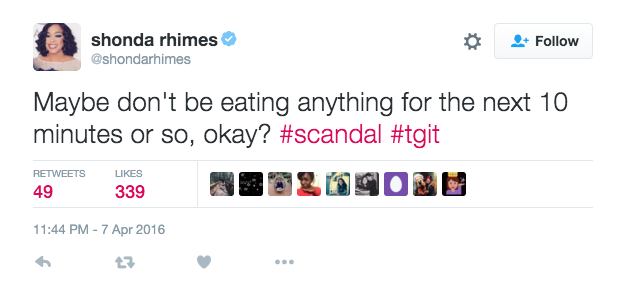
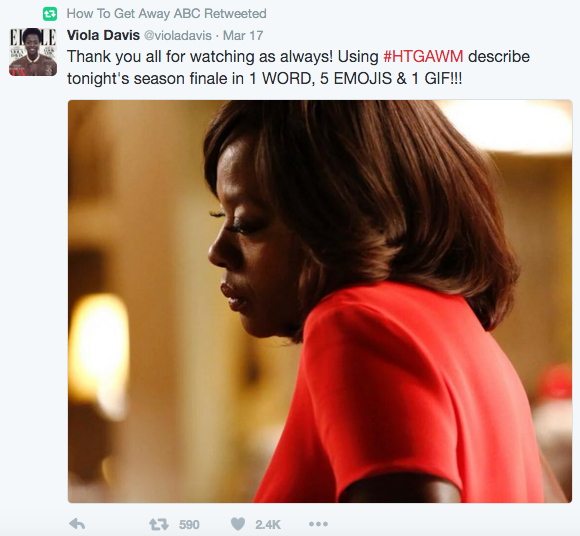
    Fans are not the only ones who tweet during Thursday’s shows. Live tweeting happens from cast members, and even the women behind #TGIT, Shonda Rhimes.

    Screen Shot 2016-04-12 at 10.46.47 AM

    If you are new to the phenomenon of Scandal, Olivia Pope is the main character, who is known for eating popcorn and drinking red wine. One Scandal fan, Jennifer Chao tweeted, “Hey guys, I really need some popcorn to go with my wine. #scandal.” Shonda Rhimes uses social media and hashtags to create an active audience during her shows

    Screen Shot 2016-04-12 at 10.52.08 AM


    Shonda Rhimes and ABC have redefined what Thursdays mean. These two miracle workers have made Grey’s Anatomy, Scandal, and How to Get Away with Murder a whole event and something to look forward to throughout the week. If you watch one of these shows, you are bound to watch the others. This idea of a nightly event allows more viewers and interaction between fans, cast members, and Shonda Rhimes.

    Now that How to Get Away with Murder is sadly over for the season, Shonda Rhimes and ABC made sure to add a new show, The Catch to the best night on television, TGIT.

    Do you watch #TGIT? Are you a fan of live tweeting during tv shows? Let us know your thoughts below!

    -Caitlin R, Megan S, Erin F, & Sarah G


  • Hot, Fast, Cheap, and Local

    Otherwise known as a flaming success, the Flaming Amy’s brand has made quite the name for itself in Wilmington. The Amy’s family enterprise offers two diverse dining experiences under one brand. The Flaming Amy’s Burrito Barn is housed in an actual barn shaped building offering an eclectic and funky vibe with its sticker covered windows and doors and mismatched frames  lining the walls. But if Tex-Mex isn’t your thing, no worries! You can head on over to the Burrito Barn’s sister and enjoy a taste of non-traditional Mongolian stir fry at Flaming Amy’s Bowl.

    Do-Good-Summer-Guide-2014_Flaming-Amys-1024x465

    The Bowl and Barn share more than just their laid back and liberal atmospheres. Since they opened their doors in 2000 the two restaurants have garnered fans and local awards, with the Burrito Barn even making it as one of 64 contenders in FiveThirtyEight’s “Search for America’s Best Burrito.” Self-proclaimed as “hot, fast, cheap and easy,” the family behind the Amy’s enterprise has successfully marketed their brand to the local community.The Wilmington community in turn has responded by becoming an active part of their IMC strategy. Locals are quick to send any visitors or newcomers in town in the direction of either Flaming Amy’s restaurant,  implementing word of mouth marketing to  increase the already well known brand.

    Diners enjoy lunch at Flaming Amy's Bowl in Wilmington, NC on Sunday, July 13, 2014. Copyright 2014 Jason Barnette Flaming Amy's Bowl is locally-owned by Amy and Jay Muxworthy. It is an Asian stir fry restaurant with an emphasis on friendly staff, great cooks, and a comfortable atmosphere.

    And in the word of the Flaming Amy brand itself:

    “Always remember and never forget… EAT AT FLAMING AMY’S!”

    Word of mouth marketing (WOMM) is a type of marketing that is the most ethical and one of the most valuable ways a company can market. WOMM allows customers to have a voice which in turn will give the company an opportunity to listen to customer’s needs and realize that a happy customer is their greatest endorsement. Conversation creation is a marketing tactic that companies use to gain people’s attention, this can be done through interesting or fun advertisements, catchphrases or emails.  Flaming Amy’s utilizes conversation creation through their FAB and Eat at Flaming Amy’s stickers. These stickers can be seen throughout the Wilmington community; on cars, laptops, notebooks and other items you would put a sticker. Conversation creation marketing targets a small group of people which will then influence a large group of people. This type of marketing is an inexpensive way that can produce big results.

    flamin'%20amys%20exterior

    The Flaming Amy’s Brand has successfully created a loyal audience and customer base with it’s marketing communication efforts. We have all seen the stickers all over town, and it’s always exciting.

    By Aki Suzuki, Carrie Poniewaz, Carey Shetterley, Lexie Trimnal, June Wilkinson

  • Home of the Original Fat Sandwich

    It’s 2 a.m. and you’re beginning to get a hunkering in your stomach. You don’t feel like making food or driving around to find a 24/7 drive-thru that might not satisfy your appetite. All of the local delivery places are closed, what are you going to do? Well, you’re going to pick up the phone, dial 910-798-4999, and order from one of the most AAAAAa MUNCHIESinnovative, newest establishments in our community: Munchies Food Co. They are open 7 days a week from 12 p.m. until 3 a.m., allowing customers to dine in until 10 p.m. and to order food for delivery or take out until 3 a.m. Their motto is simple: “You get them. We fill them.”
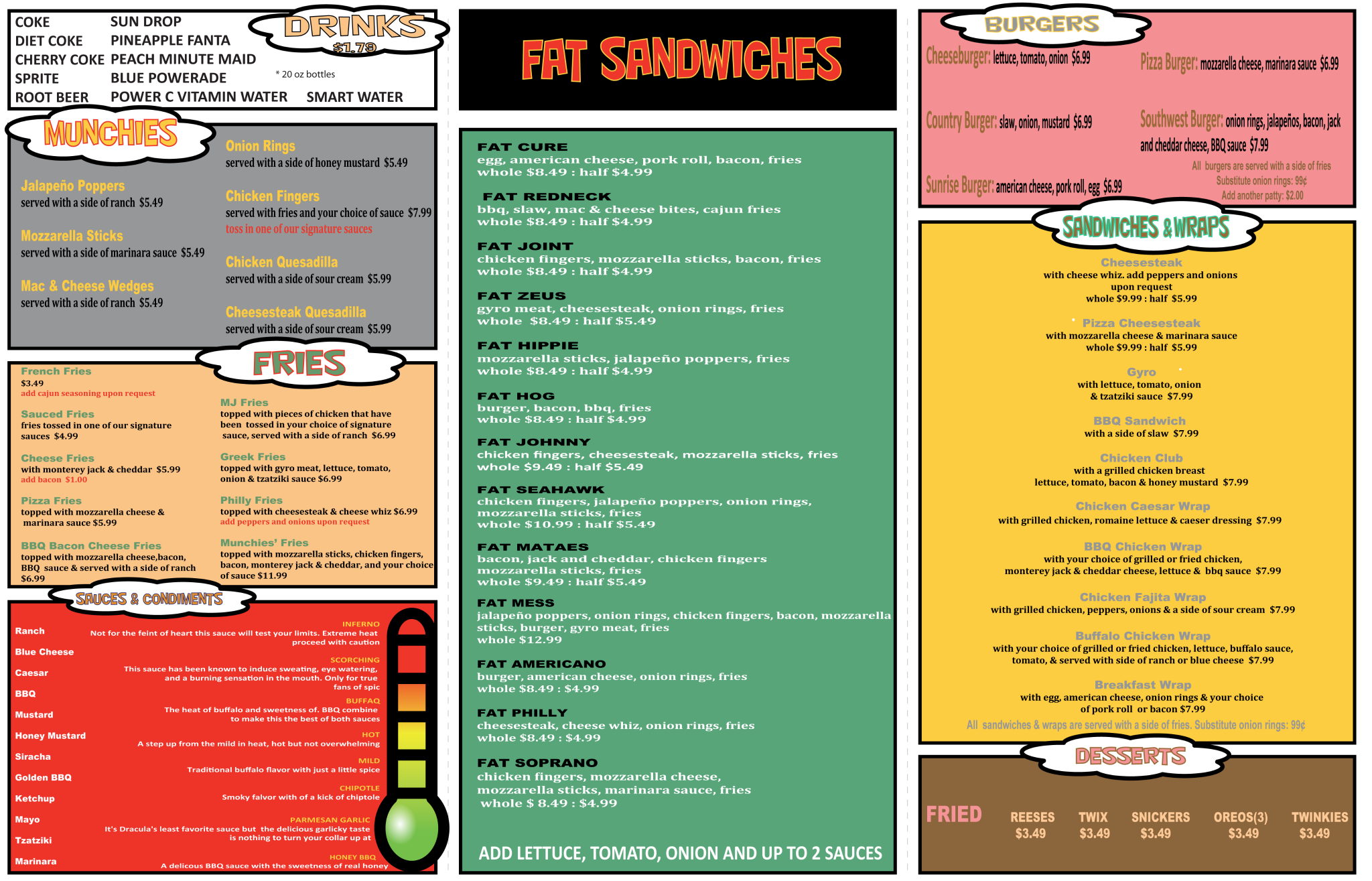
    Located in the University Landing Shopping Center, within walking distance from the UNCW campus, Munchies has a clear interest in attracting the college student population. There is a direct connection between UNCW and Munchies as it was started by two brothers and graduates of UNCW. When they opened the doors in September 2014, they had one goal: “To provide delicious, unique, and affordable food at the times you want it most. Offering a one of a kind menu and late night delivery, we at Munchies are here to satisfy your cravings, whenever they may occur.” As former UNCW students, they were able to more readily analyze their target audience and produce a mouthwatering menu to attract nearly any college student. They offer a variety of drinks, fries, sauces, sandwiches, wraps, and burgers. Along with the menu being very aesthetically appealing with bright colors and vivid font (as seen below), it includes three creatively thought out sections on the menu: Munchies, Fat Sandwiches, and Desserts.10428193_1460350754244838_520504508503865764_o

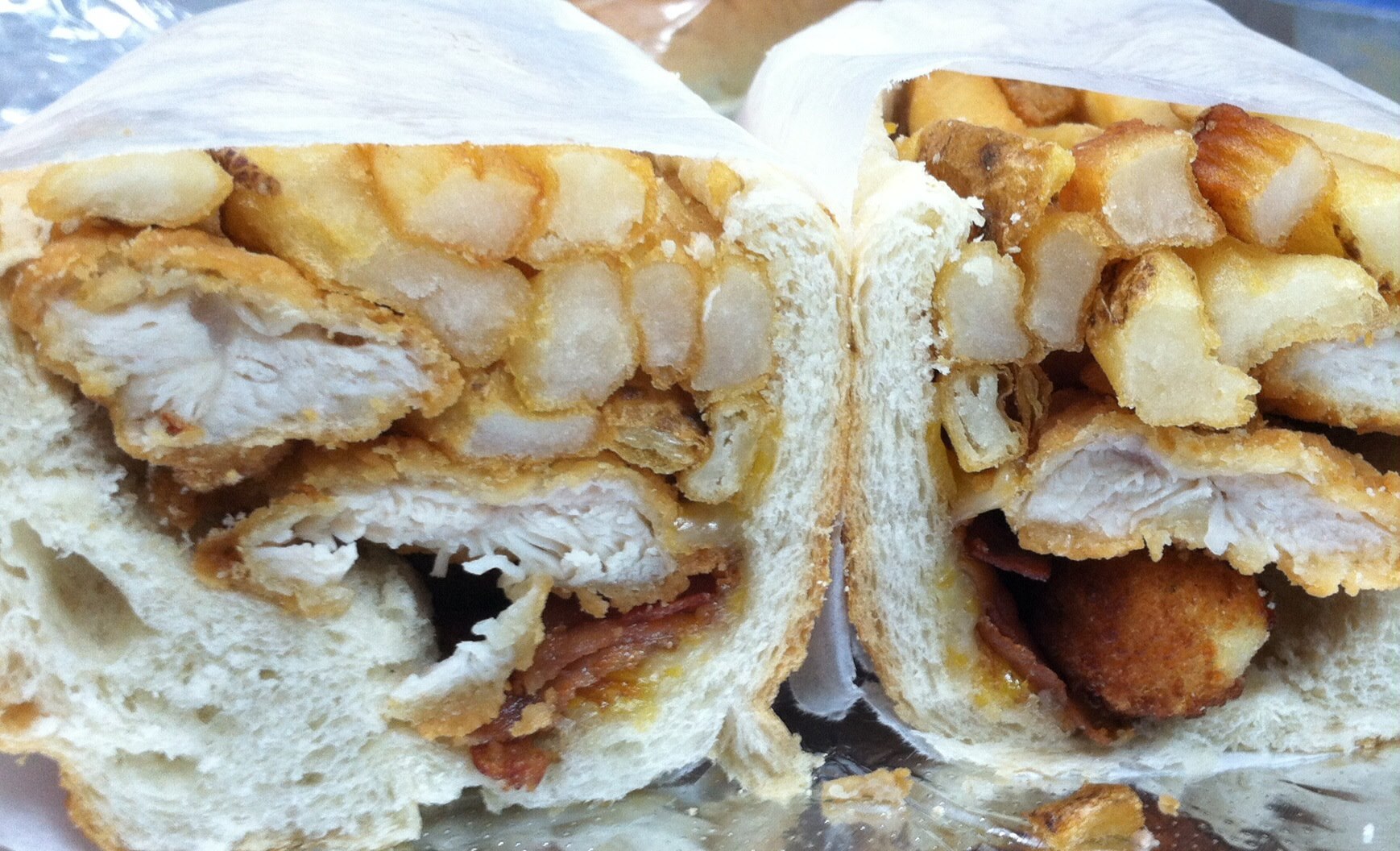
    The word ‘munchies’ has a different connotation in certain groups (cough, cough), but it is accurately defined as food suitable or meant for snacking. While the owners of Munchies Food Co. used that play on words to their advantage in attracting attention, their Munchies section is certainly meant for snacking as it includes items like jalapeno poppers, mozzarella sticks, mac & cheese wedges, and onion rings. Their Fat Sandwiches section is the most popular and are not quit the ‘sandwiches’ that one has come to know. The only similarity between Munchies Food Co. Fat Sandwiches and regular sandwiches is that they are served on bread with lettuce, tomato, and onion. However, these sandwiches contain an abundance of different fillers including chicken fingers, mozzarella sticks, cheese whiz, onion rings, gyro meat, and even fries! Their most expensive Fat Sandwich and my personal favorite is the Fat Mess. This smorgasbord of a sandwich contains jalapeno poppers, onion rings, chicken fingers, bacon, mozzarella sticks, burger, gyro meat, and fries! It truly lives up to its name. Pictured below is an example of the very popular Fat Joint, which contains chicken fingers, mozzarella sticks, bacon, and fries.

    10494975_1483123541967559_1215336181551671093_o

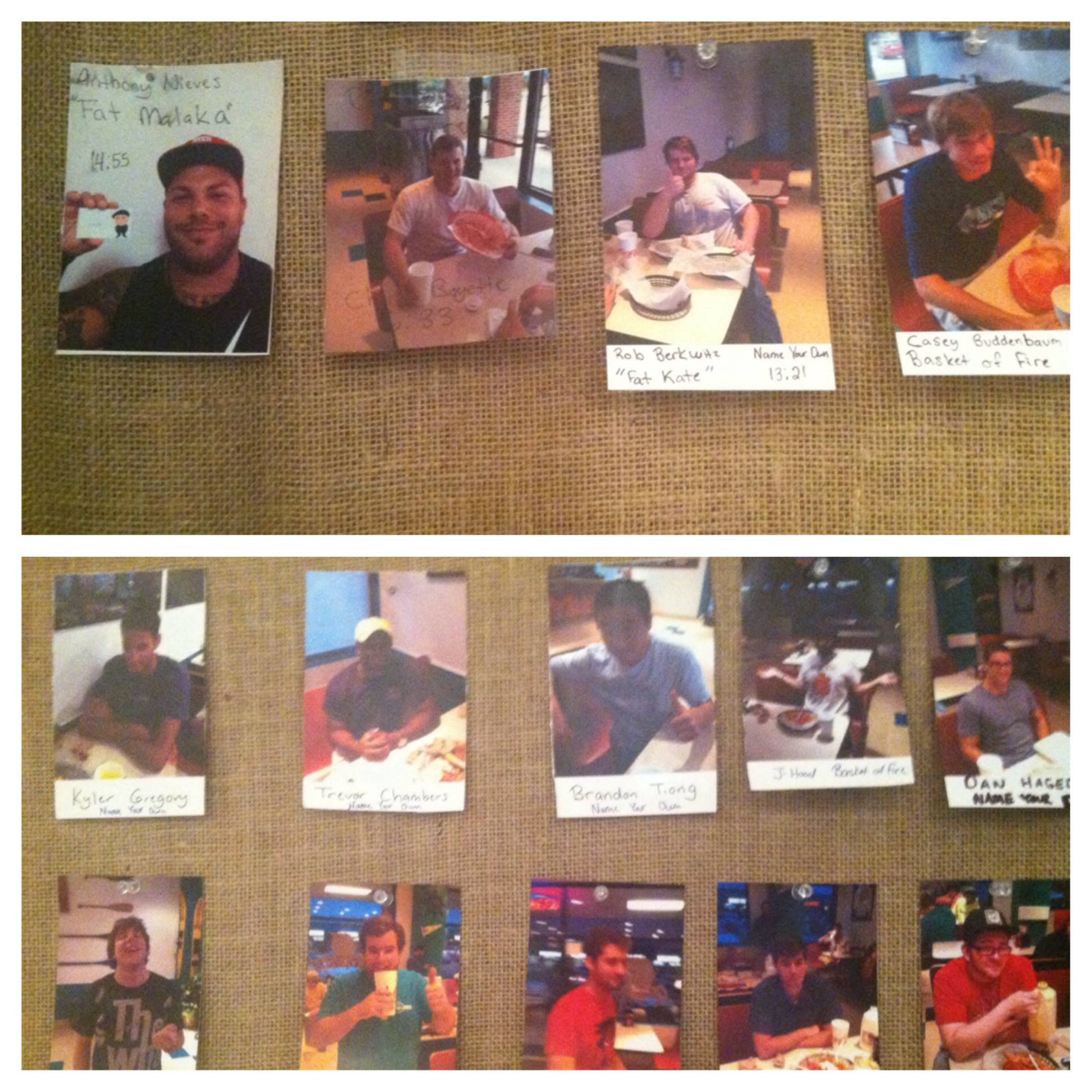
    If that doesn’t sound filling enough, imagine trying to eat 3 fat sandwiches in 30 minutes. Munchies Food Co. presents this very challenge to their customers every day. Known as the ‘Name Your Own’ challenge, if someone can complete all three sandwiches in the allotted 30 minutes, they earn the right to create and name their very own fat sandwich for their menu and have their photo put on Munchies Food Co.’s Wall of Fame. The image below shows a contestant who finished the ‘Name Your Own’ challenge in 13 minutes and 21 seconds!

    1658156_1478287432451170_2553241553932257286_o

    They offer another challenge known as the ‘Basket of Fire’. The competitor has 15 minutes to eat a pound of fries and four chicken tenders tossed in inferno sauce, covered with jack and cheddar cheese, jalapenos, and topped with even more inferno sauce. Competitors may use dipping sauces and drinks. Taking every precaution, all competitors must sign a waiver before taking the challenge. Winners have their meal paid for and also get their photo put on Munchies Food Co.’s Wall of Fame. Making it a memorable experience regardless, the employees will still take one’s picture at the end of an unsuccessful challenge and put it on their Wall of Shame. Far more make it on the Wall of Shame than the Wall of Fame. 1601937_1485437875069459_5159293372287278699_o

    These enticing challenges are just one of many ways that Munchies Food Co. attracts a younger customer base and spreads from word of mouth. Munchies Food Co.’s affordable and delectable Dessert section also plays a major part in drawing in customers. Straying from the classic milkshake that Sonics, Cookout, McDonalds, etc. has used for years to entice younger customers, Munchies Food Co. offers a staple from the state fair: Deep-Fried Twinkies. Their innovation is again evident as they also offer deep-fried Reeses, Twix, Snickers, Oreos, and Cookie Dough.

    10700334_1471457449800835_3480468814083393106_o

    The two brothers that created this company were smart:

    • They chose a good location using local knowledge
    • They used an aesthetically appealing menu with various and innovative food items designed to match their target audience
    • They offer easy accessibility with extended hours and delivery
    • They recognize the importance of affordability to a college student
    • They use a different take on classic challenges to draw customers in
    • They effectively use social media and word of mouth as marketing strategies
    • They created an app for tablets and smartphones
    • They give UNCW students a 10% discount when they show their one card
    • They offer random daily specials
    • They are an active voice in the community and run promotions with different local philanthropy events

    Check out their website at http://www.munchiesfoodco.com/ or their social media accounts:

    Stay hungry for more posts on local restaurants in Wilmington this week!

    – Griffin Weidele, Austin Moody, Luci Keefer, Allen Wooten, Scott Uraro

  • Who is Emily Schuman?

    MTMzODg3MDEzMTAyMzI3MDU4

    Emily Schuman, better known as Cupcakes and Cashmere, captivates audiences with her unique approach to fashion, food, and everyday living. The now 32-year-old began Cupcakes and Cashmere in 2008, becoming one of the first bloggers to partner with a major brand. Cupcakes and Cashmere provides, “luxe yet achievable looks and refreshingly genuine style of writing,” making Emily Schuman a very popular blogger and known social media persona. Cupcakes and Cashmere includes popular brands of J.Crew and TopShop, while adding the “less-achievable” wardrobe items of Louboutin shoes and Celine bags.

    Brand Image

    Emily Schuman transformed Cupcakes and Cashmere into two books, clothing line, and home-goods line, while maintaining a large social media presence.

    Cupcakes and Cashmere: The blog allows fashion and food fanatics to explore Emily’s top picks, morning routines, favorite recipes, and her weekly outfits. Incorporating DIY aspects into a fashion-forward blog.

    Cupcakes and Cashmere: A Guide for Defining Your Style, Reinventing Your Space, and Entertaining with Ease: Emily Schuman’s first book, follows the same outline of style, beauty, home, food, and entertainment. Cupcakes and Cashmere: A Guide for Defining Your Style, Reinventing Your Space, and Entertaining with Ease became available August 1, 2012.

    Cupcakes and Cashmere At Home: Emily Schuman’s second book offers readers DIY tips and projects, party-planning tips, design ideas, and how to “mold your space into something you’ll love.”

    Cupcakes and Cashmere Fashion Line: Her Fall 2015 Collection will be available at Nordstrom.com and Shopbop.com. She combined her favorite pieces (shown in her blog) and her personal style, making 60 pieces of clothing anyone can wear. The price tag is on the higher end of $85-$200, including a few pieces around $400.

    Cupcakes and Cashmere Home-Goods Line: She expanded her product line into semi-affordable home decor.

    Cupcakes-Cashmere-Emily-Schuman-Decorating-Tips

    Creating and obtaining an audience for a personal brand can be tricky. The engagement approach is one theory in IMC to help explain how a brand reaches a wider audience. Emily Schuman engages with her audience through multiple channels and collaborations. Reaching out to an audience through social media and popular brands are examples of the engagement approach. Essentially it is a technique to attract an audience through different methods.

    Social Media

    • Facebook– Emily Schuman’s Facebook presence is very high, with over 400,000 likes. Sharing links and pictures to her newest blog posts.
    • Twitter– Emily Schuman maintains a “light and easy” Twitter- with links to Instagram and blog posts.
    • Instagram– Her account includes the blog features of style, beauty, home, food, and entertainment but on a more personal level. Sharing pictures of family, friends, and her everyday activities with fans and fellow bloggers.
    • Pinterest Over 200,000 likes on Pinterest, Emily Schuman pins her favorite beauty secrets, fashion pieces, home decor, recipes, and DIY projects.
    • YouTube Showing fans videos of makeup, hair tutorials, and a Q+A with Emily Schuman.

    Collaborations

    Birchbox: The partnership of Birchbox and Cupcakes and Cashmere is like many we see nowadays with the advent of modern social media marketing. The low-cost partnership allows both parties to benefit through increased exposure. Birchbox paired with Cupcakes and Cashmere to create the May 2015 box. It included her favorite beauty secrets. The Birchbox collaboration is a prime example of the engagement approach, where Emily Schuman can spark an interest in a wider audience.

    Estee-Lauder: Four-years after Emily Schuman started Cupcakes and Cashmere, Estee-Lauder and Emily Schuman collaborated on a guest blogger feature. Emily Schuman created content for Estee-Lauder’s site on a weekly basis, sharing beauty, fashion trends and sneak peeks at upcoming collections.

    Coach: Emily Schuman became one of the first fashion bloggers to partner with a large brand like Coach. Emily Schuman of Cupcakes and Cashmere designed a pale-cotton candy handbag, sold out within days.

    Screen shot 2015-11-10 at 11.50.11 AM

    Back in 2012, Emily Schuman stated, “I want to diversify the brand and ultimately design a Cupcakes and Cashmere product line.” Do you believe Emily Schuman completed her goal? Do you follow unique lifestyle bloggers? Let us know your thoughts below!

    -Jonathan Callahan, Erin Fouhy, Julia George, Joseph Hines, and Sarah Suggs