Tag: Facebook

  • The New and Improved Facebook “Like”

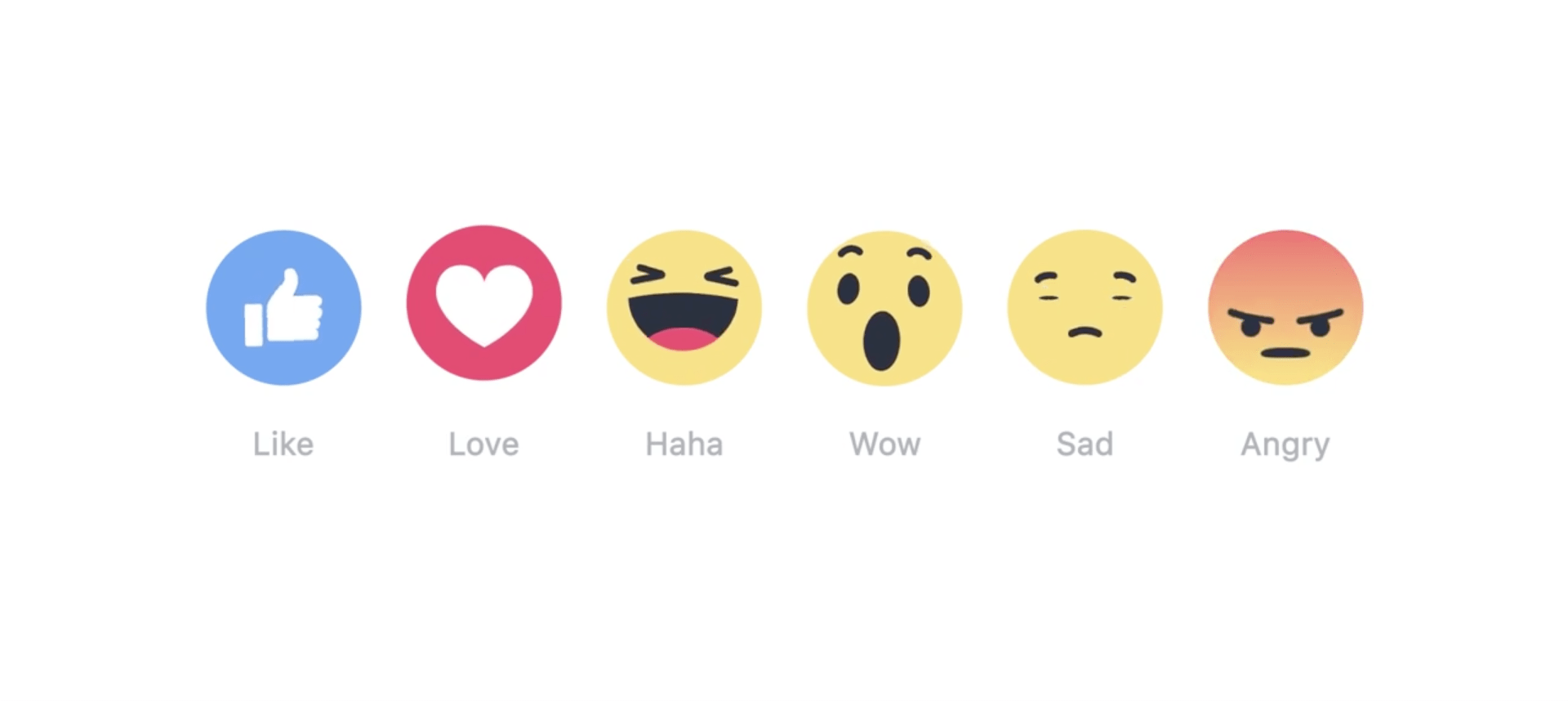
    We did not think social media could get any better, did you? Facebook added new reactions for the users including: “love,” “haha,” ,“wow,” “sad,” and “angry” on February 24th. Originally “yay” was in the running, but unfortunately it did not make the cut.

    These new features make it easier for users to express how they feel about a picture,status update, meme, etc., rather than just posting below. Instead of commenting “love” or “haha” you can now hover over the “Like” button and view the other options and click the emoji that fits best. This is Facebook’s way of making their website more user friendly to the public.

    screen shot 2016-02-24 at 12.53.30 pm

    Although users wanted Facebook to add a “Dislike” button, this was the alternative that was decided. However, are we as users naive to believe that this is the full story? These buttons serve not only to its users but it helps Facebook gather more data based on clicks. Facebook is swarming with advertisements that pop up on the screen in some way, shape, or form. However, those advertisements are not just random companies, but ones geared specifically towards the brands users have viewed and shown interest on Facebook. These newly added features will help Facebook gather further data on its users, by the click of a button.

    It’s up to us to decide whether or not is it worth our time to use Facebook’s reaction feature. What do you think about the new emoji buttons? If you love them, let us know which one is your favorite. If not, let us know why!

    -Erin Fouhy, Sarah Garner, Caitlin Rodermund, and Megan Suggs.


  • Forever Teal

    homecoming2016_header

    Hello fellow Seahawks, it is your time to show off your school spirit this week for UNCW’s Homecoming. This week is packed with fun events for students, alumni and friends, leading up to the Women’s and Men’s basketball games this Friday and Saturday.  

    Are you on campus today? It’s our favorite day of the week… Teal Tuesday! If you are wearing your teal stop by Hawk’s Nest from 11-1pm for free t-shirts, giveaways, and make your own sign for Homecoming week. Later in the evening, show your support for your fellow students at Battle of the Bands in Warwick from 8-11pm. Five bands will be competing for a cash prize, judged by American Idol look-a-likes, including Bigg B from 97.3. You can help determine the winner by attending and voting for your favorite band!

    homecoming16_logo

    Students are constantly using social media to find out information about upcoming events. Campus organizations have decided to use Instagram, Twitter, and Facebook to promote UNCW’s 2016 Homecoming Week. If you plan on attending any of the homecoming events, make sure to snap a picture and use the hashtag #UNCWHC16.

    This week UNCW’s campus organizations will be promoting Homecoming week with banners, posters, and flyers on Chancellor’s Walk. Follow the social media sites, @uncwilmington and @uncwace to keep up with Homecoming 2016 events.

    Here’s a preview for UNCW’s 2016 Homecoming events:

    • Wednesday
      • Dub Idol 8pm in Kenan Auditorium
    • Thursday:
      • Amy Rolloff 7-10pm in Burney Center
      • Homecoming Variety Show 7pm in Warwick Center.
    • Friday:
      • Homecoming Pep Rally 5:30-7pm in Hanover Gym
      • Women’s Basketball UNCW vs. Towson 7pm in Trask Coliseum.
      • Homecoming Step Show 7:30pm in Kenan Auditorium
    • Saturday:
      • College of Arts and Sciences 5K 8:30am
      • Intercultural Festival (iFest) 10am-2pm in Burney Center
      • Trunk Show & Student TEALgate 4:30pm
      • Men’s Basketball UNCW vs. Charleston at 7pm in Trask Coliseum.

    12376380_10153433104582684_1578962519850455067_n

    -Erin Fouhy, Sarah Garner, Caitlin Rodermund, and Megan Suggs.

  • One Country Painted Red

    With the rapid growth of new products, brand extensions and the blurring of traditional and new age advertising, marketing and advertising to target audiences has reached a new level of competitiveness. Brands now must adapt to this changing environment and contest with competitors to stay at the top of their market and target to audiences in creative, attention-grabbing tactics.

    The most iconic brand in the soda market, and throughout the world, is undoubtedly that of Coca-Cola. In the summer of 2011, Coke created an original marketing strategy to run a campaign that would inspire people to connect with the brand both online and offline in order to acclimate to the changing marketing environment. The campaign’s prime objective was to increase consumption of Coke over the summer season and to get people to fall in love with the iconic brand again. Particularly, in Australia, at the time nearly 50% of teens and young adults had never tasted a Coke and this drove the brand to reconnect with the country.

    Established in Australia, the ‘Share a Coke’ campaign immediately received positive media attention and consumer responsiveness. The idea of the ‘Share a Coke’ campaign was to place Australia’s 150 most popular names on the front of millions of Coca-Cola bottles, simple right? This was the first time in 125 years that Coke had made such a paramount transformation to it packaging, and it was revolutionary.

    “We used publicly available data to review the most popular names in Australia and ethnic representation in Australia to ensure the diversity of our multi-cultural nation was represented appropriately.”

    – Coca-Cola Spokesperson.

    The Coca-Cola brand wanted to initiate conversations by putting Australians front and center and inspire them to connect with people and ‘Share a Coke’. The central theme that gave ‘Share a Coke’ its power was the way a brand so universal could replace its logo with individual names by reaching out to consumers and personalizing its brand to individuals.

    “We are using the power of the first name in a playful and social way to remind people of those in their lives they may have lost touch with, or have yet to connect with”

    -Lucie Austin, Marketing Director for Coca-Cola South Pacific.

    The ‘Share a Coke’ campaign strategically exhibited that when personalization in advertising is done the right way, it can be highly appealing and extremely effective. While Coke got personal, media was buzzing with talk over what the brand was implementing behind the personalization. Coke remained silent until Australia’s highest rated media weekend. The campaign was revealed to the public and aired across the biggest weekend in Australian sport, during the AFL (Australian Football League) and NRL (National Rugby League) grand finals which reached over 30% of the population.

    Succeeding the campaign launch, requests for more names were coming in the thousands. Coke was prepared for this boom of requests by setting up kiosks that toured 18 Westfield shopping centers attracting consumers to personalize any name on a Coca-Cola bottle.

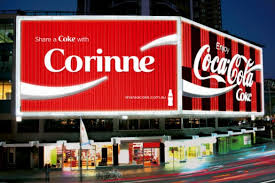
    Coke wanted to especially reach out to the 50% of young adults that had never tasted a Coke in Australia, and there was no better way to reach this target market than online. Participation and mass allocation was achieved through Facebook by providing consumers with the resources to connect and ‘Share a Coke’ by creating a personalized virtual Coke bottle to share with a Facebook friend. Consumers were tagging friends in pictures with personalized Coke bottles and sharing stories on social media platforms like Twitter, Facebook and YouTube. Coke consumers also could create their own commercials! With the abundance of requests still pouring in, Coke told consumers to put in a vote of “who do you want to share a Coke with the most?” via Facebook. After 65,000 people voted, Coke bottles with 50 new names were released. “Consumers were invited to SMS a friend’s name, which was projected live onto the iconic ‘Coca-Cola’ sign at Sydney’s King’s Cross. They then received an MMS enabling them to share their friend’s name up in lights, via Facebook and email.”

    untitled

    The multi-platform communications strategy was implemented to ‘Share a Coke’ with someone you know, or want to know and ultimately gave people the resources to find, connect and share. After 3 short months of running the campaign, young adult Coca-Cola consumption increased significantly in Australia by up to 7%, making 2011 Coke’s most fruitful summer season in history. The ‘Share a Coke’ campaign resulted in 76,000 virtual coke cans shared, 378,000 extra coke cans printed at kiosks, and 5% more people were drinking coke. Coca-Cola had successfully won over Australia and became a part of popular culture again.

    -Briana McWhirter

  • Banking on Bracketology

    Even if you’re not a fan of college basketball, you’ve likely heard friends and colleagues exclaim about their “busted brackets” as of late. The NCAA Division I men’s basketball tournament, billed as “March Madness” runs throughout the month of March and is one of the most popular spring sporting events. The tournament begins with 64 teams and ends with the championship game in April. Part of the fun of March Madness, is Bracketology, the science of pitting teams against each other to predict the outcome of the tournament. It gets pretty serious–billionaire Warren Buffett of Berkshire Hathaway even offered $1 billion to whoever fills out the perfect bracket.

    Where does Bracketology intersect with IMC? The answer lies in the “good hands” of Allstate. 2014 is the insurance company’s third year as official sponsor of the NCAA tournament. This year, Allstate’s antagonistic character, Mayhem, is breaking brackets in a series of Tweets, Facebook updates, and Vines. While Mayhem is infamously known for causing car wrecks and burglaries, the Leo Burnett-created “March Mayhem” campaign makes light of Bracketology. Watch as Mayhem breaks, bends, and even blends busted brackets.

    March is Mayhem

    “March Mayhem” is Allstate’s social media component of its NCAA tournament campaign. During TV coverage of the tournament, the company sponsors the “Good Hands Play of the Game” and is rolling out increased advertising for its homeowners insurance. Pam Hollander, Allstate’s senior IMC director, points out that the campaign goes on as the tournament progresses, taking into account how different teams perform in the tournament. She says the campaign features direct engagement with fans. Mayhem acts as a direct engagement tool to connect and learn more about Allstate’s social media-savvy audience. With Mayhem, interpersonal communication takes place in an ad campaign, personifying the brand’s relationship with the consumer.

    Mayhem isn’t the only insurance character with social media presence. Representing insurance companies big and small: the Gecko, Flo, Jake, and J.J. Hightail each interact with their Twitter followers. One of the strong points of the March Mayhem campaign is how it takes advantage of the Bracketology phenomenon to establish a connection with the consumer. Using a popular social trend in a social media campaign exemplifies the personification of brands.

    Do you believe using Bracketology in advertising is effective? How have you seen other brands use social phenomena in their advertising?

    Nathan Evers

  • The “Instructional” Campaign

    According to the calendar, Spring has officially sprung. And while we are still experiencing some chilly days, it’s undeniable most of us are ready to shed our winter gear for shorts and sandals. As with all season changes, clothing companies are eager to help you exchange your wardrobe.

    Recently, clothing company Lands’ End launched their new “How to Spring” advertising campaign, showcasing, “How fun and fashionable it is to add bright colors, graphic prints and floral patterns with a few perfect pieces from the women’s spring collection”. It could be argued that every spring campaign that will launch this season will have a similar goal; however, Lands’ End decided to do something a little different this season by adding a sweepstake to its promotional and marketing strategy.

    The sweepstakes works by first connecting with Facebook or entering your email. Once you’ve connected, you are asked to fill out your name, email, and zip code. Filling out this information unlocks the game. The rules are simple, select an outfit and click “spin”. If the outfit that the player selected matches the three tumblers, the player automatically wins a gift card with a balance of $25, $50, or $1,000. That’s it! Simple right? Not to mention, everyone is eligible to enter every day for the grand prize of $1,000 shopping spree. You can view the official rules of the sweepstakes here.

    While we like to think that games, contests, and sweepstakes’ only motives are for fun and entertainment, they are actually a smart marketing move – encouraging consumption of the product by creating consumer involvement. This involvement builds fan base, engages the audience, and enables consumers to do your marketing for you. Not to mention, user generated content often provides quality, innovative, and creative ads for free.

    In addition to promoting brand visibility, contest and sweepstakes are strategies that provide valuable quantifiable benefits for companies as well. They are cost effective, they help build search engine optimization (SEO), and increasingly important, they provide a rich source of consumer data for the company about existing and potential customers – emails, product preferences, location, etc.

    With every click essentially producing some sort of user information, online contests are growing in use on websites and especially on social media. The most popular initiatives include: photo and video contests, tagging contest, hashtag giveaways, and website raffles.

    Top Rank, an online marketing blog, named some of their picks of the best contest use on social media.
    Facebook: When Frito-Lay began their campaign for searching for new potato chips flavors, the company bypassed focus groups and turned to Facebook to connect directly with the customers who would be eating them.
    Pinterest: AMC Theaters have an entire Pinterest board, AMC Giveaways, where all users have to do is follow the board to stay up to date on the latest AMC contests. The basics are simple, when users see a prize they want, clicking on the image takes them to a landing page that collects their information.
    Twitter: In a “retweet to win” twitter contest, Doritos tweeted a message that simply asked followers to retweet for a chance to win. The tweet was retweeted over 500 times in a day with winners snagging products that ranged from Doritos to widescreen tvs.
    Instagram: As many clothing company are starting to do, Vera Bradely’s instagram contest asked users to post pictures of them and their favorite Vera Bradley bag using the hashtag #VBStyleShare. At the end of the contest, winners received a wrislet, followers of the hashtag could receive fashion inspiration, and staff could see how consumers were pairing their products.

    The benefits contests can provide seem like an almost no-brainer for companies to increase brand awareness while also gaining consumer data, but as they start to trend they are also subject to overuse. To combat becoming another form of clutter, companies will have to make sure their contest are increasingly interactive, engaging, creative, or lucrative.

    Have you ever participated in an online contest? Did you win? Did it make you feel more favorable towards the brand? Scrolling through your social media feeds have you seen brands using contests similar to the ones above? What are some of the best/most creative ones you have seen?

    Elizabeth Harrington, Caroline Robinson, Savannah Valade

  • Personal Preferences vs. Employer Requirements

    Six weeks until graduation here at UNCW. Ask any senior what’s on their mind and I can almost guarantee it has something to do with employment – resumes, cover letters, interviews, portfolios.

    It is our goal to make a good impression on our potential employers in every form – in person, on paper, and increasingly important, online. Searching someone’s name can yield a lot of information – sometimes too much information.

    In the COM Department, many students will enter fields where managing an online presence is part of their job responsibility. Here is where we enter the public versus private debate. We have been told that our social network sites should be kept public so that prospective employers, especially those in the marketing field, can see what we post about, how often we post, and if we’re keeping up with the latest trends. But what if companies aren’t making the public or private view a personal preference? What if they are demanding access to your accounts? Other than directly asking for your log in information, employers are also asking applicants to friend a human resources manager, or log in to a company computer during an interview.

    American Civil Liberties Union (ACLU) attorney, Catherine Crump said: “It’s an invasion of privacy for private employers to insist on looking at people’s private Facebook pages as a condition of employment or consideration in an application process.  People are entitled to their private lives. You’d be appalled if your employer insisted on opening up your postal mail to see if there was anything of interest inside. It’s equally out of bounds for an employer to go on a fishing expedition through a person’s private social media account.”

    Facebook’s privacy officer, Erin Egan, also weighed in on the issue: “In recent months, we’ve seen a distressing increase in reports of employers or others seeking to gain inappropriate access to people’s Facebook profiles or private information. This practice undermines the privacy expectations and the security of both the user and the user’s friends. It also potentially exposes the employer who seeks this access to anticipated legal liability.”

    Much of what these employers are doing could be illegal. When interviewing, every human resource staff member knows that some topics are strictly off limits. Asking one of these off limits questions could put your company at serious risk for being sued for discrimination. Yet by using to social media investigation or review, this kind of off limits information can be collected about a potential employee even before their interview.

    Here are some examples of questions employers cannot ask:

    –   Are you married?
    –   How old are you?
    –   Do you have children? If so how many and how old are they?
    –   What church do you attend?
    –   Do you belong to any social or political groups?
    –   Do you suffer from an illness or disability?
    –   Are you taking any prescribed drugs?

    And for women specifically:

    –  Do you plan to get married?
    –  Do you intend to start a family?
    –  Are you likely to take time off under the Family and Medical Leave Act?

    McNees Wallace & Nurick LLC describe the issue as “Tempting Fruit from a Poisonous Tree”. They give the following example:
    Applicant – Alex Jackson – catches your eye. Excellent resume, degree from a New York Ivy League school, published in trade magazine, active in community, and has excellent references. You decide to pull their Facebook page to get a better feel for the applicant. You find Alex is a 42 year old female, active in the Catholic Church, recently married, and has one year old son. A recent posts says “Please pray for my mother as she recovers from her most recent bout with cancer.”

    Just like Alex’s, your profile probably reveals a lot of the same information. In just a matter of a few clicks, race, age, religion, gender, and medical history have all been revealed – and are all illegal questions for an employer to ask. In a worst case scenario, an employer could even get sued under a variety of Acts if one felt such factors contributed to swaying a hiring decision.

    Social media continues to blur the lines of public and private. Be prepared for your interview – know what questions are likely to be asked, but also know what questions you don’t have to answer. How do you feel about employers requiring to see your accounts? Acceptable or infringing? Where should the line be drawn? Is there a compromise that can be made?

    – Savannah Valade

    Make sure to keep up with the blog this week as the team explores more employment trends in preparation for COM Studies Day this Friday. Students and alumni are encouraged to attend the informational panels, fashion, and networking events that will take place throughout the day. This is a great opportunity to learn, ask questions, and get advice . For those who cannot attend the events, follow the IMC Hawks here on Twitter as we will be live tweeting, as well as live blogging, throughout the day’s events.
     

  • Out With The Old, In With The New: Technology Decides It All

    Everyday you as a consumer are exposed to hundreds of thousands of brands. Over the decades the shopping industry has exploded with most brands disappearing at the same rate new ones appear, yet some brands have stood the cluttered test of time – one of those is Macy’s.

    Created in 1858 by Rowland Hussy Macy the Macy’s store was originally a dry goods store. Macy’s started to gain notable recognition in the 1900s with its holiday window displays and the hiring of Santa Claus for the stores. In 1924 the store moved to its current NYC location, on the corner of Broadway and 34th Street. This year was also the first Macy’s Day Parade, which was organized to celebrate immigrant employees new American Heritage.

    macys6n-2-web

    In 1944, Macy’s became apart of the Federated Department Stores, Inc., renamed Macy’s Inc. creating the world’s largest department store. Today, Macy’s has 800 stores in the United States and sells merchandise online.

    Macy’s isn’t the only iconic retailer – Sears Roebuck ring a bell? Starting in 1886, the mail order company prospered as it was able to provide low cost alternative to farmers. As mail order plants transitioned into stores, Sears found their place in city life and the retailer soon became a retailer giant. Today the store owns 863 mall-based operations and 1200 other locations including hardware, outlet, tire, and battery stores.

    sears catalogue

    Nowadays Macy’s and Sears are direct competitors, but it seems Sears, the company who invented mail order, can’t quite figure out online order.

    Holiday sales account for a large indicator of profit margins and often depict the health of a company. Sears seems to be in critical condition – US stores suffered a 9.2 percent drop. In decline for some time now, and with little to no improvement, some speculate the store could be gone by 2017.

    The history of an iconic brand is something that should be cultivated in your identity – it induces credibility, shows longevity, and prompts nostalgia. Yet being historic isn’t merely enough to remain vibrant. Iconic companies remain iconic because they are able to cultivate lasting relationships with consumers – at all time periods – and that means evolving.

    Looking at each retailers attempt to reach customers during the holiday seasons could explain Sears 9.2 percent drop in sales. Both have social media accounts, yet social media presence is widely disproportionate. Macy’s Instagram account has 150,00 followers while Sears has two Instagram accounts – “Sears” and “Sears Style” – yet both of the followers combined don’t even reach 8,000. A huge missed opportunity for Sears – Instagram is leading the way in social media, growing faster than Facebook, Twitter, and Pinterest combined.

    According to Gary Vaynerchuk’s article “The Road to Black Friday: Macy’s vs. Sears”, the use of social media by Sears is lazy. Choosing to ignore the social media culture they have posted irrelevant and uninteresting content such as a link to one of their commercials and an original YouTube video. While Macy’s post content that is culturally relevant, trendy, and formed around pop culture.

    Our culture today has switched, as James Twitchell describes it, “In the last generation we have almost completely reversed the poles of shame so that where we were once ashamed of consuming too much (religious shame), we are now often ashamed of consuming the wrong brands (shoppers’ shame)”. In this day in age a brand establishes and remains relevance by relationship cultivation, reinforcement, and engagement forged through technology – the Internet and social media. It seems Sear’s inability to adapt to technology has prevented them being able to participate in the younger crowds culture leading in profit and brand influence. As an American brand we hope Sears can get back into the groove but as they stand now they are the weakest link.

    In what other ways do old brands stay new? Can you think of any others that have had a hard time capturing new generations of shoppers? Or others that have done well?

    Caroline Robinson, Savannah Valade, Elizabeth Harrington