Tag: Candy

  • Sexy Drunk Candy Day

    A blog featured by our IMC predecessors two years ago touched on the roots of Halloween, evidently for informational purposes. But if we look at the origin of the holiday, and compare it to the simple consumer monster it is today, what does it say about our culture? How did it transform from a festival rooted in serious meaning to whatever it’s supposed to be today?

    Halloween started with the Celts many moons ago, over time it was adapted and changed by the Romans, and became what we know it as today in the 1900s. None of that is really important. What is important is how we cannibalized the traditions and passed them along, while turning the holiday into nothing more than a consumption animal party.

    The phenomenon that explains this is Social Construction of Reality, but how did it get to this? It seems that most traditions were forged in some pretty substantial fires, but American culture has a way of reducing the importance of history to make some money. The idea behind the tradition is not communicated to growing generations, and the meaning gets lost behind the ways we celebrate. Then the Americans who grow up and pay money to be a part of the “tradition” end up satisfied with their part in the whole ordeal while walking away a little poorer, and just as ignorant.

    A Google Search of “Halloween Sales 2013” turns up a link to coupons from retailers pushing to sell costumes, candy, and other Halloween-related things. A short list of the companies offering these discounts are Aeropostale, The Popcorn Factory, Party City, Amazon, Toys R Us, the Disney store, Babies R Us, Walgreens, Land’s End, Pier 1 Imports, Petco, Hot Topic, The Home Depot, Urban Outfitters, Williams-Sonoma, Cotton On, Sears, Roaman’s, and Target. Apparently Tide is also in on the Halloween action (from my colleagues’ Monday post).

    None of the companies’ ads say anything about the Celts or the Romans.

    One Halloween participant properly respecting the Celts.
    One Halloween participant properly respecting the Celts.

    Nobody ever told me what Halloween was about. I just learned to associate it with costumes and candy from my mom. It’s kind of like St. Patrick’s Day, which (you would think) is not too relevant to Americans that lack origins in Ireland, but is extensively used to increase sales and get people drunk. The fact is, today, that all Halloween really is about are costumes, candy, and partying. Most holidays end up being just another reason to party in America, but Halloween is the most notorious for partying being its sole purpose.

    Ask around, especially on campus, and people will have a whole slew of methods for celebrating the holiday. If a person has kids, they will dress their kids up and walk around to get candy on Halloween. Some folks may stay inside and hand out candy to other people’s kids if they feel up to it. Those who don’t have kids will probably dress up and get drunk.

    That’s about it.

    I could talk about the implications of the most prevalent American Halloween costumes featured in our local costume shops (which are perfectly in tune with the holiday’s roots), but everyone knows that it all pretty much ranges from “sexy nurse,” to “sexy M&M”  or “sexy pirate” for women, and “pirate,” to “caveman” for men. Most Halloween emphasis is placed on the costume. The rest is on the party or the candy.

    It doesn’t have anything to do with any of the reasons it was created. Sure, there’re Jack-O-Lanterns that have survived in homage to ol’ Stingy Jack, but does anybody reading this know about him (assuming that any one of the extremely cool tales about him is the one responsible for the tradition)?

    I say, since Halloween seems to just be an arbitrary holiday nowadays, that we change the name completely, maybe to “Sexy Drunk Candy Day.” Let’s reconstruct the reality of Halloween. Why not?

    – Chad Darrah

  • Artichoke Buttercups, Anyone?

    October 31st is the one day of the year that kids get the chance to dress up in their favorite costumes, carve pumpkins, trick-or-treat, and most importantly eat excessive amounts of sugar. This Halloween season, Crest and Oral-B have teamed up to make a commercial that portrays a child’s greatest nightmare- a Halloween without candy. This innovative and hilarious commercial titled, “Halloween Treats Gone Wrong,” is an unofficial experiment that captures how kids act when they find out healthy treats are replacing candy. This playful scare-tactic is one that parents are sure to appreciate as they attempt to find ways to motivate kids to brush and floss this Halloween.

    Companies consider many different appeals when creating advertisements to grab the attention of current and future consumers. Appeals are often used to influence consumers to purchase a product as well as speaking to their interests.  One appeal that is used often, and in this particular advertisement, is humor. If applied correctly, humor can be extremely successful in marketing a brand. Humor is used in this commercial through the use of children and their innocence and tendency to be blunt regarding their own opinions. The appeal to humor is effective at gaining and retaining the attention of audiences because humor results in better recall. Crest and Oral-B do a good job of effectively keeping their audiences engaged in their commercial while marketing their brands at a time of the year when you would least expect it.  By turning this campaign into a positive and laughable viewing experience, Oral-B and Crest have kept themselves relevant during Halloween and have shown that they too can relate to what parents everywhere are thinking.

    By establishing humor in their commercial, Crest and Oral-B have possibly widened their potential customer bases by creating a memorable narrative to leave with audiences. This emotional link that Crest and Oral-B created with their audiences increases the intent for consumers to purchase their products for themselves and their children. Some appeals to humor are not as successful as the Crest and Oral-B campaign have been.  While this commercial is being shared not only on television but also on social networking sites, other marketing attempts have not been as lucrative. If the humor is not received well by the audience the ad can backfire and create a negative image surrounding the brand.

    Image

    Have you seen any other examples of brands using the holiday season to promote their products? Do you think the use of humor in this ad was successful? What are some examples of humor used in ads that have resulted in you purchasing their product(s)?

    -Aaron Love, Kara Zimmerman, Rachel Clay, Rebecca Hobbs


  • Starburst: A Pack of Contradictions

    The latest news on the Starburst brand is that Starburst has launched a new campaign where it focuses on “contradictions.” The most recent Starburst commercial plays on the candy’s “contradiction” of solid, yet with a juicy consistency. The company’s new commercials come off to be very strange, which is exactly the point. With all of the commercials that are constantly played throughout the world, more specifically the United States, it is getting increasingly difficult for advertisements to stand out among the others. In an effort to stand out, companies are creating commercials that seem to be strange but memorable. An example of one of these weird Starburst commercials is the commercial where a Korean man is portrayed as a Scottish man due to the bagpipes and kilt he is wearing. This man is standing with a child who is dressed the same way but eating a Starburst and states, “One contradiction eating another!” Another commercial consists of a screaming mime that is supposed to portray a contradiction. Clearly mimes are not supposed to talk. The most famous of these Starburst commercials though, is a commercial where a dog is riding in the car with a group of men. The dog has its back side sticking out of the window of the moving car, and one guy in the car claims that the dog is a contradiction for doing so, since normal dogs stick their heads out of windows. It is clear that this commercial was effective in at least making a memorable impact on consumers, whether the impact was positive or negative. The commercial’s growing popularity is displayed through the 43,900 results that appear on Google after searching “Starburst your dog is a contradiction”.

    ImageThis Starburst commercial was very successful; however there is much scrutiny that is coming from it. There are many articles and blogs published about how the people shown in these Starburst ­­commercials are not actually a contradiction. One article specifically, titled “Ass-Backwards Starburst Dog Isn’t Really a Contradiction” discusses how the people in these commercials have traits that deem to be opposites, but are not actual contradictions. Author Tim Nudd states, “Now, we get this new spot with a dog who likes to hang his ass out a car window—and he’s called a contradiction. Isn’t he really just a dog with an unusual preference?” There are numerous articles similar to Nudd’s, claiming that these commercials do not actually portray contradictions at all. Therefore, their whole message is distorted and their credibility is in question. Both sides can be argued extensively due to the fact that the word contradiction has many different definitions.
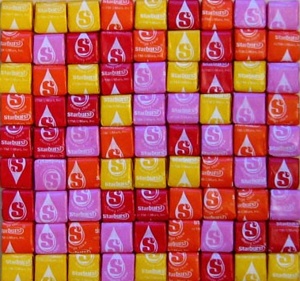
    Under the Dictionary.com definition, a contradiction is a “person, thing, or situation in which inconsistent elements are present”. Based off of this definition, these commercials would correctly portray contradictions. However, under other definitions such as, “a contradiction is two propositions used in combination where one makes the other impossible. It is something that is A and non-A at the same time. A contradiction, therefore, cannot exist in reality, since existence exists” would not consider the people or the dog in the Starburst commercials to be contradictions. These commercials are being closely examined for the accurate or inaccurate usage of the word “contradiction” by many viewers all over the world; however, this brand of candy’s new campaign theme, “Celebrating the contradictions that make life so interesting,” is capturing thousands and thousands of fans daily. The Starburst brand has also created an online “Contradictions Project,” which is seeking to involve fans all around the nation to log on to the Starburst Facebook page and submit common contradictions of their choice. For every contradiction a fan lists, that person will be added to the $250,000 donation, which is partnered with VH1’s Save the Music Foundation, to restore music programs across the country. Whether these new Starburst commercials are considered to be weird, incorrect, humorous, or just plain stupid, the reality of it is, their new theme is making the Starburst brand even more popular than it already was.

    Image

    Sasha De Vecchi, Lindsay Gallagher, Jay Reilly, Cary Welborn

  • Oh Red, How I Love Too

    There are many legends and stories explaining the history of Valentine’s Day and St. Valentine, but one thing remains the same; Valentine’s Day is a holiday where lovers express their affection for one another.  Every year marketers use the same tactics to attract their love struck consumers into the arms of their products. Valentine’s Day advertisements are flooded with hearts, flowers, and of course the colors of love: red and pink. Red and pink symbolize passion and tranquility and are considered the most romantic colors. However, the appeal of generic pink candy and red roses will eventually run its course. So it’s time to spice it up and show your love that you put some real effort into this Valentine’s Day.

    M&M’s are promoting their brand this Valentine’s Day season by offering a sweet alternative to help consumers express their feelings to their loved ones.  The commercial features “Red,” the helpless romantic candy bite, who cannot respond to the love of his life with the three words, “I-Love-You.”  M&M’s understands that it is not always easy to express your feelings. With that in mind they are here to make it easier with personalized M&M’s. Popular messages include “Be mine,” “You make me melt”, “You Had Me at Hello” and “I Love You.” M&M’s also features a prepackaged Valentine’s Day blend with an assortment of colors, sayings and symbols. If that won’t cut it the Romance Bundle may be for you. It comes complete with a teddy bear and three bags of personalized M&M’s wrapped up in a gift box.  Remember, personalization shows that you took time out of your glamorous day to care!

    Through this strategic marketing plan, M&M’s enhances their brand by making it convenient for their consumers to spice up Valentine’s Day. M&M’s are one of the few companies that offer personalized messages on their candy products. This allows the company to stand out against the assortment of chocolaty competitors. Keep in mind that personalized candies aren’t just for Valentine’s Day, but also for any of life’s sweet moments.

    -Kelsey Bendig, Andrea Blanton, Brooke Keller, Brian Burch

  • All The Single Ladies

    Valentine’s Day is a holiday dreaded by a great deal of people, both male and female, for various reasons. There is pressure on both genders to perform, declare emotions, and out-do previous years or expectations. Those who fail at this task of grandstanding may in fact find themselves without a date for next year. Okay, so there’s a ton of pressure on people in relationships, but what about those of us who are single? While some take pride in their solitude, others wish they had someone to be their valentine, and a few twitch at the mere thought of being in a relationship.

    According to an article in the New York Times, being single is a prevalent occurrence these days with 59.9 million single women in America. This staggering rate may surprise some, but companies like Dove chocolate see these table-for-one ladies as a prime marketing demographic. They hope to strike a chord with this growing independent group by catering their advertising to the women who are without companions. That is why this year Dove has made a campaign to remind women Valentine’s Day isn’t just about romance.

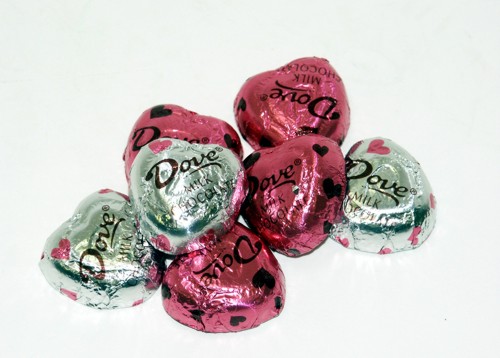
    Dove is banking on the stereotype that single women will turn to chocolate this year on Valentine’s Day. Instead of the standard “Call me” or “I’m yours” found on the candy hearts we used to share with our playground crush, Dove has created a host of witty comments and placed them on the inside of their chocolate wrappers. Some of the best include, “You’re gorgeous,” “Sometimes I buy flowers for myself,” “My flaws are fabulous” and even the ever so uplifting, “Love yourself in a moment.” The new commercial features women sharing their Dove chocolates with everyone from their barista to their neighbor, and most importantly, themselves. Is this a message of independence for the strong woman? Or rather, a cheap ploy based upon the assumption that women alone on Valentine’s Day will inevitably console themselves with chocolate? Either way it’s hard to dislike chocolate, especially when it’s making single girls smile and promising not to judge if we have more than one.

    By: Alexis Kapczynski, Kacy Cox, Josh Bowman, and Sara Kaloudis