Tag: Advertising

  • An ad is worth a thousand words


    This week, T.V. viewers all across the United States are preparing for the season premieres of this fall’s new television series. Stations such as Fox, CBS, and Showtime are all gearing up for the new seasons of their most popular shows as well as introducing new shows to the mix. Every season, many new series are introduced, yet many fail; could it be because of poor advertising?

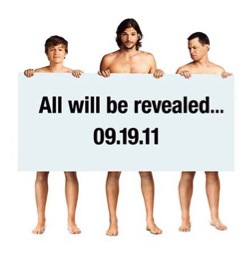
    Before many of these shows are aired, T.V. stations produce numerous ads promoting what’s new to fall television. In regards to Ashton Kutcher’s new role on CBS’ Two and a Half Men, much talk has been going around as to if the show will continue to be a success. Looking at the ad created for promoting its ninth season, Two and a Half Men is portrayed as a show filled with somewhat crude humor and mystery surrounding what’s to come.  The decision to not put the show’s name on the ad was a risk taken; however, it seems to draw even more attention to the show.

    It seems as though a good, comedic sitcom is hard to come by these days. Many of the newer sitcoms never survive the first couple weeks of airing due to poor T.V. ratings.  One comedy set to premier tonight is Fox’s new light and airy show, New Girl, starring Zooey Deschanel. Known for her quirky personality, Deschanel stands front and center of the television ad with an awkward expression on her face. At first glance, New Girl appears to be a show filled with humor and happiness. Perhaps the use of bright colors and that sneaky smile Deschanel wears will draw more viewers in.

    After looking at this season’s T.V. ads, it is evident that certain shows will more than likely draw a larger crowd than others. What it comes down to is: what do T.V. viewers want to watch on a regular basis?  Can looking at a preview advertisement and commercials set the bar for up and coming shows? We’d say so.

    Which shows will you be tuning into this fall?

    -Stephanie Bakolia, Claire Outlaw, David Glaubach

  • What Are You Watching?

    It’s that time of year again when all of the major television networks bring back our favorite shows with the premier of new episodes that we have been anticipating since May.  Whether or not you are a frequent viewer of network television, you most likely know the excitement that comes from the end of summer reruns and the fresh series that awaits.  NBC, CBS, ABC, and FOX are considered the top four major networks; each competing for the top spot as their most popular shows return to television this week.  In addition to the return of the popular shows, these networks invest millions of dollars in the premier of new series that hope to get their viewer ratings among the highest.

    One of the most beneficial ways to get the viewer anticipation flaming is through the persistent use of advertising that each network uses to promote these new episodes.  They build the viewer into believing that the show will be a suitable part of their weekly routine through advertising strategies such as time slots, commercials, clips, sound bites, and many more.  The importance of advertising is to bring the consumer in; while the importance of programming and commercial ads is to keep them coming back each and every week. If an advertisement is presented to us on a persistent level, it can successfully send messages to different aspects of our lives that we feel can relate to the show. For example, reality shows advertise their “genuine”, “real” experiences; family comedies advertise their ability to bring families together; dramas advertise towards our emotional appeals.  In realizing these types of advertisement strategies, we should be conscientious about what we watch in today’s vastly well marketed society. Because where our interests are targeted, our willingness to watch these upcoming premiers follows.  This week will not only reveal the new episodes that these major networks have in store, but will also reveal the kind of connection viewers hope to achieve with the programs they choose to watch.

    By: Oliver Evans, Sally Shupe, and Jared Sales

  • Breaking the Brand Bank

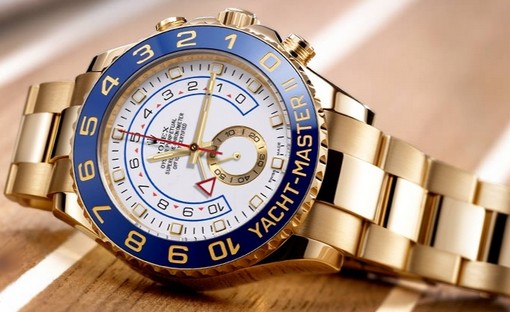
    It’s just a watch right? Wrong. It’s a representation of who you are as a person, an insight into your success and a statement of your style and character. It’s a Rolex and it costs a ridiculous amount of money.

    What do customers look for when shopping for a product? Quality? Price? For most people, this depends on the product. I am sure everyone can think of at least one consumer good in which you are loyal to a single brand. For me, this is my shampoo. Why pay twice as much for a bottle of John Frieda when I can easily get the knock off and save a buck? Because I have developed a brand loyalty; an unwavering devotion to John Frieda hair products and I don’t care if it’s on sale or not. I’m choosing this brand. For most other things in my life, I am content with generics or off brands that generally work as well as the name brands they imitate but when it comes to my hair care I never compromise.

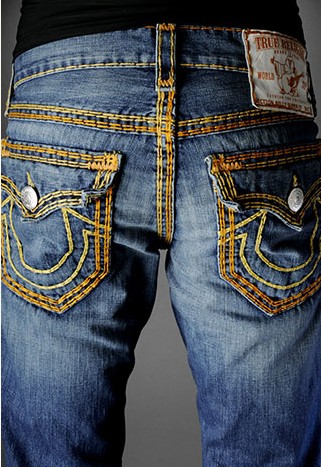
    What phenomenon is it that gets us to pay exponentially more for something that works just marginally more effectively? Does the $8000 Louis Vuitton suitcase really do the job better than your army issue canvas duffel bag? Do the $400 True Religion jeans really make your hips look smaller? The truth is it doesn’t matter. What matters is how we feel. Like the feeling that results from when out of the corner of your eye you notice someone taking an appreciative glance at your checked bag or the “Nice Trues!” from the guy at The Dirty Martini when you come off the dance floor…it’s all about feelings…and feelings matter…to the tune of over 4 trillion dollars domestically in 2009 alone.

    The theories behind brand loyalty run far and wide with arguably one of the more interesting being religion.  An article from futurepundit.com shares that Prof. Ron Shachar of Tel Aviv University’s Leon Recanati Graduate School of Business Administration says that a consumer’s religiosity has a large impact on his likelihood for choosing particular brands. Consumers who are deeply religious are less likely to display an explicit preference for a particular brand, while more secular populations are more prone to define their self-worth through loyalty to corporate brands instead of religious denominations.  Whether it’s religion, feelings, need or just plain greed motivating us, Americans consume labels and brands voraciously.  Perhaps we could all use a little less of both.

  • Marketing’s New Superhero

    In a world where most of the general public has been inundated by the vast amount of advertising on every realm of media, advertisers are struggling to connect with one of their prime markets – the college student. College students are a principal market for corporate marketers with their discretionary spending, having a $2 billion gain from 2009 to 2010. Along with their spending habits, these young adults are beginning to shop for themselves for the very first time, thus beginning to form brand loyalties that marketers strive to form in their target audiences. Herein lays the problem: since we are prone to ignoring most forms of traditional media marketing on television, radio, or newspapers, recent studies have shown that college students are no more likely to open an Internet ad than the rest of the population.

    Introducing corporate marketing’s new superhero: the student brand ambassador. Large corporations are starting to tap campus leaders with a wide sphere of social influence, not to mention the people skills to go along with marketing the brand to a variety of students across their campuses. They also paper bulletin boards, chalk sidewalks, and have constant Facebook or Twitter updates promoting their brand. “The student ambassador tactic embraces all the elements that corporations find [have the] most effect,” states Matt Briton, managing partner of Mr. Youth, a firm that specializes in college marketing, “It’s peer-to-peer, it’s word of mouth, it’s flexible and it breaks through the clutter of the media.” As a market that generally tends to distrust corporate messages, having a peer spin the praises of a certain brand can certainly turn more heads than an ad placed in the correct time slot on MTV.  Marketers are finally beginning to realize something WE all already knew, the best way to sell students something is for other students to be talking about it.                                                                              

    – Jessica Kingman, Alaethea Hensley, & Lauren Phelps

  • Branded Letters

    Today marks the day that every little girl dreams of since the day her mother blessed her with her very own set of pearl earrings, high heel shoes, and sweet- but- sassy personality. Bid Day for sorority life at UNCW allows girls to put their collegiate fate in the hands of anxiously awaiting sorority women who only hope to have a new pledge class formed from the group of their various “rush crushes” developed over the course of the past five days of formal recruitment. After hours upon hours of chanting, smiling, talking, voting, and dancing, girls of UNCW can be associated with a sorority group on campus that they can call their own.

    With the recruitment process finally over, letter shirts are undoubtedly going to flood the length of chancellors walk. Girls won’t be able to fight the temptation to brand themselves under the stereotype of such letters; proud to be a part of the group that is associated with the letters sewn onto their shirts. However, sorority members must be fair-warned: this type of attire is a form of branding that should be used with caution and responsibility. The actions you take and words you say as you wear these letters not only represent you, but also represent how you want yourself and your chapter to be perceived by others.

    Each sorority on this campus offers something different. From reputation to reality, the young ladies involved in Greek Life all make an impression upon their peers according to how they act when they wear these prized letter shirts. If one girl wearing the letter shirt misses class; all sorority women skip classes. If one girl gossips while wearing the letter shirt; all sorority women gossip.

    At least in the minds of those who stereotype.

    This kind of branding is not only true for sororities. All organizations create their identity based on the kind of brand they hope to portray through their members. Each person has the power to represent their group as a whole based on how they act individually…creating an instant association built from one impression. The new members of the Greek system on UNC-Wilmington’s campus have the ability to either accept this brand that has been established for their particular organization or to enhance it. The perception of a group is something that can change with simple, consistent actions that are valued and upheld by all members. Therefore, the revealing of Bid Day today should also reveal hope to expand the brand that these women are newly associated with on UNCW’s campus.

    -Sally, Jared, Oliver

  • How Much is Too Much?

    As the ten-year anniversary of September 11th quickly approaches, many Americans are beginning to prepare for the remembrance of the lives that were lost on that day. All across the country, people are buying extra American flags to place in their windows, commemorative pins, banners, posters, and even coin sets. And that is exactly what marketers want them to do.

    NYCWebstore.com boasts an impressive display of 9/11 commemorative goods from Twin Tower ornaments to hang on the Christmas tree with care, to memorial umbrellas, to FDNY and NYPD shot glasses. Although some of the profits from these “limited edition” items do go towards The FDNY Foundation, we are not told exactly how much.  None the less, at least our conscience can be comforted knowing some part of our consumer spending is for the greater good. However, unfortunately we cannot say the same for all products.

    What better way to remember than through the unique 9/11 Commemorative Coin Certificate? But if a coin-certificate doesn’t tickle your fancy, fear not for the National Collector’s Mint has a variety of coins to choose from including a brand new coin rolled out to honor the 10th anniversary. Now only $29.95 can help you “pay homage to America’s heroes and remember the day that changed America forever… order today!” 

     We do not mean to make light of 9/11. For many of us, this marks an extremely important day in our country’s history and is a day that we will not soon forget. However, when is too much? When does our need for consumption begin to take over so much that we need to have teddy bears, snow globes, and necklaces to help us “remember our heroes”?

    – Jessica Kingman, Alaethea Hensley, Lauren Phelps

  • A Royal Frenzy

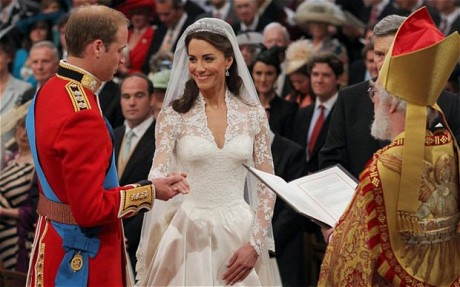
    For centuries, royal weddings have drawn a unique interest among the population; however it is not until recent decades that such events have been televised. The first televised royal wedding was in 1960 of Princess Margaret and Anthony Armstrong Jones who were married at Westminster Abbey. The occasion accumulated over 20 million viewers according to BBC News, and since then royal weddings have become a social event not only for those attending, but millions worldwide. With such a broad interest in the subject, it’s no wonder marketing and branding gurus jumped on the royal bandwagon.

    The wedding of Prince William and Catherine Middleton, now the Duke and Duchess of Cambridge brought in record numbers of viewers from all over the world. More than 52 million viewers tuned into NBC Universal, more than 40 million tuned into NBC news. But what would a royal wedding be in this day in age without a social media impact?  Don’t worry, Prince William and Kate made a huge splash on Facebook and Twitter. NBC News hosted a Royal Wedding Facebook event that received 7,500 attendees and over 500,000 impressions. NBC News also created a Twitter account @RoyalWedding that acquired over 90,000 followers and more than 1.5 million users. The frenzy didn’t stop there, “The Royal Wedding by NBC News” App for iPad, iPhone, and Android reached over 200,000 downloads and quickly became one of  iTune’s Top Ten listed free iPad Apps.

    Aside from the technological and social media craze, numerous memorabilia items were created just for the big day. From replicas of the engagement ring to china sets with Prince William and Kate’s faces, branding reached a whole new level. Marketers even went so far as to create toilet seat covers with the dynamic duo’s face and wedding date. It is safe to say, the Duke and Duchess of Cambridge have developed into their own brand with the help of IMC.

    – Katie Eagle, Deji Adeleke, Carissa Niederkorn, Anna Kate Babnik & Tiffany Evans