Tag: Advertising

  • Where to go, Where to go.

    I’d like to tell you a story about “My Friend”. My friend is a senior enrolled at UNC-Wilmington, and though he is very low on funds, he really wanted to enjoy his final spring break. After some consideration, he decided to make the short drive to Myrtle Beach, South Carolina with his girlfriend where they could live it up like true college students. After my friend returned from his 4 day trip he took a few moments to relive his getaway and came to an abrupt realization. When he was in Myrtle Beach, his schedule consisted of very few things that couldn’t have been done right here in Wilmington. He got up at the break of noon, spent the afternoons lounging on the beach, the evenings relaxing at the local eatery and the nights chilling at the local pub. So if all of these things could have been accomplished in Wilmington, why didn’t my friend just stay in Wilmington? More importantly, why don’t other college students from all around flock to Wilmington to celebrate their time off?

    After some consideration and a little observation, I think I have discovered the answers to these questions: college students don’t come party in Wilmington because Wilmington doesn’t want them to come party here. Wilmington, and more specifically Wrightsville Beach, consists of well-developed (expensive) beach houses and family friendly entertainment offerings. If flocks of college students flocked here every spring then Wilmington could potentially become a less desirable location to bring your family or spend your retirement. It almost comes to a point where a city that is blessed with the kinds of attributes that make it a destination must choose what segment of the population they want to be a destination for. Though the marketing of geographic locations is often not as aggressive as that of traditional businesses, it can be an important decision in the life of a city.

  • Marketing for Vacationers


    Sun tans, sand between our toes and palm trees are images that come to our minds when thinking about spring break. For many college students, spring break is a chance to escape the monotony of the academic lifestyle. This escape often incorporates tropical beaches and fun times with friends. Spring break is about getting away for a little while before the stress associated with the end of the semester creeps up on us.

    Since so many students decide to travel during their spring break, travel agencies take notice of this huge resource of customers and tailor a variety of packages to students. These agencies are aware that students are traveling on a restricted budget, and therefore market cheap packages to them.  Popular packages include flights and rooms is hotels  for five nights (because spring break is usually Monday through Friday).

    One travel agency in particular is cashing in on the huge revenue associated with the student demographic, StudentUniverse. The agency’s website promotes the company as a resource for students to find travel deals catered to them. On the website students can search prices for flights going to their potential spring break travel destinations, activities to do while on vacation,  and cheap hotel rooms. StudentUniverse creates travel packages to popular spring break destinations, such as Panama City and Cancun.

    All though StudentUniverse markets itself as a travel agency for students, it also provides profitable advertising and marketing tactics for companies. The StudentUniverse website shares the benefits of marketing to students with companies. The website also tells companies how they can connect with students without the internet.

    It is apparent that StudentUniverse works with other companies when looking at the activities and events it suggests for its student customers.   The website promotes specific restaurants, parties and other things for travelers. Companies are aware that StudentUniverse can connect them with thousands of potential customers. These customers are looking to go on vacation, have fun and spend money.

    StudentUniverse is an excellent example of the ways companies are marketing to us, without us ever being aware of it. Maybe the next time you are planning your trip you will take a  minute to consider the locations and activities your travel agency is promoting and why.

    ~Hunter, Josh, Molly and Ashley

  • Shave Time. Shave Money. Go Viral.

    You may have seen the latest viral ad campaign that has surged through the Internet and created quite the buzz. It’s a video from DollarShaveClub.com, a recent startup company that ships high quality razors for as little as $1 a month. The video has reached close to 700,000 views on YouTube in just two days.

    The video features Michael Dublin, founder and CEO of Dollar Shave Club, leading the viewer through the company’s warehouse. Michael claims that their blades aren’t just good, they’re “f***ing great”. Michael continues by bashing the competition and “fancy razors” with high-tech gear, saying how handsome your grandfather was with just one razor. The level of absurdity in the video has been compared to the success of the Old Spice campaign, which features deadpan humor and ridiculous situations.

    The marketing campaign may have been more than Dollar Shave Club bargained for. The reaction was so strong that the company’s website crashed soon after the video launched due to the amount of traffic they were receiving. With the website shut down, Dollar Shave Club potentially lost revenue from the overwhelming demand. In the world of modern business, success can literally happen over night, as displayed by Dollar Shave Club’s huge viral impact. With startup companies trying to get their name out there in the fastest and cheapest way possible, creating a hit video may be the way to go, as long as your prepared for the traffic flow afterwards.

    The popularity of the campaign raises some questions regarding the changes in modern advertising. Having your CEO star in a video where you pronounce that your blades are “f***ing great” is risky,  but it seems that the risk, blatant honesty, and the ability for a company to poke fun at itself is what drives a business to viral success. In comparison to the Old Spice campaign, Isaiah Mustafa’s character became so popular that Old Spice went beyond TV adverts and began answering viewer questions on YouTube. While this is still just a character that sells deodorant, it became much more than that to viewers because it didn’t feel like a commercial. If commercials have a self-awareness of what they are, the audience recognizes that awareness and is more lenient to simply enjoy an advertisement as entertainment. Perhaps this is what Dollar Shave Club was going for, simply telling people what they are in the most honest, exciting, and fun way that they knew how.

    By: Hunter Wilson, Josh Vester, Ashley Oliver, Molly Jacques

  • Surfing Your Way to Success

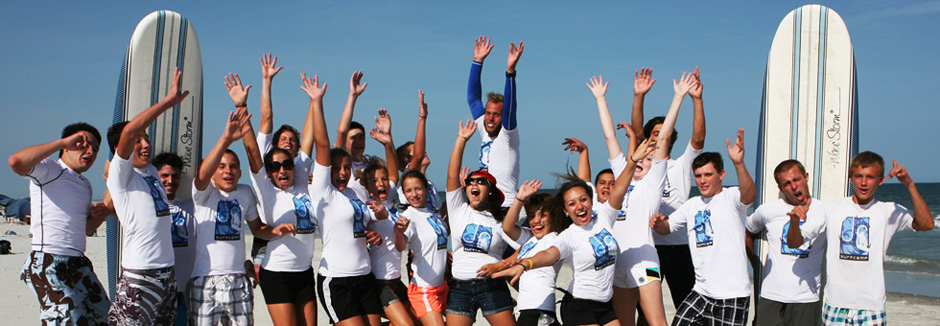
    Entrepreneurs, as well as many other companies, rely on Integrated Marketing Communication to get the word of their business out to the public with multiple methods. A fellow UNCW Senior in the Communication Studies department, James Connolley, has been an entrepreneur using IMC to promote his business, JC Surf Camp. James has been teaching people of all ages how to surf for 8 years and has been an entrepreneur, owning JC Surf Camp for 6 years. His decision to start his own surf camp business started with a conversation with his high school bible study leader. James has a love for surfing, kids, and Jesus and decided the best way to combine all the things he loves into his surf camp. He likes to share his message through his surf camp by the quality and professionalism in his every day work.

    When the surf camp started in 2006, the only way James was communicating with his publics was by posting fliers in the storefront of a local surf shop. His business quickly started to grow and in 2007, James decided he wanted to market his business to a broader audience. He paid someone to build his own website and just recently added new content and features. James uses many other ways to communicate to his public by using mass emails, direct mailing, brochures, website, and social media. The best marketing overall with JC Surf Camp is word of mouth advertising and partnerships with other local camps in Wilmington. More recently, James was able to advertise his business through the local news station WECT.

    Link to WECT Live bit on JC Surf Camp

    The JC Surf Camp team considers surfing one of the greatest blessings in life and goes to great lengths to ensure others see it the same way. Each instructor at JC Surf Camp has gone through an extensive SurfInstruct Training Program before becoming a surf instructor. This program was developed to ensure every instructor knows ocean safety, surf safety, CPR and First Aid certified, and knowledge of different teaching methods for all levels, such as, kids, teens, groups, or private lessons. Another way James and his team ensure safety is by providing UV protected rash guards and soft-top surfboards. Safety is very important to all the JC Surf Camp instructors to make sure they are providing a safe learning environment. James stated it perfectly when he said if people feel safe, they are able to have fun. This is one of the messages James tries to communicate to retain and maintain customers.

    Many times entrepreneurs start from the ground up and have to take what they have and make the most of it. Since James is in the communication studies department at UNCW, he has been able to take the knowledge learned in communication classes and IMC classes and implement that in his business. James, as a student and entrepreneur, thinks of entrepreneurship as an adventure and has far exceeded what many entrepreneurs his age are capable of.

    Learn how to surf today!

    By: Laura Simmons, Dorothy Conley, Christina Stevenson, Mollie Berthold

  • Wait, they care about my vote?

    Candidates have really been trying to “woo” young people to vote. This demographic can be quite difficult to motivate and actually get them to do something. They all just really need someone who they can relate to before we can make a decision, you know like a celebrity who is endorsing one of the candidates. Remembering back to the last election, this was very successful in Obama’s favor. Many famous people were sporting the always fashionable Obama gear. He even made it on the runway! Who wouldn’t want a president that has made it on the Paris fashion runway?


    Of course, not all ploys to get the youth to vote are quite so extreme and over the top. Rock the Vote is one of the biggest organizations trying to get young people to vote. They use pop culture, music, and new technologies to get them to register and have successfully signed up over five million young voters. The Millennial Generation makes up about 1/4 of the voting population which makes them an important demographic for politicians to market themselves to. Just in the last presidential election alone Rock the Vote registered 2.5 million voters. This was by far their highest number they have had yet.

    College campuses are another great outlet for getting the younger crowd to register to vote. Statistics show that there is a much higher rate of educated youth voting versus the ones who didn’t attend college. This is the most convenient way to motivate this  apathetic age group. Having an on campus presence is a good reminder of how easy it is to register. Since the 2000 presidential election it has been forced by federal law for postsecondary institutions to make a good faith effort to distribute voter registration forms to all of their degree seeking students.

    The Presidential candidates now take the Millennial Generation a lot more seriously, then they ever did before. They want their voting numbers to go up and this large demographic can be the boost they need. As a member of this generation, I wonder what tactic they will use next to sway my vote?


    – Mollie Berthold, Laura Simmons, Christina Stevenson, Dorothy Conley

  • Let’s get Weird!

    So here we are in the middle of award shows. We just had the Grammys and now we are preparing for the Oscars. We know that some of the things we are going to see at these events are the designer gowns, crazy hairstyles, and death-defying shoes. We all know who most of the winners are going to be at these events: it will be the new and hip people on the scene, or possibly a singer/actor who has made a comeback in the industry. But what about the unsung heroes that are always there? Who are those people that are really good at what they do, but never seem to make it? One of the biggest unsung heroes is “Weird Al” Yankovic. He has been on the music scene since 1976 and has been making comedy music like “Bob”, “Born this way”, and “Amish Paradise”, just to name a few.

    He has been nominated for comedy awards 14 times, but only twice has he ever won. Even with only two wins, he just keeps on writing and performing his amazing parodies. This is what people should look for when choosing a brand. You want to research and look for a brand that has been around and survived throughout the years; brands that are secure and responsible. You can go out and try the newest brands, but because of their newness, they might not last. Then you have those brands that are trying to revamp themselves because they are on their last leg. Just like “Weird Al,” we all love those brands that have given us the best products and services for years and that we know we can rely on. This is something to keep in mind when you are looking at all the brands that will show up this year at the award shows.

    ~ Dorothy Conley, Laura Simmons, Christina Stevenson, Mollie Berthold

  • Foursquare U

    Back before texting and tweeting, students on college campuses relied on announcement boards and gossip floating in the student center to find the popular hang out spots or know about the latest buzz. Today, news about and around campus is instant. Most major universities have embraced social media over the past decade and are using it to reach college students in a unique way. But how can universities gain access to real-time social trends on campus? Welcome to the new and evolving world of geosocial networks.
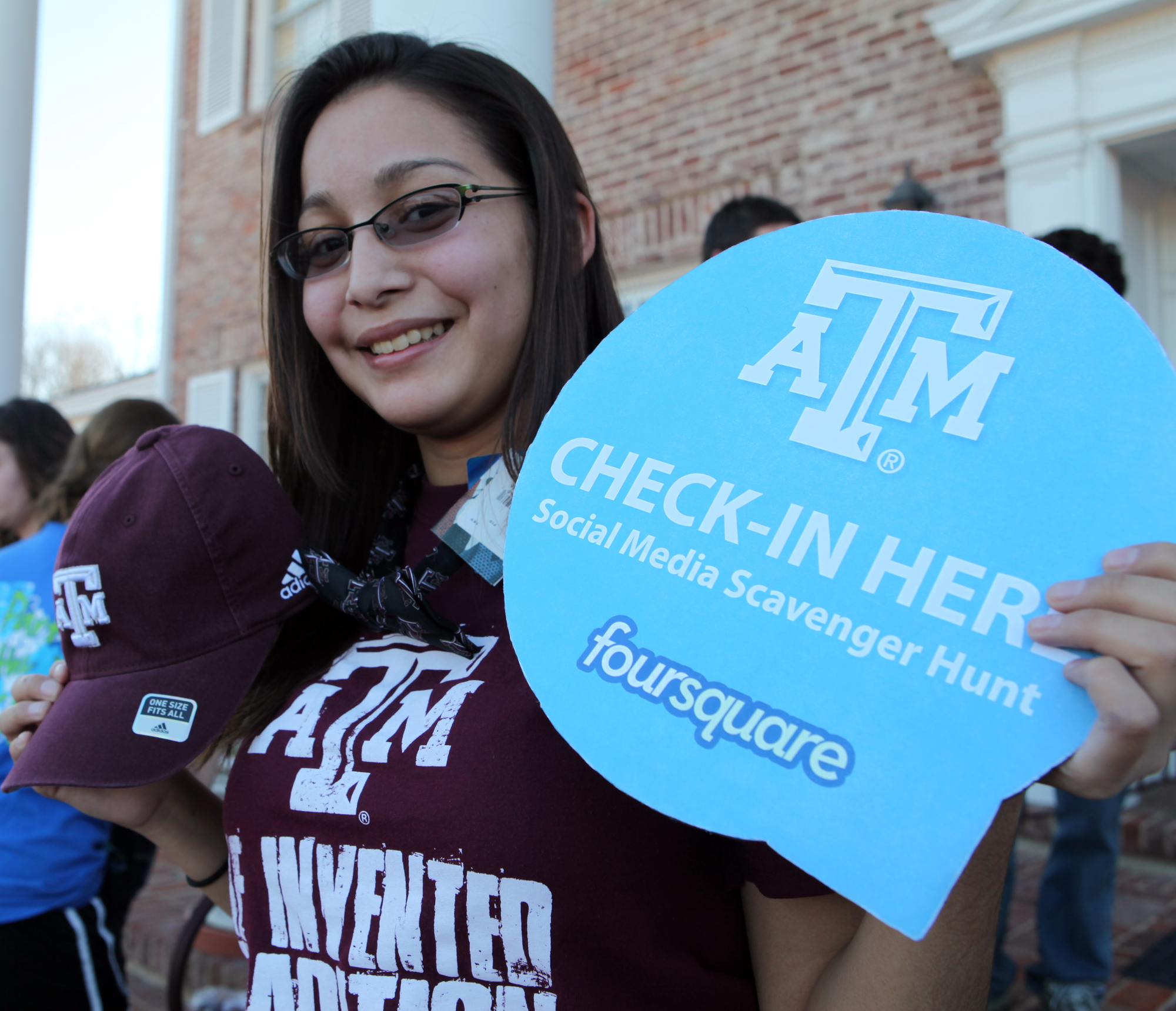
    Geosocial or “location-based” social networks are on the rise, with the forerunner being foursquare, a mobile app launched in 2009 that allows users to “check-in” to various locations and share where they are and what they are doing with their friends. Access to real-time location data from foursquare allows marketers and businesses to know what locations are “trending” as well as the demographics of users checking-in to their establishment. With the growing momentum of foursquare, universities are hopping onto the “check-in” train and recognizing foursquare on campus.
    Why should universities be interested in foursquare? For starters, foursquare currently has 15 million users and over 1.5 billion check-ins worldwide, with a growth rate of 3400% in 2010. Chances are that your business or venue is already on foursquare and users have probably checked in and maybe even left some tips. Information that users enter when creating a venue may be incorrect, but universities that claim their venues can add appropriate information to academic buildings to ensure the best overall experience for faculty, students, and guest.
    Universities are beginning to recognize the potential value of information gathered using geosocial networks. What does 4pm look like on campus? Is the library packed? Are students working out? Applications like foursquare can also attract visitors on campus by offering “check-in” deals (ex. 10% off a shirt when you check-in to the campus bookstore), creating a self guided mobile tour of academic venues, and leaving historic information or helpful tips for different locations.

    Most importantly, foursquare is free advertising (for now). Not only that, but it can be interactive and rewarding for users, perhaps by giving away free university gear for going to the library, attending a campus event, or staying healthy at the gym. The possibilities for university marketing are endless.

    By: Hunter Wilson, Josh Vester, Ashley Oliver, Molly Jacques