Blog

  • How Luxury Brand’s Social Media Content Influences Consumer Engagement

    By: Lia Carnes

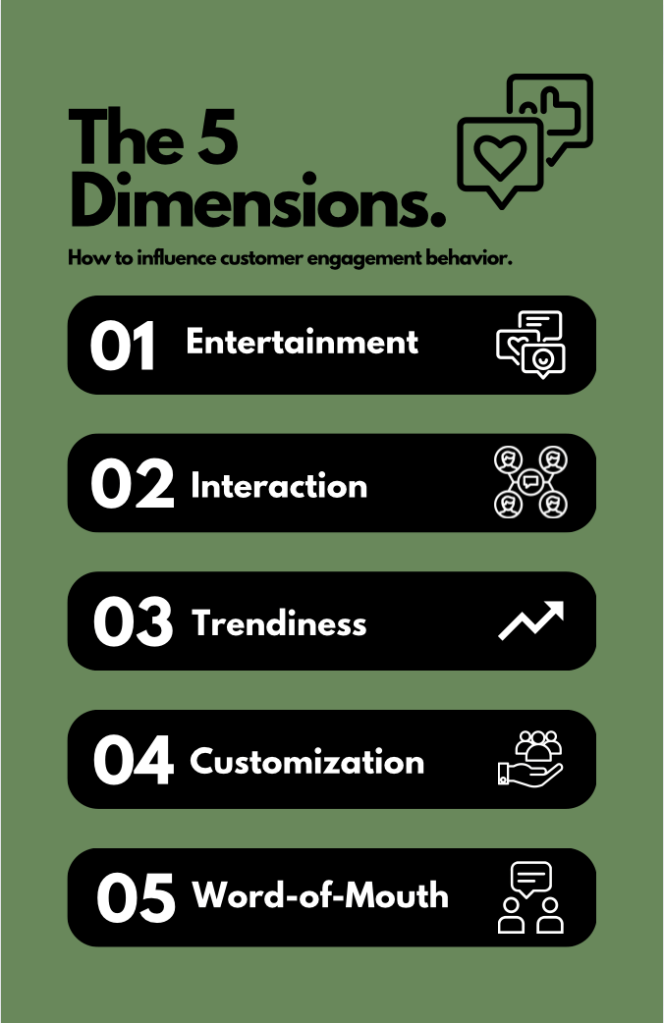
    Is there a difference in how luxury brands influence customer engagement compared to non-luxury? The short answer is no. While luxury brand names are influential, the name does not make the cut. There are five dimensions that industry practitioners should keep in mind while posting: entertainment, interaction, trendiness, customization, and word of mouth (Liu et al., 2021). Besides the dimensions, remember it’s not all about the brand; it’s about how the content can benefit the customer. Let’s dive deeper on how social media content influences consumer behavior by Liu et al. (2021).

    Online Customer Engagement Behavior

    There are three types of online customer engagement behavior, a.k.a, customer activeness. Consumption, being the least active, consists of individuals who primarily scroll and read the content. Contribution is those who are moderately active. This category encompasses those who will like, comment, or share on their platforms or with others. Creation is the most active group. They will go on to make user-generated content (UGC) or write reviews relating to the company that posted (Liu et al., 2021). While the luxury brand’s name can influence each type of customer behavior, the five dimensions discussed below are the primary reason for one’s engagement behavior.
    (Carnes, 2023)

    Entertainment

    In social media, entertainment encompasses all the motivators that would push consumers to create their own UGC. No matter a luxury or non-luxury brand, the social media coordinator will want to post interesting, amusing, and fun content. Keeping the brand image light and fun will make consumers more willing to interact with them and share on their personal platforms (Liu et al., 2021). Nowadays, coordinators are equally interested in keeping their brand image engaging while figuring out how to become viral. 

    Interaction

    Interaction with consumers is vital to the social media world; it requires presence and allows collaboration between others. What’s more exciting than a verified brand seeing your comment and responding? It makes us want to keep interacting and spending time on that brand’s profile. Interaction with a brand will make us more inclined, as consumers, to continually like and share that brand’s content. A brand that only posts and never interacts with its followers, shares their content, or other companies’ content will be overlooked (Liu et al., 2021).

    Trendiness

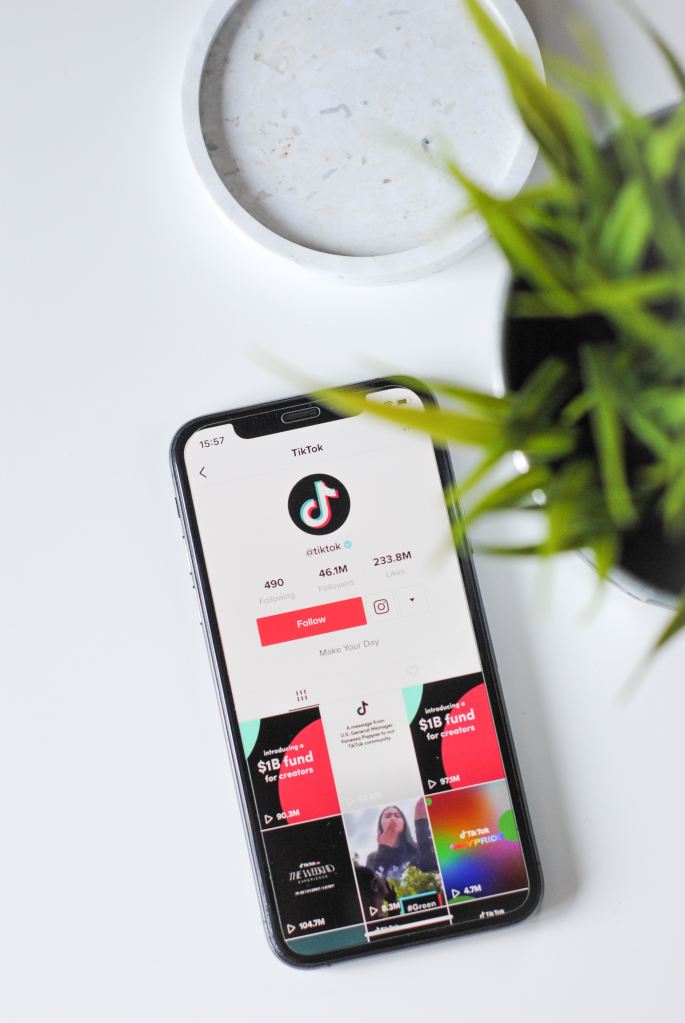
    Trendiness focuses on how in tune the brand is with recent trends. Recently, social media consumers have found online information more trustworthy than listening to the news or press releases (Liu et al., 2021). The social media platform, TikTok, is becoming both a source of entertainment and a search engine. We look to brands to decide what we want to consume, purchase, etc. We want immediate information rather than waiting a few days for an article to be published. If there’s a crisis and something goes viral for the wrong reasons, consumers will constantly be refreshing that brand’s profiles on all platforms (Liu et al., 2021). They want the most up-to-date information and believe that social media will be the most truthful.
    (Photo by Nik via Unsplash)

    Customization

    Unlike a newspaper, brands can customize their social media however they want. They find their demographic and tailor their profiles to reach that specific audience. Consumers can follow any social media account they want to (Liu et al., 2021). They follow people they know, who they’re interested in, and who could pique their interest. Creating a profile that’s specific to the desired audience will have more success than one that tries to mass produce content for a general population (Liu et al., 2021).

    Word of Mouth

    Word-of-mouth encompasses the three customer engagement behaviors mentioned above, consumption, contribution, and creation. Word-of-mouth combines the previous four dimensions into one; it’s a behavior as a response to the other four. Word of mouth is the consumers’ willingness to share information from one brand to another or their profile. They can be a part of consumption and read the content, or they can be part of creation and use elements of the social media post and add it to their blog (Liu et al., 2021).

    Gucci vs. Duolingo

    Looking at TikTok, the viral video-sharing app, we’ll see an example of all these dimensions in action and how luxury brands fail compared to non-luxury. As of March 18, 2023, the luxury brand Gucci has 2.9 million followers, and Duolingo, the language learning app, has 6.3 million followers. Looking at Gucci’s profile, it’s apparent that they customize their account to their audience; it’s a specific, tailored look. While it looks polished, they don’t follow trends, interact with followers, and are primarily entertaining to its particular audience. Compared to Duolingo, their owl mascot dances to trending sounds and replies to smaller accounts and other brands. “In a little over a year, the language-learning app has attracted more than 4 million followers on TikTok with its playful passive aggression” (Honigman, 2022). Duolingo isn’t only successful because of its passive aggressiveness, but the content is funny and entertaining, boosting customer engagement. It gives consumers something to talk about.

    (Photo by Johanne Pold Jacobsen via Unsplash)

    Regarding customer engagement, luxury brands’ social media content is no different from non-luxury brands. Yes, the name has appeal and gets attention, but it’s more focused on the dimensions talked about. Can a company do well without having that brand name and verification symbol? Yes. It must focus on sharing trending and exciting content that makes its consumers want to follow them and engage with the brand. They want to find their target audience and tailor their account toward them. Doing so gives them a specific audience to interact with, presenting the consumer with the potential excitement of being recognized and can lead to word-of-mouth marketing. Using these five dimensions as an industry practitioner will help move those utilizing consumption behavior to creation. 

  • Engaging with College Students and Luxury Brands

    Social media is everywhere these days. Whether college students are looking on social media to find out what their friends did over the weekend or looking to find the latest fashion trends, college students are on social media a lot. One of the things social media is known for is selling items to people. It could be everything from beauty to high fashion clothing, the images, music, and general aesthetic brands use to help to sell their products. But the problem that is happening now is young adults want to buy luxury brands but can’t afford them. So how do these luxury brands find ways to still connect with this important audience with the knowledge that right now, may not be able to afford them?

    Listening

    Even though most college kids can’t afford a $4,200 Prada handbag, the opportunity for Prada to listen to this crowd of consumers is important. In Creevey, Coughlan, and O’Connor’s research study, they found that “Consumer attitudes are investigated by brands on social media through sentiment analysis of multiple forms of UGC (user-generated content), especially online reviews (Creevey et al., 2021). Understanding that brands are looking at user-generated content to make their decisions is important for college kids to know. But it’s also important for brands to make sure they are listening and acting on what they learn from consumers online because the authors see it as “an effective way of harnessing real-time information in evaluating client opinion and perception of brands (Creevey et al., 2021) as consumers perceive UGC and eWOM as trustworthy sources of information (Creevey et al., 2021).”

    Increase Engagement

    The next key part of how luxury brands should think about the college-age consumer is by increasing their engagement with them. The authors noted this by saying “Luxury communication remains more emotional than informational (Okonkwo, 2010), effective communication via social media poses a challenge (Cervellon & Galipienzo, 2015) (Creevey et al., 2021).  Luxury brands should really be looking at this as an opportunity to engage with college-age students by looking for emotional ways to connect with them. This could be done by using images and music that inspire this age group by using trending Tik Tok sounds or trying to find ways to use filters that fit with their brand. Working on this strategy will help luxury brands because “social media use is a significant predictor of materialism (Kamal et al., 2013), which is associated with conspicuous consumption whereby individuals are more likely to display brands more aligned with their ideal self than their actual self on social media (Wallace et al., 2020) (Creevey et al., 2021).

    The authors in this research study also shared important examples of early adopters of social media by luxury brands including Louis Vuitton using Facebook to share photos of their catwalk fashion shows with fans. Doing this gives fans an inside look into that world without them feeling like they need to purchase something. When brands do things like this on social media, it helps create a connection between the brand and the consumer.

    Why This Matters

    College students and luxury brands should take the time to read and understand this research study because it’s important for the study of integrated marketing. College students should know they serve an important role in consuming social media by luxury brands but don’t need to be intimidated by it simply because they can’t afford it right now.

    Luxury brands should take the time to read this research study because as the authors said, “Change has occurred not only in the format of business communication but also in consumers’ capacity to construct, distribute and consume brand-related messages. This presents a wealth of opportunities and challenges for businesses, particularly the luxury industry. The democratization of the creation and distribution of business communication, fueled by the ubiquity of social media, continues to pose pertinent questions for luxury brands striving to preserve a reputation grounded in exclusivity, rarity, and uniqueness” (Creevey et al., 2021).

    What is important for brands to understand is that establishing a solid relationship with college-aged students now means they are working to grow that relationship online for years to come. Just because a college student can’t afford it now, doesn’t mean that in five to 10 years, that could change. The authors also said “These platforms have accentuated a disruption in the power relations between brands and consumers, due in no small part to the velocity at which information can be exchanged among individuals (Pantano, 2021), constituting a profound challenge to traditional branding theory and practice” (Creevey et al., 2021). The luxury brands that really embrace what it means to be online with a college-aged audience and engage with them, will be able to help sustain customers for life.

    References:

     Creevey, D., Coughlan, J., & O’Connor, C. (2021). Social media and luxury: A systematic literature review. International Journal of Management Reviews, 24(1). https://doi.org/10.1111/ijmr.12271

  • Social Media is Regulating Your Behavior

    Case Against Social Media

    Introduction  

     Social media has become an all-new world for people to stay in touch with the trends of lives people are living on social media. Social media, in today’s world, is a main part of many young people today. We have become a society being more concerned with Facebook friends than we are with the people interacting with us face-to-face in our daily lives. The dangers of social media are real: overusing it can lead to symptoms of depression, falling into a comparison trap, and feeling more isolated, among other negative outcomes. There’s good reason to be aware of these negative effects. It is also important to remember that we can seek out and spread positivity through these platforms. 

    Misinformation  

    Today, social media has grown so big that it is a part of our everyday life. We use social media for school, shopping, work life, and entertainment: “About 72% of adults report using at least one social media platform and an average daily usage of 2 hours” (De Vere Hunt and Linos, 2022). First, social media is known for not being entirely truthful and can share misinformation.  People create false social media posts and share them with others worldwide, spreading them to groups. Social media plays a significant role in the dissemination of fake news. Anyone can manufacture fake news on a trending topic and post it on social media platforms without any verification. Misinformation can be super dangerous to others because in most cases they advertise certain products showing these beneficial side effects which are not always true. This encourages the audience to buy products that do not work. People buy these products because they are advertised by popular celebrities, which today’s society is so influenced by. Misinformation can influence the healthy attitude of the audience. “False news reaches more people than the truth does because it has a higher degree of novelty and provokes stronger emotional reactions of recipients, making it more likely to be passed on” (De Vere Hunt and Linos 2022). Public health practitioners can directly address misinformation through myth-busting messages, in which false claims are highlighted and explained and accurate information changed. This should be a lengthy process, beginning with message design and continuing through active comment changing, including direct responses to any false information.  

    Creating Effective Posts  

    Social media is beneficial for promotion and advertising. The entire world is connected and uses social media, people may share their business products and services with the entire world. Online and non-online businesses require promotions and advertisements to promote their products and services to the public. You can freely promote your product with individuals in groups on social media, or you can pay to have paid adverts appear. Others can use social media to promote their products and reach out to people interested in what they have to offer. In addition to connecting individuals, social media platforms, including Facebook, Instagram, Twitter, and TikTok, have sophisticated advertising platforms that facilitate the targeting of advertisements to specified populations. Social media can spread so easily which is why we need to use social media in a positive way. “When designing messages for social media, it is crucial to consider their “shareability. Can the message be designed in a way that encourages users to share it with their friends? Partnering with social media influencer users of social media with established credibility among their followers is a useful approach for leveraging trusted messengers” (De Vere Hunt and Linos, 2022). When creating an ad or posting it is important to have desire and effectiveness. Watching what kind of mental work goes into creating a post is ridiculously awesome. Messages should be designed with and approved by members of the community they are designed to reach, to ensure cultural sensitivity and trust-building.  One way to achieve this is to assemble an advisory board, including members of the target population, and reflect the demographics of users of the intended platform.  

    Solution 

    Public Health Campaign

    For us, as a society to grow with social media, we should deliver public health campaigns. Social media is the only way to spread the word about promoting public health. Public health leaders across the United States are realizing the power of targeted public health campaigns to get the right message to the right person at the right time. Social media is what is driving public health campaigns. Overall, using our platforms to encourage and help people is super important. There is no reason we should use these advanced technology platforms to engage negatively with each other.  

     References 

    De Vere Hunt, I. J., & Linos, E. (2022). Social Media for Public Health: Framework for Social Media–Based Public Health Campaigns. Journal of Medical Internet Research, 24(12), e42179. https://doi.org/10.2196/42179

    Teens and social media use: What’s the impact? (2022, February 26). Mayo Clinic. https://www.mayoclinic.org/healthy-lifestyle/tween-and-teen-health/in-depth/teens-and-social-media-use/art-20474437

    Here’s How Social Media Affects Your Mental Health | McLean Hospital. (2023, January 18). https://www.mcleanhospital.org/essential/it-or-not-social-medias-affecting-your-mental-health

    Banners: A better future with public health for all. (2016, December 12). PSI – the Global Union Federation of Workers in Public Services. https://publicservices.international/resources/news/banners-a-better-future-with-public-health-for-all?id=8667 &lang=en

    Competitive Enterprise Institute. (2020, October 9). The Case against Social Media Content Regulation – Competitive Enterprise Institute. https://cei.org/studies/the-case-against-social-media-content-regulation/

  • Do you know your audience?

    by: Spencer Jones

    Businesses either “get” social media or they don’t.  Every small, local business and international corporation faces this dilemma and some may not even realize it.  Remember this?

    (Photo from Wendy’s, 2015)

    That originated from a 2015 Wendy’s commercial promoting their Jalepeño Fresco Spicy Chicken Sandwich.  Initial reactions were… mixed.  Incorporating elements of online media used in this commercial felt tacky upon release.  Although there’s an argument to be made that it did catch people’s eyes a bit.  If you saw this back when and your friend showed you the frame, how can you not crack a smile?  At the time however, thematic elements from online humor on television mixed like oil and water in this instance.  

    Let’s fast forward a couple years.  The fast food giant would soon pick up steam online at the beginning of 2017 stemming from a hilarious brand-user discussion on Twitter:

    @Wendys: Our beef is way too cool to ever be frozen.

    @NHride: Your beef is frozen and we all know it. Y’all know we laugh at your slogan “fresh, never frozen” right? Like you’re really a joke.

    @Wendys: Sorry to hear you think that! But you’re wrong, we’ve only ever used fresh beef since we were founded in 1969.

    @NHride: So you deliver it raw on a hot truck?

    @Wendys: Where do you store cold things that aren’t frozen?

    Oh, boy.

    @NHride: Y’all should give up. @McDonalds got you guys beat with the dope ass breakfast.

    @Wendys:

    (Wendys, 2016).

    This discussion would shortly thereafter be featured on CNN’s Anderson Cooper 360.  The following positive brand feedback by users blossomed into an intriguing shift in their tone of messaging.  A series of caustic rebuttals and witty banter with both followers and corporate competitors shot their total online follower count up 13% in just 6 months (Thorne, 2020).  I wouldn’t blame you if you think it’s unprofessional or distasteful.  Keep in mind, we’re talking about Wendy’s.  This is an international corporation; a lot of people are familiar with them.  The reach of your business and expectations of a target audience should correlate to what values are upheld in messaging practices.  Building a strong tone for brand messaging consists of surveying the land, aligning with values, and being active.

    Surveying the land

    Research is the predecessor to any informed decision.  That starts with understanding our target audience.  What has worked in the past?  How do they communicate?  What types of content or genres are of  interest to them?  What’s the most important element of what we have to say?  Anticipating how the target audience will react determines what topics or actions to steer away from.  Try to humanize your tone when responding to complaints and compliments alike.  Developing personal, casual tones to messages separates the idea of talking to a brick wall (Jeong & Kim, 2022).  

    Aligning with values

    Each business has messaging values that apply for each active channel. Look for key words or expressions to keep in mind.  Establishing a consistent structure of messaging has to happen before users can express their own positive sentiment towards you.  Aligning values helps to clarify an outline of a business’s social presence to users.  That way, users grow a stronger bond to the business through similar values.

    Being active

    Appropriate usage of humor in social media marketing tells users that a business is not only competent, but confident.  Humor relies on context (Bitterly et al., 2017).  Every business may not intend to be humorous, but should be looking to engage with their audience.  That means speaking in an active voice, being resourceful, rewarding feedback, etc.  The little details that feel authentic and human (emojis, phrases, etc.) strengthen a brand’s social relatability and presence online, widening the path for users to construct a positive view of the brand (Hayes et al., 2019).

    Takeaways

    I like to imagine a business is a living, breathing entity. In order for an audience to have an emotional reaction, there needs to be emotion conveyed through messaging. In order for consumers to engage, there should be engagement going their way. Consistency and confidence creates authenticity. Lean into that. Keep in mind employers (especially local) see Gen-Z interns or staff members with the assumption that they “get” the nuances of a brand’s identity. Some of us assume that we get it, too. Going off assumptions or skipping steps is where businesses and professionals alike fail to maximize their reach.

    References

    Bitterly, T. B., A.W. Brooks, and M. E. Schweitzer. (2017). Risky Business: When Humor Increases and Decreases Status. Journal of Personality and Social Psychology 112, no. 3 (March 2017): 431–455.

    Hayes, J. L., Britt, B. C., Applequist, J., Ramirez, A., & Hill, J. (2019). Leveraging textual paralanguage and consumer–brand relationships for more relatable online brand communication: A social presence approach. Journal of Interactive Advertising, 20(1), 17–30. https://doi.org/10.1080/15252019.2019.1691093 

    Jeong, H. J., Chung, D. S., & Kim, J. (2022). Brands Are Human on Social Media: The Effectiveness of Human Tone-of-Voice on Consumer Engagement and Purchase Intentions Through Social Presence. International journal of communication [Online], 16, 4231+. https://link-gale-com.liblink.uncw.edu/apps/doc/A717299271/PPCM?u=wilm99594&sid=bookmark-PPCM&xid=cf588424

    Thorne, J. (2020). How Wendy’s revolutionized corporate social media accounts. Medium. Retrieved March 22, 2023, from https://bettermarketing.pub/how-wendys-revolutionized-corporate-social-media-accounts-6d4aec739f37 

    Wendy’s. [@Wendys]. (2016, December 30). Our beef is way too cool to ever be frozen. [Photo attached] . Twitter. https://twitter.com/Wendys/status/815973811115925504

  • Reminisce with Nostalgic Marketing

    By: Natalie Stinnett

    (Photo by The Deaf Institute

    The Power of Brand Nostalgia

    Recently, we have seen brands and companies utilize the feeling of nostalgia to market to and connect with their target audience. Some of your favorite childhood shows have made recent reboot versions of the old shows you grew up watching, like: iCarly, That 90’s Show, The Proud Family: Louder and Prouder, and Fuller House. A few of your favorite childhood bands or singers are singing their old songs, going on tour, and releasing new music – The Jonas Brothers, Paramore, and Aly & AJ. Companies like Pepsi, Coca-Cola, and McDonald’s have utilized nostalgia by bringing back old or limited menu items that were once customer favorites. These examples all point back to how you can use nostalgia marketing to pull on the heartstrings of your audience and reel them into your brand.

    What is Nostalgia? 

    “Nostalgia has been viewed as a yearning for a fond memory or liking for personal experiences and possessions of days gone by” (Youn & Amponsah Dodoo, 2021). Brand nostalgia could also be utilized “as a way to communicate with consumers [who have] already been more favorable in the marketing field.” (Cui, 2015) When you reach that feeling of nostalgia, you will experience a sense of homesickness, or sentimental longing or yearning for a past moment, memory, experience, feeling, or past period in your life. 

    How to Implement Nostalgia in Your Brand

    A nostalgia marketing approach can highlight familiar and positive concepts into new and modern ideas, products, or campaigns. Additionally, this nostalgia tactic of associating your brand with something that consumers already love, know about, or have positive or sentimental memories with, will benefit your brand, and your consumer-brand relationship with your audience. Let’s see if you can point out a few examples of brand nostalgia.

    Examples of Brand Nostalgia 

    Let’s look at That 90’s Show. This rebooted version of the hit TV show, That 70’s Show was created during the height of the COVID-19 global pandemic. The creators, Bonnie and Terry Turner wanted to do a spinoff show to That 70’s Show, because it gave them a sense of nostalgia of “going home to a familiar place” (Rath, 2023). In this case, that familiar place for The Turners was the Foreman’s basement, and they wanted to share that familiarity and nostalgia with their audience. 

    (Photo by Patrick Wymore, for Netflix) 

    Former Disney Channel Stars, Aly, and AJ Michalka – also known as Aly & AJ, have also taken advantage of nostalgia marketing. These two women were signed in 2004 by Disney’s Hollywood Record Labels, and they starred in old Disney Channel movies including, “Cow Belles”. They have recently made their comeback with the release of an explicit version of their hit song, “Potential Breakup Song”. Their target audience grew up with these sisters and this song, so the cuss words they added in this new version hit all the right spots for their now grown-up listeners. Since then, they have released a new album, With Love From and are going on tour starting in March 2023. 

    (Photo by Gregg Deguire for WireImage and Getty Images)

    Consumer-Brand Relationship 

    Your consumers and target audience will appreciate the nostalgia you incorporate into your brand, as they have fond memories and experiences with your message, product, or content. That feeling of nostalgia will make your audience reminisce on the good ol’ days and get them to relive those memories or experiences. This marketing will take your audience back to their happy place, despite what their current busy work schedules, or relentless responsibilities may look like. 

    Brand Loyalty and Attachment 

    Your audience may develop a sense of brand loyalty and brand attachment when they see the emotion and nostalgia you implement in your brand. You want your customers to walk away from your brand wanting more. To do this, you should invoke emotions like nostalgia into your brand and marketing because “people tend to have personal attachments to brands that evoke past events and personal experiences” (Youn & Amponsah Dodoo, 2021). This attachment will influence your audiences’ purchase intentions, commitment, and loyalty to continue coming back to your brand, as opposed to your competitors.

    Brand Personality  An effective brand personality should mirror a target audience that has similar traits and personalities to your brand. This also ties in with your audience’s loyalty, commitment, and attachment to your brand, as the “consistency between a brand’s personality and a consumer’s personality enhances the consumer’s attachment to the brand.” (Youn & Amponsah Dodoo, 2021). Your brand personality will also align with your audiences’ self-image, which could develop consumer-brand loyalty and attachment.

    References 

    Cui, R. (2015). A Review of Nostalgic Marketing. Journal of Service Science and Management, 08(01), 125–131. https://doi.org/10.4236/jssm.2015.81015

    Jokic, N. (2021, May 5). Aly & AJ Revealed What They Miss About Releasing Music in the 2000s, What They Really Think About TikTok, and Why Their New Album Name is So Darn Long. BuzzFeed. Retrieved March 21, 2023, from https://www.buzzfeed.com/natashajokic1/aly-and-aj-new-album-interview

    Rath, K. (2023, January 31). Why That ’90s Show Wouldn’t Have Happened Without the Pandemic. ScreenRant. Retrieved March 21, 2023, from https://screenrant.com/that-90s-show-pandemic-help-reason/#:~:text=The%20Pandemic%20Led%20To%20That,the%20That%20’70s%20Show%20spinoff.

    Youn, S., & Amponsah Dodoo, N. (2021, April 8). The Power of Brand Nostalgia: Contrasting Brand Personality Dimensions and Consumer-Brand Relationships of Nostalgic and Non-Nostalgic Brands. Wiley Online Library, 20(6), 1371-1694. Retrieved March 20, 2023, from https://doi.org/10.1002/cb.1941

  • Getting More Likes Through Brand Perception

    By: Harrison Tabb

    (Photo by Luke Chesser on Unsplash)

    Brand Communication Strategy

    Have you ever wondered how or why a brand advertises the way they do? How customers react to the brand’s content and “likes” are the main factors. While “likes” are a direct indicator of the performance of an ad, likes also enhance brand connections, customer engagements, and online brand endorsements (Chang et al., 2019, p. 1028). Strategizing effective in-feed advertising can help brands present themselves with humanistic qualities and encourage social media users to interact with brands. Frequently, we find ourselves checking the legitimacy of brands we haven’t heard of by looking at reviews or simply looking at the amount of likes an ad receives. How a brand utilizes human characteristics within its messaging can affect impressions, relationships, and the persuasiveness of its messages.

    Successful In-feed Advertising

    In-feed advertising has the potential to annoy or captivate its audience. Oftentimes in-feed advertising can be the first thing social media users see, and if it sends the wrong message, viewers can be turned away from the brand or product. We often find ourselves looking for cues or qualities to make brands more relatable and appealing to create personal connections with a brand we want to identify with. Similar to how nobody is perfect, no brand is perfect. A brand adopting humanistic qualities can send different types of messages that can alter our perceptions of a brand. The two main types are “warmth” and “competence” (Chang et al., 2019, p. 1028). 

    Warmth

    Messages that are perceived as warm typically make a person or brand seem kind, friendly, trustworthy, and helpful (Chang et al., 2019, p. 1028). Try to be mindful the next time you use social media and think about how a particular advertisement makes you feel. Without being cognizant of how an advertisement can make you feel, specific messages can easily persuade you. Pairing certain types of language with warm advertisements can enhance or detract from an intended message. For example, when brands create messaging to display warmth, using first-person language will make the brand more likable. This effect will make customers feel a need for social belonging that can be fulfilled by associating themselves with the brand (Chang et al., 2019, p. 1041). 

    (Photo by Quan Le on Unsplash)

    Competence

    Inversely to warmth, brands can portray competence through their messaging to make customers feel a sense of intelligence, power, or that the product is highly effective (Chang et al., 2019, p. 1028). Notice how many advertisements that make a product seem highly effective do not rely on emotions but instead demonstrate the product or service’s potential. Rather than relying on first-person narration, third-person narration can be used to make brands seem more competent and grab consumers’ attention (Chang et al., 2019, p. 1031). Some major brands that advertise the effectiveness of a product often use this approach rather than an emotional appeal because it displays the product or service’s capabilities. This can lead people to desire a product because of the experience they’re selling rather than the product itself.

    Branded Content and Consumer Engagement

    A brand can choose to personify itself through varying human qualities, but it takes effort and careful analysis to ensure that the image of the brand aligns with the audience it intends to reach. When consumers can clearly see the brand’s personality, they’re more likely to engage with posts, and advertisements will feel less commercially intrusive (Chang et al., 2019, p. 1031). Deciding whether we want to identify with a brand because of its personality, what they stand for, or even just the design of its logo is a choice we make every time we decide what to buy. As we become more acquainted with a brand, we will often look to that brand to satisfy our needs through brand loyalty.

    (Photo by Cottonbro Studio on Pexels)

    Managing Brand Perceptions and Impressions

    Creating successful in-feed advertising requires marketers to understand how they intend for their messages to be perceived. Effectively breaking down what types of narration and images must be combined to create messages can significantly improve a marketer’s potential to influence consumers. An advertisement may perform well on some platforms but not others because “the same ads in different social media contexts may have different advertising effectiveness” (Chang et al., 2019, p. 1043). However, consistent performance analysis can aid in making necessary and appropriate adjustments to appeal to the specific intended audience. Determining and marketing to an intended audience can be challenging, but understanding whether to use warm or competent messaging can enhance the presentation of the brand and products. While no perfect message can appeal to everyone, accurately matching warmth or competence, first-person or third-person narratives, and images can personify a brand and products to extremely specific audiences. Utilizing these findings can make a brand more engaging and create effective impressions.

    References

    Chang, Y., Li, Y., Yan, J., & Kumar, V. (2019). Getting more likes: the impact of narrative person and brand image on customer-brand interactions. Journal of the Academy of Marketing Science, 47(6), 1027+. https://link-gale-com.liblink.uncw.edu/apps/doc/A605172785/ITOF?u=wilm99594&sid=summon&xid=ffef8e34

    Chesser, L. (2019). Speedcurve Performance Analytics. Unsplash. Retrieved March 21, 2023, from https://unsplash.com/photos/JKUTrJ4vK00?utm_source=unsplash&utm_medium=referral&utm_content=creditShareLink.

    Cottonbro studio. (2020). Liking a Photo on Instagram. Unsplash. Retrieved April 23, 2023, from https://www.pexels.com/photo/liking-a-photo-on-instagram-5052877/.

    Le, Q. (2017). Person stacking five assorted-color Starbucks cups. Unsplash. Retrieved April 23, 2023, from https://unsplash.com/photos/nZJOEYzKliA.

  • Social Media is Regulating Your Behavior

    Case Against Social Media

    Introduction  

     Social media has become an all-new world for people to stay in touch with the trends of lives people are living on social media. Social media, in today’s world, is a main part of many young people today. We have become a society being more concerned with Facebook friends than we are with the people interacting with us face-to-face in our daily lives. The dangers of social media are real: overusing it can lead to symptoms of depression, falling into a comparison trap, and feeling more isolated, among other negative outcomes. There’s good reason to be aware of these negative effects. It is also important to remember that we can seek out and spread positivity through these platforms. 

    Misinformation  

    Today, social media has grown so big that it is a part of our everyday life. We use social media for school, shopping, work life, and entertainment: “About 72% of adults report using at least one social media platform and an average daily usage of 2 hours” (Leung 2022). First, social media is known for not being entirely truthful and can share misinformation.  People create false social media posts and share them with others worldwide, spreading them to groups. Social media plays a significant role in the dissemination of fake news. Anyone can manufacture fake news on a trending topic and post it on social media platforms without any verification. Misinformation can be super dangerous to others because in most cases they advertise certain products showing these beneficial side effects which are not always true. This encourages the audience to buy products that do not work. People buy these products because they are advertised by popular celebrities, which today’s society is so influenced by. Misinformation can influence the healthy attitude of the audience. “False news reaches more people than the truth does because it has a higher degree of novelty and provokes stronger emotional reactions of recipients, making it more likely to be passed on” (Leung 2022). Public health practitioners can directly address misinformation through myth-busting messages, in which false claims are highlighted and explained and accurate information changed. This should be a lengthy process, beginning with message design and continuing through active comment changing, including direct responses to any false information.  

    Creating Effective Posts  

    Social media is beneficial for promotion and advertising. The entire world is connected and uses social media, people may share their business products and services with the entire world. Online and non-online businesses require promotions and advertisements to promote their products and services to the public. You can freely promote your product with individuals in groups on social media, or you can pay to have paid adverts appear. Others can use social media to promote their products and reach out to people interested in what they have to offer. In addition to connecting individuals, social media platforms, including Facebook, Instagram, Twitter, and TikTok, have sophisticated advertising platforms that facilitate the targeting of advertisements to specified populations. Social media can spread so easily which is why we need to use social media in a positive way. “When designing messages for social media, it is crucial to consider their “shareability. Can the message be designed in a way that encourages users to share it with their friends? Partnering with social media influencer users of social media with established credibility among their followers is a useful approach for leveraging trusted messengers” (Leung 2022). When creating an ad or posting it is important to have desire and effectiveness. Watching what kind of mental work goes into creating a post is ridiculously awesome. Messages should be designed with and approved by members of the community they are designed to reach, to ensure cultural sensitivity and trust-building.  One way to achieve this is to assemble an advisory board, including members of the target population, and reflect the demographics of users of the intended platform.  

    Solution 

    Public Health Campaign

    For us, as a society to grow with social media, we should deliver public health campaigns. Social media is the only way to spread the word about promoting public health. Public health leaders across the United States are realizing the power of targeted public health campaigns to get the right message to the right person at the right time. Social media is what is driving public health campaigns. Overall, using our platforms to encourage and help people is super important. There is no reason we should use these advanced technology platforms to engage negatively with each other.  

    References 

    De Vere Hunt, I. J., & Linos, E. (2022). Social Media for Public Health: Framework for Social Media–Based Public Health Campaigns. Journal of Medical Internet Research, 24(12), e42179. https://doi.org/10.2196/42179

    Teens and social media use: What’s the impact? (2022, February 26). Mayo Clinic. https://www.mayoclinic.org/healthy-lifestyle/tween-and-teen-health/in-depth/teens-and-social-media-use/art-20474437

    Here’s How Social Media Affects Your Mental Health | McLean Hospital. (2023, January 18). https://www.mcleanhospital.org/essential/it-or-not-social-medias-affecting-your-mental-health

    Banners: A better future with public health for all. (2016, December 12). PSI – the Global Union Federation of Workers in Public Services. https://publicservices.international/resources/news/banners-a-better-future-with-public-health-for-all?id=8667 &lang=enCompetitive Enterprise Institute. (2020, October 9). The Case against Social Media Content Regulation – Competitive Enterprise Institute. https://cei.org/studies/the-case-against-social-media-content-regulation/