Blog

  • Walking Billboards

    When we first hear the term “product placement” our minds invariably flash to ill-disguised attempts by companies to sling their brands into popular television shows and movies. The movie Transformers 3 was bashed for looking like one giant advertisement for a litany of companies including Mercedes, Nokia, and Apple.

    But what about the infamous red carpet? As stars twirl their way down these crimson lanes, they will all face one important question: Who are you wearing? By having a star tout your brand, it raises its stock tenfold. For instance, in 1998, Kim Basinger arrived at the Oscars in an Escada gown raising the then relatively unknown German fashion house’s profile to an international status. Jewelry also has a big stake in the red carpet industry. Jeweler Harry Winston can usually be found dripping off of no less than 20 celebrities, but when rival brand Chopard wanted a part of the red carpet action they offered celebrities Hilary Swank and Charlize Theron a six-figure paycheck to wear a pair of their earrings.

    Off the red carpet, celebrities are still walking billboards for fashion companies. Take a look at the Australian footwear brand UGG. After the tabloids started picking up shots of Cameron Diaz and Kate Hudson flouncing around town in their boots, sales went through the roof. At this point, almost everyone either has a pair of UGGs or knows at least two people who do. And in this vein, when The Today Show featured a segment about Madonna’s infatuation with designer Steve Madden’s Iglou boots, the company racked in 240 orders for the boots in a grand total of 13 minutes giving the company a whopping $30,000 in profit. 

    So what does this all mean? Must our favorite celebs only be seen as walking product placements? Do they not have any taste of their own? Of course, they do. But the next time you run out and buy a pair of shoes because Kim Kardashian was wearing them at her birthday party, think how you might be doing exactly what their marketers intended.

    -Jessica Kingman, Alaethea Hensley, and Lauren Phelps

  • IMC Minus the C: The World Behind IMM

    With questions in my mind about product placement and how the book “The Authenticity Hoax” relates, we eagerly write this blog post.  Though there were many great points in the book, we were particularly interested in status seeking and materialism.  Do we want things because we really want them, or do we want things because we perceive them to be desirable?  What is our motive for buying?  Do these $250 Dylan George jeans do the job better than Wranglers… or are we seeking exclusivity? We think the answer has much to do with simple competition.

    We don’t think people were born with the inherent proclivity to seek out high priced designer fashions, We think their behaviors were molded by society saying, “These things make you important and envied.”  This brings us to the title of the post, IMM, Integrated Marketing Materialism.
    There is nothing wrong with promoting products; however, we have been wondering lately how early certain niche luxury markets are starting to target their audiences.  Of course, children of the stars have custom made Salvatore Ferragamo shoes, but it seems like serious materialism is rapidly affecting younger demographics even outside of Hollywood.

    Certain television shows like “Gossip Girl” are aimed at teens, but the characters always wear over the top, Haute couture only available at high end stores for outlandish prices.  Are these television shows telling our teens that it’s time to kick it up a notch and take a trip to Neiman Marcus for some Oscar de la Renta?  You can be the judge of that after you check out this picture of Blair Waldorf from “Gossip Girl.” Blair has a $2,100 dress by Moschino, $900 Quepi Reci platforms by Christian Louboutin and a $3,400 Chanel patchwork purse.  All together, her ensemble costs $6,400 plus tax and shipping (since most of us do not have access to such retailers).

    To people who are remotely knowledgeable about fashion, those products are easy to identify (especially because of the red soles on the shoes).  They are easy to recognize because they have been shoved in our faces for years now.  To our surprise, when we investigated these products, many retailers were sold out!  Obviously, their marketing strategy is working, which one do you think it is?

    -Stephanie Bakolia, Claire Outlaw, David Glaubach


  • Product Placement: The 90’s and Today

    Growing up in the 90’s was quite a rich experience. Alongside the bright colors, turtle necks, and psychedelic patterns that we all wore, an amazing new shoe graced the decade that had all of the kids talking. It was marketed as a shoe that could make any kid run faster, jump higher, and practically defeat gravity.

    It was the PF Flyer.

    These particular shoes were worn by Benny “THE JET” Rodriguez; the star of the movie, The Sandlot, who became the instant role model for every young boy dreaming of a baseball career. While wearing these shoes, Benny caught a baseball that was signed by the world famous player, Babe Ruth; diving for it against the clutches of a monstrous guard dog.
    After this movie hit screens, kids in the 90’s just had to get their hands on these PF Flyers. These shoes were marketed as something magical, all because of one slow-motion movie scene. They could not only make you run and jump higher, but these shoes were also instantly associated with the heroic catch made by Benny Rodriguez. If Benny could catch that ball, so could you. But only if you had your pair of PF Flyers.
    At the time, kids did not have the knowledge to dissociate Benny’s success among his friends and baseball from mere product placement. The placement of these shoes during such a critical point in The Sandlot was no mistake. Marketers from the brand knew very well what they were doing, and they did it well. The PF Flyers became a staple sneaker for every young kid in the 90’s. Perhaps the successful sales numbers were not solely because of the appearance on Benny Rodriguez’s feet, but it was simple placements such as this that made the brand attractive to families across America.
    Today, we see this kind of marketing everywhere we look. Movies and television programs lace their characters and settings with products as a result of eager marketers trying to solicit their image. When the marketer has the opportunity to take advantage of a hopeful, entertained audience through something as simple as product placement, they are diving into more than they may have originally intended. They are not only selling a product, but they are selling a brand message. By choosing which scene, character and setting to place products, the marketers are aiming to take advantage of a relationship that has been built between the audience and the movie. In doing so, they can only hope that the audience will feel so related to the movie that they will be reminded and persuaded about the “value” the product had in the film.
    So, would Benny Rodriguez have caught the infamous catch if he was wearing LA GEARS or NIKES? The marketers of PF Flyers want you to think not.

    Sally Shupe, Jared Sales, Oliver Evans

  • The Need for Nielsen

    Imagine being chosen at random to watch hours of television and get paid to rate the shows you watch.  Believe it or not, this is exactly how television shows get their ratings.  The Nielsen Company is the leading consumer research group that collects demographic as well as  media consumption data that produce television ratings- hence the name “Nielsen Ratings”.  Nielsen randomly surveys millions of households nationwide to find trends among viewers based on what they are watching.
    Ratings may not seem that important to you as the viewer, but to the companies that wish to market their brand, these ratings determine when and where they invest their money.  For instance, say you work for a brand whose target market is young adults; where are you going to place your commercial? Are you going to have it air during the premiere of NBC’s provocative new drama The Playboy Club or the season premiere of FOX’s “High-School-Musical-esque” show Glee? This should be a no-brainer, but for  shows that are in the same genre and marketing the same audience, firms depend on these ratings and the demographic data from “Nielsen families” to assist in making these types of marketing decisions.
    So thanks to you, Nielsen Company, for only airing what we want, when we want it.

  • Ad it all up

    The anticipation of the 2011 TV line up is almost complete as we
    are wrapping up the first week of an intense premiere season. Coming soon we
    will view the Nielson rating which will say which show came out on top with the
    most viewers and what networks picked the best shows to debut. However, there is
    more to just ratings from a show that make it popular, there are strategies
    weaved into placing certain advertisement’s along with the viewers of those
    shows.

    When watching the recent Emmy award-dominating force, Modern
    Family, on Wednesday
    evening
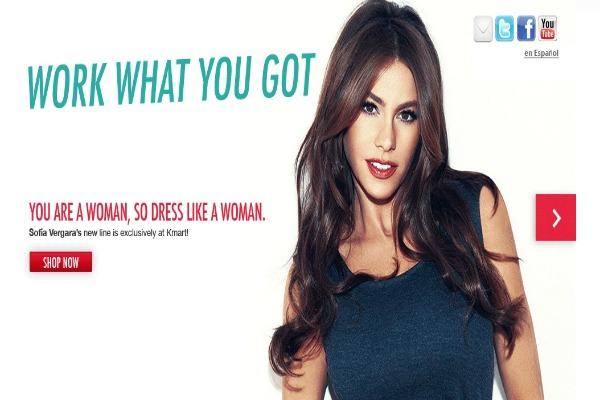
    ,  did you notice that actress Sofia Vergara, who plays the role
    of gorgeous Gloria Pritchett, debuted her new clothing line at K-Mart for the “
    You are Woman, So dress like a Woman line”? Maybe the nostalgic 60
    second Pepsi commercial caught your attention while watching the hit show X
    Factor on Fox which took the audience on a journey through the
    past. The commercial starts off as a new performer about to enter
    the stage but before he goes on he picks up a can of Pepsi, takes a swig, then
    stares at the logo it then evokes emotion from the new performer and, it
    sends him into a tumbling daydream full of Pepsi’s pop stars past commercials,
    such as the late Michael Jackson, Ray Charles and Mariah Carey to name a few,
    then you are left to a blurred vision of this man about to enter the stage and
    become his own start like those who drank Pepsi its first big brand spot touting
    its connection to the program.

    Is it a coincidence for both of these commercials to premiere
    simultaneously with these shows? You would be silly to consider such a
    thing. Thematically, the spot placement of each advertisement is
    seamless. Pepsi really is wondering who will become the next, since they have
    promised the winner of The X Factor a starring role in a Super Bowl commercial
    this winter.  Sofia Vergara knew she had the “mom” and “working
    women” audience during the Modern Family season premiere; ABC and Sofia knew
    those mom’s and working women were those who helped nominate her for the 4
    Emmy’s this year. It was a perfect fit for one of the highly anticipated comedy
    shows to integrate Sofia’s personal achievements.

    The Nielsen rating suggests that consumers are watching TV more
    than ever before, which makes what they are watching an integral and essential
    part of a marketing campaigning for brands. This is there one opportunity this
    fall season to make impact on those targeted viewers to entice them to purchase
    a can of Pepsi over Coke, or that leopard Mini skirt at K-Mart over the
    over-priced department stores. These are ad placement strategies, brands and
    networks have merged together to get more bang for your buck.

    – Jordan Hill, Ashley Nelson, Michela Noreski

  • But first, here is an ad from our sponsor.

    Did you find yourself inconveniently plopped in the library studying for an exam during last night’s season premiere of Glee? DVR malfunction? No worries, Fox has you covered. With our schedules growing busier and busier all the time, network TV has to find a way for their programming to reach us. And they have found the solution. By having episodes for free on their website, networks, such as Fox, are able to get their programming to you at your convenience.  This means that you are able to sit and watch the program you missed without any distractions, at the time you want, with no commercials… right? Unfortunately, convenience comes with its price.

    When watching your favorite shows online, commercials are forced upon you at least 2 to 3 times per hour.  This is quite different from the early days of online video where one 20 second ad would play during the course of an hour program. Now, your show is interrupted several times with no means of changing the channel or fast-forwarding. This may be seen as an inconvenience by the viewer, but this is a marketing dream. Not only can you show ads which must be viewed in order to continue on with your program, but it also provides the viewer with clickable links to find out more information about the product or service. It goes beyond anything a TV commercial can do.  Having commercials online, as well as on TV, doubles the network’s advertising dollar. With the ease that episodes can be placed online, this can definitely be seen as quite a bargain.  As always, convenience comes with a price. In this case, frequent commercial interruption is the price we pay for being able to watch our episode of Glee on our computers while we do our laundry today.

    – Lauren Phelps, Jessica Kingman, Alaethea Hensley

  • An ad is worth a thousand words


    This week, T.V. viewers all across the United States are preparing for the season premieres of this fall’s new television series. Stations such as Fox, CBS, and Showtime are all gearing up for the new seasons of their most popular shows as well as introducing new shows to the mix. Every season, many new series are introduced, yet many fail; could it be because of poor advertising?

    Before many of these shows are aired, T.V. stations produce numerous ads promoting what’s new to fall television. In regards to Ashton Kutcher’s new role on CBS’ Two and a Half Men, much talk has been going around as to if the show will continue to be a success. Looking at the ad created for promoting its ninth season, Two and a Half Men is portrayed as a show filled with somewhat crude humor and mystery surrounding what’s to come.  The decision to not put the show’s name on the ad was a risk taken; however, it seems to draw even more attention to the show.

    It seems as though a good, comedic sitcom is hard to come by these days. Many of the newer sitcoms never survive the first couple weeks of airing due to poor T.V. ratings.  One comedy set to premier tonight is Fox’s new light and airy show, New Girl, starring Zooey Deschanel. Known for her quirky personality, Deschanel stands front and center of the television ad with an awkward expression on her face. At first glance, New Girl appears to be a show filled with humor and happiness. Perhaps the use of bright colors and that sneaky smile Deschanel wears will draw more viewers in.

    After looking at this season’s T.V. ads, it is evident that certain shows will more than likely draw a larger crowd than others. What it comes down to is: what do T.V. viewers want to watch on a regular basis?  Can looking at a preview advertisement and commercials set the bar for up and coming shows? We’d say so.

    Which shows will you be tuning into this fall?

    -Stephanie Bakolia, Claire Outlaw, David Glaubach