Blog

  • New Rules For Celebrities Who Advertise On Twitter

    Not all tweets are created equal: the U.S. Federal Trade Commission has decided to impose new regulations for celebrities who advertise on Twitter. The agency involved in the regulation of business activities has updated the rules on consumer protection for online business, publishing a specific document that explains how the VIPs should be tweeting their promotional messages.

    Image

    When a celebrity mentions a product or a service in social media, the sales can often skyrocket. But is the celebrity really a fan of what is being advertised or is he/she simply being paid to say something nice? After an incident when celebrity Lauren Bacall showed up on “The Today Show” promoting a drug without disclosing she was being paid, the Federal Trade Commission warned celebrities, as well as the marketers that use them, about not disclosing paid endorsements. Afterward, the FTC took steps to ensure social media bloggers disclose when they are being compensated for their comments.

    Image

    To make it as clear as possible, the FTC has invented a fictional celebrity, named Juli Starz. The fake star promotes a pill “Fat-away” that would help her lose 30 pounds in six weeks. The message also contains a direct link to the product’s website for those who may be interested. According to the FTC, this is an example of how one should not tweet promotionally. Juli in fact has made two mistakes: she did not specify that it was an ad, and secondly, the ad also lacked more precise information on the possibility that others could expect to obtain an identical result.

    In a second example, an identical tweet is presented, which contains however the hashtag #spon abbreviation of “sponsored.” In this case Juli still fails to comply with the FTC guidelines. The hashtag #spon, in fact, is still too ambiguous for many potential followers of the diva. It would be much better if the tweet contained the hashtag “ad” ie “advertisement.”

    Image

    Twitter has hundreds of millions of users, and it is interesting to think about the reach and impact of these free forms of advertising and online promotions. Another thing that is important to emphasize on is the ethicality of these advertisements. In fact, celebrities until now have been free to advertise on social media without really having to disclose whether they are being paid for that endorsement. I think it is important that followers and fans not be deceived and know when it is not a personal opinion, in order for them to make an informed choice about whether they also support the brand or product.

    The stars, in either case, are now warned. If you want to advertise, you must comply with the rules. “The same consumer protections laws that apply to commercial activities in other media apply online, including activities in the mobile marketplace,” the FTC said in its guidance. “Required disclosures must be clear and conspicuous.”
    Sasha De Vecchi

  • The New American “Diet”

    If you haven’t dined out, visited the drive through, or stocked up on packaged foods in the past week, I applaud you.  For the rest of us, with too little time, too much to do, and tight budgets, these can make up the majority of our diets.  Let’s face it, eating and cooking fresh can be pricey, and watching your produce waste away in the refrigerator is a little bit depressing.  In a country overrun with obesity and simultaneously fascinated with eating better, lighter options in stores and restaurants have become relatively commonplace.  So if we’re all buying the low-calorie options, why aren’t we getting thinner?

    Diet Coke, turkey burgers, and yogurt parfaits are only a few of the products often advertised and consumed as healthy alternatives to their higher calorie counterparts, but items like these can be the downfall of our healthy lifestyles.  Coca-Cola is a large offender, especially with their “all calories count” message in a recent anti-obesity ad campaign.  This campaign essentially highlights the improvements to Coca-Cola products and frames their beverages in a way that attempts to diminish their reputation as one of the biggest causes of obesity.

    Along with this beverage super-star, fast-food chains like McDonalds have focused ads on their lighter fare, restaurants advertise low-calorie menus, and snacks are packaged in smaller servings. The problem is, not all calories are equal, and not all low-calorie foods are healthy.  These companies position these products for the average American, looking to make improvements to their diet without much hassle, and it works.  Why you might ask?  It’s not because we don’t think about the choices we make, or are easily fooled.  It’s because advertisers utilize the fundamentals to communicate their messages.

    Advertisers are truly the kings and queens of Aristotle’s appeals of ethos, pathos, and logos.  They appear credible with FDA nutrition facts printed clearly on each label, appeal to our emotions by loading their ads with language and messages about healthy living or weight loss, and petition our logic with facts about what goes into different items and how the calories add up.

    This isn’t to say that most people will be quick to believe that a McDonald’s hamburger is part of a healthy diet because it’s part of the “under 400 calories” menu.  However, for those of us looking to do the best we can with the time and budgets we have, these ads can play powerful roles in decision-making.

    The big question about these types of ads, is whether or not it’s ethical to allow unhealthy products to be represented as the means to a healthier life.  For many people, shopping and eating well is a guessing game, largely impacted by packaging, print, and television ads.  In a world where being overweight or obese can cause health problems, social anxiety, and even death, should companies be required to avoid misleading their consumers?  It’s an age-old question unlikely to be answered anytime soon.

    Ally Walton

  • Free Advertising!

    It was Monday. I was at work. I was hungry. It was hours until my lunch break, and in walks the delivery lady for Jimmy John’s. To my delight she was not dropping off someone’s lunch order but had a box full of FREE SAMPLES! Yes, free sub sandwiches. And guess what, I now love Jimmy John’s.

    freesample-300x300

    Who doesn’t love free samples? Let’s be honest, it is the main reason we go to Costco. Since it is no secret that we love free things, giving away samples is a genius form of advertising. However, companies are not just giving away products for fun but use free samples, or sampling, as a strategic promotion. This type of promotion is nothing new. We can walk through Costco or the grocery store and sample bite size pieces of food. We can buy shampoo with a free trial size bottle of conditioner attached. We can go online and request free samples of dish soap, cosmetics, or toothpaste to be sent to us in the mail. So why am I so excited about Jimmy John’s free samples? Here’s the answer: I was not expecting on a mundane Monday morning for someone to show up with free food. My expectations for Monday were violated, in a positive way.

    According to Judee Burgoon’s Expectancy Violations Theory, expectations can be violated in both positive and negative ways. The value and weight of that violation can affect the relationship between the two parties. For me, Jimmy John’s violation caused my opinion of the company to go from neutral to rather high. The company made a step in forming a relationship with me as a consumer.

    Jimmy John's

    One of the goals of product sampling is to cultivate positive brand attitudes in potential customers. Just the simple fact that they are giving you something for nothing elicits a positive response. Sampling can be the first step in getting people to not only recognize the brand but also feel favorably towards it. While positive attitudes towards a brand are great, it is the future purchase that is the goal. It is too soon to tell if I will consistently choose Jimmy John’s, but I am much more likely to go there than before. If the promotion and the product are successful, consumers are likely to purchase the product.

    As you are witnessing, sampling can have another positive affect for brands: word of mouth. Because people are generally excited to receive free products, they are likely to talk about it. It worked on me (you’re welcome Jimmy John’s). Take a second to search hashtags relating to free samples on Twitter and Instagram, and you will see people advertising for brands through their excitement of free samples.

    So, we know sampling in almost any form can elicit several positive effects for companies, but Jimmy John’s took this normal practice and enhanced it. They brought the free samples to me. I didn’t have to walk around a grocery store or check the mail. By doing this, they are reaching people who might not have ever sampled their food and hopefully gaining new customers.

    Laura Tippett

  • Reaching New Heights in Creativity

    How many billboards do you take notice to on your daily commute? I honestly could not recall the last one I saw or what it was promoting. I am sure I am not alone in this realization. These strategic advertisements are lined down the highway like dominoes, yet many do not even double take to see what they have to offer. That is the point, right? To be noticed? I am sure that advertisers do not spend thousands of dollars on outdoor advertising just to have it passed by without a second thought. However, surprisingly 71% of drivers notice billboard ads according to an article entitled The Strange Impact of Billboard Advertising. With that being said, agencies have some ammunition for their brands if executed correctly. Even though we may not remember every advertisement we pass, we are subconsciously taking it in. The challenge is to effectively present your brand so that they work as effectively as they are intended to. Here are a few that are quite bold and competitive:

    Okay, so we know, statistically speaking, they work well but the question is: what makes billboard advertising effective enough? The whole purpose in this choice of advertising is not to be informative, I mean we only have about 4 seconds in the drive by to take it all in, but rather to create a lasting impression of the brand. Stephen Littlejohn puts it well in his textbook on “Theories of Communication.” In chapter 7 he discusses the idea of ‘Message Reception and Processing.’ This theory implies that a communicator has 2 levels of intent: informative intention and communicative intention. Informative intention hopes that the audience is made aware of something and communicative intention being that the audience realizes the purpose of it. That is the goal with outdoor advertising. Within a matter of seconds the viewer should be visually made aware of the brand or product. Then, the advertiser has hopes that they made a big enough statement that they remember the brand, even if it is triggered in the depth of our sub-conscious somehow.

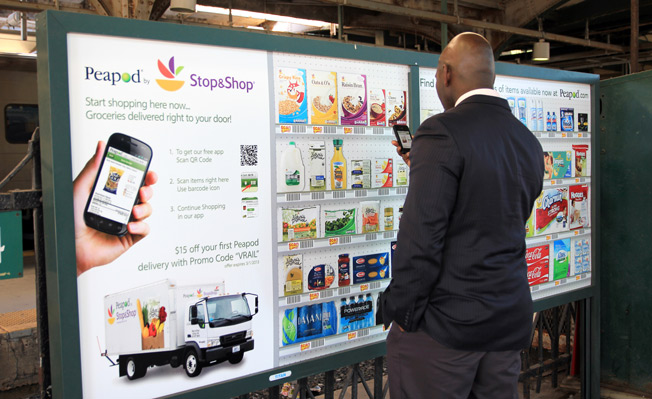
    What does this mean for advertising? In order to make the impression on people that they hope for, advertisers have to aim to be engaging, bold and informative all at the same time. The brands and products are resting on a visual representation…telling a story. Some of the ones seen today have accomplished just that and have been very beneficial to maintaining their brand names.  For example, the creative “Peapod” allows those on foot to access an interactive screen when they need to complete a quick grocery shop. Shopping on the go has never been easier. Image

    The target audience for this display is those who lead busy lifestyles and don’t permit much time to complete daily necessities. This type of shopping is entertaining and even seems enjoyable. The user-friendly screen only requires a smartphone, the free ‘Peapod’ app, and a quick wave over the bar code to scan the image above it. Instant groceries are right there, only a scan away.

    Needless to say, advertising is making some huge improvements in their promotion of products via billboard ads. The article 40 Absolutely Brilliant Billboard Ads displays images of some of the most recently developed billboards which have been highly effective.It seems that Outdoor Advertising is finally reaching new heights in creative presentation, communicating to the public that they are something worth looking at!

    -Katelyn Alston

  • The Galaxy S4

    What could be better than Siri you ask? Apple better watch out because they may have recently developed a new top competitor. Samsung’s newest phone the Galaxy S4 is soon to be released at the end of April 2013. The Galaxy S4’s, or GS4, dimensions and weight are slightly larger than the iPhone5, but so is the screen size for those who like to see a bigger picture.

    image

    The GS4 processing speed is 1 .9GHz with the Android 4.2.2 operating system, which is considerably faster, than iPhone5’s processing speed of 1 GHz on the iOS operating system. To see a table of more comparisons, click this link. When it comes to the camera, GS4’s Super AMOLED panel at 441 pixels per inch is significantly denser than iPhone5’s 326 pixels per inch. The GS4 camera also has crazy new features such as the recording of front and back cameras at the same time.

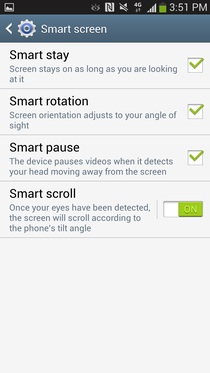
    So what new technological features does the Galaxy S4 have that could really disperse the iPhone fanatics? When choosing between the Galaxy S4 and the iPhone5 the design, display, apps, and processing system are all based on individual preference, but the Galaxy S4 interface is just on a completely new level. PC mag.com states, “Android features a much more customizable interface for advanced users, which lets you configure your phone exactly how you want it.” The interface has a feature called Air Gestures, which includes motion sensors of hand movements to control the display with out even touching the screen. They have Smart Stay, which tracks your eyes to tell if you are looking at the screen. If you are watching a video, Smart Pause will automatically pause the video for you when you look away. Smart Scroll will check when you are reading a scroll up and down when you tilt the device.

    image    image

    This April we will all be able to see for ourselves if the iPhone has a real competitor; and if Samsung’s new features using hand and eye sensors are handy to use on a day-to-day basis or just plain creepy!

    -Kelsey Raskob

  • March Madness = Advertising Mayhem: The competition is heating up!

    The brackets are in! For all you college basketball fans, March Madness has officially begun. According to USA Today, the NCAA basketball tournament brings in more TV advertising revenue than the NFL playoffs and even the Super Bowl, reaching a whopping 1 billion dollars in 2012. Columnist Bruce Horovitz says it will only get bigger. Despite your feelings about the teams and the games they are playing, this can only mean one thing for advertisers: the standards are skyrocketing. A 30-second spot during the college basketball championship game is running at about 1.4 million dollars. With a price like that, we can only expect some crazy, entertaining commercials.

    Just as many big-name brands come up with new advertising campaigns for the Super Bowl, they will have to step it up even more this March. The credit card company, Capital One, has already begun to roll out their campaign partnering with Charles Barkley and Alec Baldwin as the faces of their commercials. While the ads are pretty funny, I think Capital One could step it up a notch in the creativity department for the big game. Here is a clip of one of their new spots you may have already seen on the air:

    According to Forbes magazine, Capital One is also advancing their campaign by adding the hashtag #rallycry to the end frames of their advertisements to keep the conversation going, targeting those passionate bracket participants. I think this is a smart decision, from an advertising standpoint, as Capital One has really kept their target audience in mind.

    As for other brands to look out for when you’re watching college basketball this month are Buick, Acura, Dove Men+Care and ING, all of which will be advertising heavily during the NCAA tournament. To quote Dale Buss, columnist for BrandChannel.com, “Let the madness begin.”

    -Julia Tompkins

  • The Next Big Thing… Coming Soon.

    Have YOU had the Cool Ranch Doritos Locos taco yet?  I can’t say that I was waiting anxiously outside of my local Taco Bell on March 7th when this new wonder debuted, but millions of taco fans could barely contain their excitement.  Not convinced?  Follow Taco Bell on Twitter or Facebook and you’ll experience the overwhelming response.  On March 4th Taco Bell announced via social media that fans could get the new Cool Ranch DLT (Doritos Locos Taco) a day early and the response was a mix of joy and outrage.  Many fans hopped on the chance to indulge while others were shocked to discover that their local chain had not gotten the memo.

    It seems that Taco Bell knows exactly what their fans want and have aimed to deliver.  In fact, the franchise has focused their advertising for the new DLT on their fans.  Working their fan base, the earliest announcements of the new taco came in the form of teasers, meant to fuel the DLT craze and build anticipation.

    Next came a series of ads featuring tweets from fans about the new taco sensation. Since the rise of social media, companies have been able to receive more direct feedback from their fans and have taken advantage of this in their ads.  Through these ads Taco Bell is not only able to highlight fan comments, but also feature these fans in the ad, emphasizing their delight in finally having the Cool Ranch DLT.


    Starting to sound familiar? You might be thinking back to the iPhone 5 and Apple’s promise to finally deliver all of the features that fans have been anxiously awaiting.  So is this new, fan-based advertising genius or overdone?  That’s up for us as consumers to decide.  After all, gone are the days of simply consuming advertising.  Today, we can all be a part of the magic behind the ads.

    Ally Walton