Blog

  • Tis the Season

    In ancient Greece, rhetoric was a crucial skill. Today, it is still used in our everyday life: in the office, in the classroom, and in the home. As the holidays approach, big brands are beginning to rev up their inner rhetorician, persuading consumers to buy their products and to buy into the holiday season. Main stream brands have mastered the art of rhetoric, changing it from a way of speech to a way of images.

    Within the past week the “top shelf” department stores in New York City opened their window displays featuring holiday themes, winter traditions, and of course, several of their top products. The stores claim that their holiday window displays are merely “gifts to the city” by sharing their excitement for the holiday season with passer-bys. I beg to differ. Yes, it is a brilliant idea to provide beautiful window displays to spread seasonal cheer. However, it is also a fantastic use of modern day rhetoric, persuading consumers to purchase the products that share the spotlight with the seasonal window displays are the perfect gift for this holiday season.

    295-1cKBRC.St.55
    Tiffany & Co. window display

    Senior direct of visual presentation at Bergdorf Goodman says that “every store has their own style.” Stores like Bloomingdale’s, Bergdorf Goodman, Macy’s, Tiffany & Co., and Saks Fifth Avenue to name a few each have their own theme for their window displays. The stores each have a different focus on a holiday tradition while incorporating some of their top products of the season. The displays fashion innovative light displays, eye catching colors, and even live models in some windows. Through this transactional strategy of rhetoric, the stores are able to create a connection between their objects in their window displays and the consumer audience. Without the use of words, the stores are persuading consumers to purchase their products by creating the image of the perfect Christmas morning, holiday dinner party, or snowy sleigh ride.

    Big brand names have taken rhetoric, which has thousands of years of history, and created it into something to work with today’s world. Do you think this new form of nonverbal rhetoric is effective?

    -Tilson Hackley

  • Mayor Ford’s lack of Rational Communication

    Recent headlines have highlighted the mayor of Canada’s largest city, Rob Ford’s, crack cocaine addiction. After coming out with the addiction he has been faced with intense pressure to resign and in more recent weeks he has admitted to buying illegal drugs while serving as mayor. Negative publicity and the lack of support from Toronto citizens have caused the Toronto city council to vote and strip Mayor Ford of most of his authority. Controversial times like this calls for an increase in communication between Mayor Ford and the citizens of Toronto. Rational communication is a goal orientated interactive theory that has three aspects:

    • The discussion is unrestrained, which means that all participants are allowed to speak freely and be able to present positions without fear of being restricted.

    Citizens of Toronto want answers from the man they elected to represent their city. Questions are arising left and right, and rightfully so. The smartest PR tactic for the mayor during this time would be to answer these questions himself. Having someone speak on his behalf or even worse, not responding at all, only opens a window for unreliable sources to answer in his behalf.

    • All advocates must have a right to self-representation or the freedom to speak for themselves.

    With that being said, although Mayor Ford should have professional representation to help him handle the negative slander, he is entitled to speaking freely about his addiction and the steps he is taking to recover. Mayor Ford was quoted by BBC News saying, “I’ve admitted my mistakes, I’m not going to sit here and go on and on and on.” The citizens of Toronto also have the right to speak freely about their opinion of his actions as well as the reasoning why he should still be in public office.

    • A full complement of norms and expectations must be in place under the conditions of rational discourse.

    The people of Toronto have norms and expectations for the mayor they elect for their city. Mayor Ford has violated these expectations by his recent illegal activity. Not only has he infringed the expectations of the city’s people but of his staff as well. Fox News reported that he is losing 11 staffers, including Chief of Staff Earl Provost. Mayor Ford and the Toronto’s city council should be communicating on equal grounds and maintaining certain expectations from one another.

    Image

    If Mayor Ford followed the rules of rational communication he would not be in the predicament he currently is faced with. Even with all the negative publicity he is currently facing, Ford is still determined to run for Prime Minister. He is hoping that the people of Toronto and the citizens of Canada will be able to overlook his past mistakes and instead, focus on his goals for the future.

    -Alex Corrigan, Kaitlin Batson, Parker Farfour & Caitlin Ford

  • What was that word again?

    “Four score and seven years ago our fathers brought forth…” and the rest I can’t remember. I know I’m not alone in the painstaking task of memorizing the Gettysburg Address, but are current junior high students the first generation to not participate in this tedious tradition? Dating back to 5th century BCE Sophists, memorization has been considered a great asset for rhetoricians. Sophists are known for their emphasis on teaching effective dialectics. One aspect of their teachings included encouraging their students to memorize long discourses to persuade their audiences. Sophists, who were masters of persuasion, considered memorization an art form of delivery.

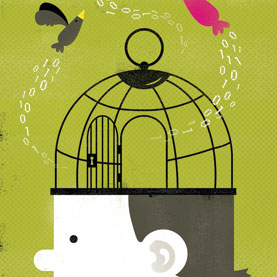
    Now we have the ability to look up any information at the touch of a screen. If we don’t remember something right away, we don’t have to struggle for that tidbit to rise to the top of our brains-we can just ‘Google’ it. Some scholars suggest memorization is simply not a part of the modern student’s duty. Has this asset now become irrelevant?

    Image

    Image: Shaw Nielsen

    The Shallows, written by Nicholas Carr, analyzes the impact technology has on our brains and our thinking processes. We may not be able to measure if there have been long-term consequences of being glued to technology but some short-term alarms have been noted. Carr and other researchers have noticed technology’s impact on our attention spans. We are unable to sit to stay concentrated on one thing for a substantial amount of time with flipping to different webpages, checking our phone and flipping through TV channels…and all at the same time. The debate is whether we are learning more simultaneously or losing something we once valued: our memory. Carr comes to the conclusion that, although technology makes us smarter in certain areas, it makes us less intelligent in others. Is one impact of the rise of technology on mankind the loss the art of memorization? Or is this simply technology opening our minds for other tasks? The Sophists are surely turning over in their graves.

    -Rachel Edwards

  • PlayStation Lights Up the UK

    If one were to look at the Oxo Tower in London at night over the past few days, they might notice a striking difference in the lighting of the prominent building.  Covering the side of the tower are the famous control buttons of the PlayStation brand that replaced the usual OXO that can be seen on the tower.  In regards to the holiday season and the release of their newest PlayStation 4 product, the brand decided to take their advertising to new heights. Sony paired with Manning Gottlieb OMD media agency to change the letters for the first time in the building’s eighty-five year history.

    Image

    When relating this recent event to Kenneth Burke’s Theory of Identification, we can see a clear connection between the consumer’s ability to recognize the PlayStation symbols, and the persuasive technique used by the brand.  Burke’s theory states that persuasion can only be communicated effectively when the two parties (the consumer and the brand sharing the product) have something in common. This means that only people who know what the symbols represent will be able to understand that this is an advertisement for one of the largest gaming systems in the world.

    This form of brand advertising seeks to create excitement and anticipation for the upcoming PS4 release on November 28th in the United Kingdom. Consumers are unconsciously motivated to have the PlayStation product on their minds when they see the symbols lit up every night.  This could lead to consumers talking about the product to friends or on social media or even purchasing the product when it is released.  In fact, 14.3 million people had tweeted about the lights within the first 24 hours that they were used.

    Image

    Overall the strategy used by PlayStation to advertise and motivate their publics to think about this new product was a creative and original way to reach potential customers.  This is a method not commonly used and created a large amount of social media buzz that was beneficial to the brand.  What are some original and uncommon ways that you have seen brands advertise? Have you seen any brands advertise in uncommon places?

    -Aaron Love, Kara Zimmerman, Rachel Clay, Rebecca Hobbs

  • Persuasion Through Customization: Moto X

    “If you wish to persuade me, you must think my thoughts, feel my feelings, and speak my words. -Cicero

    Spoken nearly 2000 years ago, this statement still rings true today. Philosophizing rhetoric and the art of persuasion, Cicero understood the importance of connecting with an audience at the mental and emotional level.

    The above quote points out three of his main claims. To persuade an audience one must “think their thoughts”.  People are more likely to be persuaded when the rhetorician communicates in a way that embraces the individual’s own point of view. Focusing solely on changing point of view results in discomfort and suspicion. Rhetoricians must also “feel their feelings”. To do so, one must ask themselves what the deep-seated feelings are that drive the listeners. Asking this question and reflecting on the answers is an essential part in the pathway to connecting. Finally, according to Cicero, to persuade an audience, one must “speak their words”.  People need to understand what you have to say in order to care about it.  If they don’t care, they won’t do the ultimate goal – act.

    In the age of advertising, these classical concepts are still prevalent as we transcend into the postmodern era. In postmodernity the “self” becomes the ultimate selling point. Marketers strive to persuade their audience that their product does more than whatever its mechanical purpose – the pitching point becomes that their product is an extension of oneself. As a result, individualization and customization are reigning themes. Furthermore, because individuals are immersing themselves as an object, consumers become an actual participant in customization. Products are increasingly less of a finished object, allowing consumers to provide direct input – ultimately and simultaneously becoming a producer as well.

    Therefore, it is no coincidence products today are increasingly individualized. An example of this is the new Motorola Moto X phone. Check out it’s commercial, Customize below.

    After watching this how do you feel? This is a pretty cool phone, right? You can make it however you want! Notice how this commercial mentions nothing about tech specs, mobile web speed, or how the phone will be used in your every day life. Its persuasion strategy focuses on “you” – “your ride”, “your pet”, “your body” and now “your phone” – the idea that you can be in charge of customizing your phone, just as you do everything else, as an expression of your self. You are the producer. No longer are the only options either black and white. Your options are whatever you think brands yourself best.

    This commercial is the essence of Cicero’s idea of persuasion combined with post-modernism ideals. By knowing what its postmodern consumers think and feel about individualization, Motorola has created a product that speaks to every thing you as a consumer expects and wants – customization. Not only do you become a buyer of the Moto X, but a producer of it. Their persuasion hook is that you can directly produce their product as a means of your own expression.

    Has this commercial persuaded you? What other brands and products use customization and self-expression as a persuasion tool?

    Savannah Valade, Caroline Robinson

  • Water for the People, But A Crisis for the Company

    When a natural disaster occurs, it is always encouraging to see how much help, love, and prayers are poured forth from the general public. People and companies across the world donate what they can to help. Recently, the Philippines have seen some of that generosity. The country is recovering from a massive typhoon that devastated communities across the islands. Now the people are struggling to find food and clean water. So when Instagramers saw that People Water was offering to solve that problem, they jumped on the bandwagon pretty quickly.

    People Water is a company that defines itself as a “for-profit, cause-based business that is committed to alleviating the global water crisis.” Their claim is that for every bottle of People Water purchased, the company will give an equal amount of clean water to someone in need. On November 12th, the picture below appeared on Instagram with the caption “EVERY REPOST = 1 @peoplewater will donate $1 for every repost #peoplewater”.

    people water

    Cody Barker, one of the founders of People Water, was the one who originally posted this picture. It soon exploded all over social media as people started sharing in support of the Philippines. However, People Water posted on Instagram a day later explaining that they weren’t entirely on board with this campaign. “People Water’s management was not consulted about this campaign before it was posted to our social media outlets,” claimed the post. “In an honest attempt to help those in need, some of our employees hurriedly decided to launch this initiative…Although our employees’ intent was sincere, we are troubled by what may be perceived as an advertising campaign based on those who are seriously suffering.” They go on to say that they will honor their commitment for the first day’s shares during their regular business hours, but that they can’t afford to give any more.

    Looking at this from a public relations standpoint, People Water did almost everything right. They were honest with their public and tried to communicate that to them as best they could. They shared the “open letter” on their website and Instagram, making it as clear as possible that they didn’t want to hide anything. As Coombs advises in Public Relations: Strategies and Tactics by Dennis L. Wilcox and Glen T. Cameron, People Water minimized their responsibility for the fiasco by making excuses. While this may seem like a cop-out, finding someone else to blame is a successful way to change the way the public views your business. In this case, the scapegoat was Cody Barker. Unfortunately, he didn’t have full permission from the company to post such a generous offer. Because of his actions and their “limited resources,” People Water was put in an awkward place. In an attempt to save their reputation, they had to let Barker go and show their public that they are doing everything they can to ensure this won’t happen again.

    But not everything was handled correctly. Many Instagram users claimed that they couldn’t reach the company by phone or email in the aftermath of the crisis. Whether this was due to an influx of phone calls or the company was purposely avoiding their customers, People Water violated the number one rule during a public relations crisis: be accessible. Had they picked up the phone, they might not have so many angry consumers talking smack about them on social media.

    What do you think People Water should have done? How should they move forward?

    – Christine Schulze

  • Dogfish Disaster Averted

    As we have gravitated towards becoming a society submerged in technology, in recent years, outlets of social media have become essential marketing tools for many companies and organizations.Facebook, Twitter, Instagram and Vine are few forms of social media utilized by most. While social media can strongly influence consumer behaviors and increase consumer awareness it can also be detrimental to a company’s image. In some cases social media can be the cause of a PR crisis. Crisis management is the process by which an organization deals with this major event that threatens to harm the organization.

    The American Red Cross is a prime example of an organization who exemplifies strong crisis management skills. This honorable humanitarian organization managed to dodge-a-bullet back in 2011 when an intern fired off a personal tweet on the company’s twitter account. The tweet read “Ryan found two more 4 bottle packs of Dogfish Head’s Midas Touch beer…when we drink we do it right #gettingslizzerd”.

    red cross

    This uniquely unorthodox and unprofessional tweet received a lot of negative attention from the general public. In this particular circumstance social media proved to be the cause of the crisis. When responding to the tweet the Red Cross avoided disaster by acknowledging that the tweet went out, deleting it, and explaining with humor that is was a mistake. This is an example of crisis management where the Red Cross turned a potentially harmful tweet in to an opportunity for engagement.

    Thankfully, the Red Cross realized the potential of social media and understood the power that it has to bring down a major organization. Now, other companies can look at this experience and utilize it to learn for themselves. After understanding the Red Cross’s response it is easy to break down their post-crisis steps and keep them in mind for other emergency situations. First, they were able to assess the situation. They realized the crisis was a major problem but they came to the conclusion that they could handle it which brought them to their second step, adapting their message. They considered their stakeholders and created a strong message to appeal to them. Lastly, they were able to analyze and learn from the situation post-crisis. Although this could have led to a horrific downfall for one of the greatest humanitarian organizations, everyone was able to benefit, understand, and learn from this experience.

    red cross 2

    -Parker Farfour, Caitlin Ford, Alex Corrigan, Kaitlin Batson