Blog

  • Holidays of Shopping

    With the holiday season coming up, are you more excited about turkey or sales?  Black Friday deals attract customers in mass numbers every year. In order to keep that excitement going, Wal-Mart promotes “rollbacks” the whole week starting November 21st. “It used to be called Black Friday, and then it became Thursday, now it’s a week long,” said Wal-Mart U.S. chief merchant Duncan Mac Naughton last week. “Maybe we should just call it November.” Wal-Mart’s marketing strategies not only include longer windows of deals, but also price matching, online sales, more staff, and e-commerce in order to take full advantage of the Black Friday madness. Walmart has even added signs to the registers advertising that they will have more lanes open than ever from Thanksgiving until Christmas.

    George Gerbner developed the idea of Cultivation Theory. This states that the way that we view our world is influenced significantly through what we watch on TV. Wal-Mart as well as other companies have been broadcasting commercials showing Black Friday sales, Black Thursday sales, and even more recently, sales that last the whole week long. This is cultivating our minds and making us feel like everyone around us is doing these extreme sales thus making us feel the need to shop this much in advance.

    Another component to Gerbner’s cultivation theory is resonance. This means that the more times we see something, the more likely it will stick in our minds, and perhaps influence us to do something or believe that something is true. Wal-Mart has been on a Black Friday commercial spree using celebrities such as Anthony Anderson and Melissa Joan Hart on almost every other commercial to influence buyers to do their Thanksgiving and Christmas shopping at Wal-Mart. This strategy Wal-mart is used to try to resonate in people’s mind that their store is the right choice because the celebrities in the commercials think so too.

    Due to the fact that television is a huge part of our society’s lifestyle, do you think that the numerous amount of commercial’s Walmart are using are making people want to do their holiday shopping there?

    -Margaret Cafasso, Kierstin Geary, Connor Gold, Olivia Sadler, Hannah Zeskind

  • North Carolina: From the Mountains to the Sea

    Every year millions of people travel long and far to get a piece of the North Carolina experience. The Carolina culture has deep roots in vinegar based BBQ, cotton and tobacco production, and more recently, is becoming a center for research and industry. The great Tar Heel state is home to highly esteemed universities, beautiful mountains, charming cities, and the Outer Banks and Crystal Coast. Tourism in North Carolina has been on the rise and continues to flourish.

    original

    According to a 2013 study prepared for the North Carolina Division of Tourism, Film, and Sports Development, domestic and international travelers spent almost $21.0 billion on transportation, lodging, food, entertainment, recreation, and retail trade. This is an increase compared to previous years, 2014’s forecast projected even higher. North Carolina is home to many great places to visit including the Biltmore Estate, Blue Ridge Parkway, Old Salem, historic lighthouses, and over 300 miles of incredible beaches. According to Bloomberg Businessweek, North Carolina’s capital city, Raleigh, has continually been rated as one of the best cities to live in.

    image_crop_800x448

    On a local level, Wilmington and the surrounding area offers an array of attractions from Screen Gem Studio tours to eating lunch on the pier at the Oceanic. Recently, US Today ranked Wilmington as the Best American Riverfront due to the amount of cafes, bars, and shops as well as close proximity to many historic museums and landmarks including the USS North Carolina. According to the Attraction-Selection-Attrition framework, “the people make the place.” The people of North Carolina bring charm to the state and create a large part of the culture. As a student of the University of North Carolina Wilmington, I am proud to call this amazing place home. Wilmington and the state of North Carolina exemplify southern hospitality, good eats, and a rich culture. So, what’s your favorite part about North Carolina?

    – Anderson McNaull

  • Bojangles: A North Carolina Icon

    The year was 1977 and in Charlotte N.C. fried chicken would be changed forever by the Bojangles Founders, Jack Fulk and Richard Thomas. With the introduction of their Cajun-style chicken and scratch made biscuits, people began to crave this irresistible duo and now, thirty years later Bojangles has spread across the region but the recipe nor the cravings have changed.

    Over the years, Bojangles has done a phenomenal job of promoting themselves through community involvement, quality advertisements, and hard to resist promos, coupons, and deals. Despite having over 600 restaurants, they attempt to remain local and active in each of their locations. This has allowed them to expand at a rapid rate while becoming a respected and credible fast food chain. One of their most popular promotions is the E-club which began in 2008. All you have to do is fill out your information on their website and you will receive a free biscuit with any purchase along with coupons on your birthday and a free Bo-Berry biscuit when you refer a friend. Simple deals like this encourage a long term customer relationship while also using free word-of-mouth advertising by their customers.

    Bojangles has created a niche market in the quick service food industry by offering food and service that their competition cannot compete with. Their menu is large and unique, with everything from country ham and pinto beans to garden salads and sweet potato pie. They promise food made fresh every day and biscuits made every twenty minutes. While other fast food chains focus on quantity and quickness, Bojangles has taken a tip from the South by taking their time and catering to their customers. A niche market can be defined as a business that addressed the need of a product or service not already available. Being local N.C. residents, the founders pride themselves on the quality of their food and the southern hospitality that comes with it. They realized they had a market for their cajun-style cooking and found a way to connect with the community through their irresistible chicken and biscuits.

    bojangles

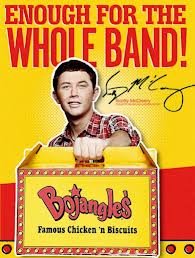
    Bojangles has repeatedly marketed to North Carolina residents in the past. Jake Delhomme would pop in on our television sets at halftime of the Panthers games to tell us how much he loved Bojangles. Scotty McCreery comes on to serenade us with his Bojangles song–which has become just as well-known as some of his actual work. One thing that everyone in North Carolina loves–college basketball. Bojangles has recognized this by offering two sausage biscuits for a dollar at any North Carolina restaurant after the Tar Heels top 100 points.

    Because of the success of Bojangles and the exclusive experience they offer to customers, they were recognized as the #1 restaurant franchise in the chicken category by Entrepreneur Magazine in 2007, named one of only eight restaurant franchises as an elite performer by the Wall Street Times and in 2011, Zagat Survey listed Bojangles’ in the Top 5 Fast Food, Large Chains.

    Bojangles has created a niche of fans that crave their fresh made food and are willing to talk about Bojangles anywhere they are, which is the main reason for success.  When this niche hears fried chicken they immediately think of Bojangles and by being unforgettable for their quality food and southern hospitality service you can be sure Bojangles isn’t going anywhere and the only place to go is up.

    Brandon Hawkins, Bobby Huckabee, SavannaMitchell, Tony Mangili, Danielle Salas

  • Are We Still the Hollywood of the East?

    What do Jennifer Lawrence, Will Ferrell, and Nicholas Sparks all have in common? Other than being well-known in the film industry, they have all brought their talents to North Carolina. The state of North Carolina, specifically Wilmington, has been the home of over 130 feature films not including television shows. Some of these films include Iron Man 3, A Walk to Remember, We’re the Millers, and Safe Haven. North Carolina is called “Hollywood of the East,” offering a variety of environments, from the mountains to the beach to city and the country, the state provides many location and scenery options for productions to take place. Another thing that was attractive to directors and producers was the NC Film Incentive.

    Just the word “incentive” shows that there is something special about filming in North Carolina that would be beneficial to any production. But what is happening to the NC Film Incentive? The NC Film incentives are currently changing from a rebate to more of a grant, with rules that are still somewhat undefined. WRAL.com says that “North Carolina’s film tax credit program will expire on Dec. 31, 2014. Lawmakers have replaced it with a grant program that currently has $10 million available for the first six months of 2015.” The incentives will then have to compete with other important state projects, like school changes and road construction. This $10 million is receiving a lot of scrutiny considering the fact that there was over $61 million claimed in 2013.

    Offering supportive data in keeping the incentives as they were, a study conducted by North Carolina State University was done to see how much the film and television industry helps the state. They found that the state does in fact make their money back. “For every $1 spent in film and television credits, the film and television industry generated $1.52 of tax revenue and $9.10 of direct spending.” 

    The impact that the film and television industry has on our state seems to be somewhat overlooked. There are more people affected by the presence of the film industry than just producers and directors. Catering, transportation, and local businesses in general are largely impacted by productions choosing North Carolina as a temporary home.

    Without the large incentives, do you think we’ll be able to continue marketing North Carolina as a prime filming location to keep the projects coming?

    By: Kelli Hall, Stephanie Jordan, Morgan McCleaf, Shawn Rause, and Danielle Walters

    Photo Credit

  • Re-branding the soda of North Carolina into a “Legend”

    Cheerwine, the novelty soda of North Carolina, was created in 1917 in Salisbury, NC by L.D. Peeler. A soda called the “Nectar of North Carolina” flourishes in the state, but Cheerwine has more recently branded itself to grow to a larger demographic–setting itself aside from other popular drinks.

    While the renowned soda is unique to its NC roots, the company released Diet Cheerwine in the ’60s in an attempt to target more health-conscious consumers; however, the company was still mostly Southern-dominated. In more recent years, Cheerwine has used a new advertising campaign to break out of NC into a national product through a refreshed branding of the company, calling the beverage a “Legend.”

    The New York Times reported  that Cheerwine’s company Carolina Beverage Corporation hired a New York-based advertising agency, Woods Witt Dealy & Sons, around 2011 to promote the brand as a “legend.”

    “The campaign has two goals: stimulate interest in Cheerwine among those who have not tried it while at the same time forging stronger ties with fans,” NYT says.

    With a new website, featuring graphics and a tab entitled “Find Cheerwine,” consumers can search via zip codes to find a local place to purchase the hard-to-find drink. By portraying the brand as authentic, unique, and staying true to its original “nectar” image, the drink has created a high demand for itself. Cheerwine says that they gained attention from their new marketing strategy, receiving letters from consumers and an increase in popularity outside of North Carolina. Since 2011, the brand continues to expand to other states, most recently Virgina, Maryland and Delaware in 2014.

    Through social media presence, promotions, and revamped advertising, Cheerwine’s collaboration with a creative advertising firm attempted to break out of the Southern demographic while staying true to its old-school roots. What do you think about their re-branding in 2011?

    -Kaitlyn Russell

  • Blast from the Past: First in Flight

    North Carolina was admitted into the union on November 21, 1789.  That’s 225 years ago this week! In order to celebrate our 225th birthday in the union our blog is dedicated to our North Carolina pride all week long. We’re going to start this week off with one of our most proud accomplishments: “First in Flight”.

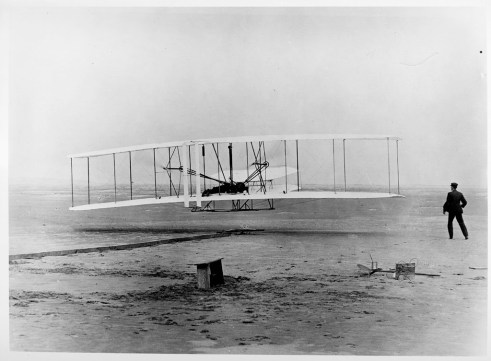
    Wilbur and Orville Wright were the first humans to sail through the sky. In 1903, they built the world’s first plane and it launched in Kitty Hawk, North Carolina. Although the brothers where born in Ohio, North Carolina takes a lot of pride in being the location of this historic flight. In Kitty Hawk, there is a memorial honoring and celebrating this achievement that is visited by tourists and locals alike. Bumper stickers all over the state are emblazoned with the phrase “First in Flight”.

    wb

    Aside from bumper stickers, we see the plane symbol everywhere: on our license plates, the back of the North Carolina state quarter, and even as the hologram on the NC identification card. Semiotics allows us to identify with the plane as being a proud North Carolinian. The plane symbolizes our achievements and successes as a state, and helps create the brand that North Carolina has developed over the past 225 years.

    What do you consider to be North Carolina’s brand?

    – Margaret Cafasso, Kierstin Geary, Connor Gold, Olivia Sadler, Hannah Zeskind

  • How Advertisers are “Buzzing” Through BuzzFeed

    Open up your Facebook newsfeed. In scrolling down the page, the amount of BuzzFeed articles, quizzes, and news stories shared by your friends may often cover your entire newsfeed. Yes, it is true the articles are fun and entertaining, but a majority have a different sponsor than you may have in mind. According to Adweek, “If it’s a great piece of content, not only will it not matter if it’s an advertisement, they’ll appreciate it as a brand.” In this way, BuzzFeed has taken product placement and native advertising to a new level in the social media sphere.

    Screen Shot 2014-11-11 at 10.10.46 AM

    By positioning brands and products as organic, everyday content instead of advertisements, BuzzFeed masters blurring the line between entertainment and advertisement. According to Walter Fisher’s Narrative Paradigm Theory, “People are storytelling animals; almost all forms of human communication are fundamentally narrative. Listeners judge a story by whether it hangs together and rings true with the values of an ideal audience.” This can be seen in BuzzFeed’s partnership with Purina in their “Dear Kitten” video. Not considered a commercial, BuzzFeed and Purina outline a narrative between the senior “cat of the house” and a newly acquired kitten. With the simplicity of embedding Purina’s Friskies can and mealtime within the bond of the two felines, a heart-warming story unfolds around the product. This use of a narrative and values through product placement, cat owners and pet lovers alike have fallen in love with the journey of a new kitten.

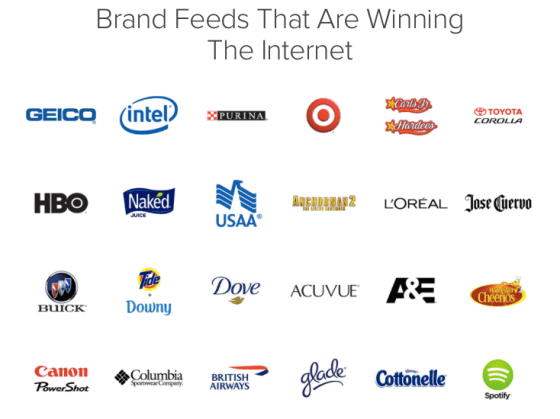
    In addition to Purina, brands such as Tide, Target, Dove, and Michael Kors have caught on to the positive benefits of subtle product placement through BuzzFeed articles and videos. In the ever-changing digital landscape, a “brand-lift” without blatantly obvious logos and advertising is being seen as a timely way for companies to reach multiple online audiences without over-stepping their boundaries. With BuzzFeed being the second most viral hit factory on the web, corporations are beginning to understand the sheer importance of catching and maintaining an audience’s interest through the community site, especially when they least expect it.

    Screen Shot 2014-11-11 at 10.11.40 AM


    – Angelica DiPaolo and Rachel White