Category: Marketing

  • Remember When… Social Media Was Not Overrun With Ads?

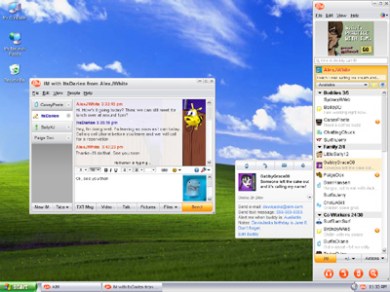
    Do you know how to transfer your buddy list? What is your Myspace song today? Why did you lower me in your Top 8? Where did you get your buddy icon? Remember when these were your biggest worries on social networking? Nowadays, a social networker must be fully aware of everything they post, every picture they are in, and even everything they click on.                            Image
    When social media first began, it is doubtful that anyone could have predicted where it is today. Employers search Facebook, Twitter, and LinkedIn before hiring new staff. School systems are implementing cyber bullying policies across the nation. Even our parents are sending us friend requests. It is hard to come by someone who doesn’t have a Facebook or Twitter. Due to the popularity of social media, it is no surprise advertisers want to tap into this huge online market.

    Image

    What began with AOL Instant Messenger, evolved into the Myspace fad, and now Facebook, Twitter, FourSquare, Pinterest, LinkedIn, and Instagram have joined the scene. After Myspace died out, there was much debate about how long Facebook would last. With the help of advertisers, it seemed like it could potentially last forever. Unfortunately, with the rise of other social networking sites, Facebook has seen a less than desirable decline in popularity. Now Mark Zuckerberg, the CEO of Facebook, is having to persuade advertisers to continue investing. In an interview covered by ABC News, he “[promised] better results as Facebook’s mobile app is made friendlier to advertisers.”

    What does this mean for users?  More advertising headed your way! If you’ve seen Facebook’s login page lately, you might notice that it has officially been sold. It is hard not to notice as it takes up more than three-fourths of the screen. When Myspace sold their front page, it was the first sign they were not cutting it anymore. Does this mean Facebook’s “in” time is ending soon too? Not if Zuckerberg can help it.

    You might notice the sidebar ads following more closely to your internet searches. As Facebook tries to evolve to keep up with the market, Zuckerberg stated that he would like to make Facebook a search engine that could compete with Google. It is no coincidence that the items you were looking for on Amazon a couple of days ago are popping up in the ads you see on Facebook.  Long gone are the innocent days of simply “lol”ing with your buddies on AIM.  It seems now more than ever before the public will become a constant target for advertisers.

    Will this increase in advertising on Facebook lead to a shift in which social network is the most popular? Will Instagram and Twitter combined be able to wipe out Facebook? Would it even matter because Facebook owns Instagram? Or will the dark horse network, Google +, take the internet by storm?

    G2G. Mom needs the comp. TTYL 🙂 ❤

    Alexandra Huss, Caroline Merrill, Alyssa Morrello, Lauren Van Trigt, Daniel Williams

  • #Eastwooding

    Clint Eastwood is a man of many roles: he’s a movie star, American badass, producer, director, and even politician.  Most recently, he can also add empty chair talker to the list.  Eastwood attended the Republican National Convention this past Thursday, August 30th. He was attending the convention to give an endorsement speech prior to Republican candidate Mitt Romney taking the microphone, and things got a little wacky.  Eastwood began talking and asking rhetorical questions directed towards Barack Obama to an empty chair on stage.   Almost immediately after the speech aired on television, Clint’s stint at the convention became a huge buzz on social media networks, such as Twitter, where #invisibleobama was trending.  Not only were people talking about Eastwood’s strange chair conversation, but people also began posting pictures of themselves reprimanding empty seats as well, giving rise to the internet’s newest sensation, #Eastwooding.

    Romney may not have known what the outcome of bringing Eastwood to the convention would be, but it was certainly a strategic move on his part. It is safe to say that even if no one was expecting such a social media buzz about the speech, Romney was definitely looking to add star power to his campaign. Barack Obama and his wife, Michelle, have become celebrities in their own right over the last four years. Obama has even taken to trying to downplay his celebrity in this election. This article from the Washington Times discusses Obama’s relationship with George Clooney. Obama is quoted as saying, “Clooney keeps his distance so that [the President] won’t be criticized for hanging out with Hollywood celebrities.” So it makes sense for Romney to try to bring in some celebrity credit, since after all, he is competing with the President who hangs out with George Clooney and was nominated by Oprah Winfrey. Who could be better to compete with those two celebrities than Clint Eastwood? Both candidates are trying to walk the fine line of celebrity endorsement. Obama has a little too much, and Romney has a bit too little. Why does celebrity endorsement even matter though? Celebrities are able to make campaign’s multidimensional and bring in more funds.

    Mitt Romney knew what he was doing when he brought in Clint Eastwood. He knew that Eastwood is a celebrated and respected actor that everyone can easily recognize. What the Romney campaign did not realize was the unintentional social media phenomenon that #Eastwooding would become. This trending topic got people from all over the country posting pictures of themselves speaking to empty chairs. Not only did it spark a riot via social media outlets, it also turned a national holiday, Labor Day, into National Empty Chair Day where people were encouraged to continue to post more pictures of empty chairs. Coincidence? We will let you decide that one. As for the Republican Party, their intentions of bringing in Mr. ‘Dirty Harry’ himself were well thought out and calculated in hopes that he would be able to rally the voters who are currently undecided to choose their candidate. Instead, the Republican National Convention of 2012 will forever be known for Clint Eastwood yelling at an empty chair as opposed to what issues the party stands for in this election. These unintentional acts can make or break a campaign. Will #Eastwooding have a lasting impact on the campaign? Will the President soon become #invisibleobama? Only time will tell.

    Alexandra HussCaroline MerrillAlyssa MorrelloLauren Van Trigt, Daniel Williams
  • Time Flies Faster Then You Think

    Our three years here at UNCW has been a nonstop learning experience. We have not only gained knowledge in classes, but have also gained valuable and unforgettable life experiences. Laura transferred to UNCW after her freshman year and since she has been in Wilmington has had three very valuable internships. The key to getting a job in this market is to have experience in your field of interest and being able to effectively market yourself to potential employers. In our IMC 1 class we had an assignment where we had to market our personal brand and why we should be hired over our competitors. It is crucial to understand how and why your brand is better than the kids sitting next to you. It is not only important to know why your brand is the best, but you also need to understand how to market your experiences and internships to fit the qualities for your potential employer. Taking advantage of internship opportunities, especially for credit through the Department of Communication Studies, is a great idea for anyone and everyone. Without those experiences we would not be as prepared or as knowledgeable about our field of interest as we are now. So, when you’re thinking of what to do with all your time during the beautiful summer in Wilmington, think about taking an internship or think about how you can make your brand stand out among others.

    Another important piece of advice is to get involved on campus. Once you are a student, UNCW becomes your home away from home. The best way to find comfort is meeting and bonding with other students who are in your exact situation. UNCW has over 200 clubs and organizations for students to become involved in. The only hard decision you have to make is: which club should I join? Tennis, TealTV, Communication Studies Society, the choices are endless. The moral of the story is this: get involved on campus and make your presence known. You only have four years, which believe me, flies by in a blink of an eye. The friends you make in college become your friends for life. It is important to make your college journey memorable, exciting, and one that you can laugh about 40 years down the road reminiscing with your old college friends.

    Lastly, as a college student, one of the most important things you do is research. Whether it’s writing a report, putting together a presentation, or simply watching the news on TV to catch the latest events, you are gathering information to analyze. Some of this information will be forgotten shortly after graduation, if not before you even cross the stage to get your diploma. However, some information you have gathered through your college career will stick with you for a lifetime and will become helpful in future career situations.  Learning doesn’t just stop when you get your diploma. The research skills you learn to use as a student can be used for the rest of your life, as you strive to be an informed individual.

    So just remember, time flies. Before you know it you will be walking across the stage to receive your diploma.  Don’t just be a beach bum, at least, not all the time. Do something that will show your future employers that you did something with your short time here to make a difference.

    -Laura Simmons, Brooke Keller, Ashley Oliver

  • Filter Your Way To A Greener Earth


    “What do you want for dinner honey, how about plastic?” This may seem like a ridiculous statement, but it’s one that needs to be taken seriously. The Great Pacific Garbage Patch is a large island in the Pacific Ocean that is full of tires, plastic, nets, and lots and lots of trash. To be clear, the largest landfill isn’t on land, it’s in the ocean. An estimated 80% of the garbage in the ocean comes from land sources and plastic composes 90% of the trash floating in the oceans around the world. The size of the Great Pacific Garbage Patch is not verified, but some say that it is twice the size of the state of Texas while others say the garbage island is 3.8 million square miles. The trash leaves human hands, goes into the ocean, and kills sea animals. Sea turtles become entangled by fishing nets, eating plastic bags mistaking them as jelly fish, and dying because of it. Birds are also scooping up the trash and feeding it to their young mistaking it for food and dying from starvation or ruptured organs. How does this process come to a full circle? The trash leaves humans hands, goes into the ocean, animals then eat the trash, bigger animals eat the smaller animals that have ingested the trash, the animals are then caught by fisherman, and then the fish, which have ingested trash and plastic, ends up on your dinner plate. Sounds delicious right? No, I didn’t think so.

    Mostly everyone can agree with the statement that we live in the “Age of Plastic”. However, it has been a growing issue within the world that plastic is harmful to the environment. But has anyone stopped to think of what it is doing to the human body? Werner Boote has and that is why he created the documentary called Plastic Planet. Boote traveled all over the world to understand how plastic is made and used throughout the countries. During the video he speaks to the world’s foremost experts in biology, pharmacology, and genetics to receive some answers about the effects of plastics. A shocking revolution of this video is that plastic is actually in our blood. He created this video to educate those about the risks of plastic and how long the material really lasts on earth. This video is encouraging those to limit the use of plastic and to educate the next generations of children so that they understand what kind of a plant they are being introduced to. Last year, the Green Team on UNCW’s campus collaborated with another sustainability group to play this movie for the students to see. People should be educated on the effects of plastic and understand how harmful it really is.http://firstrunfeatures.com/plasticplanetdvd.html

    Many companies are now producing products to help save the environment and cut down on the amount of plastic bottles the world uses every year. Brita water filters has made technology so that customers can make tap water from their home safe from harmful bacteria and pure while using their own glasses. Brita has a new campaign, Brita For Good, which asks customers to use their bottle and pitcher filters to save about 300 plastic bottles from being used and thrown away. The average filter needs to be thrown away every two months, so you don’t have to constantly be worrying about changing the filter. Camelbak is another company striving to save the environment from being consumed by waste. They have recently designed a product to solve water purification problems with a system that uses UV light. The bottle takes 60 seconds to purify the water inside, which is not too long to wait for pure and fresh water.

    -Kelsey Bendig, Brooke Keller, Andrea Blanton, Brian Burch

  • Barefoot? Not with TOMS Shoes!


    Many of us are familiar with the shoe brand TOMS. The company, started by Blake Mycoskie, commits itself to donating one pair of shoes to a child living in poor conditions for every pair of shoes it sells. TOMS’s program of giving was the result of its owner traveling to South America and finding that many children were contracting diseases through their bare feet, as they were unable to afford or obtain shoes. Mycoskie decided to manufacture his company’s shoes in an eco-friendly and vegan manner. TOMS are made using supplies from an organization, Livity, specializing in “low environment impact materials” (information based on a 2008 interview between Mycoskie and San Diego Loves Green reporter Allie Bullock Kagamaster).

    Not only does TOMS market their product as a philanthropic exercise, but it also markets itself as an organization dedicated to environmentally sound products. The company is able to create establish integrity for its product among potential customers who are concerned with social and environmental issues. Partnering social and environmental values, allows TOMS products to stand out amongst competitors.

    TOMS has gone a step further than its usual shoe donation program; by implements its “One Day Without Shoes” campaign. This campaign is meant to raise awareness of the dangers faced by individuals who do not have shoes to walk in, in areas where environmental conditions, such as chemical contamination and littering of glass, syringes and debris, can cause multiple diseases. “One Day Without Shoes” also encourages individuals to buy shoes from the company so that TOMS can donate shoes to these individuals.

    The “One Day Without Shoes” campaign is designed in a way that the company’s customers and followers can actively participate in it. When going to the company’s website, a person can email the page to their friends and family, post it on Facebook, or follow the campaign on Twitter. This implementation of social media shows that TOMS Shoes is aware of the powerful impact individuals can have when marketing a message, just by sharing information with friends on social media they are already using, and that can be viewed by mass numbers of friends and peers.

    Also on the campaign’s website, TOMS Shoes encourages individuals to share videos and photos of themselves without shoes and an explanation of what the experience meant to them. Followers can find their own marketing devices to spread the word of the campaign on the website. Rally signs, street stencils, pocket info cards, stickers, profile pins and banners, DIY t-shirts, and displays can be downloaded from the campaign’s website for the event.

    “One Day Without Shoes” has also found many corporate partners to participate in its campaign. These partners are Aol., Discovery, essie, flickr, just wink by American Greetings, Kiehl’s, Kind Healthy Snacks, and SIMS. The “One Day Without Shoes” campaign shows the ways in which organizations rely on various societal values and corporate marketing techniques to draw attention to their brand or promotion.

    -Ashley Oliver,Hunter Wilson, Josh Vester, Molly Jacques

  • Watch TV on your own time

    Digital video recorders, also known as DVR’s, have been around since 1999. Replay TV and TiVo were the first two digital video recorders launched at the Consumer Electronics Show in Las Vegas. DVR’s have become increasing popular because it allows you to record your favorite shows or movies and watch them later when you have more time. Now there is no need to rush home or stay up late just to catch the news or E! True Hollywood Story. DVR is changing how we watch television. With DVR on everyone’s mind, cable companies have created apps so that their users can set their DVR’s to record even when they are not home. Another feature of DVR that has caught many people’s attention is the fact that you can fast forward through the commercials. People can enjoy their favorite shows without interruptions. This has made it difficult for advertising companies to get the viewers to watch their advertisements.

    With the development of DVR and television show recording programs, companies have to find new and effective ways to market their products to their target markets.  Television viewer’s ability to fast forward through commercials is thought to be affecting buying habits of consumers.  Companies and marketing experts have to peruse other means of getting their products out to the public.  Social media sites such as Twitter, Facebook, and especially Pinterest are effective ways for companies to market their products in a way to get consumer attention.  Through this marketing hardship, integrated marketing communication is very important to gain and retain interest.

    -Kelsey Bendig, Brooke Keller, Andrea Blanton, Brian Burch

  • An “Augmented” Look Into the Future of Advertising

    Last week Google unveiled Project Glass, their latest developmental project set out to design and build augmented reality eyeglasses. Google upload a video to YouTube entitled “Project Glass: One day…”, which shows viewers what Project Glass could potentially look like. Project Glass would allow you to communicate with friends, schedule appointments, get directions, take pictures, and even hold video conferences all by using the augmented reality interface and voice commands. While this technology is in the earliest stages of development, Project Glass has the potential to be a realistic and marketable product in the future.

    While the announcement of Project Glass is only a week old, there is already concern about user privacy and advertisements. Google already uses search terms to customize advertisements, and are even beginning to push ads based on your location, so just how far would Project Glass go? Would advertisements pop-up in front of you if you are close enough to a store? Could marketers use where you go and what you look at throughout the day to better understand what type of consumer you are? The parody video below shows how pop-up ads with Project Glass might look if they were implemented:

    While this idea of “forced advertising” seems a bit extreme, it’s already happening with several other projects. Twitter now adds Promoted Tweets to your timeline, which are sponsored announcements from businesses that merge together with the other tweets from people you follow. Pop-up ads are common with free Android and iPhone apps, and some applications even send ads as a notification. Amazon sells discounted Kindle e-Readers with “special offer” advertisements that appear on your screen. It seems that with every new piece of technology, the first idea that is addressed is how to advertise on it. With Project Glass, the possibilities for customized advertising are much more personal. How will marketers adapt to changing technology? Will consumers be willing to sacrifice their privacy and accept interruptive advertisements in order to use Project Glass? Only the future will tell.

    -Hunter Wilson, Joshua Vester, Ashley Oliver, Molly Jacques