Category: IMC

  • How Social Media Benefits Brand Attitude and Awareness Online

    Based on a research study by Daniela Langaro, Paulo Rita, and Maria de Fa ́tima Salgueiro

    It’s no secret that social media has moved mountains, and has created a plethora of new ideas in the world of branding. The correlation between using social media sites and branding has always been an integral factor in utilizing the different communication and marketing skills this generation has to offer. Something so normal and monotonous like scrolling through social media feeds now has more power and value than we as a society of communicators could ever imagine. Branding nowadays cannot be fostered within a company without some sort of media and online presence, and social media happens to be a somewhat “free” platform for building a brand. The article “Do social networking sites contribute for building brands?” clarified a lot of my assumptions as a Communication Studies student on how different areas of social media serve different organizations. While a lot of my discoveries and observations were not new, they have expanded the way I think about social media and branding as a whole, and as two equal parts that help one another in the world of communication.

    Before considering the advantages of social media, let’s discuss branding. Branding, by definition, is “the promotion of a particular product or company by means of advertising and distinctive design”, and a brand alone is defined as “a type of product manufactured by a particular company under a particular name”. So, we can conclude that while a brand is the product or idea being promoted, if the act of branding isn’t successful, the actual brand may not be of as much value as it could be. These two individual elements of branding and an actual brand depend on each other for quite a lot.

    From these ideas, companies build the image and vision of their “brand” and formulate ways to continue the branding process in different, creative ways. For example, almost anyone can identify the “target” emblem included in the retail store Target’s logo. People identify with the logo, and immediately think about what the logo means to them by associating it with a time or place they engaged with the Target brand, and then decide if they like it or not. From here, all of these interactions with branding can be broken down into subcategories including brand awareness and brand attitude.

    Brand awareness, as defined in the article “Do social networking sites contribute for building brands?” captures the potential availability of a brand in the mind of the consumer (Langaro, Rita, and Salgueiro, 2018). In the same article, brand attitude is defined as the evaluative dimension of brand image. Customers, potential or current, develop their own evaluation and judgements towards a brand by what they see and interact with. Having a presence on social media heavily affects this interaction and can provide a leg up for companies looking to engage more with different audiences. This can make a company or organization more competitive as well. The more a brand image or brand in general is shown in an appropriate way, the more association, knowledge, and popularity the brand will attract. This is why an online or social media presence is so vital today. Because social media is so relevant, why not utilize free promotion and improve the image of a company by establishing an online presence on a social media website?

    When it comes to branding, organizations want their personal image to be immediately identified and simple enough for people to remember. This is most often achieved by visuals and resonating cognitively with the organization’s potential or desired audiences. Brand association, brand quality, and brand knowledge are all benefits of using social media to boost any image or brand online (Langaro, Rita, and Salgueiro, 2018). When a company posts regularly on popular social media platforms, it now has individuals associated with and educated in it’s brand based off of the brand’s online presence, which is an essentially free outlet to promote or improve branding. Organizations now see the value and necessity in posting daily on social media sites and looking into analytics because it can show an organization exactly how people are interacting with their brand.

    One can realize quickly that branding is a very broad element in the promotion of a company, business, or organization. Branding is not just simply “branding”. Branding is developing a certain image within a brand, connecting other people and things to the brand, showcasing the brand in a way that will connect with others and display the right idea to customers, and the list goes on. When one analyzes the purpose of branding, so many layers can be found within it and its purpose is ever-changing. One thing that isn’t going anywhere, though, is the constant yet rapid growth of the internet and social media. Companies should continue to use social media outlets for brand communication. They should stay current on evolving social media trends, and how the company can adjust and grow with a technologically-charged society. Taking advantage of the online community can work wonders in the world of branding.

    Written by Natalie Oldani

  • Social Media: How Relevant are You?

    Crafting an idea, building a brand, launching it and growing a following all take time and the key factor in making a brand successful is building relationships on social media. Social media has shifted the focus of strategic marketing from informational ads to creating content and having conversations within social groups. According to the 2018 article in The Journal of Media Research Online Brand Awareness. A Case-Study on Creating Associations and Attachment by Alina Nechita “the symbolic dimension built by communicative means ensures the consistency and value of a brand.”

    Nechita discusses figuring out how your audience is using social media, she mentions the reach of Facebook, Instagram, Youtube, Pinterest, and niche blogs for reaching your audiences. You should be figuring out what platforms your audiences are using, Facebook and Pinterest report the most active users, Instagram is popular with teenagers and young millennials, what are your consumers using?

    Once you know where the people are, where do you start? Nechita’s research recommends piggy-backing on influencers; she specifically mentions using influencers who test products, applies personal experience, and share a final verdict. Nechita acknowledges the potential for bias but mentions that these tend to be very successful and apply similarly to general brand awareness. She states that “in the absence of a well-known brand to associate it with, the impact of its message will soon become null.” 

    Though Nechita recommends building brand awareness through more established brands and influencers, it can be done over time through consistent engagement with social groups online. The process requires analysis of not only sales, but of likes, shares, and comments at six-month intervals. 

    You should be establishing consistent positive interactions with your consumers online. Nechita mentions looking into all mentions of your brand and having them removed. The text mentions how detrimental to a new brand a negative comment could be and recommends going as far as to look the person up and contact them to discuss having the comment removed as well as frequently removing those who engage negatively online. While a negative comment may be detrimental, I think to contact someone with the goal to remove it seems risky, I would think responding directly would be a better solution. Public criticism deserves a public response.

    She goes on to mention that creating a tone or mood to the conversations on social media is also important, she mentions humor working particularly well here in America like Wendy’s use of Twitter. It is essential to create a conversation that your audience wants to be a part of and is relevant.

    Another key point that she makes is that the worst possible thing a brand can do is to ignore the customers. Nechita iterates that with well-known brands, our consumption shows who we are, it’s a representation of us so the brand’s personality needs to match up with our own. These brands have to continue to stay relatable to the consumer and she elaborates on this by going over measuring customer satisfaction and that being shared among social communities: if you like it, you tell your friends about it, right? She states that the most successful brands are the ones that “fulfill the needs of community members.” 

    This doesn’t just mean physical needs but emotional ones as well, she offers the example of Samsungs’ commercial in India in 2018, where they mention a refrigerator taking care of you like your mother does, driving on strong emotions like a mothers’ love, maybe sadness from missing that mother, and so on. Nechita makes the point that “the brand sales goal is no longer obviously profit-oriented, but apparently targets its alignment to certain emotional needs, to bring joy to customers.”

    The article goes on to warn of trying to engage online by launching too many social media accounts at once that you cannot create individual content consistently for each or not having a specific communication strategy which creates inconsistency in messaging. It says that “humanizing a brand will ensure the public’s involvement for a longer period of time” and unattended social media profiles that have old posts at the top of the page create the feeling that the brand is doesn’t care about interacting with their consumers.

    So what this research boils down to is finding your target audiences and immersing your brand into the conversation in the various social groups in your audience and then having an honest, organic conversation with your consumers and figuring out their needs and trying to fulfill them. Through this process, you create a lasting impression on your audience and an authentic value to your brand that consumers want to take part in and share with others. 

    NECHITA, V. A. (2018). Online Brand Awareness. A Case-Study on Creating Associations and Attachment. Journal of Media Research, 11(2), 91–111. https://doi-org.liblink.uncw.edu/10.24193/jmr.31.7

    Carol Friday 


    Carol Friday is a Communication Studies senior at the University of North Carolina Wilmington and is the creative director for the community group managing the Communication department’s Twitter page, the IMC Hawks blog, and its respective Twitter and Facebook page. 


  • IMC-You Later

    As I reflect on these past four years at UNCW, so many memories come flooding back to me. I remember my first day of class, when I quickly learned that Physical Anthropology was not for me. I remember my first ever basketball game, and the first time I ever tried Jole Mole. I also remember my first COM class with Dr. Weber, my first exposure to the Communication Studies major here at UNCW. As a Film and Communication Studies double major, I often toggled back and forth with the idea of dropping my COM major, that is, until COM 105. I am forever grateful for the piece of advice Dr. Weber gave us one afternoon: “There’s nothing a COM major isn’t capable of. If you study COM, you will be successful in almost all areas of your life.” I wrote it down, and took it to heart, and I’m forever grateful for that lecture. Without it, I might not be here writing this blog post. So thank you, Dr. Weber.

    I’m also taking some time to reflect on another course that significantly changed my life: COM 231-Intro to IMC. While I knew documentary was my passion in film, I had yet to find my Communication Studies passion. Enter Dr. Persuit, who taught me about all things advertising, branding, public relations, and marketing. It was as though something had been unlocked inside me, and suddenly a whole new world of exciting career possibilities opened up before me. Without her support and guidance, there’s no way I would be pursuing the careers I am after now, or interning as a public relations and marketing specialist in Wilmington. My only regret in college is that I wasn’t able to take more of her classes. So, thank you, Dr. Persuit, for pushing me outside of my comfort zone, and always believing in us IMChawks.

    Although graduation is a bittersweet time, I remind myself that it’s not “goodbye,” it’s “see you later.” Communication Studies has opened doors for me that allow for a career in the field I love, in the city I love, and I can never express how grateful I am for that. Here’s to the best four years of my life so far, and the even better years to come.

    -Audra Bullard

    see

  • Sneaky Little Sponsored Posts

    Sneaky Little Sponsored Posts

    Product placement is nothing new, in fact, it’s a tale as old as time. Whether it be Wilson the volleyball or the countless music video stars and their Beats, we are bombarded with these gentle (or not so gentle) reminders that celebrities are just like us. Here are the products they use, and you should use them too.

    It’s pretty easy to spot overt product placement, but what happens when you’re scrolling your Instagram a feed and come across your favorite Bachelor contestant showing off a new pair of “sunnies” or your fitspo follow sharing her favorite smoothie recipe that includes a specific brand of protein powder. In recent years, it has become harder to spot when products are being intentionally marketed towards us. Even with the addition of the trusty sponsored post, there is something about Instagram ads that seems a little sneakier than good old-fashioned product placement.

    When a brand pays to be referenced in a film or TV show there is a level of responsibility the platform has to ensure the brand is trustworthy. If a film comes out supporting a faulty product the whole movie is tainted. Yet, when an influencer creates a post supporting a weight loss tea that is said to have very negative side effects, no one bats an eye. Sure, they might get called out here or there but for the most part, they get off scot-free and continue to post disingenuous ads.

    Speaking of Scott, celebrity influencer and member of the Kardashian empire Scott Disick, was the first person to (inadvertently) unveil the insincerity of these sponsored posts. In an ad for Bootea, he appeared to have accidentally copy and pasted the intended caption along with the instructions for posting. The caption read “Here you go, at 4pm est, write below. Caption: Keeping up with the summer workout routine with my morning @booteauk protein shake!” That’s a pretty big mistake to make. Of course, we would have known it was a sponsored post regardless of the blunder, however, there is something so underhanded about knowing brands are telling people what and when to post on their personal accounts.

    (Read the full article here)

    As someone studying IMC, this sort of marketing behavior really becomes a Sophie’s choice. There is no denying the power Instagram ads have in terms of creating brand awareness. We follow people on Instagram because we want to see their lives, the products they’re using, and in turn what products we should be using. But how do we make the informed choice when we don’t truly know it is a product they actually use or just a payout. When Serena Williams signs a contract with Nike we know that without a doubt she will be playing in Nike equipment, there is a level of accountability there. But when Scott Disick posts about protein powder we have no idea if that product ever even got opened.

    There isn’t really a clear fix to ensure that brands and influencers are held accountable for the content they post and promote but, as IMC students I urge to be diligent and aware of those sneaky little sponsored posts and as IMC practitioners I urge you to learn from Scott’s mistake.

    -Tori Lyman


  • And the Oscar Goes To…Advertising!

    And the Oscar Goes To…Advertising!

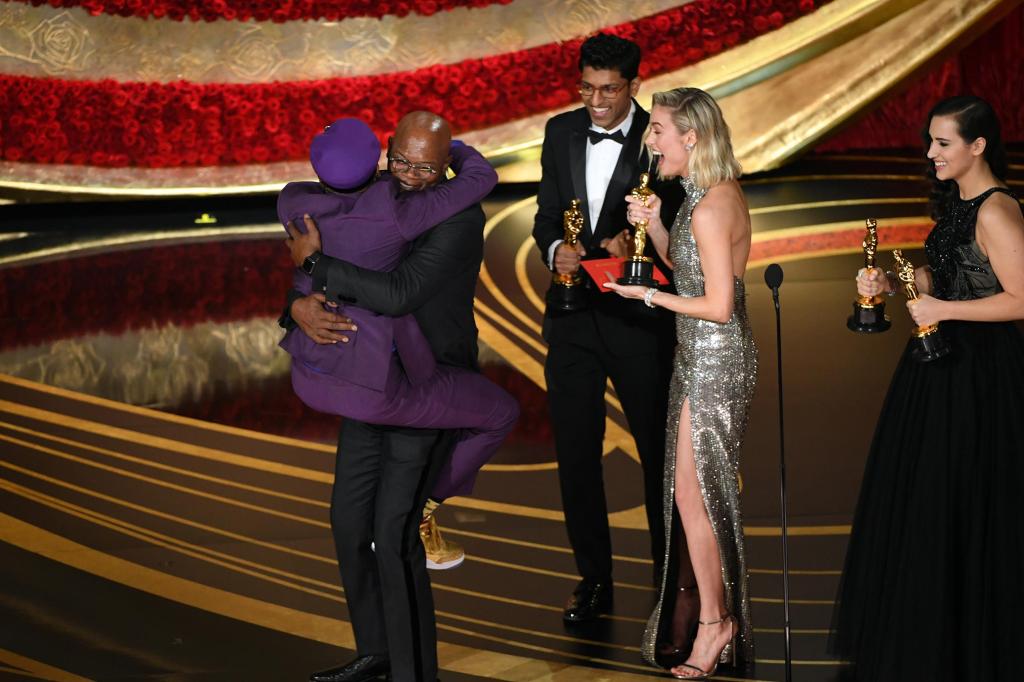
    The Academy Awards were last Sunday, and I think it’s safe to say there were plenty of surprises throughout the night. From the program having no host, to Green Book unexpectedly winning Best Picture, there was plenty to talk over the course of the next few days. Although director Spike Lee supposedly storming out after the Best Picture reveal, and Lady Gaga and Bradley Cooper’s steamy duet made headlines, things that didn’t get as much recognition were the various advertisement campaigns geared specifically towards the Academy Awards audience.

    It’s no secret that we are living in an age of recorded television and streaming services, and people have become impatient in general when it comes to sitting through commercials. Much like the Super Bowl, an awards show such as the Oscars are another example of a live televised event people tune in to in real time, and thus present the perfect opportunity to capitalize on viewers’ attention. While the adverts for the program didn’t cost nearly as much as those for the Super Bowl (according to Variety, 30 second advertisement spots for the Oscars cost between $2-3 million), it was very clear through the commercials’ content that they were advertising directly to the Academy Award audience, especially females.

    One example of this was with Walmart’s ad campaign. It’s known that fashion and style contribute to some of the Oscar’s biggest moments—both on the red carpet and in the award categories. Walmart, one of the night’s sponsors, seized this night of culture and fashion as an opportunity to advertise their clothing lines, while simultaneously highlighting film crew members and stylists who work endlessly behind the camera to make “movie magic” happen. The various commercials reinforced the idea that if ordinary people such as Julia Roberts’, Rami Malek’s, and Chadwick Boseman’s stylists can be glamorous and creative while wearing Walmart, then you can too!

    Another advertisement specifically aimed at women between the awards was a Budweiser commercial featuring Charlize Theron. In the commercial, Theron challenges female stereotypes while drinking her beer in a bar by challenging men to various games (billiards, darts, arm wrestling, etc.). An A-List celebrity, and a beautiful woman at that, was sure to capture and keep the attention of a time-shift-conditioned audience.

    Another Academy-specific ad campaign came from Google. The company utilized clips from various iconic movies, such as 2001: A Space Odyssey, Lady Bird, The Hangover Scream, Jerry Maguire, Deadpool etc., and depicted how the scenarios could have played out differently had Google been present in each scene. The commercials assume that viewers of the Oscars are movie buffs, and know enough about the films to understand the references within the commercials.


    What do you think? Do you believe the advertising efforts between the awards successfully kept audiences engaged? Did celebrities or those closely associated with celebrities influence your opinion about a product or brand featured? Comment below with your thoughts!

    -Audra Bullard

  • Elections are overwhelming, but not as overwhelming as bad public officials!

    Elections are overwhelming, but not as overwhelming as bad public officials!

    It should be no surprise that the midterm elections are around the corner. I’m sure we’ve all seen the plethora of ads and commercials that have taken up every inch of public space recently. Multichannel marketing is a sure-fire way to make certain your targeted audience doesn’t miss your message and the candidates this season knew what they were doing. They were all over your mail, your street signs, Facebook, Twitter, and YouTube. Even if you didn’t know their message, you knew their name. tenor

          Both tragically and thankfully, this election season is nearly over, however there is still plenty of time to get educated and get to the polls! Don’t let the rhetoric and oversaturated market you’re seeing scare you away!

    I understand how it could feel overwhelming with how intense our political climate seems to be nowadays. New policies and claims appear to be made daily that threaten the lives of minorities, women, the LGBT+ community, and many others. From DACA to birth control to trans livelihoods to gun control, there seems to always be something new and confusing to comprehend in the political sector.

    64b814bd-9f6f-496f-83f9-6f0ba3d07703       The issues lie with all the campaign ads you see, and the crazy claims being made by publications and political groups. Don’t let all the talk freak you out. This is an exciting and promising time in politics-we can make a real change. Take all the advertising you see with a grain of salt. We know to be responsible communicators and go into the world with honesty and transparency, and to do good. Unfortunately, not everyone communicates in this way and it’s important to keep that in mind. So, when the opportunity presents itself to make a difference about who gets to represent you in Washington, you need to take it.
    200w_d (1).gif

     Here’s five steps you can take to tackle this as educated as possible!

    1. Register
      Several states allow voters to register on election day! If you’re lucky enough to live in those few states, congratulations! If you’re a resident of NC I hope you planned and registered ahead of time, because the deadline has unfortunately passed. Registering to vote is the first step in our voting process and if the number of ads we see to encourage registration is anything to go by, it might be the most important. What can you do if you aren’t registered? If you missed the deadline this time around, don’t worry. There is a lot you can do to help the candidates you support. The rest of this list won’t be too useful for a while but feel free to continue reading anyways and share it! You never know who could need a little push in the right direction.
      2. Think
      You know what’s important to you and what values you want upheld. Really think of how you believe those values should be fought for in office. What do you want your candidates to stand for? Guide yourself by the issues you see discussed on the news, online, in your classes. How do you feel about gun control, abortion, education, universal healthcare? While I do believe the information we see is highly polarized and a lot of times dramatized, those are issues that matter. There are so many policies to have opinions on and the more you understand your own, the better you can decide who should stand up for you in government.
      3. Search
      Looking up a sample ballot for your address is the easiest way to conduct a search about the candidates you need to learn about. It’s not very helpful to distract yourself with all the political discussions when you don’t even know who’s running in your district.
      4. Check
      Read up and check on the candidates now! See who fits best with what you want to see in government. Once you’ve researched your ballot, spreading out and looking at other districts and states could be helpful to see whom the candidates associate with and endorse. We know the candidates in different levels of government will often associate publicly and belong to the same public groups to spread their message. Association is a powerful force when marketing and that sort of branding doesn’t come easy. Reputations matter, both in politics and in marketing.
      5. Vote!
      This is my favorite step. Go out to your voting place and fill in your ballot. Don’t forget to grab a sticker and share it online!

    My Post (4)

    More Readings!
    Main Source

    -Rachel Montesinos Jorro

  • Do Celebrity Endorsements Change the Way People Vote?

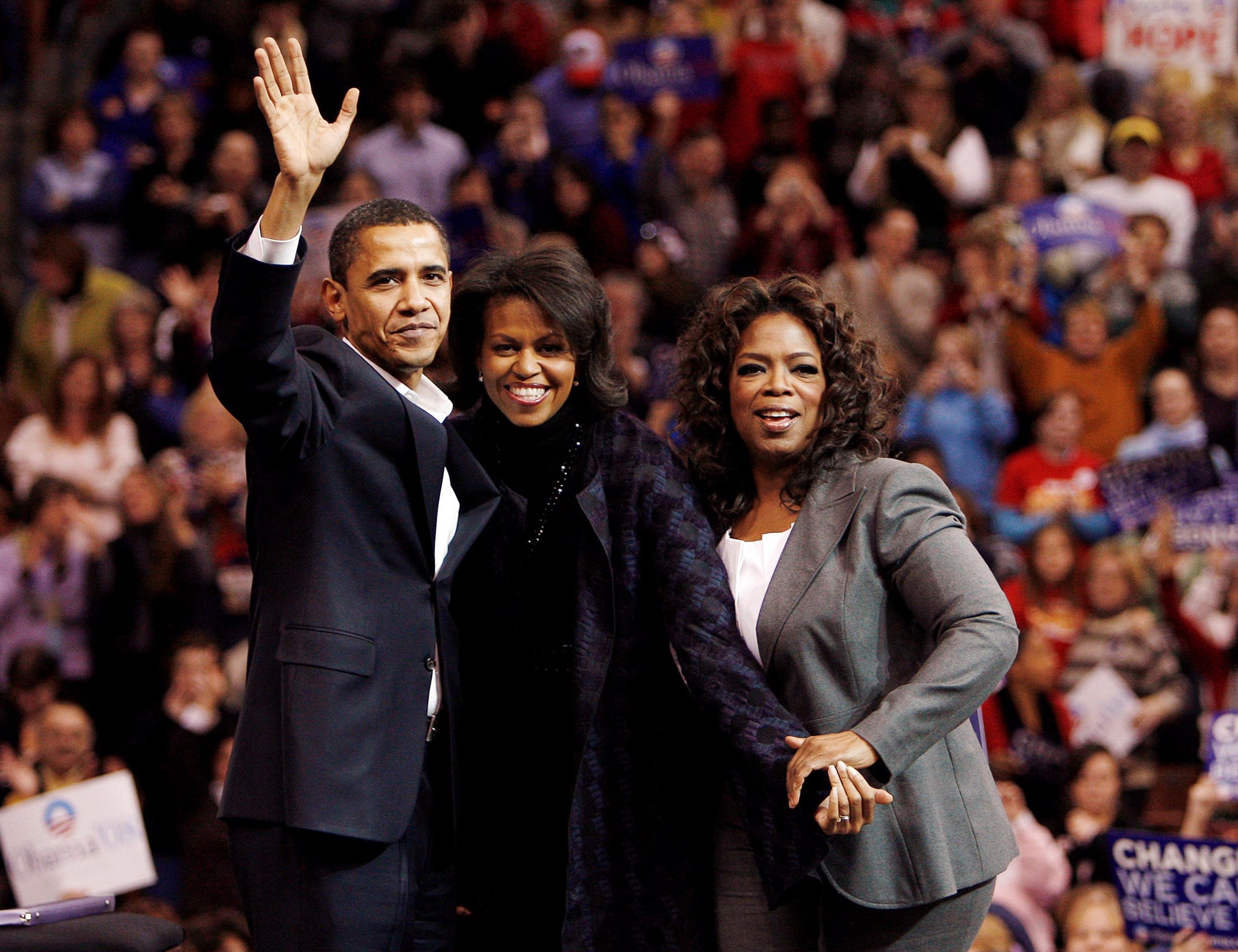
    180108-oprah-winfrey-michelle-obama-ac-532p_0fbd7ab0e3ab6c8a230fb18bc50e8ab0.fit-2000wThere is no denying how impactful celebrity endorsements can be on the public, especially in today’s political landscape. As the 2018 midterm election approaches, more and more celebrities are attempting to mobilize people to get to the polls and vote! But are these endorsements actually affecting candidates’ numbers?

    Many celebrities have been seen personally endorsing candidates from their home states. Recently, Taylor Swift posted on Instagram that she will be voting for Tennessee candidates Jim Cooper and Phil Bredesen. Will Ferrell was spotted knocking on doors in Georgia endorsing Stacey Abrams for governor. Jack Black and Meryl Streep made large donations to Senator Claire McCaskill’s reelection fund. Even the Houston native, Travis Scott, voiced his support for Beto O’Rourke.

    ifxeonmt9clbgaoywl0b.png

    It is obvious celebrities have an effect on the way people think. People are more likely to use a product if they see a celebrity using that product or endorsing it.  Also, the more credible celebrities have a much higher impact on people’s opinions and decisions.  However, this does not seem to apply to the political scene.

    According to Gallup, Pew, and CBS News, celebrity-endorsed campaigns do not matter to the overwhelming majority of voters. CBS News polls revealed that 78% of people expected celebrity endorsements to have little to no effect on the election. Some experts say poll numbers may not accurately reflect the true impact that big-name celebrities have on campaigns.

    dt1.jpg

    So maybe, celebrities that endorse politicians aren’t doing the trick. One study found that an increase in young voter participation could be attributed to celebs that influence fans to “get out and vote”. Many celebrities are posting pictures of their “I Voted” stickers and tweeting to their fans the importance of having your voice heard by voting.

    1108-rocking-the-vote-primary-3-1200x630

    Overall, a voter who typically votes for one party is not going to turn around and become a supporter of another party because a celebrity told them to. But people who were undecided or weren’t planning on voting in the first place could be persuaded to get out to the polls. The link between celebrity power and politics has a long history and most studies claim it does not affect the way people vote. Perhaps the question we should ask is, “Do celebrity endorsements make you pay more attention?”

    – Lizzy Regnery


    References:

    http://theconversation.com/us-election-what-impact-do-celebrity-endorsements-really-have-66204

    https://www.marieclaire.com/politics/g24442884/celebrity-endorsements-politics-2018/

    http://www.electionanalysis2016.us/us-election-analysis-2016/section-2-campaign/us-election-what-impact-do-celebrity-endorsements-really-have/

    https://www.today.com/news/oprah-effect-can-celebs-sway-voters-wbna27227264