Category: Branding

  • Price Tag on a Super Bowl Ticket? Not for these fans.

    It seems fans whose plans were altered by seating issues at this years Super Bowl have filed a lawsuit against the NFL. Go figure. The lawsuit also targets specifically the Dallas Cowboys and owner Jerry Jones and alleges a breach of contract, fraud, and deceptive sales practices. The massive group of fans, as many as a thousand people, are pushing for a collective gain up to $5 million from the NFL. While some of these fans pushing for the lawsuit are legit (400 fans did not even get a seat for the game), others seem to be coming off as a bit forced such as season-ticket holders who weren’t aware that they would be in “temporary seats”.

    Perhaps the NFL’s biggest problem stemmed from an inadequate offer that would have given the displaced fans $2,400 and even a ticket to next year’s Super Bowl, airfare and hotel included. But clearly this just is not good enough for these fans who felt gipped out of their paid-for seats. Apparently the NFL should have made these fans an offer they couldn’t refuse, at least up front, and now they will really have to pay for it. Clearly, the NFL cannot afford to get into a legal battle with these angry fans as it would lead to nothing more than a public relations disaster and a huge blow to the brand. It is no secret now that the league is to blame for the seating fiasco. So now in order to evade future damage to sales efforts and brand integrity and credibility, the NFL needs to do whatever it now takes to keep its faithful customers.

    Apparently there is no price tag on a Super Bowl ticket for these fans and they show no signs of dropping the issue. It seems at this point, the main hope for the NFL is that this story gets out of the media as fast as possible, and without further damage to the brand and future marketing and sales efforts and profits.

    -Eric Holtzman, Chad Graves, Ryan Kelley, Maxann Keller, Katelyn Truss
  • Super Bowl Mixed With Red and Pink Flowers?

    Super Bowl XLV had 111 million viewers throughout the entire game, but it doesn’t stop there.  “A record-breaking 169.2 million people tuned in to the program for at least a portion of the game” according to Fox News.  With this many people, and a majority of the audience being male, what else could be better than reminding men about Valentine’s Day?  The game is played a week before V-day, still allowing the men with crushes, significant others, and spouses to order flowers and various other red and pink gifts.

    The Super Bowl submerges men into drinking beer with their buddies, talking about football and, thanks to Go-Daddy commercials, hot chicks.  Teleflora was able to combine all these aspects into an effective, realistic and catchy commercial.  Speaking on behalf of the female population, men are stereotyped into not knowing how to express their feelings, especially around Saint Valentine’s Day.  In the commercial, the guy expresses his feelings for Kim in a not-so-romantic way; “your rack is unreal” doesn’t really scream romance.

    Teleflora’s effectiveness of this commercial is outstanding.  Targeting men and illustrating a guys perspective on Valentine’s Day and translating that into the beauty of flowers is what the overall audience of the Super Bowl will enjoy.  Comical, yet true, this commercial and Teleflora as a company, will be remembered.

    -Lauren DeHart

  • Super Brand: Chrysler’s Super Bowl Success

    Though the Super Bowl commercials are known for their celebrity appearances and (sometimes) hilarious gimmicks, rarely do the viewers get a look into the heart & identity of a company while also being entertained. Last year, Google’s “Search Stories: Parisian Love” set a new standard for showing Super Bowl viewers what a company’s product actually did while also making a touching commercial that triggered an emotional response.

    Google didn’t have a spot in this year’s game, but one company capitalized on using the ad time to set a definition for their brand and that company was Chrysler.  Chrysler’s lengthy 2-minute spot focused on defining the building blocks of their brand’s identity.  Although the commercial was essentially a straight minute of voice-over narration, the use of the urban backdrop of Detroit and celebrity endorser Eminem’s riff for his mega-hit “Lose Yourself” still provided viewers with a chilling emotional response.  Chrysler may have been using the commercial to announce its new 200 model, a “luxury” car, but the ad focused primarily on the American grit and hard work that goes into each and every one of its vehicles.

    During a time when America is constantly being classified by how behind we are in the global marketplace, Chrysler chose to define its brand as purely American. Everything from the visuals, to the voice over, to Detroit born & raised celebrity Eminem provided a united identity for Chrysler that culminated in the company’s new tag line: “Imported from Detroit”.

    Anna Kate Babnik, Katie Eagle, Deji Adeleke, Tiffany Evans, and Carissa Niederkorn

  • Who really came out on top during the Super Bowl? The Packers or Bud Light?

    Overall, this years Super Bowl commercials were not as satisfying and did not meet the expectations that previous years commercials met. Usually there is a wide array of different brands being represented, but this year the same ones were repeated. Nonetheless, there were a few that caught our eye.

    Bud Light, which always creates entertaining commercials, did not disappoint. The first commercial that appeared mimicked Extreme Makeover Home Edition and other similar shows.

    The target audience for this commercial is women, different from their usual predominantly male target audience. It begins seeming like the couple, with the typical crazed anticipation of the woman, was going to receive a new kitchen.  Surprise! Only Bud Light was added to the room. The wife was shocked at first and a little unsure, but as people started to party in the kitchen, the host says “now this is a room that everyone wants to be in!”. This adds emphasis to their slogan of “a sure sign of a good time.”

    The second one (our favorite) that spoofed how outrageous product placement has become.

    Product placement is meant to be subtle, something to quietly promote a brand name without interfering the television show or movie (for example, a soda can on a kitchen counter). Bud Light took this fad to the extreme by mentioning how every time you place a product, you get free stuff. Bud Light appears almost twenty times in the thirty-second ad. Since it is such a recognizable brand, they do not have to explain what their product is or why you should buy it. Instead, they are able to use they creativity to make funny and memorable ads that people will talk about. This strengthens their brand by creating a buzz (figuratively and physically).

    They also created a commercial in which the dog sitter throws a party and has the dogs do all the work.

    The dogs open the door, serve beer, DJ, bartend, cook, basically running the party. This is memorable because most people can relate to owning a pet but by having the dogs personify human actions, it creates a humorous and different twist. This ties directly into their current slogan. Even though the commercial does not demonstrate the benefits of drinking Bud Light, it creates an image of how much fun you can have while drinking Bud Light.

    As one of the only three beers represented during the Super Bowl, they stood out as the frontrunner in beer ads for the year.  This indicates their financial prosperity as a company.

    -Allison Day, Jessica Berinson, Megan Canny, Melissa Gagliardi, Scott Burgess

  • Who markets the best ice cream in town?

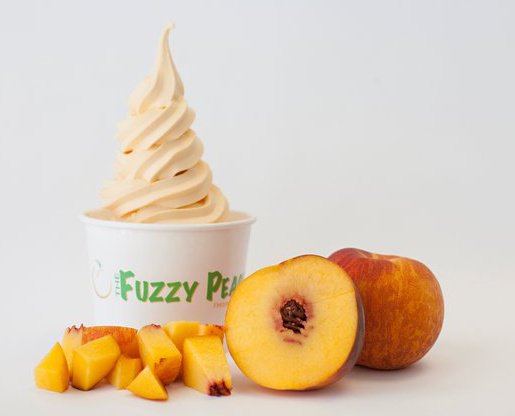
    As a smaller town, Wilmington has a lot of competition between businesses. Kilwin’s has always been known as a “go-to” location for ice cream in Wilmington and a popular tourist spot.  This past summer the ice cream industry grew by one, adding the Fuzzy Peach into the choices for a cool treat on a hot day. The Fuzzy Peach is located less than a mile from UNCW and this is their only location. Both Coldstone and Kilwin’s are chains and have locations across America.

    Coldstone is the largest of the three and it has stores internationally. Their marketing strategy involves television commercials, promotional coupons, direct marketing at UNCW events like the Involvement Carnival. They are a sponsor for the UNCW Athletic Department. On our basketball tickets, you will find a coupon provided by Coldstone. They set themselves apart from the competition because they have lots of different combinations such as “Cookie Doughn’t You Want Some” and “That’s How I Roll”.  You can see their entire signature creations made right in front of you and they have pictures of each combo on their website. Their portion sizes are called “Like It” “Love It” and “Gotta Have It”. They also sell ice cream sundaes, smoothies, and pre-made ice cream cakes. This company is also known for their quirky songs that they sing when you walk in the door and when you leave them a tip. You can hear the same songs at each location, so you know that you’re walking into a Coldstone when you open the door.

    The Fuzzy Peach opened in May of 2010 and already has a lot of brand recognition. Their t-shirts and facebook page are almost as popular as their low fat yogurt.  The frozen yogurt bar allows you to choose the toppings that you want and how much of each topping you want on your yogurt.  The Fuzzy Peach is the only frozen yogurt bar in Wilmington, so that makes them stand out from their completion. The price is calculated by the weight of your bowl and toppings. Their slogan is, “Providing Wilmington with a healthy dessert alternative.  On the website, they have a comparison of why they are better than their competition, which includes Dairy Queen and Baskin Robbins.  Their marketing strategies include t-shirts with their logo, which allows people to recognize the brand since the logo is a peach. They also use direct marketing by passing out coupons, stickers, and shot glasses at events.  They come to UNCW’s Involvement Carnival in the beginning of the year and give out samples.

    Kilwin’s is a downtown Wilmington classic. It is a common tourist location. They sell ice cream, chocolates, caramel apples, fudge, and more. Kilwin’s makes their own traditional waffle cones, which lures customers in from their scent. Kilwin’s creates an exciting experience by creating the cones right in front of you. It ads a personal element of trust, since you can see the people hard at work on your waffle cone. They rely mostly on word of mouth marketing, as well as social media and their website. They draw people into the store because they bake their own waffle cones and the aroma drags people in by their noses. They are not as big as Cold Stone, only located in 15 states with only 9 locations in North Carolina.

    Who do you think has the best marketing strategy? The winner is…….The Fuzzy Peach! We think this because they employ the most promotional strategies. They handed out coupons and got customer input on what the best flavor is at UNCW’s 2010 Beach Blast. The store has been open for less than a year and a second location is already in the making. We look forward to seeing how much The Fuzzy Peach grows in the coming years.

  • Is Apple taking over the world?

    As you might have read over the past few weeks, there has been a media frenzy regarding Verizon Wireless receiving the iPhone 4. This has further added fuel to the cutthroat marketing campaigns of both AT&T and Verizon. With this in mind, the real question is how this will affect the marketing and brand image of the iPhone.

    By utilizing two wireless networks, the constant battle for customers by Verizon and AT&T may actually have a negative image on the Apple brand.  Apple, known for its superior technologies, has an overall positive brand image.  With both companies airing commercials attacking one another, how can Apple maintain their image? This is the most controversial issue that Apple has had to take on to date.

    Below is the most recent commercial for the iPhone 4 released by Apple.

    In the commercial, Apple is remaining neutral with AT&T and Verizon. This is keeping both companies on an even playing field, while not portraying one as better than the other.  This may change once Verizon’s iPhone is released in stores and a new slew of Verizon and AT&T ads hit the airways.  Will Apple continue to remain neutral or eventually choose a side? The future is uncertain, but on January 19,, 2011, Apple became the largest mobile phone vendor in the world by revenue. If this upward trend continues, they will continue to dominate the market share, regardless of which company carries the iPhone.

    -Allison Day, Jessica Berinson, Megan Canny, Melissa Gagliardi, Scott Burgess

  • Seasons Greetings (For Whom, Actually?)

    The Yuletide season is drawing closer, as stores begin displaying decorations and Christmas music makes its seasonal debut on the radio. Some would say that the holiday spirit is in the air, but what is truly being celebrated? Is it a time of giving and charity, or a testament to our nation’s consumerism and emphasis on material possessions? As our earlier posts pointed out, advertising and marketing campaigns equate holidays to buying products and spending money. This deflects from the real meaning of the season of giving, and even excludes some less recognized holidays. These corporations need to realize that the holidays retain different meanings to different groups of people.

    Most people tend to categorize the month of December as the month of Christmas. Often times, the mainstream audiences overlook other holidays such as Hanukkah and Kwanzaa. This could result from the lack of media attention given to these holidays. Currently, the greeting card industry offers cards celebrating these events, but that is about as far as it goes. The attention is almost always directed towards Christmas. This could be because Christmas is more marketable, thus turning a larger profit for companies. In the end, a company’s main goal is to earn a profit, no matter what it takes.

    These corporate practices are not exclusive to Christmas. Other holidays display the same profit-minded trend as well. With the creation of Black Friday, Thanksgiving has become less about giving thanks, and more about marking the beginning of the shopping season. Valentine’s Day and Mother’s Day are synonymous with showing someone how much you care about them by purchasing a gift for them. Halloween advertises costumes and candy. Almost every holiday has some kind of themed product linked to it (clothing, party supplies, decorations, etc.), all in the name of profit. It could be argued that society has become so wrapped up in consumerism and receiving gifts, that the true meaning of holidays can become lost in the translation. In the corporate sense, holidays are about generating income and creating innovative new products. So who is really experiencing “Happy Holidays” around this time? Is it the corporations gaining substantial revenue, or is it the consumers providing the revenue?

    Sarah McIntosh, Eliza Wadson, Jocelyn Walson, Sean O’Connell