Category: Branding

  • Social Media: How Relevant are You?

    Crafting an idea, building a brand, launching it and growing a following all take time and the key factor in making a brand successful is building relationships on social media. Social media has shifted the focus of strategic marketing from informational ads to creating content and having conversations within social groups. According to the 2018 article in The Journal of Media Research Online Brand Awareness. A Case-Study on Creating Associations and Attachment by Alina Nechita “the symbolic dimension built by communicative means ensures the consistency and value of a brand.”

    Nechita discusses figuring out how your audience is using social media, she mentions the reach of Facebook, Instagram, Youtube, Pinterest, and niche blogs for reaching your audiences. You should be figuring out what platforms your audiences are using, Facebook and Pinterest report the most active users, Instagram is popular with teenagers and young millennials, what are your consumers using?

    Once you know where the people are, where do you start? Nechita’s research recommends piggy-backing on influencers; she specifically mentions using influencers who test products, applies personal experience, and share a final verdict. Nechita acknowledges the potential for bias but mentions that these tend to be very successful and apply similarly to general brand awareness. She states that “in the absence of a well-known brand to associate it with, the impact of its message will soon become null.” 

    Though Nechita recommends building brand awareness through more established brands and influencers, it can be done over time through consistent engagement with social groups online. The process requires analysis of not only sales, but of likes, shares, and comments at six-month intervals. 

    You should be establishing consistent positive interactions with your consumers online. Nechita mentions looking into all mentions of your brand and having them removed. The text mentions how detrimental to a new brand a negative comment could be and recommends going as far as to look the person up and contact them to discuss having the comment removed as well as frequently removing those who engage negatively online. While a negative comment may be detrimental, I think to contact someone with the goal to remove it seems risky, I would think responding directly would be a better solution. Public criticism deserves a public response.

    She goes on to mention that creating a tone or mood to the conversations on social media is also important, she mentions humor working particularly well here in America like Wendy’s use of Twitter. It is essential to create a conversation that your audience wants to be a part of and is relevant.

    Another key point that she makes is that the worst possible thing a brand can do is to ignore the customers. Nechita iterates that with well-known brands, our consumption shows who we are, it’s a representation of us so the brand’s personality needs to match up with our own. These brands have to continue to stay relatable to the consumer and she elaborates on this by going over measuring customer satisfaction and that being shared among social communities: if you like it, you tell your friends about it, right? She states that the most successful brands are the ones that “fulfill the needs of community members.” 

    This doesn’t just mean physical needs but emotional ones as well, she offers the example of Samsungs’ commercial in India in 2018, where they mention a refrigerator taking care of you like your mother does, driving on strong emotions like a mothers’ love, maybe sadness from missing that mother, and so on. Nechita makes the point that “the brand sales goal is no longer obviously profit-oriented, but apparently targets its alignment to certain emotional needs, to bring joy to customers.”

    The article goes on to warn of trying to engage online by launching too many social media accounts at once that you cannot create individual content consistently for each or not having a specific communication strategy which creates inconsistency in messaging. It says that “humanizing a brand will ensure the public’s involvement for a longer period of time” and unattended social media profiles that have old posts at the top of the page create the feeling that the brand is doesn’t care about interacting with their consumers.

    So what this research boils down to is finding your target audiences and immersing your brand into the conversation in the various social groups in your audience and then having an honest, organic conversation with your consumers and figuring out their needs and trying to fulfill them. Through this process, you create a lasting impression on your audience and an authentic value to your brand that consumers want to take part in and share with others. 

    NECHITA, V. A. (2018). Online Brand Awareness. A Case-Study on Creating Associations and Attachment. Journal of Media Research, 11(2), 91–111. https://doi-org.liblink.uncw.edu/10.24193/jmr.31.7

    Carol Friday 


    Carol Friday is a Communication Studies senior at the University of North Carolina Wilmington and is the creative director for the community group managing the Communication department’s Twitter page, the IMC Hawks blog, and its respective Twitter and Facebook page. 


  • Spring Break Travel, Iceland, and Authentic Advertising

    Spring Break Travel, Iceland, and Authentic Advertising

    March begins the season of spring break for college students and faculty. It’s a necessary period to disconnect, reflect, and have some fun in the midst of midterms and difficult coursework, jobs, or internships.

    But just because we might be escaping our day-to-day lives for a week doesn’t mean we escape the myriad ways that advertising and integrated marketing communication impacts us and our decisions. One huge way IMC impacts us: how do we decide where to go?

    Travel agents, tourism bureaus, hotels, airlines, and other stakeholders create vibrant campaigns. Few have had to deal with a crisis as large as a volcanic eruption.

    Inspired by Iceland

    Eyjafjallajokull-fimmvorduhals-eruption-iceland11
    Eyjafjallajökull erupting. Via adventures.is

    In 2010, Eyjafjallajökull (an Icelandic volcano) erupted and caused historic disruptions, including ash fall that shut down flights across Europe for almost a week.

    Tourism to Iceland fell by 30%. Inspired by Iceland was a campaign that involved the whole country. The president of the country at the time, Ólafur Ragnar Grímsson, stopped the entire country in its tracks (schools, workplaces and more) to ask for citizens to submit positive stories–which they did.

    The campaign chronicled its success in this video:

    The huge catalogue of positive Iceland experiences included celebrity testimonials. Webcams provided live footage of some of the most tourist-attracting natural wonders. The results of the campaign included more than £137 million in extra tourism revenue and more than 22 million stories shared.

    That last part is pretty amazing, because Iceland’s population is fewer than 350,000 people.

    The Brooklyn Brothers, the campaign’s creators, shared a case study on their website with more details.

    What Other Travel Experiences Can Take from Inspired By Iceland

    The award-winning campaign was effective because the agency running it knew its target audience: socially conscious millennials wary of traditional advertising ploys. The Brooklyn Brothers successfully gathered authenticity and storytelling.

    What would be more likely to get you to travel to a destination: a generic, high-production-value slideshow of landscapes with a peppy but robotic disembodied narrator telling you to Visit XYZ? Or a series of pictures of black sand beaches and a story from Olaf, a real Icelander, telling you about his afternoon on Iceland’s south coast? What is more authentic–a curated video or a live webcam broadcast?

    If you picked the second answer for any of those, you’re part of the target audience for Inspired by Iceland.

    Authenticity in marketing is now more important than ever, Business.com writes. That’s counterintuitive for some brands, which strive to carefully curate a perfect facade. Consumers’ desire for authenticity also makes it difficult for brands that lack a clear contribution to “the greater good”–without that corporate social responsibility, authenticity just means admitting that a brand wants a profit.

    The travel and tourism industry has always been about selling experiences, not goods. The next time you start googling destinations, consider what experiences you’re being sold–and whether they’re true-to-life or inauthentic ones.

    –Nikki Kroushl

  • Total Taylor Shift

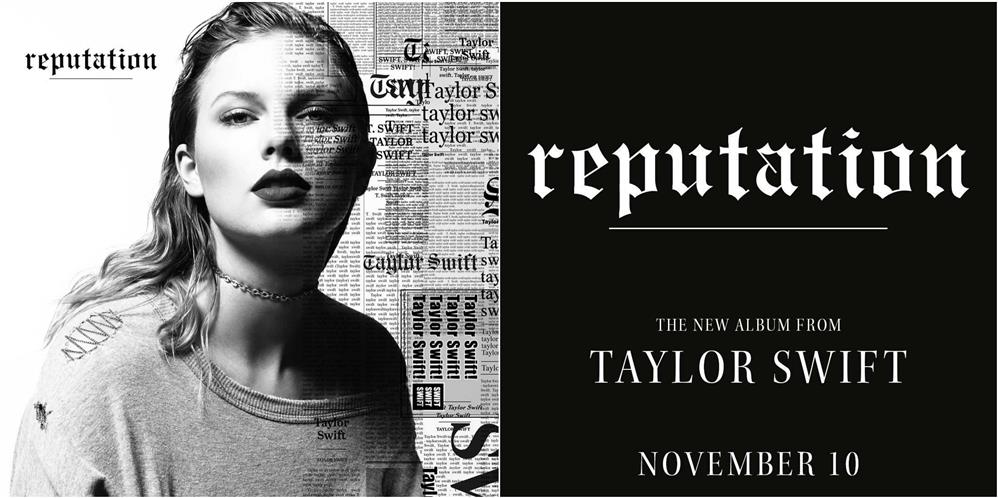
    taylor-swift-reputation

    Taylor Swift, a global pop culture icon and musician, was known as a sweet innocent country artist. When she began her career, her songs quickly gained recognition and she immediately assimilated a loyal fan base. Since the release of her third studio album, Red, the music sensation has transformed her musical style and the way she brands herself.

    The media targeted Swift shortly after her rise in popularity. She became known as a ‘heartbreaker’ because she seemingly generated tragic romances, which were the inspiration for many of her songs. She used the media coverage of her unfortunate circumstances, to make a transition from innocent country singer to unapologetic pop sensation.

    Her latest album, Reputation, which released on November 10th, is a musical expression of her fight against the media chatter, which, coincidentally, was self-inflicted most of the time.

    In her attempt to hang on to the musical trends, has Taylor Swift abandoned her true self, or is she just now showing it to the world? How authentic is Taylor Swift’s brand?

    ~ Ben Yerby


  • “I’d like to buy the world a Coke”

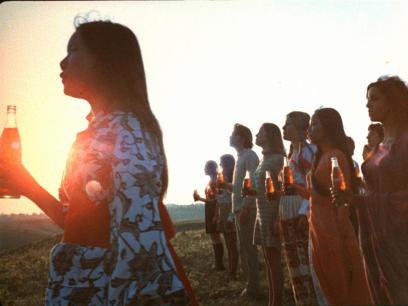
    In 1971 Coca-Cola launched one of its very first in-color TV commercials. It was named; “I’d like to buy the world a Coke” and has been called, “one of the best-loved and most influential ads in TV history”. It featured a multicultural cast with actors and actresses from over 20 countries singing together on a hilltop in Italy. All holding a cold bottle of coke in their hands.

    cocacolapic2

    The commercial has been called “groundbreaking” and was a part of the Coca-Cola campaign, “It’s the real thing”. The slogan, as well as the commercial was created by Bill Backer (creative director for the Coca-Cola account at McCann). The idea of the commercial came to Backer while in an airport on the way to London. He quickly wrote down the words, “I’d like to buy the world a Coke and keep it company” on a white napkin so that he would not forget it in the morning.

    cocacolapic1

    Backer got help from established song writers Roger Cook, Billy Davis and Roger Greenway to write the full song for the commercial. The song became such a hit it was recorded by the New Seekers, a British pop-band. It was so idolized that it was played on the radio as a full-on song.

    The lyrics read;

     “I’d like to teach the world to sing in perfect harmony”
    “I’d like to buy the world a Coke” 
    “And keep it company”
    “It’s the real thing—Coke is”
    “What the world wants today”


    The commercial has received praise throughout the years, and rightfully so. Davis truly captured the essence of Coca-Cola’s brand identity explaining that, Coke was more than a liquid refresher. Saying that, Coke is a “tiny bit of commonality between all people”.

     cocacolapic3.png

    The commercial gave hope to a multicultural world in where a bottle of Coke could be shared together amongst anyone in “perfect harmony”. The Coca-Cola bottle was used as a symbol of peace. By using a multicultural cast the commercial aimed for a world filled with greater acceptance and inclusion. Erasing divisions between people with different skin colors, ethnicities, and backgrounds.

    The commercial first aired in 1971. The same year as the US voting age was lowered to 18, Disney World welcomed it’s first visitors, the Pentagon Papers were published, and National Public Radio broadcasted for the first time.

    cocacolapic4

    A lot of things were changing at this time. You could possibly argue that in a state of doubt and anti-Vietnam war attitudes, Coca-Cola was ahead of its time releasing this “feel good” commercial focused on friendship and happiness. And it might have been a slight nod against the war oversees.

    Take a look at the commercial yourself! Why do you think this became such a hit? Why do you think it resonated with people?

    P.S. If you watched Mad Men, the final scene of the show is followed by the Coca-Cola Hilltop commercial. Showcasing just how iconic it was and still is today.

    – Olivia Nilsson

  • The Key to Success

    What would happen if every company in the world was socially conscious? Would we diminish poverty or maybe end world hunger? This would be a simple solution to much of our worlds problems and it seems as though only a few companies have this figured out like The Giving Keys, a Los Angeles-based jewelry company.

    4-Charitable-Companies-we-LOVE-The-Giving-Keys.png

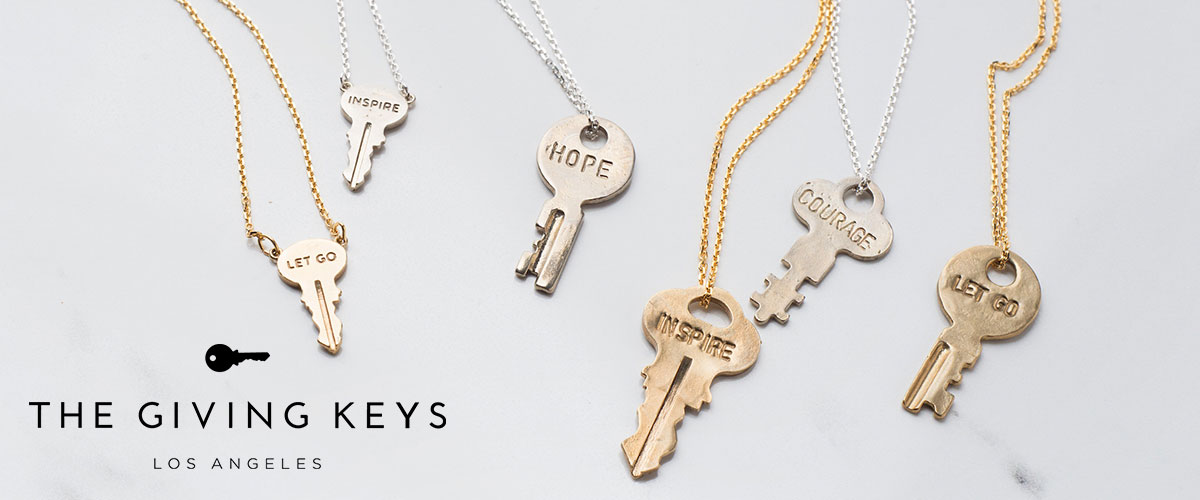
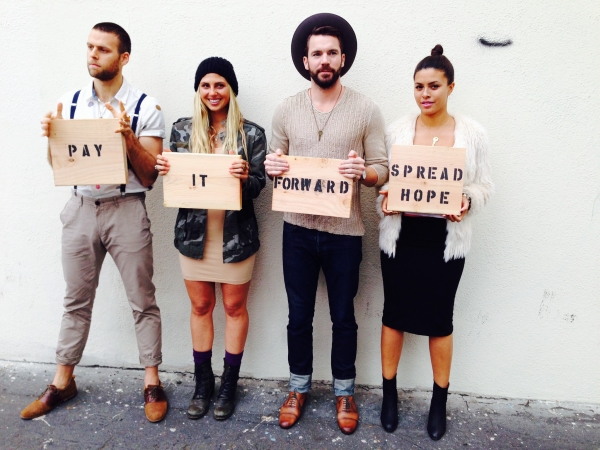
    The Giving Keys is not a nonprofit but a social enterprise.  They believe that the solution to ending generational poverty and homelessness is to provide jobs for those in need. Instead of raising donations, the company employs those transitioning out of homelessness. The Giving Key is a pay it forward company where you can purchase an collection of different vintage keys with phrases like love, breathe, courage engraved into them. You pick the key with the word that speaks most to you and then once you feel as though it has served its purpose in your life you give your key to a person who needs the message. Through your purchase you help those transitioning out of homelessness get jobs, the company has currently provided 70 plus jobs opportunities to those in need.

    tgk-header-1200x500-opt-1.jpg

    Simple and meaningful. These are two words which can be used to describe the keys. It seems as though it is the meaning and purpose behind the keys that sells them. Founder Caitlin Crosby says “We aren’t in this just to make money and be fashionable. We exist to change people’s lives”. Being socially aware and using that to set you apart from other companies can turn a simple idea turn into a widely known enterprise.

    904699_696285380410829_3501537327158763815_o.jpg


    Check out their website and see how they are changing the world one key at a time!

    Does a company with a social purpose make you more prone to buying their product? Why or why not?

    • Isabella Martinez


  • Showing the Human Side of Businesses

    Whether you are an individual about to speak to a crowd or an organization trying to increase brand awareness, connecting to your audience is essential. Knowing your audience, what message you are trying to send, and the most effective channel to send your message, are all critical components when trying to achieve this connection. The various channels that organizations can communicate through is always increasing as technology advances and right now social media platforms are the latest and greatest among these channels. 56732301


    While Mr. Burgundy is right, simply creating social media accounts is not enough. The most successful companies use social media to show a more human side of their organization. People are bombarded with thousands of advertisements daily and smart consumers block out these traditional advertisements. What social media allows is for companies to reach potential consumers in a different way and engage with their audience more than ever.

    img_2612The challenge becomes knowing how to properly use this new-found channel of communication. Companies who treat their audience as individuals, and therefore treat their organization as an individual, have the most success establishing a connection through social media. Instead of focusing on purely sales related messages, social media platforms should be used to communicate any information that is relevant to a given audience, messages should sound natural, and be current in order to really show off that human side.

    Denny’s is a company that is a great example of this and has been gaining recognition as one of the funnier and more engaging companies on social media.

    https://twitter.com/DennysDiner/status/618503585685377024?ref_src=twsrc%5Etfw

    This tweet of a viral video and catchphrase, with Denny’s’ personal touch, shows the company’s ability to take something that is relevant to their target audience and apply it to their brand. Denny’s goes even further when it comes to engaging with their audience and actually responds to some of their audience.

    dennys_tweet_1

    While these tweets may be on the more extreme and silly side for many companies, it is perfect for Denny’s and what they are trying to communicate.

    There is a fine line between showing the more human side of an organization and being inappropriate, as many companies have found out when there has been significant backlash after an inappropriate post. However, with a properly run social media account, the benefits of using social media to gain new customers and maintain an image of being a thoughtful and relevant organization, vastly outweigh the potential downside.

    -Brian Clifford