Tag: women

  • Humor: The Helper

    It’s undeniable that cancer is a scary subject, and breast cancer is no exception. One simple statistic summarizes just how un-discriminatory and prevalent breast cancer is: breast cancer is the most common form of cancer in women, no matter your race or ethnicity. With the whole month of October designated as National Breast Cancer Month, reminders for women to get mammograms and to screen themselves appear regularly. So how do you get people to face one of the scariest diseases out there? The answer is humor.

    Rethink Breast Cancer is an organization dedicated to changing the perspective of breast cancer from scary, to preventive and manageable. Most notably, they want to change how awareness is taught. Rethink Breast Cancer has moved away from fear-based education tactics to using “fear-free, cutting edge messaging, multi-media platform reach and positive energy [that will] revitalize the breast cancer movement and motivate young people to action.” The YouTube video they have created for awareness has done just that.

    With over six million views, the video Rethink Breast Cancer produced in 2011 has done a remarkable job of not only raising awareness for breast cancer, but also doing so in an approachable manner. Based on the premise that “women are more likely to watch a video if it features a hot guy,” it stars male models that educate the audience on how to check for breast cancer. Humor is interwoven throughout the video in scenes such as a female nurse tripping over a stool, and a slow motion of a male model bathing himself.

    Together, all of these humorous scenes combine with raw education to make breast cancer awareness fun to learn about. By using a pop-culture medium, such as YouTube it is even harder to ignore the message. But most importantly, Rethink Breast Cancer is living up to its goal of helping to educate from a perspective of humor rather than fear. This is exactly the kind of video that women (and even men) will pass on to their friends, helping to spread the importance of proactively approaching breast cancer.

    Carefully balancing humor and sex appeal, Rethink Breast Cancer has created the ultimate advertisement for spreading awareness on how to help catch breast cancer. By using humor the ad becomes persuasive and makes examinations less of a chore and more of a self-service. But is this particular message the way that survivors would want to caution the public? While it seems appropriate to use humor on occasion, could there be a point where humor starts to detract from the sincerity of the situation at hand? If ads like this can be successful for breast cancer could this type of levity be introduced in messages of other health campaigns?

    Meghan Carey, Caroline Robinson

  • True Life: We Live in a Barbie World

    The Barbie Doll is an icon in American history.  Young girls have been playing with Barbie since 1959 when the doll was first introduced.  Jill Barad president of Mattel, which manufactures Barbie said, “99% of girls ages 3 to 10 own at least one Barbie doll.”  Though Barbie has been considered anatomically incorrect, teens and women everywhere consider Barbie to have the perfect body.  According to the Media Awareness Network, “Researchers generating a computer model of a woman with Barbie-doll proportions found that her back would be too weak to support the weight of her upper body, and her body would be too narrow to contain more than half a liver and a few centimeters of bowel.”  Even with realizations such as those mentioned above and professional opinions, teens and women are continuously looking for ways to get the “perfect” body that clearly doesn’t exist.

    With the media’s portrayal of skinny bodies, tiny waists, and big busts, beauty products and diet plans are constantly growing and becoming more profitable by the day. Women become insecure with their body image because they are surrounded by the unattainable beauty presented in the media.  This overwhelming presence of thinness presented in the media can easily bruise women’s confidence and self-esteem. Living in the culture of thinness can ultimately lead to self-destruction. However, some marketing companies, such as Dove, are fighting against this stereotype and defining what real beauty truly is.

    The Dove® Campaign for Real Beauty was created in September 2004 to encourage women to voice their opinions on the issue of the definition of beauty. Through these discussions, it was obvious that the definition of beauty that the women knew was extremely limiting and virtually unattainable. The Real Truth About Beauty: A Global Report found that “among the study’s findings was the statistic that only 2% of women around the world would describe themselves as beautiful.” Since these horrifying findings, Dove has put forth amazing effort to break beauty stereotypes and make people realize that beauty is not what the media portrays. The first jab at the media came when Dove aired a commercial that featured real women whose appearances were not of the norm. Dove asked their viewers to judge the women’s looks and vote at their website. The options for the voting consisted of questions such as “oversized or outstanding?” and “wrinkled or wonderful?” Since the campaign was created, these commercials have made an impact on women around the world. Dove has seen an increase in the percentage of women who can describe themselves as beautiful.

    -Kelsey Bendig, Andrea Blanton, Brooke Keller, Brian Burch

  • Rock for the Cure


    UNCW Communication Studies Society is rocking out this Friday evening for a great cause. October is Breast Cancer Awareness month and to make our mark in fighting for the cause, UNCW students and faculty invite everyone to participate in Rock for the Cure Friday, October 21st, 2011 on the second floor of Reel Café, downtown Wilmington N.C. at 7:00pm. The admission to this event is $5 and all proceeds will go to New Hanover Regional Medical Center’s Pink Ribbon Project. The profits will help fund uninsured women in the greater Wilmington area to receive free mammogram screening and also provide “comfort bags” with items that include a pink fleece blanket to be used to warm patients as they receive treatments, a satin pillowcase for comfort after hair loss and an herbal eye pillow to help with relaxation during this time. Rock for the Cure will also raise money through a silent auction and raffle. With the help from you and others we can make a difference for the incredible success of the Pink Ribbon Project and help provide early diagnosis and comfort to women in our area.

    -Michela Noreski, Jordan Hill, Ashley Nelson

  • Ad it all up

    The anticipation of the 2011 TV line up is almost complete as we
    are wrapping up the first week of an intense premiere season. Coming soon we
    will view the Nielson rating which will say which show came out on top with the
    most viewers and what networks picked the best shows to debut. However, there is
    more to just ratings from a show that make it popular, there are strategies
    weaved into placing certain advertisement’s along with the viewers of those
    shows.

    When watching the recent Emmy award-dominating force, Modern
    Family, on Wednesday
    evening
    ,  did you notice that actress Sofia Vergara, who plays the role
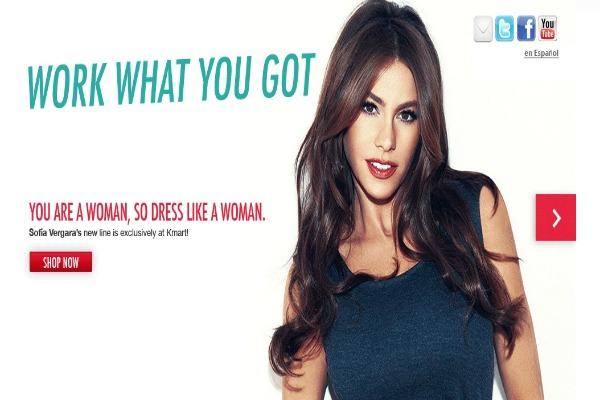
    of gorgeous Gloria Pritchett, debuted her new clothing line at K-Mart for the “
    You are Woman, So dress like a Woman line”? Maybe the nostalgic 60
    second Pepsi commercial caught your attention while watching the hit show X
    Factor on Fox which took the audience on a journey through the
    past. The commercial starts off as a new performer about to enter
    the stage but before he goes on he picks up a can of Pepsi, takes a swig, then
    stares at the logo it then evokes emotion from the new performer and, it
    sends him into a tumbling daydream full of Pepsi’s pop stars past commercials,
    such as the late Michael Jackson, Ray Charles and Mariah Carey to name a few,
    then you are left to a blurred vision of this man about to enter the stage and
    become his own start like those who drank Pepsi its first big brand spot touting
    its connection to the program.

    Is it a coincidence for both of these commercials to premiere
    simultaneously with these shows? You would be silly to consider such a
    thing. Thematically, the spot placement of each advertisement is
    seamless. Pepsi really is wondering who will become the next, since they have
    promised the winner of The X Factor a starring role in a Super Bowl commercial
    this winter.  Sofia Vergara knew she had the “mom” and “working
    women” audience during the Modern Family season premiere; ABC and Sofia knew
    those mom’s and working women were those who helped nominate her for the 4
    Emmy’s this year. It was a perfect fit for one of the highly anticipated comedy
    shows to integrate Sofia’s personal achievements.

    The Nielsen rating suggests that consumers are watching TV more
    than ever before, which makes what they are watching an integral and essential
    part of a marketing campaigning for brands. This is there one opportunity this
    fall season to make impact on those targeted viewers to entice them to purchase
    a can of Pepsi over Coke, or that leopard Mini skirt at K-Mart over the
    over-priced department stores. These are ad placement strategies, brands and
    networks have merged together to get more bang for your buck.

    – Jordan Hill, Ashley Nelson, Michela Noreski