Tag: UNCW

  • Time Flies, When You’re In College

    I can remember kindergarten graduation like it was last week. I had on my white dress, frilly socks with my shiny, white shoes (I never understood this style) – big white bow in my curled hair, and lipstick. I remember being incredibly embarrassed when I walked across the stage to get my diploma; simply because when they announced my name and my aspirations of being an ice skater when I grew up: the crowd burst into laughter. My graduating kindergarten class of 1996 was full of future firefighters, doctors, teachers, policemen, and then there was me – the future ice skater. Needless to say, where I am from we do not have ice rinks; we barely even get snow every other year.  This experience at an early age, to realize that I was different and had an imagination, paved the way for how I would now approach my life. I branded myself creative. From this point on, I decided that I was going to be me – no matter how many people laughed at me.

    Fast-forward 15 years and here I am graduating college.

    It honestly feels like just yesterday I was moving into Cornerstone Hall on UNCW’s campus, a ‘fresh’ new student straight out of high school. When people say “time flies when you’re having fun,” they are referring to college. I cannot grasp the fact that in 10 days I will be a college graduate; time has definitely flown by. Before this semester began, I thought I had it all figured out, and that I was “ready” to graduate. However, I had it all wrong! My current feelings are similar to Peter Pan’s in that all I want to do is scream “I will not grow up! You cannot make me!” But, I realize that I am not Peter Pan and I do not live in Neverland; I am a Communication Studies student who is about to step foot into the real world. It may be scary, and I might not like it at first, but its life. I shouldn’t worry though – I am prepared for it. I have taken so many different classes at UNCW, have experienced so many different things, and have learned from all of them. I have dealt with my share of “crazy” roommates, the difficult realization that UNCW will never have a football team, and also a climate that is all but predictable. As I am about to graduate, I can honestly say that I am a better person after my time spent as a Seahawk. Although I am not 100% sure what I want to do with the rest of my life, I know that UNCW has prepared me for anything.

    An excerpt from Robert Fulghum’s book, All I Really Need to Know I Learned in Kindergarten, is the list of things learned in kindergarten – with the insight I have gained over the past 15 years in parentheses:

    • Share everything. (but write your name on it, roommates sometimes steal from you!)
    • Play fair.
    • Don’t hit people. (it is against the law when you get older)
    • Put things back where you found them.
    • Clean up your own mess. (if you don’t, no one will)
    • Don’t take things that aren’t yours. (you will get caught)
    • Say you’re sorry when you hurt somebody.
    • Wash your hands before you eat. (getting sick in college is not fun- your mom can’t make you soup!)
    • Flush.
    • Warm cookies and cold milk are good for you. (but you should probably visit the Rec Center too)
    • Live a balanced life – learn some and think some and draw and paint and sing and dance and play and work every day some.
    • Take a nap every afternoon.
    • When you go out into the world, watch out for traffic, hold hands, and stick together. (especially when you ‘go out’ downtown)
    • Be aware of wonder.
    • Remember the little seed in the styrofoam cup: The roots go down and the plant goes up and nobody really knows how or why, but we are all like that. Goldfish and hamsters and white mice and even the little seed in the Styrofoam cup – they all die. So do we.
    • And then, remember the Dick-and-Jane books and the first word you learned – the biggest word of all – LOOK. Everything you need to know is in there somewhere.
    • The Golden Rule and love and basic sanitation. Ecology and politics and equality and sane living. Take any of those items and extrapolate it into sophisticated adult terms and apply it to your family life or your work or your government or your world and it holds true and clear and firm.
    • Think what a better world it would be if all – the whole world – had cookies and milk about three o’clock every afternoon and then lay down with our blankies for a nap. Or if all governments had a basic policy to always put thing back where they found them and to clean up their own mess. And it is still true, no matter how old you are – when you go out into the world, it is best to hold hands and stick together.

    Some things change and some things stay the same but in the end we all have to grow up. But for the next week and a half that I have left as a student, and for everyone else that has time left here, and for the future Seahawks – I suggest we listen to the lesson that Jay-Z and Alphaville live by and stay “Forever Young.”

    — Jordan Hill
  • Global Warming: A Global Concern

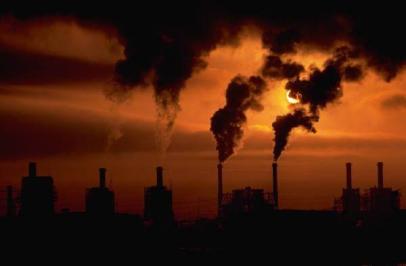
    Most of us are familiar with the term “going green,” and we all agree that it is a good thing.  Reusing, recycling and emitting less greenhouse gasses are awesome. 
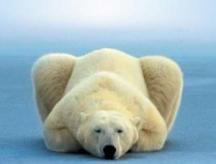
    Greenhouse gasses have been a hot topic for many years, particularly when it comes to global warming.  Some scientists and Al Gore are looking into the effects that humans are having on the earth and saying we are the cause of global warming.  Many people are saying that high levels of carbon dioxide in the atmosphere are trapping heat and causing temperatures to raise, glaciers to melt and sea levels to change.  All those things are detrimental to many wildlife habitats and could ultimately lead to the extinction of human kind.  Some scientists are saying that we need to take The Polar Bear Pledge, find cleaner sources of energy and stop eating so much beef.

    Some scientists are saying that the sun simply goes through hot and cool spells, and right now it happens to be hot.

    Global warming due to human activity has been marketed to us very successfully, and most people think it is true because its prominence in the media has allowed for many repeated messages (agenda setting).  We are not trying to reject any of the scientific research that has been done to support global warming theories, but from an IMC standpoint we should know better than to blindly accept something as true without questioning it and researching both sides.  There are many theories about global warming that have nothing to do with humans. Some researchers say that global warming and cooling is a natural phenomenon that has been occurring since the beginning of time due to the amount of water vapor in the atmosphere.  Political analysts say that many people stand to benefit financially from global warming with the trading of carbon credits, and that certain politicians have dual roles in the matter, as advocates and investors.  Either way, it is wise to take a stance on the issue; the wellbeing of our world is at stake and it is up to us to protect it.

    -Stephanie Bakolia, Claire Outlaw, David Glaubach
  • Looking Forward

    Going green.  It seems to be at the top of every corporation’s priorities.  In this day and age we have a better understanding for how unsustainable our daily lifestyles have been since the start of industrialism.  In the past, building and developing areas was praise-worthy.  Urbanization has supplied new jobs and opportunity for the ever-increasing population.   It is only in last fifteen to twenty-five years that we have started to realize that depleting our natural resources and burning fossil fuels cannot persist at the rate at which they are.

    Alternatives must be sought out. 

    Today, we can still live freely without compromise, however, the media has brought on an underlying pressure to conserve and to use less.  People are speaking out about Global Warming’s effects and the public is listening.  The message is now resonating that the way we do business personally and professionally needs to change.  With a heightened awareness of going green amongst the general public, it has opened up a new avenue for companies to use in appealing to their target audience.

    “Green this, organic that”…  business motives have shifted and companies are doing whatever they can to show they are a green, sustainable business. Marketers have leaped into branding “green” through strategies and ideas that promote the better goodness of the environment.  Besides a company’s involvement in becoming more sustainable, the main concern lies within the image they portray. Today, for the general public green equals good.  In going with a “green” company, it allows people to grant themselves with a feeling that they are doing the right thing for themselves, their environment, and the future based on what the mass media has hyped about the environment.  The color green symbolizes many positive aspects about a company’s values, making it crucial for any business to incorporate the theme into the design of their logo, website, advertisements etc.  Having an overall look of being clean, simple, sustainable, organic or recyclable seems to be what’s driving some of the most successful companies around us today.

    by: Oliver Evans, Sally Shupe, Jared Sales

  • Another Day, Another “Gunman”

    It was not our plan to write another blog post about university safety communication however, for the second day in a row, one of North Carolina’s universities was faced with a crisis as a reported gunman was spotted on campus. Much like how the University of North Carolina Wilmington alerted their students, East Carolina University also utilized all tools necessary in order to notify their students. Officials issued a complete lockdown and notified students via e-mail, phone calls, text messaging and social media sites. However, the role social media played in UNCW’s crisis is far different from what happened at ECU.

    Reports of a gunman walking through campus started circulating around 10 am this morning and there was surveillance of a man with a cowboy hat carrying what looked like a large riffle walking on a 5th Street, a road that runs through the campus. As students were locked up in class, tweets began to flood in reporting the incident and some even saying that they saw the gunman and that there were hostages. However, after three hours of searching the Greenville Police tracked down the suspect and found that the “rifle” was in fact an umbrella. Greenville police Sgt. Carlton Williams stated that rumors circulating on social media sites such as Facebook and Twitter caused authorities to “chase ghosts” and follow leads that were false.

    Although yesterday’s post focused on how social media has allowed us to share and cooperate in moments of crisis, there is also a negative side to the impact it has on the crisis communication. Officials utilize the tweets and posts on social media sites in order to gain information and as you can see from today, often have to take those tweets at face value. There’s always that “better safe than sorry” feeling, especially in the wake of the Virgina Tech massacre, but to what extent should authorities follow-up on information provided through social media?

    -Alaethea Hensley, Jessica Kingman, & Lauren Phelps

  • Rock for the Cure


    UNCW Communication Studies Society is rocking out this Friday evening for a great cause. October is Breast Cancer Awareness month and to make our mark in fighting for the cause, UNCW students and faculty invite everyone to participate in Rock for the Cure Friday, October 21st, 2011 on the second floor of Reel Café, downtown Wilmington N.C. at 7:00pm. The admission to this event is $5 and all proceeds will go to New Hanover Regional Medical Center’s Pink Ribbon Project. The profits will help fund uninsured women in the greater Wilmington area to receive free mammogram screening and also provide “comfort bags” with items that include a pink fleece blanket to be used to warm patients as they receive treatments, a satin pillowcase for comfort after hair loss and an herbal eye pillow to help with relaxation during this time. Rock for the Cure will also raise money through a silent auction and raffle. With the help from you and others we can make a difference for the incredible success of the Pink Ribbon Project and help provide early diagnosis and comfort to women in our area.

    -Michela Noreski, Jordan Hill, Ashley Nelson

  • The Real Cost of Advertising

    Our economic troubles are hurting deeper than the punch from the gas pump, bruise from increased tuition costs, and stabs from the job market. These economically challenging times are also abusing the fundamental business principles that companies have relied on for years. In particular, these bad financial times are changing the way advertisements are valued.

    Many companies assume that when they are affected by hard economic times, it is best to pull the plug on various advertisement campaigns as a way to cut marketing costs. However, this kind of penny-pinching seems to only make the struggling financial situation worse. According to a study prepared for American Business Media by Yankelovich Partners and Harris Interactive, businesses who continue to run ads have a significant competitive advantage over those who choose to cut back.

    Simply: there is a value to spending money on advertisements, regardless of economic struggles.

    Darwin’s theory of “survival of the fittest” has never been so true in today’s economic downfall. Companies cannot risk pulling their advertising from the marketplace if they want to remain in the thoughts and minds of consumers. If only the fit survive, then a company should use aggressive advertisements and marketing strategies as a way to not only reach their audience, but to intimidate the competition. The continuation of building clientele through running advertisements establishes an image of loyalty, faith, and stability a company has in their product or service to the consumer. If the advertisements get pulled, then so will the opportunity to reassure to consumers that the company is prospering despite the economic hardships.

    If a company is facing the decision to pull advertisements as an attempt to adhere to budget cuts, it would be wise to think beyond the element of monetary cost. Because the cost of losing attention could be larger than the amount of money you may be saving without advertisements.

    -Oliver Evans, Sally Shupe, Jared Sales

  • Wonka Vision

    Have you ever gone out and bought something simply for the
    fact that you saw your favorite celebrity or athlete endorsing it? Or, have you
    watched your favorite show or football team-play on TV and be mesmerized by a
    product?

    Many companies use product placement on television shows to
    advertise their brand. A lot of times, the company will sponsor a certain show,
    and in return their brand may be used in various ways throughout an episode; it
    may be used as a product in the episode or the company’s commercial will play
    during a break. For instance, have you ever wondered why all three judges on American Idol are always sitting behind
    large glasses of Coca-Cola? It is not because they cannot get enough
    daily-intake of Coke; it is because American Idol is sponsored by the Coca-Cola
    brand. Television shows are a major source of advertisement. The reality show The Kardashians is a show focused
    around the life of the Kardashian brand and family. They now have a clothing
    line through the Sears Company which is marketed on the show, a boutique
    clothing and accessory store Dash, and even market perfumes because who doesn’t
    want to smell just like a Kardashian!

    Product placement is a way for companies to inject their
    products to be endorsed by celebrities so the product will then be “cool” and
    acceptable for everyone else to buy. The show The Restaurant, on the Bravo network, starring the high-end
    restaurant chef Rocco, was paid by the show’s three main sponsors: American
    Express, Mitsubishi Motors and Coors Brewing. Bravo
    did not pay a single penny of
    license fee to have the show made. To justify its investment, each of the shows’
    sponsors has received a prominent place in the show: American Express provides
    the financing for the restaurant and the show.

    Of course, in the early days of television, such
    integration between advertiser and show was quite common. Such links persisted
    into the 1970s from the movie Willie Wonka and the Chocolate Factory, which was entirely funded by Quaker Oats. The
    Quaker Oats brand used the movie to promote its new “Wonka” brand of
    candy and sweets. Beware and conscious of what you are buying.

    – Jordan Hill, Michela Noreski, Ashley Nelson